2026 NYC & Long Island Restoration Update. Restoration claim volume across NYC, Long Island (Nassau and Suffolk), and the broader Tri-State has continued to track water damage, sewage backup, fire and smoke, and mold remediation as the dominant categories through 2026. Insurance claim mechanics — particularly around water mitigation, IICRC certifications, and the documented chain of restoration steps — have remained the deciding factor in successful claims. For homeowners, building managers, and condo and co-op boards across NYC and Long Island, the restoration landscape rewards licensed, IICRC-certified providers with documented claim experience. The remainder of this article — originally published in an earlier cycle and updated for 2026 — covers the underlying restoration and claim detail.
Owning a home in New York City or Long Island means confronting repair costs that often exceed national averages by 20–40%, according to HomeAdvisor’s 2025 True Cost Report. Some repairs are predictable; others strike without warning. This guide breaks down the most expensive home repairs in 2026, what they actually cost in the NYC metro area, and how to prevent them — or at minimum, catch them early enough to reduce the bill. Upper Restoration’s Long Island recovery guide covers emergency steps when damage has already occurred.
Foundation Repairs: $5,000–$75,000 in the NYC Metro Area
Foundation failure is the single most expensive residential repair category. The National Association of Home Builders reports that the median foundation repair in the Northeast costs $12,500, but full stabilization jobs on Long Island homes built before 1970 regularly exceed $40,000. Common causes include hydrostatic pressure from high water tables, frost heave cycles, and root intrusion from mature trees.
Warning signs include horizontal cracks wider than 1/4 inch, doors or windows that no longer close properly, and uneven floors. Upper Restoration recommends annual inspections by a licensed structural engineer — early detection of a minor crack ($500–$1,500 to seal) prevents the $30,000+ excavation-and-pier job. Homes in Nassau County and Suffolk County are particularly vulnerable due to sandy soil conditions and proximity to coastal groundwater. If foundation issues have caused hidden water damage, a restoration specialist should assess secondary damage before structural work begins.
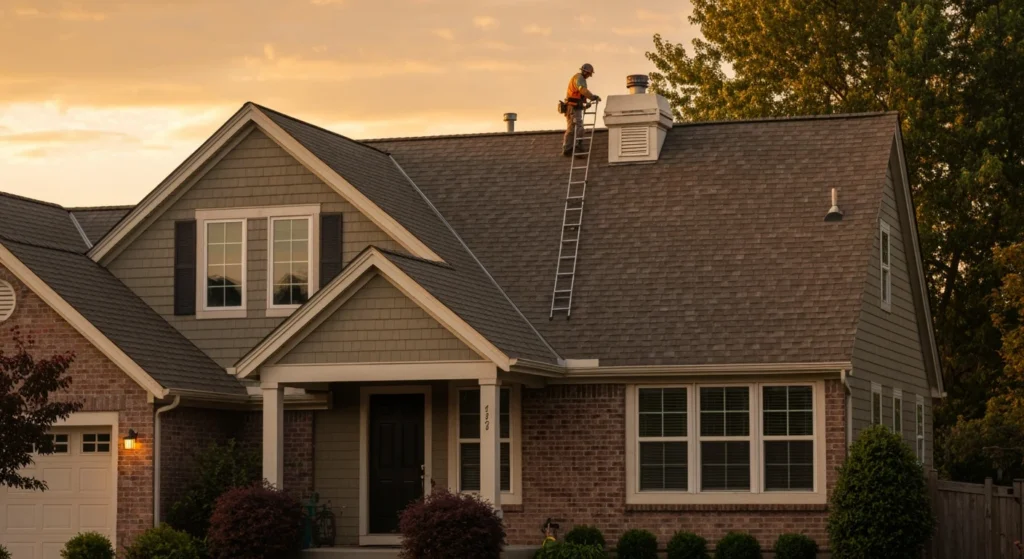
Roof Replacement: $15,000–$50,000 for NYC and Long Island Homes
A full roof replacement on a typical 2,000-square-foot Long Island home costs $18,000–$35,000 for architectural shingles and $35,000–$50,000+ for slate or standing-seam metal, based on 2026 pricing from the National Roofing Contractors Association (NRCA). Nor’easters, ice dams, and hurricane-season wind events are the primary damage triggers in this region.
Preventive maintenance includes biannual gutter cleaning, annual flashing inspections, and prompt replacement of missing or curling shingles. Upper Restoration handles storm damage restoration on Long Island when weather events compromise roof integrity. Insurance typically covers storm-related roof damage under HO-3 policies, but deductibles for wind and named storms in New York can reach 2–5% of the insured value.
Plumbing Failures and Water Damage: $3,000–$30,000+
Burst pipes, slab leaks, and sewage backups rank among the most disruptive and expensive repair categories. The Insurance Information Institute (III) reports that water damage claims average $12,514 nationally, but NYC-area claims trend 30% higher due to labor and material costs. Galvanized pipe failures in pre-1980s homes and frozen pipe bursts during January–February cold snaps are the most common triggers on Long Island.
Annual plumbing inspections, water leak detection systems (such as Flo by Moen or Phyn Plus), and pipe insulation in unheated spaces are the most cost-effective prevention measures. When water damage does occur, the response window matters — mold colonization begins within 24–48 hours in humid conditions. Sewage backup cleanup requires specialized equipment and IICRC-certified technicians due to Category 3 contamination risks.
HVAC System Replacement: $8,000–$25,000
Replacing a central HVAC system in a Long Island home costs $8,000–$15,000 for a standard efficiency unit and $15,000–$25,000 for a high-efficiency heat pump system, according to the U.S. Department of Energy. Systems typically last 15–20 years, but salt air exposure in coastal Long Island communities can reduce lifespan by 3–5 years.
Preventive steps include quarterly filter changes, annual professional tune-ups, and keeping outdoor condenser units clear of debris. The 2025 federal tax credits under the Inflation Reduction Act provide up to $2,000 for qualifying heat pump installations — a meaningful offset against replacement costs.
Electrical Rewiring: $8,000–$30,000
Homes built before 1965 with knob-and-tube or aluminum wiring face the highest electrical fire risk. Full rewiring of a 2,000-square-foot home costs $8,000–$20,000 in Suffolk County and $15,000–$30,000 in Manhattan, based on licensed electrician quotes compiled by HomeAdvisor. The National Fire Protection Association (NFPA) reports that electrical failures cause an estimated 46,700 home fires annually in the United States.
Signs that rewiring is needed include frequent breaker trips, flickering lights, discolored outlets, and burning smells near switch plates. Annual electrical inspections are especially critical for homes over 40 years old. If fire damage has occurred, Upper Restoration’s IICRC-certified team handles both the structural restoration and the coordination with licensed electrical contractors for code-compliant rewiring.
2026 Cost Trends: Which Repairs Are Getting More Expensive in New York
Home repair costs in the New York metro area have increased 8–12% year-over-year since 2023, driven by construction labor shortages, rising material costs, and stricter building codes. According to the Bureau of Labor Statistics Consumer Price Index, the shelter and home maintenance categories reached record levels in Q1 2026. Foundation work and full HVAC replacements saw the steepest increases due to supply chain constraints on concrete, steel, and refrigerant.
Upper Restoration works with all major insurance carriers in New York — including Allstate, State Farm, Liberty Mutual, and USAA — to ensure that covered repair costs are documented, justified, and fully reimbursed. For details on how insurance handles restoration claims, see our guide: Do Insurance Companies Work with Cleaning and Restoration Claims?
The Most Cost-Effective Prevention Strategy
The single most impactful action a homeowner can take is scheduling an annual whole-home inspection that covers foundation, roof, plumbing, HVAC, and electrical systems. The typical cost of a comprehensive home inspection on Long Island is $400–$800 — less than 1% of the average major repair. Early detection of a roof leak, a hairline foundation crack, or a corroding pipe joint can prevent five- and six-figure repair bills.
When damage has already occurred, response time determines the final cost. Mold remediation costs escalate dramatically for every week that water damage goes unaddressed. Upper Restoration offers 24/7 emergency response across Long Island, Nassau County, Suffolk County, and all five NYC boroughs.
Frequently Asked Questions: Costly Home Repairs
What is the most expensive home repair in New York?
Foundation stabilization is typically the most expensive single repair, ranging from $5,000 for minor crack sealing to $75,000+ for full pier-and-beam restoration on Long Island homes. Roofing replacements are the second most costly, averaging $18,000–$50,000 depending on material and home size.
Does homeowners insurance cover major repairs like foundation or roof work?
Standard HO-3 homeowners policies cover sudden and accidental damage — such as storm damage to a roof or a burst pipe flooding a basement — but do not cover maintenance-related deterioration. Foundation settling from normal soil movement is typically excluded. Always document damage with photos and file claims within the policy’s reporting window.
How often should I have my home inspected to prevent costly repairs?
The National Association of Home Builders recommends annual whole-home inspections covering foundation, roof, plumbing, HVAC, and electrical systems. A $400–$800 inspection can identify issues before they escalate into five-figure repair bills.
When should I call a restoration company instead of a general contractor?
Call a restoration company like Upper Restoration when the damage involves water, fire, smoke, or mold — situations that require IICRC-certified remediation, insurance documentation, and coordinated multi-trade restoration. General contractors are appropriate for planned renovations and non-emergency structural work.
How quickly does mold grow after water damage?
Mold colonization can begin within 24–48 hours in humid conditions, according to the EPA. This is why immediate water extraction and professional drying are critical after any plumbing failure, roof leak, or flood event. Delaying remediation by even one week can triple the total restoration cost.
What are the warning signs that my home needs foundation repair?
Key warning signs include horizontal or stair-step cracks in basement walls wider than 1/4 inch, doors and windows that stick or no longer close properly, uneven or sloping floors, and gaps between walls and ceiling. If you observe any of these, schedule a structural engineer inspection immediately.
*Editor’s Note: This article was originally published in 2025 and has been fully updated with 2026 cost data, current insurance guidance, and region-specific pricing for the NYC and Long Island market. Last reviewed: March 22, 2026.