The moment you discover water pouring into your basement, smoke damage in a unit upstairs, mold behind a wall, or sewage backing up through a basement drain, the next few hours matter more than you think. The decisions you make in the first day shape the size of the loss, the speed of recovery, and whether your insurance claim is approved cleanly or pushed back on for documentation gaps. This 2026 guide walks through property damage restoration in NYC and Long Island — what to do first, how the process works, which damage categories Upper Restoration handles, and how the insurance side fits together.
What to Do First (The Critical First 24 Hours)
Three things matter immediately:
- Stop the source of damage if it is safe to do so. Shut off the water main if there is active flooding. Get out of the building if there is fire or active smoke. Do not enter a basement with raw sewage or standing water near electrical sources.
- Document everything before anything moves. Photos and video of every affected surface, before any cleanup, before any moving of contents, before the restoration team starts work. The documentation is what your insurance adjuster will use to establish the loss.
- Call a licensed, IICRC-certified restoration company. Time is the enemy in water damage in particular — mold begins establishing within 24 to 48 hours of standing water exposure, which means the difference between a water mitigation claim and a water-plus-mold claim is often measured in hours.
For 24/7 emergency response across NYC and Long Island, Upper Restoration responds within hours of the call. Request a free consultation for non-emergencies; for emergencies, call directly.
The Damage Categories Upper Restoration Handles
Restoration is a broad category encompassing several distinct skill sets and certifications. Upper Restoration covers the major damage categories that affect NYC and Long Island properties:
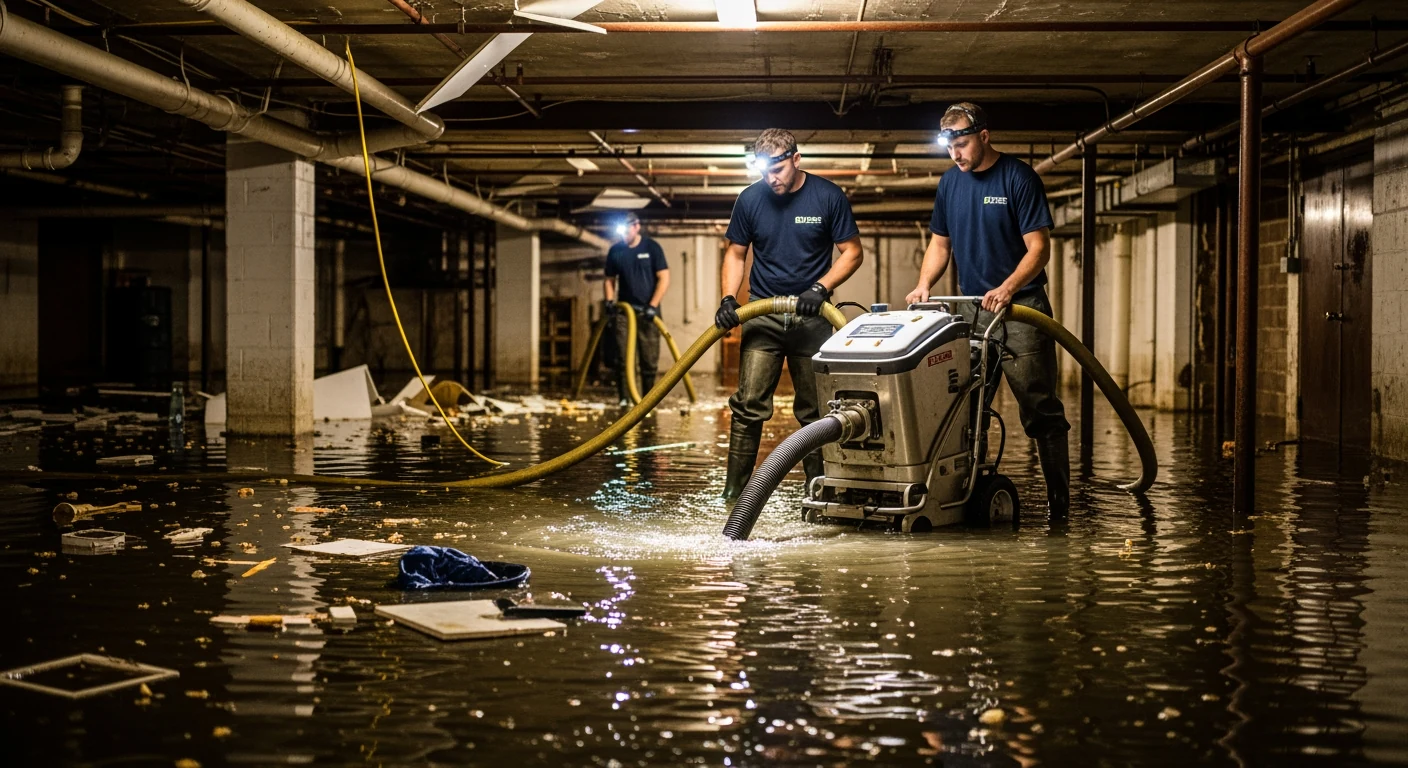
- Water and flood damage restoration — pipe bursts, supply line failures, storm flooding, washing machine and dishwasher leaks, ice dam water intrusion. Also dedicated Long Island water damage coverage with 24/7 emergency service.
- Fire and smoke damage restoration — structural fire, kitchen fire, electrical fire, smoke infiltration from neighboring units, soot remediation. Also Long Island fire and smoke.
- Mold removal and remediation — testing, containment, remediation, post-remediation verification. Also Long Island mold remediation.
- Sewage cleanup and restoration — Category 3 (black water) cleanup, biohazard protocols, building rebuild. Also Long Island sewage cleanup.
- Asbestos abatement and removal — licensed asbestos work for older NYC and LI properties. Also Long Island asbestos abatement.
- Board up and tarping — securing properties after storm, fire, or break-in. Also Long Island board up and tarping.
- Tree removal and storm cleanup. Also Long Island tree removal.
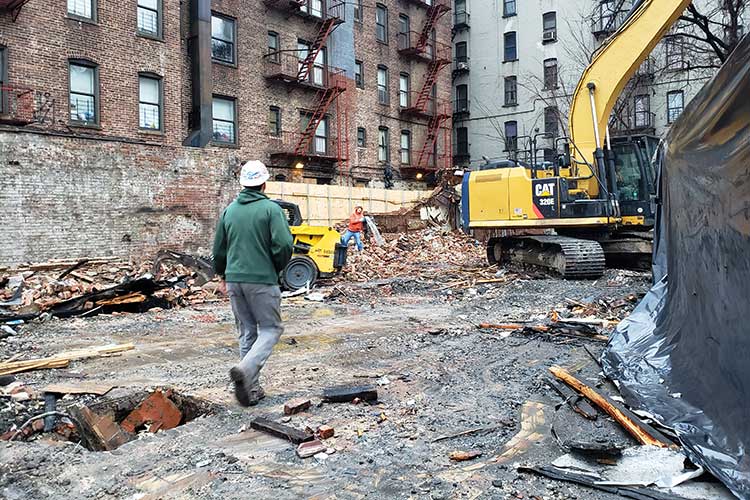
- General construction — rebuild and renovation following restoration. Also Long Island general construction and demolition.
For a damage-type-specific guide to what each category involves, see restoration by damage type.
How the Restoration Process Works
Every restoration job runs through roughly the same phases, though the specifics vary by damage type:
- Emergency response and inspection. A technician arrives within hours of the call (immediately for emergencies). The property is inspected, damage scoped, and immediate mitigation steps taken — water extraction, smoke containment, safety securing.
- Mitigation. Stopping the damage from getting worse. Water extraction, dehumidification, structural drying, smoke deodorization, mold containment. This phase is time-critical.
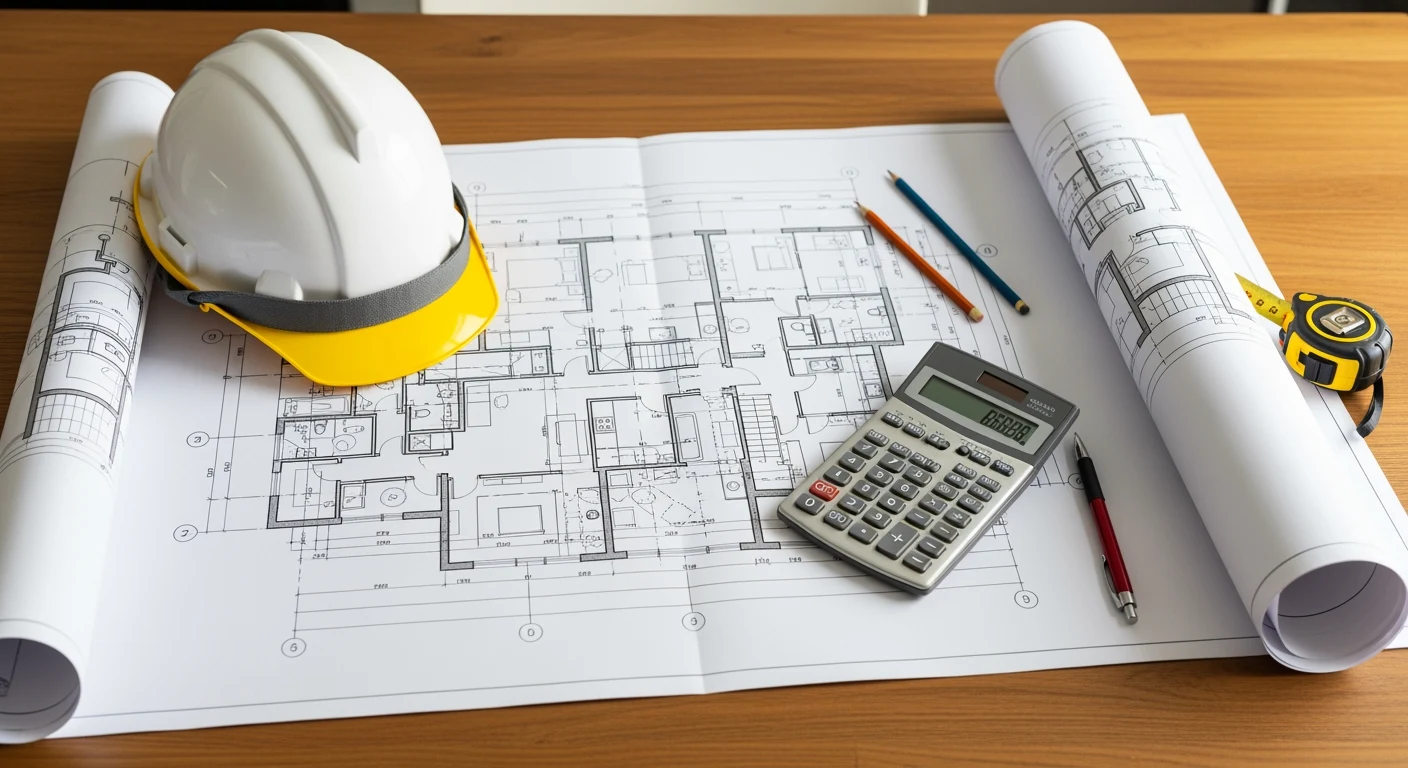
- Insurance coordination. Documentation, photos, scope of work, line-item estimates aligned to Xactimate (the industry-standard insurance estimating software). Upper Restoration coordinates directly with the property owner’s insurance adjuster.
- Cleaning and content restoration. Cleaning of affected surfaces, content cleaning and restoration where possible, pack-out and storage of contents that need to be removed.
- Reconstruction. Drywall replacement, flooring, painting, full rebuild of damaged structure. Larger jobs draw on Upper Restoration’s general construction capacity.
- Final inspection and handoff. Post-remediation verification (especially for mold and sewage jobs), final walkthrough with the owner, completion documentation for insurance.
The Insurance Side
Property damage restoration is almost always paid through the property owner’s insurance policy — homeowner’s, condo, co-op, or commercial property insurance. The mechanics of the claim — what is covered, what the deductible is, how the documentation flows — matter substantially to the financial outcome. Upper Restoration’s IICRC certification, documented chain-of-restoration steps, and Xactimate-aligned estimating give the adjuster the documentation needed to approve the claim cleanly.
For the deeper insurance-side playbook — what an adjuster looks for, how to handle a denied claim, the documentation that protects you — see working with your insurance adjuster: the IICRC restoration playbook.
Why IICRC Certification Matters
IICRC (the Institute of Inspection, Cleaning and Restoration Certification) is the industry-standard credential for restoration work. Insurance adjusters specifically look for IICRC-certified providers because the certification means the work follows established industry standards — the S500 standard for water damage, S520 for mold remediation, S540 for trauma and crime scene cleanup, and the related category standards. A non-certified contractor’s work may not be reimbursable at full claim value because the adjuster cannot verify the work was done to industry standard.
Upper Restoration’s certifications page documents the firm’s current IICRC and related credentials.
Service Area
Upper Restoration serves NYC (all five boroughs) and Long Island (Nassau and Suffolk counties), with 24/7 emergency response across the service area. Co-op and condo board work, commercial property work, and residential work all run through the same operational structure with appropriate scope adjustments.
Frequently Asked Questions
What should I do first when I discover damage?
Stop the source of damage if safe, document everything with photos and video before cleanup begins, and call a licensed IICRC-certified restoration company immediately. Time is critical, especially for water damage where mold begins establishing within 24–48 hours.
Does Upper Restoration work directly with my insurance company?
Yes. Upper Restoration coordinates directly with the property owner’s insurance adjuster, providing the documentation, scope, and Xactimate-aligned estimates needed for claim approval.
How fast does Upper Restoration respond to emergencies?
Within hours of the call. 24/7 emergency response across NYC and Long Island.
Do you handle co-op and condo board work?
Yes. Upper Restoration regularly works with NYC co-op and condo boards on shared-system damage (water main, sewer, roof) and individual-unit damage.
What does restoration cost?
Costs vary substantially by damage type, scope, and the property’s existing condition. Insurance typically covers most or all of the restoration cost subject to the policy deductible and coverage limits. Upper Restoration provides line-item Xactimate-aligned estimates that allow the property owner to understand the scope clearly.
What if my claim is denied?
Documentation is the deciding factor in most denied claims. Upper Restoration’s restoration documentation — photos, moisture readings, scope, line-item Xactimate estimates — supports the appeal process. See the insurance playbook for the deeper detail.
Talk to Upper Restoration
For emergencies, call the 24/7 emergency line. For non-emergencies, request a free consultation or reach out via the contact page. View recent project work for examples of the restoration scope.