Different damage categories require fundamentally different restoration approaches. Water damage runs on a 24- to 48-hour clock before mold begins establishing. Fire damage requires smoke deodorization that has its own dedicated specialty. Mold remediation has IICRC-prescribed containment protocols. Sewage cleanup is Category 3 work with biohazard handling. Asbestos requires licensed abatement work. This 2026 guide walks through each restoration by damage type for NYC and Long Island properties, with what’s involved, the typical timeline, and a link to the dedicated service page.
For the broader restoration process and what to do first, see the complete guide to property damage restoration.
Water and Flood Damage Restoration
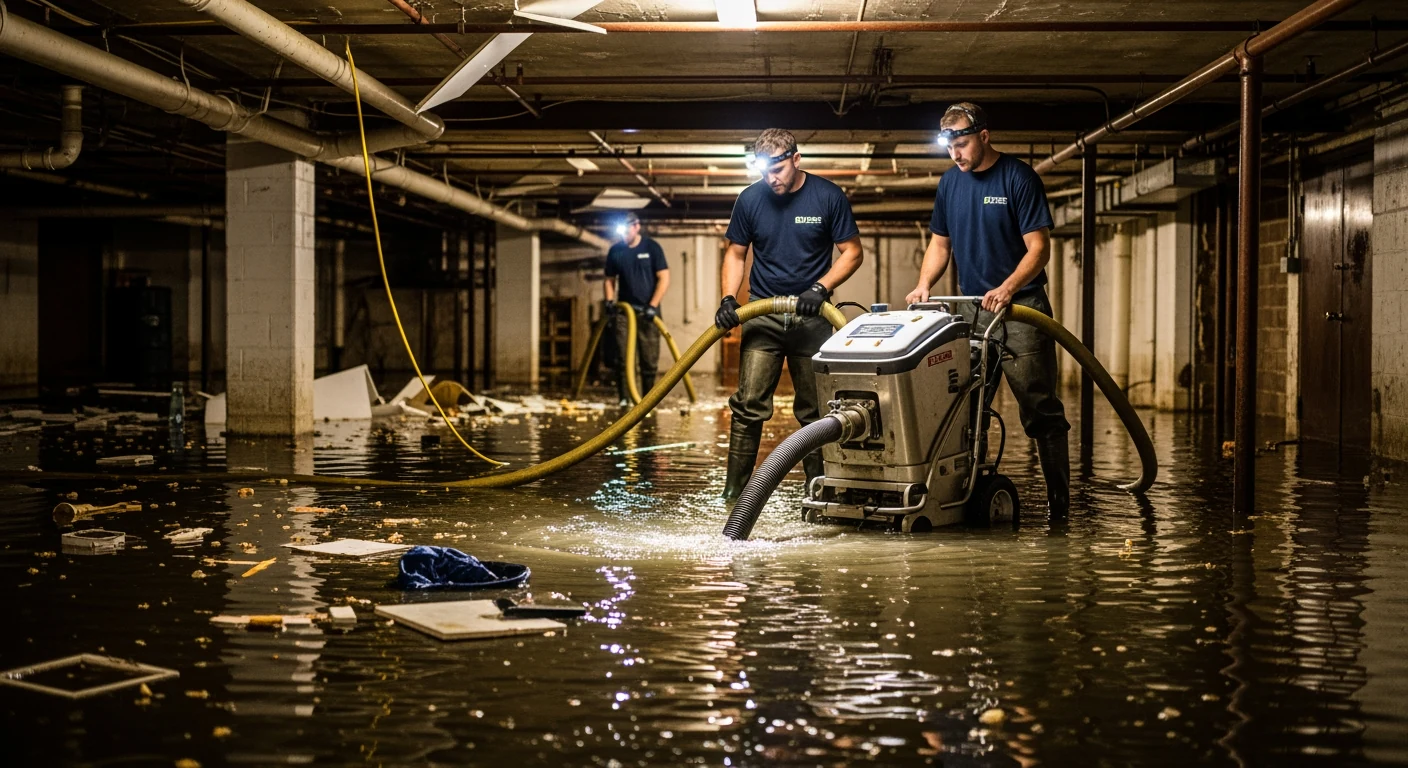
The most common restoration category. Sources range from internal pipe failures (supply lines, drain lines, washing machine hoses, water heater leaks, dishwasher hoses) to external (storm flooding, ice dams, roof failures, sump pump failures). Water damage is classified into three categories: Category 1 (clean water from a supply line), Category 2 (gray water with some contamination — washing machine, dishwasher), and Category 3 (black water — sewage, storm flooding, or any water that has sat for 48+ hours).
Timeline: Mitigation phase 24–72 hours for water extraction and structural drying. Mold begins establishing within 24–48 hours of standing water, which makes immediate response critical. Reconstruction phase varies by damage extent — days for a single room, weeks for whole-floor damage.
IICRC standard: S500 (Water Damage Restoration).
Service pages: Water and flood damage restoration, Long Island water damage (24/7 emergency).
Fire and Smoke Damage Restoration
Fire damage involves three distinct restoration tracks running simultaneously: structural damage from the fire itself (charring, structural compromise, water damage from the fire suppression), smoke and soot damage (which spreads beyond the immediate fire area and requires specific deodorization), and contents restoration (cleaning or pack-out of personal property exposed to smoke and soot).
Smoke odor is particularly persistent — without specialized deodorization, smoke residue can continue affecting indoor air quality for months after surface cleaning. Upper Restoration uses ozone treatment, hydroxyl generators, and thermal fogging as appropriate to the specific smoke profile.
Timeline: Securing and board-up immediately (often the same day as the fire). Smoke containment and deodorization 1–3 weeks depending on penetration. Structural reconstruction varies widely with the scope of the fire.
Service pages: Fire and smoke damage restoration NYC and Long Island, Long Island fire and smoke damage cleanup.
Mold Removal and Remediation
Mold restoration is highly procedural. The IICRC S520 standard prescribes specific containment, air filtration, removal, and post-remediation verification steps. Cross-contamination is the central risk — improper containment spreads mold spores throughout the building during remediation.
Mold remediation work typically follows three phases:
- Testing and assessment. Confirming the presence and extent of mold, identifying species (some require more aggressive handling), mapping affected areas.
- Containment and remediation. Physical barriers, negative-air-pressure machines, HEPA filtration, removal of affected materials following S520 protocols.
- Post-remediation verification. Air quality testing confirming the remediation was successful before reconstruction begins.
Timeline: Assessment 1–3 days. Remediation 1–2 weeks for typical residential scope. Verification 2–5 days. Reconstruction variable.
IICRC standard: S520 (Mold Remediation).
Service pages: Mold removal, remediation, and testing, Long Island mold remediation.
Sewage Cleanup and Restoration
Sewage is Category 3 (black water) by definition, which carries biohazard risk and requires specific handling. Sewage backups in NYC and Long Island commonly result from main sewer line failures, septic system failures (on LI), backup from heavy rain overwhelming municipal systems, and broken drain lines within the property.
The work involves extraction, full disinfection of affected surfaces with appropriate antimicrobial treatment, removal and disposal of porous materials that cannot be effectively sanitized (drywall, carpet, padding, sometimes flooring), structural drying, and reconstruction.
Timeline: Emergency response immediately. Extraction and disinfection 1–3 days. Demolition and dry-out 3–7 days. Reconstruction variable.
Service pages: Sewage cleanup and removal, Long Island sewage cleanup and restoration.
Asbestos Abatement and Removal
Older NYC and Long Island properties (pre-1980 construction in particular) frequently contain asbestos in floor tile, pipe insulation, plaster, popcorn ceilings, and roofing materials. When a renovation, restoration, or demolition project disturbs asbestos-containing material, licensed abatement is legally required before further work can proceed.
Abatement involves testing to confirm asbestos presence, regulatory notification (NYC and NY State filings), containment, removal under controlled conditions by licensed asbestos handlers, disposal at approved facilities, and post-abatement air clearance testing.
Timeline: Testing 1–3 days. Notification period 10 days (regulatory). Abatement variable by scope — single bathroom 1–3 days, whole-property removal 1–4 weeks.
Service pages: Asbestos abatement and removal NYC and Long Island, Long Island asbestos abatement.
Board Up and Tarping
Emergency property securing after fire, storm damage, vehicle impact, or break-in. Plywood over broken windows and openings, tarping over damaged roofing, securing access points. This is typically immediate, same-day or next-day work as a precursor to the full restoration scope.
Service pages: Board up and tarping service, Long Island board up and tarping.
Tree Removal and Storm Cleanup
Storm-related tree damage, fallen trees, hazardous tree removal, and post-storm cleanup. Particularly relevant in Long Island and the northern suburbs where storm impact on mature trees produces predictable damage patterns.
Service pages: Tree removal and storm cleanup, Long Island tree removal.
General Construction and Reconstruction
Restoration jobs of any meaningful scope require reconstruction work after the mitigation and damage cleanup phases. Upper Restoration’s general construction services handle the full rebuild — drywall, flooring, painting, kitchen and bath rebuild, framing, electrical, plumbing — under a single project structure that keeps the restoration and rebuild phases integrated.
Service pages: General construction services, Long Island general construction, Long Island demolition.
Frequently Asked Questions
Which damage category is most time-critical?
Water damage. Mold begins establishing within 24–48 hours of standing water exposure. The faster water mitigation begins, the smaller the eventual restoration scope.
How do I know if I have a water damage problem or a mold problem?
If you have visible water (current or recent), water damage is the primary issue and mold is a secondary risk that develops with time. If you have visible mold without recent water, the underlying cause needs to be identified — almost all mold has a moisture source.
Does insurance cover all of these damage types?
Coverage varies by policy. Sudden water damage from internal sources is typically covered; gradual leaks may not be. Fire damage is almost always covered. Mold coverage depends on the source — mold from a covered water loss is typically covered, mold from undetected long-term leaks may not be. Sewage backup requires a specific endorsement in many policies. The insurance playbook covers this in detail.
How is asbestos handled differently from other restoration?
Asbestos requires licensed abatement workers, regulatory notification before work begins, controlled removal procedures, and air-clearance testing. Non-licensed contractors cannot legally remove asbestos-containing material.
Can Upper Restoration handle all phases — mitigation, restoration, and reconstruction?
Yes. Single-project structure across mitigation, restoration, and general construction reconstruction.
Talk to Upper Restoration
For emergency response, call the 24/7 emergency line. For non-emergencies, request a free consultation or reach out via the contact page. View recent restoration projects for examples of the work scope by damage type.