Sewage Backup Cleanup: Health Risks and Professional Remediation
A sewage backup is one of the most serious water damage events a homeowner can experience. Unlike clean water leaks, sewage backup cleanup involves hazardous biological contamination that poses immediate and severe health risks. According to the CDC, sewage contains over 50 pathogenic bacteria species, parasites, and viruses that cause serious illness.
If you’re experiencing a sewage backup, this is not a DIY cleanup situation. The health hazards are real, immediate, and potentially life-threatening. This guide explains the dangers, what qualifies as a sewage backup, how professionals remediate it, and what you need to know to protect your family.
What is a Sewage Backup?
A sewage backup occurs when wastewater from your home’s septic system or municipal sewer line backs up into your home instead of flowing away. This results in raw sewage (or partially treated sewage) appearing in:
- Basement floors and areas
- Lowest-level bathrooms
- Lower-level drains (showers, sinks, toilets)
- Foundation walls
- Crawl spaces
Common causes:
- Tree roots breaking through or clogging sewer lines
- Grease buildup in municipal sewer lines
- Structural defects or breaks in sewer lines
- Heavy rain overwhelming municipal systems during storms
- Septic tank failure or overflow
- Collapsed sections of main sewer line
- Downstream blockages (municipal system malfunctions)
Water Damage Classification: Sewage is Category 3
Sewage backup water is classified as Category 3 water—the most contaminated water classification.
The IICRC (Institute of Inspection, Cleaning and Restoration Certification) defines Category 3 water as:
“Grossly contaminated water that contains pathogenic agents, toxic substances, or other serious contaminants. Sources include sewage and water from flooding with significant pathogenic contamination.”
This classification means:
- Immediate professional remediation is required—this is not optional
- Biohazard protocols must be followed to prevent contamination spread
- Most porous materials in contact with sewage must be removed—they cannot be safely dried and reused
- Extensive disinfection is necessary after water removal
- Professional decontamination is a critical phase of the remediation process
Health Hazards of Sewage Backup
Pathogenic Bacteria in Sewage
Raw sewage contains dozens of harmful bacteria species:
- E. coli (Escherichia coli): Causes severe gastroenteritis, urinary tract infections, and bloodstream infections; particularly dangerous for children and elderly
- Salmonella: Causes salmonellosis (severe food poisoning-like illness) with fever, diarrhea, and abdominal cramps lasting weeks
- Shigella: Causes severe dysentery and diarrheal disease; spreads rapidly in families and groups
- Vibrio: Causes cholera-like illness and wound infections
- Campylobacter: Leading bacterial cause of diarrheal disease; can lead to Guillain-Barré syndrome
- Listeria: Causes serious blood infections and meningitis; particularly dangerous for pregnant women and immunocompromised individuals
Parasites and Protozoa
Sewage contains parasitic organisms that cause persistent, serious illness:
- Giardia: Causes severe diarrhea, abdominal cramping, and malnutrition lasting weeks to months
- Cryptosporidium: Causes severe diarrheal disease; particularly dangerous for immunocompromised individuals (can be life-threatening)
- Entamoeba: Causes severe dysentery and liver abscesses
- Hookworms and roundworms: Cause intestinal infections and malnutrition
Viruses
Multiple virus types survive in sewage water:
- Hepatitis A virus: Causes acute liver infection with jaundice, fatigue, and weeks-long illness
- Norovirus: Causes severe gastroenteritis with vomiting and diarrhea
- Enteroviruses: Cause various illnesses from mild symptoms to meningitis
- SARS-CoV-2: Survives and is transmitted through sewage systems
Toxic Chemical Contamination
Beyond biological hazards, sewage contains chemical contaminants:
- Ammonia: Highly toxic when inhaled; causes respiratory damage and burns
- Methane gas: Produced by sewage decomposition; explosive and toxic
- Hydrogen sulfide: Produces characteristic “rotten egg” smell; highly toxic even in small concentrations
- Pharmaceutical residues: Medications accumulate in sewage; health effects variable
- Heavy metals: From industrial discharge; accumulate in tissues and cause neurological damage
Exposure Routes and Illness Risk
You can contract sewage-borne illness through:
- Direct contact: Touching contaminated surfaces with open wounds
- Ingestion: Contaminated food touched after sewage exposure; hand-to-mouth contact
- Inhalation: Aerosolized pathogens and toxic gases from sewage
- Cross-contamination: Touching contaminated surfaces, then touching your face/food
High-risk populations: Young children, elderly, immunocompromised individuals, and those with chronic illnesses face severe illness risks from sewage exposure.
Immediate Steps After Sewage Backup Discovery
Safety First
- Exit the affected area immediately. Do not attempt to stay in areas with sewage.
- Keep family members and pets away. Restrict access to contaminated areas completely.
- Do not attempt to clean or remove sewage yourself. This is hazardous without proper equipment and training.
- Do not use water or plumbing systems until backup is cleared (using plumbing creates risk of further contamination spread).
- Open windows and doors for ventilation (assuming safe outdoor access).
- Wash any exposed skin immediately with hot water and soap.
- Wash any contaminated clothing separately using hot water and bleach.
Professional Response
- Call a licensed sewage backup remediation company immediately. This is a 24/7 emergency—don’t wait.
- Document everything for insurance. Take photographs (from safe distance) of water level and affected areas.
- Contact your homeowners insurance company. Report the sewage backup and ask about coverage and temporary housing.
- Determine the cause. Your plumber may need to investigate whether backup is from your septic/line or municipal system.
- Arrange temporary housing if home is uninhabitable. Most insurance policies cover temporary housing during professional remediation.
Professional Sewage Backup Remediation Process
Phase 1: Safety Setup and Hazmat Protocols (Hours 1-2)
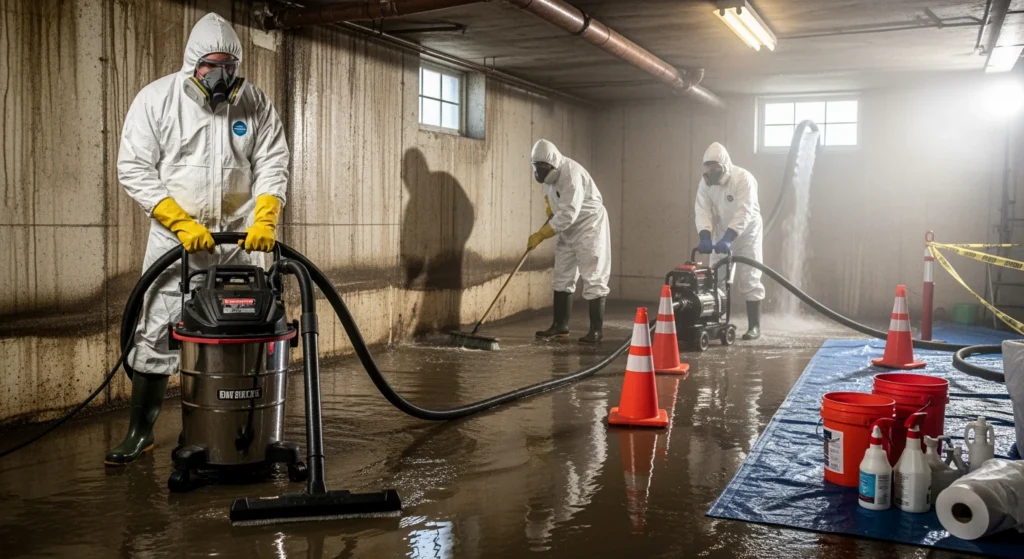
Professional teams arrive in full biohazard protection:
- Establish contamination zones; restrict access
- Set up decontamination stations for equipment and personnel
- Identify sewage source; ensure it’s plugged or diverted
- Verify plumbing systems are isolated (water/sewer lines shut off)
- Document all affected areas photographically
Phase 2: Water Extraction (Hours 2-8, depending on volume)
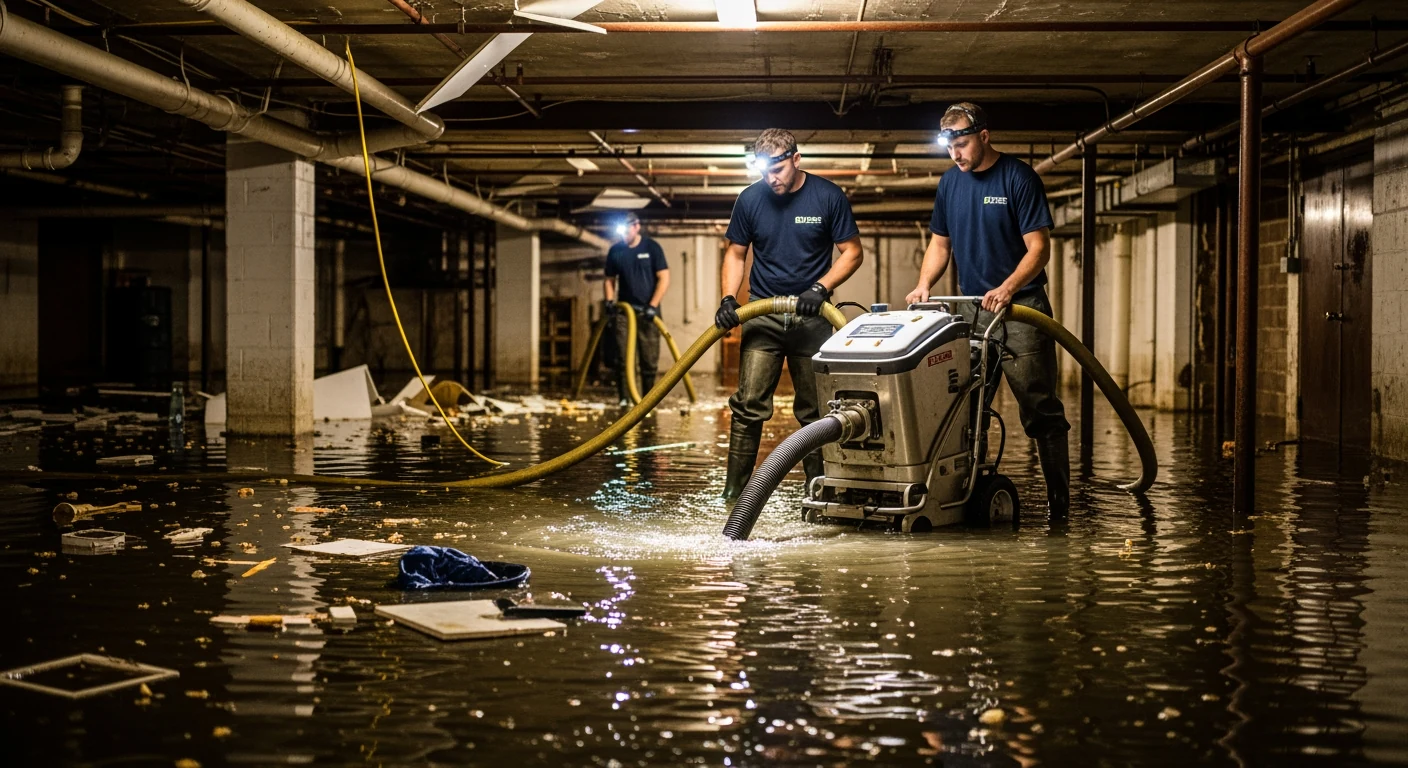
High-capacity water extraction equipment removes standing sewage:
- Industrial-grade pumps and wet vacuums remove bulk sewage
- All extracted water is disposed of through licensed hazardous waste protocols
- Equipment decontamination between phases prevents cross-contamination
- Final surface rinsing removes residual contamination
Phase 3: Material Removal and Decontamination (Days 2-5)
This phase is extensive because Category 3 water cannot be safely dried; affected materials must be removed:
- Drywall: All drywall in contact with sewage is removed (minimum 3 feet above visible water line)
- Flooring: Carpet, underlay, and flooring are completely removed
- Subfloors: If saturated, subfloors are removed to expose joists for inspection
- Insulation: All wet insulation is removed (cannot be dried)
- Cabinets and built-ins: Items in direct contact with sewage are removed and disposed of
- HVAC components: HVAC systems in contact zones are inspected; contaminated components are replaced
- All removed materials are double-bagged and disposed of through hazardous waste protocols
Phase 4: Professional Disinfection (Days 3-7)
After material removal, comprehensive chemical disinfection eliminates remaining pathogens:
- All remaining structural surfaces (studs, joists, concrete) are treated with hospital-grade disinfectants
- Multiple application cycles ensure thorough pathogen elimination
- Dwell time is observed (disinfectant sits on surface long enough to kill pathogens)
- Specialist-grade equipment applies disinfectants to ensure penetration and coverage
Phase 5: Structural Drying (Days 5-14)
Remaining structural materials are dried to prevent secondary mold growth:
- Industrial dehumidifiers remove moisture from cavity spaces
- Air movers dry exposed structural elements
- Continuous monitoring verifies moisture levels reach safe targets
- Process continues 24/7 until complete drying is verified
Phase 6: Verification and Clearance (Days 10-14)
Final inspection confirms safety:
- Professional verification confirms all pathogenic contamination is eliminated
- Moisture readings verify structural integrity
- Final clearance documentation provided for your records
- Home is certified safe for reoccupancy
Phase 7: Reconstruction (Weeks 3-8+)
After remediation clearance, reconstruction begins:
- New drywall installation
- Flooring replacement (hardwood, laminate, tile, carpet)
- Painting and finishing
- Fixture replacement if damaged
- Cabinet and built-in replacement
Sewage Backup Cleanup Costs
Sewage backup remediation is expensive due to hazmat protocols and extensive material removal. Typical costs:
- Minor sewage backup (1-2 rooms): $3,000-$8,000
- Moderate sewage backup (3-4 rooms): $8,000-$15,000
- Severe sewage backup (basement or whole house): $15,000-$40,000+
These costs cover hazmat remediation, material removal, disinfection, and drying. Reconstruction costs (replacing drywall, flooring, fixtures) are separate and additional.
Insurance Coverage
Important: Most homeowners insurance policies do NOT cover sewage backup unless you have an optional sewage backup endorsement. However:
- If backup resulted from a covered water event (storm, flood, burst pipe), coverage may apply
- If backup resulted from municipal system failure (backup caused by city sewer overflow), city may be liable
- Review your policy and contact your insurer immediately when backup occurs
Preventing Sewage Backups
Plumbing Maintenance
- Avoid flushing non-flushable items: Wet wipes, feminine products, paper towels, diapers cause clogs
- Dispose of grease properly: Never pour grease down drains; it accumulates and causes blockages
- Schedule professional drain cleaning: Every 1-3 years to prevent buildup
- Know sewer line location: Prevent digging near sewer lines; protect from tree root damage
Tree Root Management
- Plant trees away from sewer lines (minimum 5-10 feet, depending on tree type and sewer depth)
- Remove or treat trees with problematic roots if roots are actively penetrating sewer lines
- Schedule professional root barrier installation if tree root damage is recurring issue
Sump Pump and Backflow Prevention
- Install sump pump with check valve in basement or low-lying areas
- Install backflow preventers on all plumbing fixtures (check valves in water lines)
- Regular sump pump maintenance ensures functionality when needed
Consider Sewage Backup Insurance Endorsement
- Review your homeowners policy. Do you have sewage backup coverage?
- Add sewage backup endorsement if not included (typically $100-$200/year adds $5,000-$25,000 coverage)
- This is inexpensive insurance against catastrophic costs if backup occurs
Frequently Asked Questions
Is sewage backup covered by homeowners insurance?
Most policies don’t cover sewage backup unless you purchase an optional endorsement. However, if backup resulted from a covered water event (storm, flood), coverage may apply. Always check your policy and contact your insurer immediately.
Can I clean sewage backup myself?
Absolutely not. Sewage poses serious pathogenic hazards that require professional biohazard protocols. DIY cleanup creates severe health risks and may not meet legal/insurance requirements for proper remediation.
How long does sewage backup remediation take?
Typical timeline: 2-4 weeks for professional remediation (removal, disinfection, drying) plus 4-8+ weeks for reconstruction. Severe cases may take longer.
Is my home safe after sewage backup is cleaned?
Yes, if remediation followed professional protocols. Professional companies provide clearance documentation confirming pathogenic contamination is eliminated. Your home is certified safe for reoccupancy.
Can I stay in my home during sewage backup remediation?
Not during the hazmat removal and disinfection phases. Most homeowners relocate during the 2-4 week remediation period. Temporary housing is typically covered by insurance if you have a covered event.
What causes most sewage backups?
Tree roots (most common), grease buildup, structural defects in sewer lines, and heavy rain overwhelming municipal systems are primary causes. Professional inspection identifies your specific cause.
Conclusion: Sewage Backup Requires Professional Remediation
Sewage backup cleanup is not a DIY project or minor inconvenience. The health hazards are real, immediate, and potentially life-threatening. Raw sewage contains dozens of pathogenic organisms, parasites, viruses, and toxic chemicals that cause serious illness.
Professional remediation is not just recommended—it’s essential. Proper remediation requires biohazard protocols, extensive material removal, professional disinfection, and structural drying to eliminate pathogenic contamination and restore your home safely.
Upper Restoration provides 24/7 emergency sewage backup remediation services throughout Long Island, all five boroughs of NYC, and the surrounding tri-state area. Our IICRC-certified, hazmat-trained teams respond immediately with full biohazard containment and professional remediation protocols.
If you’re experiencing sewage backup, contact Upper Restoration immediately. Don’t wait. Time is critical to prevent further contamination spread and protect your family’s health. Call now for emergency response or visit upperrestoration.com to learn more about our sewage backup remediation services.
About Upper Restoration
Upper Restoration is a full-service property restoration company serving New York City and Long Island. Licensed by the NYC Department of Labor for mold remediation and the NYC Department of Environmental Protection for asbestos abatement, Upper Restoration provides 24/7 emergency response for water damage, fire damage, mold contamination, asbestos hazards, and storm damage. Our IICRC-certified technicians serve all five NYC boroughs — Manhattan, Brooklyn, Queens, the Bronx, and Staten Island — as well as Nassau County and Suffolk County communities across Long Island.