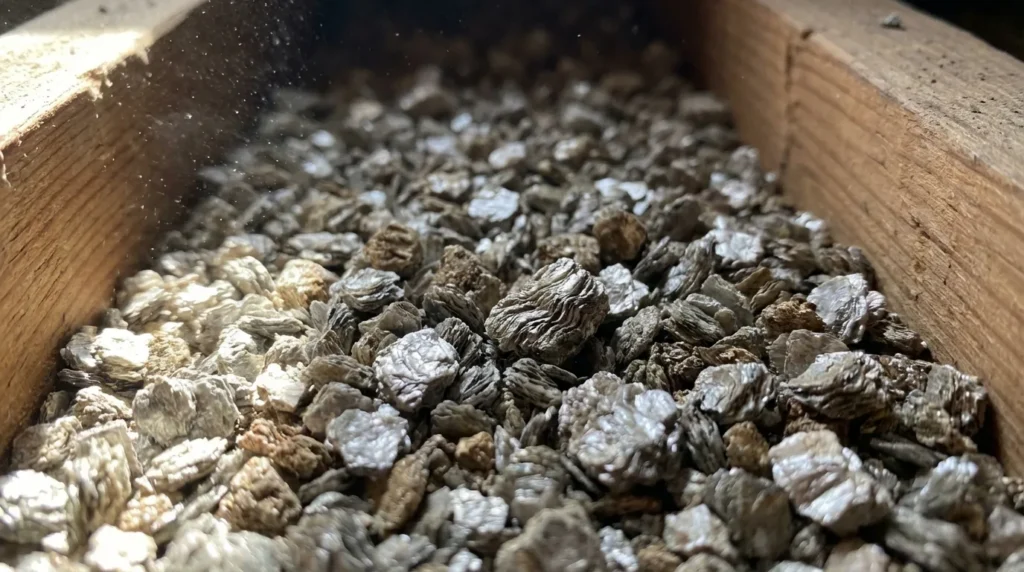
Vermiculite attic insulation is one of the most misunderstood asbestos hazards in Long Island homes. Unlike pipe insulation or ceiling tiles, vermiculite doesn’t look like a building material — it looks like a pile of small pebbles. And unlike other asbestos-containing materials that were deliberately formulated with asbestos, vermiculite became contaminated because of where it was mined, not because asbestos was intentionally added.
The result is an attic insulation that sits in tens of thousands of Long Island homes, often under decades of stored boxes and personal belongings, releasing asbestos fibers every time someone enters the attic. This guide shows you exactly what vermiculite attic insulation looks like, how to distinguish it from safe alternatives, and what to do if you find it.
What Vermiculite Attic Insulation Looks Like: Close-Up
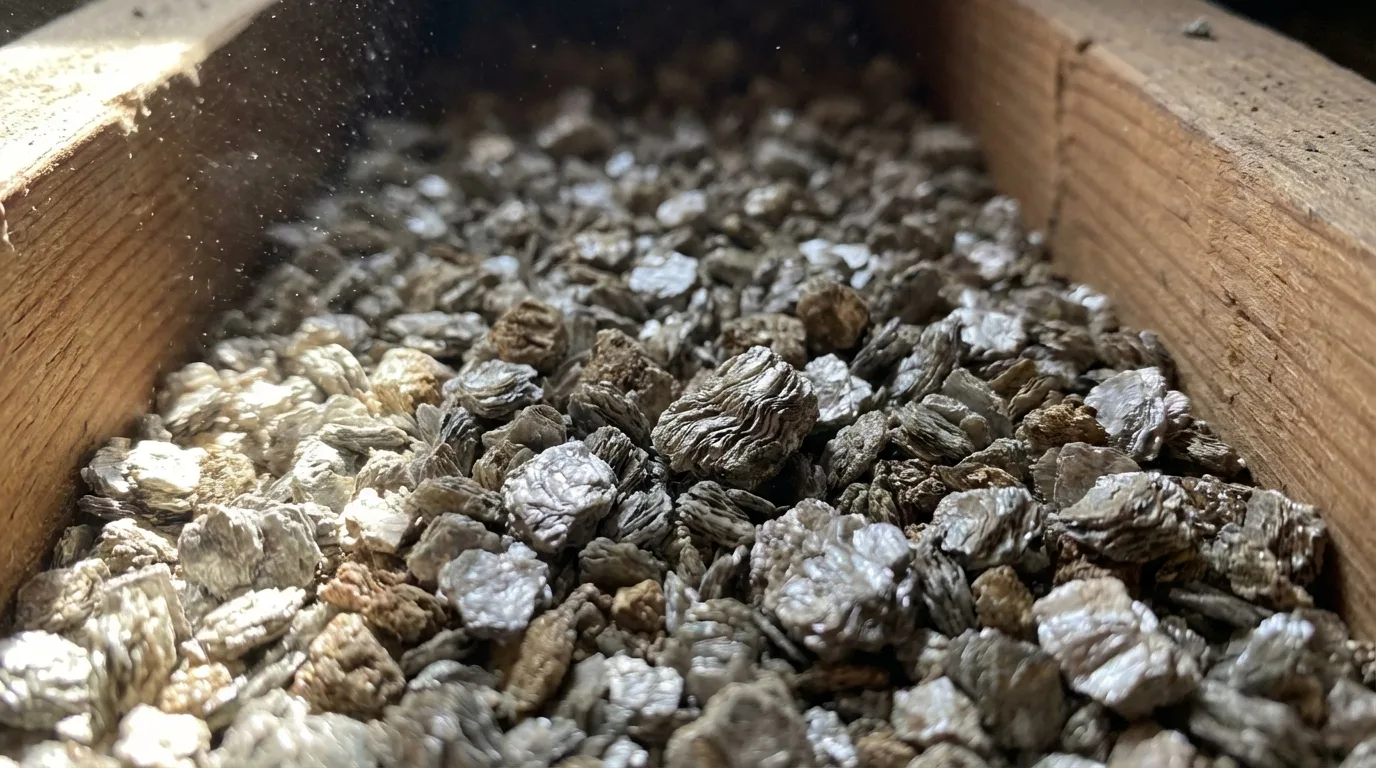
At close range, vermiculite insulation has a very specific appearance that distinguishes it from other loose-fill insulation types. The individual particles are:
Pebble-shaped, not fluffy. Vermiculite particles are solid, irregular pebbles — not the cotton-like fluff of cellulose insulation or the fibrous strands of fiberglass. They have weight and density when you handle them (with gloves on — do not handle vermiculite without gloves and respiratory protection).
Gold-brown to silver-gray color. Fresh vermiculite has a gold or bronze color. Aged attic vermiculite — which has been in place for decades — shifts toward silver-gray with tan undertones. The color variation within a single handful is part of the identification signature.
Accordion layered surface. Each pebble has a distinctive layered surface structure — like a tiny accordion or book of pages — that results from the thermal expansion process used to produce it. This layered texture is the single most reliable visual identifier of vermiculite versus other loose-fill insulation.
The Full Attic View: What Vermiculite Looks Like in Context
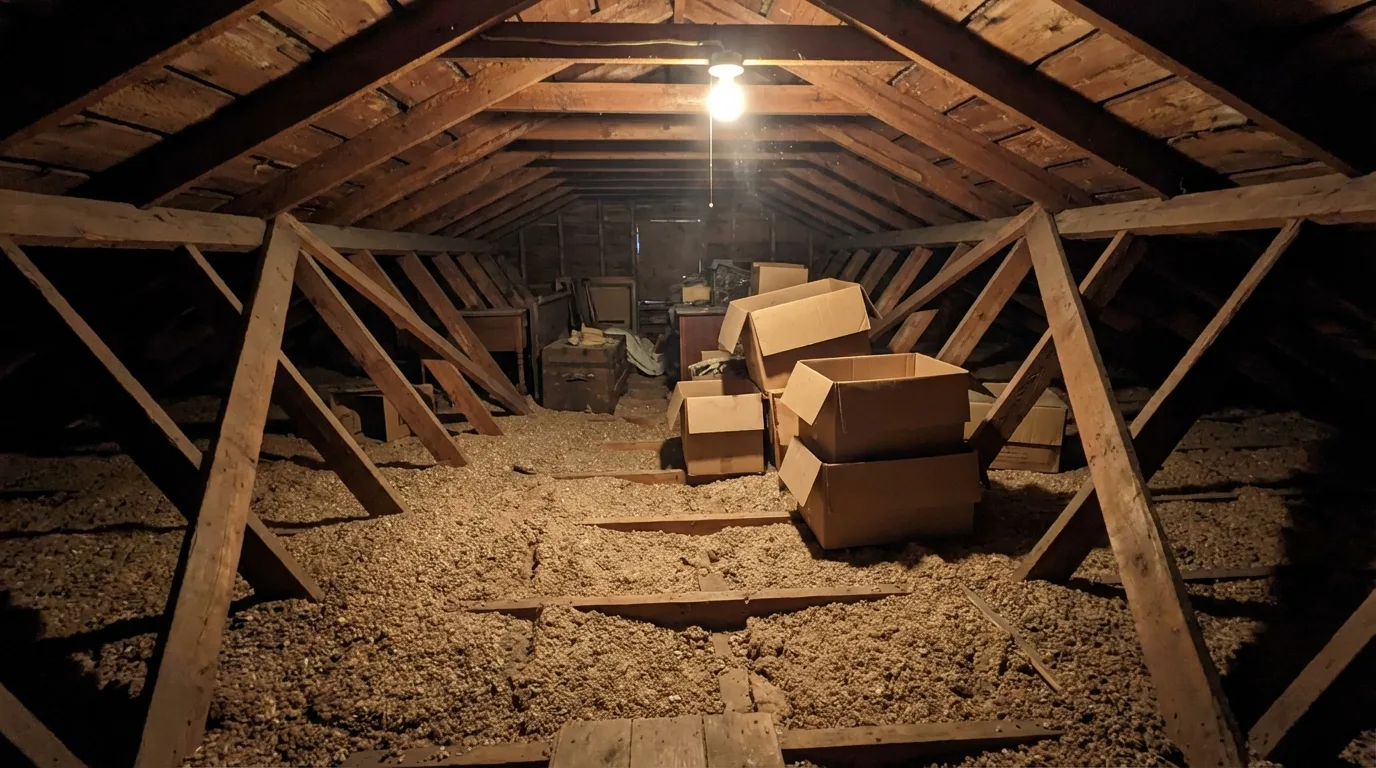
From a distance, a vermiculite-insulated attic floor looks like a gravel or pebble surface between the wood joists. The coverage is typically 3 to 6 inches deep, settling over decades to fill the joist cavities. The gray-silver-tan color of the insulation against the dark wood of the floor joists is the characteristic attic view.
The scenario in the image above — cardboard boxes and personal belongings stored directly on top of vermiculite insulation — is the highest-risk everyday exposure situation for Long Island homeowners. Every time boxes are moved, dragged across the surface, or stacked and unstacked, the vermiculite pebbles are disturbed. Disturbing vermiculite releases asbestos fibers. The person moving the boxes is breathing those fibers in an enclosed, often poorly ventilated attic space.
This is why the EPA’s guidance on vermiculite is unambiguous: do not disturb it, do not store items in the attic, do not use the attic as a living or workspace, and consult a licensed asbestos professional before taking any action.
How to Identify Vermiculite: The Gloved Hand Test
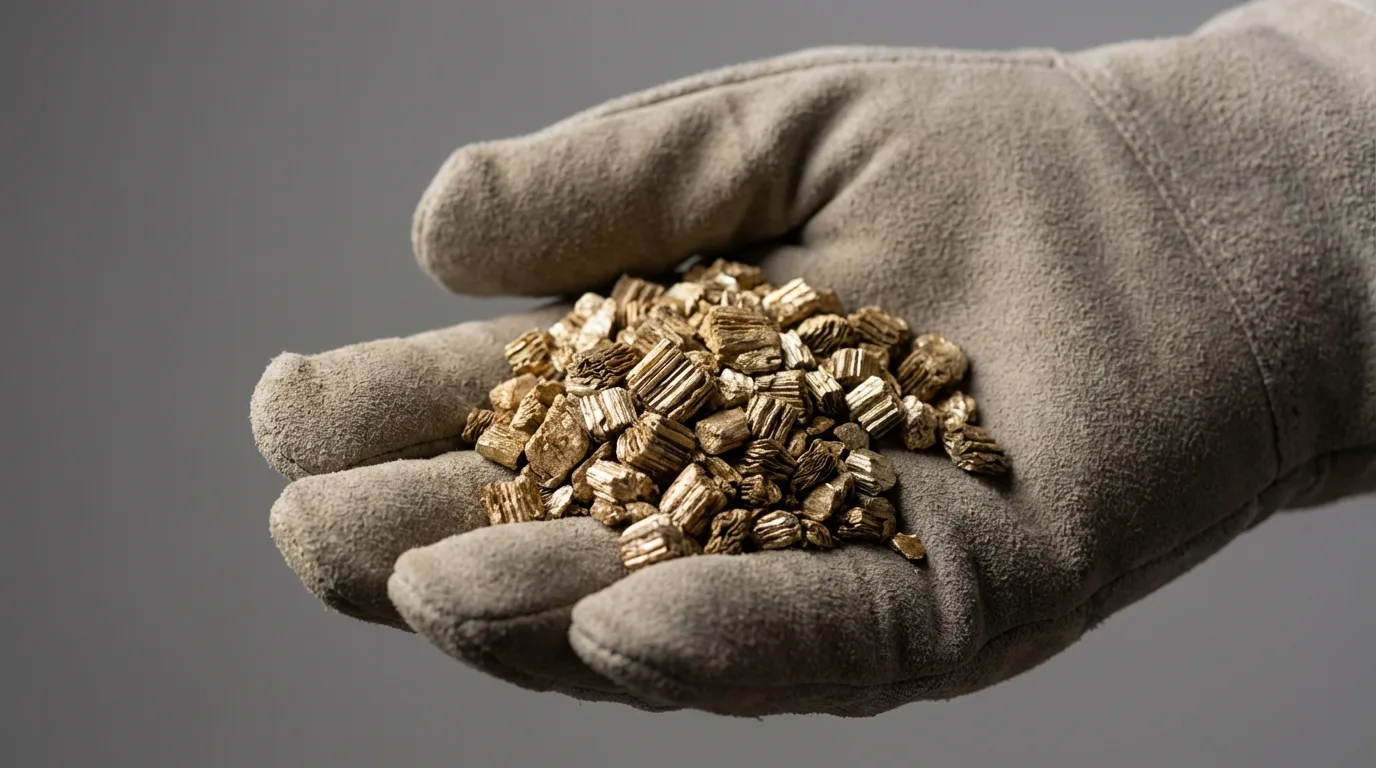
If you need to visually confirm whether the loose-fill insulation in your attic is vermiculite, the gloved hand examination is the standard identification approach — but only if you are already wearing appropriate personal protective equipment. Do not reach into unknown attic insulation with bare hands.
With heavy gloves and an N100 respirator in place, scoop a small sample and examine it in your palm. Vermiculite is immediately recognizable by the accordion-layered surface on each pebble — under any reasonable light, the individual layers are visible as thin, parallel striations running across the pebble surface. No other common attic insulation has this structure. Cellulose is soft and fibrous. Fiberglass is fluffy and stranded. Rock wool is fibrous but lighter. Vermiculite is uniquely dense, pebble-shaped, and layered.
Vermiculite vs. Perlite: The Critical Identification Difference
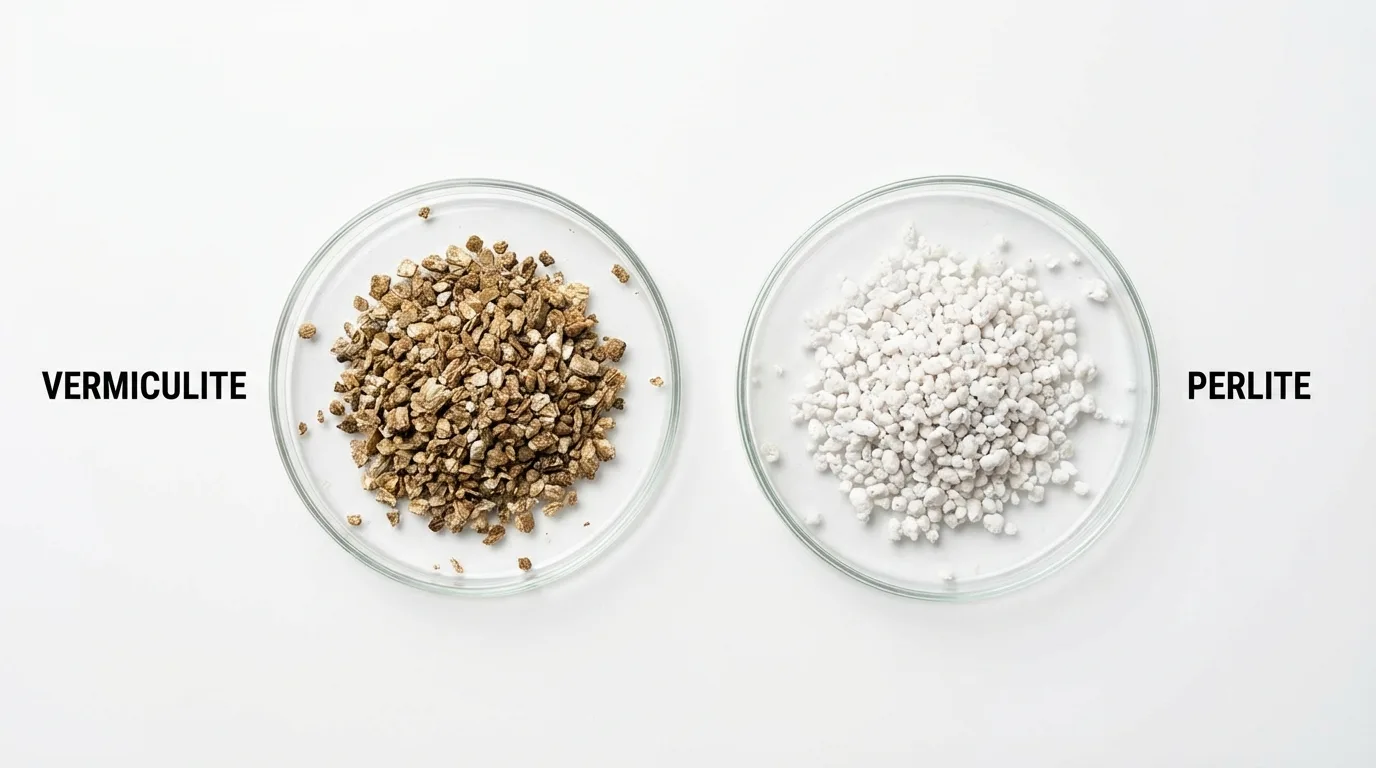
The most important identification comparison for homeowners is vermiculite versus perlite, because both are loose-fill granular materials that can appear in attics and planting mixes. The differences are visually clear once you know what to look for:
Vermiculite is brown to gold to silver-gray, with an irregular pebble shape and the distinctive accordion-layered surface. It has a dull, matte finish. The color range varies within a single sample.
Perlite is white to off-white, with a more rounded, bubbly shape and a smooth, popcorn-like surface texture. It is lighter and less dense than vermiculite. Perlite has no known asbestos contamination history and is safe to handle.
If what you find in your attic matches the left dish in the image above — brown, irregular, layered pebbles — treat it as vermiculite and treat vermiculite as potentially containing asbestos until tested.
Disturbed Vermiculite: The Highest-Risk Condition
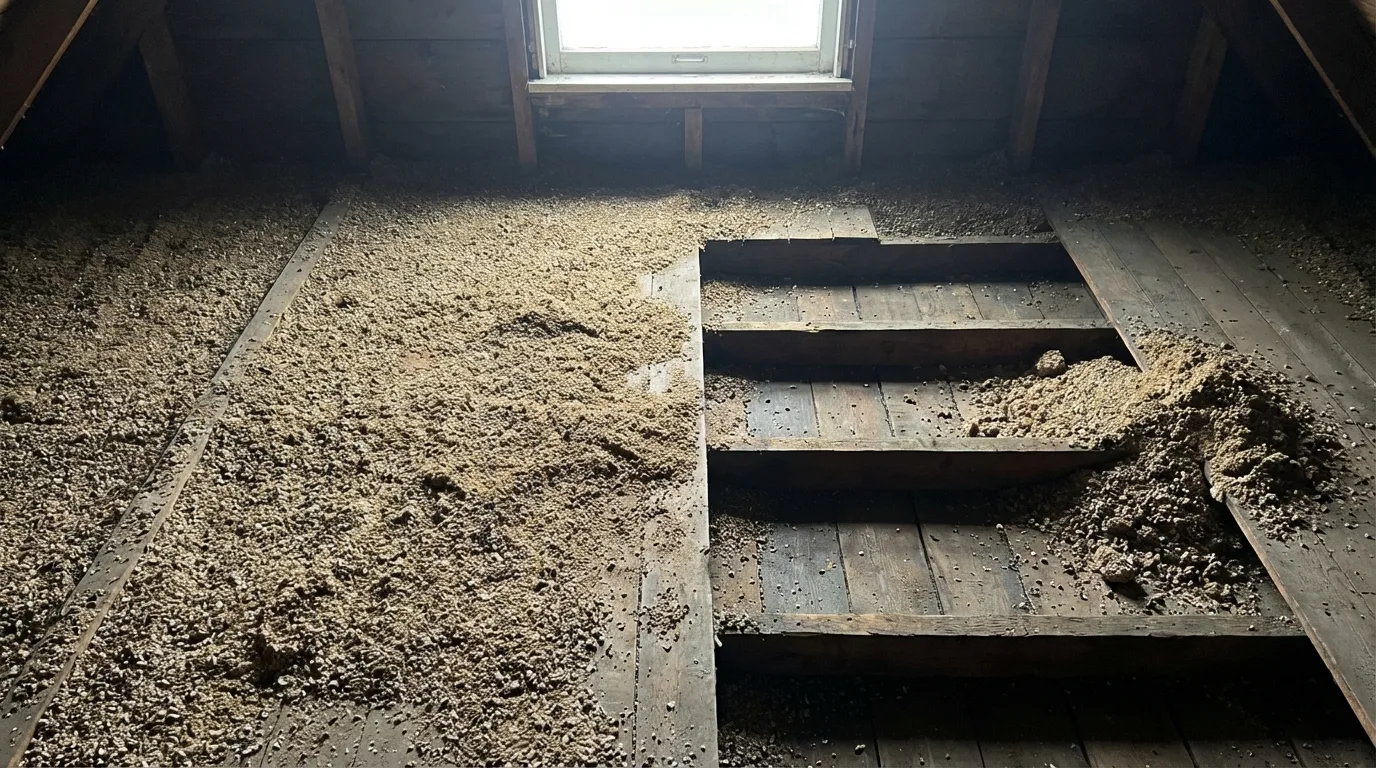
Once vermiculite has been disturbed — moved, pushed aside, swept, or displaced by stored items — the asbestos fiber release that has already occurred cannot be undone. The disturbed condition in the image above shows a section of attic floor where the insulation has been cleared from the joists. Every action that moved this material released fibers into the attic air space.
The critical point: pushing the insulation back does not remediate it. The fibers released during the disturbance are now in the air, on surfaces, and in any materials stored in the attic. Once vermiculite has been significantly disturbed, the appropriate response is professional remediation — not attempting to restore the insulation to its original position.
Long Island Housing: Where Vermiculite Is Found
Vermiculite attic insulation is concentrated in Long Island homes built or insulated between 1940 and 1985, with the highest density in the postwar residential build-out of Nassau County. Levittown — the largest planned community in American history, built 1947–1951 — is a particular concentration area. The original Levitt homes were built without attic insulation, but many were retrofitted with vermiculite insulation during the energy-consciousness period of the 1970s, when Zonolite was heavily marketed as an affordable attic insulation upgrade.
Similar concentrations exist throughout Hicksville, Westbury, Garden City Park, New Hyde Park, and the broader Nassau County postwar residential developments. In Suffolk County, homes in Babylon, Islip, and western Brookhaven townships that were retrofitted with blown-in attic insulation in the 1960s and 1970s are also high-probability sites.
The practical test: if your home was built before 1985, has an attic, and you have never had the insulation professionally identified, it is worth an inspection before any attic access, home renovation, or real estate transaction.
What To Do If You Have Vermiculite Attic Insulation
The EPA’s guidance is direct: if you have vermiculite attic insulation, assume it contains asbestos and act accordingly. Do not disturb it. Do not use the attic for storage. Do not have renovation work done that requires attic access without first having the insulation professionally assessed and abated if necessary.
Upper Restoration conducts vermiculite attic insulation testing and abatement throughout Nassau and Suffolk County and the five boroughs. Abatement typically involves contained wet removal and HEPA vacuuming of all residual material, followed by post-abatement air clearance testing. See our asbestos removal cost guide for 2026 pricing on vermiculite abatement, review our Long Island asbestos abatement services, or schedule a free consultation.
Frequently Asked Questions: Vermiculite Attic Insulation
How do I know if my attic insulation is vermiculite?
Vermiculite insulation is a loose-fill pebble material, gold-brown to silver-gray in color, with an accordion-layered surface structure on each pebble. It sits between attic floor joists at a depth of 3 to 6 inches. If your attic insulation is pebble-like rather than fluffy or fibrous, and your home was built or renovated before 1985, it is very likely vermiculite and should be tested for asbestos before any disturbance.
Is all vermiculite attic insulation contaminated with asbestos?
Not all vermiculite contains asbestos, but approximately 70% of vermiculite sold in the US before 1990 came from the Libby, Montana mine that was contaminated with tremolite asbestos. Because it is impossible to distinguish contaminated from non-contaminated vermiculite by appearance alone, the EPA recommends treating all pre-1990 vermiculite attic insulation as potentially asbestos-containing until laboratory tested.
Can I store things in my attic if it has vermiculite insulation?
No. The EPA advises against using an attic with vermiculite insulation for storage. Every time items are moved across or through vermiculite, the material is disturbed and fibers are released. The enclosed attic space concentrates those fibers. Until the vermiculite is professionally remediated, attic access should be minimized and never done without respiratory protection.
What is the difference between vermiculite and perlite?
Vermiculite is brown to gold-gray, with an irregular pebble shape and distinctive accordion-layered surface texture. Perlite is white to off-white, with a rounded, bubbly, popcorn-like surface. Perlite has no known asbestos contamination history. If your attic loose-fill is brown and layered rather than white and round, it is vermiculite.
How much does vermiculite attic insulation removal cost on Long Island?
Vermiculite attic insulation removal on Long Island typically runs $3,000 to $8,000 for a standard ranch or cape cod attic, depending on square footage, depth of insulation, and attic accessibility. The work requires full containment, wet removal methods, HEPA vacuuming of residual material, and post-abatement air clearance testing. See our full cost guide for 2026 pricing.
Does my homeowner’s insurance cover vermiculite removal?
Standard homeowner’s insurance policies in New York generally exclude asbestos removal as a routine maintenance expense. Coverage may apply if the vermiculite is disturbed during a covered event such as a fire, storm damage, or sudden structural collapse. Ask Upper Restoration about documentation for insurance adjuster support if your vermiculite situation is connected to a covered claim.