
Mold Remediation in Valley Stream, NY
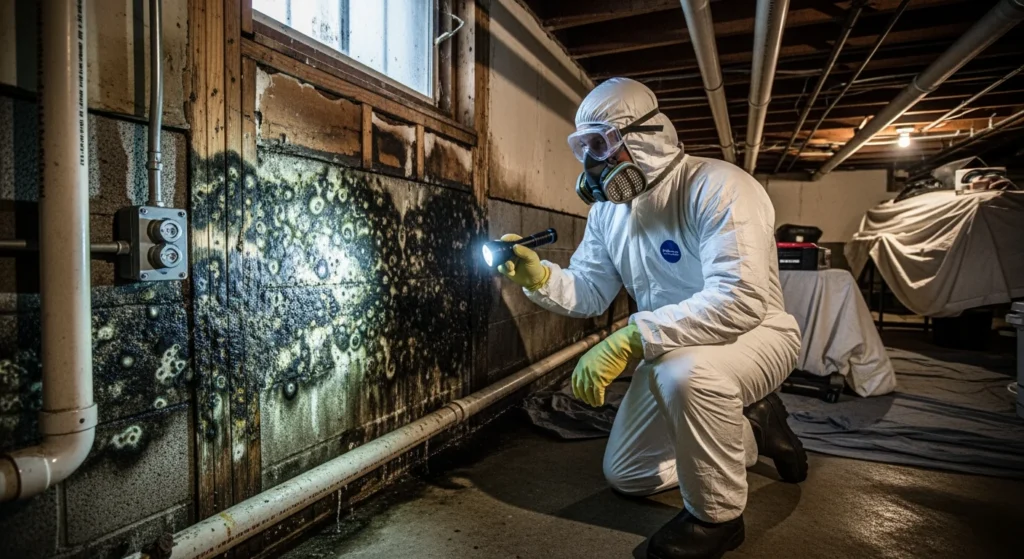
Valley Stream’s oldest housing stock — some built before 1940 — carries mold risk from historic building assemblies without modern moisture management, while its post-war Cape Cod and Colonial stock carries the standard Nassau County attic and basement mold profile.
Mold Remediation in Freeport, NY
Freeport’s canal community carries the highest mold discovery rate from post-Sandy incomplete remediation of any Nassau County village — the combination of Category 3 bay water flooding, rushed post-storm surface cleaning rather than full demolition protocol, and summer humidity cycling has produced hidden wall cavity mold in thousands of Freeport canal homes over the decade since 2012.
Mold Remediation in Hicksville, NY
Hicksville’s dense split-level and Colonial stock carries endemic below-grade family room mold from condensation against uninsulated block foundation walls — the most common residential mold scenario in interior Nassau County — alongside the standard Cape Cod attic mold pattern in the community’s older housing.
Mold Remediation in Levittown, NY
Levittown attic mold is endemic — the original 1947-1951 Cape Cod’s steep-pitched roof, inadequate eave ventilation, and bathroom fans vented into attic spaces have produced Cladosporium colonization in the majority of un-remediated Levittown attics over 75 years of humidity cycling.
Mold Remediation on Shelter Island, NY
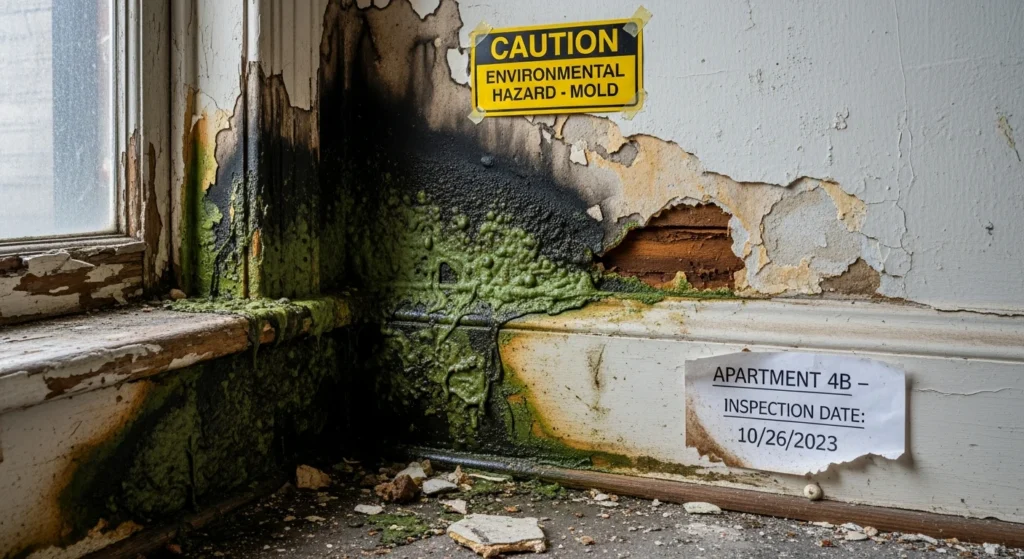
Shelter Island’s complete encirclement by Peconic Bay waters creates year-round ambient humidity above the Long Island average, making it the highest-humidity residential environment on Long Island — and the township where mold remediation faces the unique logistical constraint that every contractor, every piece of equipment, and every disposal container must cross by ferry.
Mold Remediation in the Town of Southold, NY
Southold’s North Fork mold profile combines seasonal vacancy losses similar to East Hampton’s pattern with the unique preservation challenge of the township’s 17th and 18th-century village structures, where mold in original timber framing and historic masonry assemblies requires approaches that differ fundamentally from modern construction remediation.
Mold Remediation in the Town of Riverhead, NY
Riverhead’s mold remediation profile is anchored by Peconic River flooding in its historic downtown — producing freshwater mold events in older commercial and residential structures — and by the township’s agricultural and rural residential stock where mold from structural moisture in older farm buildings and wood-framed cottages follows patterns distinct from suburban Long Island.
Mold Remediation in the Town of Southampton, NY
Southampton’s mold remediation landscape combines East Hampton’s seasonal vacancy mold risk in its high-value Hamptons corridor with the significant working-class south shore communities of Hampton Bays and Flanders where the mold profile more closely resembles western Suffolk’s recurring flood and aging infrastructure pattern.
Mold Remediation in the Town of East Hampton, NY
East Hampton’s mold remediation landscape is dominated by a pattern virtually unique on Long Island: high-value seasonal homes left vacant for extended winter periods without adequate humidity control, where a slow leak or failed heating system produces months of undiscovered moisture accumulation and mold that rivals the most severe single-event losses in scope and cost.
Mold Remediation in the Town of Smithtown, NY
Smithtown’s mold remediation profile is defined by its interior suburban character — the Nissequogue River watershed creates freshwater flooding events that produce different mold risk than the coastal bay water pattern, and the township’s 1960s–1980s split-level and Colonial housing stock carries the standard pre-1980 attic and below-grade family room mold vulnerabilities.
