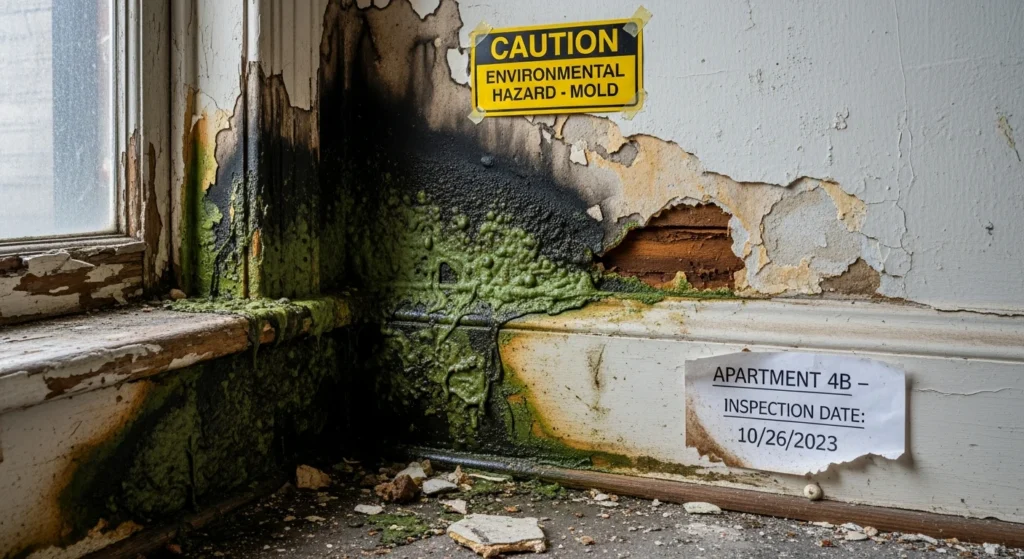
The Town of Southold shares one key mold risk driver with East Hampton to the south: a significant seasonal population that leaves homes vacant for extended periods without adequate humidity and leak monitoring. The North Fork’s year-round farming and tourism economy means Southold has more permanent residents relative to its seasonal base than the Hamptons, but the retirement and second-home population that owns properties in Orient, East Marion, and the Sound-front communities of Mattituck and Cutchogue creates the same vacancy-period mold risk that makes the East End’s seasonal markets distinctive. For the regulatory framework, see the Long Island Mold Remediation Master Guide.
Greenport Village: Historic Structures and Mold
Greenport is one of Long Island’s oldest incorporated villages, with a maritime history dating to the whaling era. The village’s historic building stock includes 19th-century commercial buildings, sea captain’s homes, and workers’ cottages that represent some of the most historically significant residential architecture in Suffolk County. Mold in Greenport’s historic structures is not an anomaly — it is an expected consequence of buildings that have experienced more than 150 years of humidity cycling, moisture events, and the gradual failure of original building assemblies that lack any modern moisture management infrastructure.
The mold species encountered in Greenport’s historic building stock typically includes Cladosporium on original timber framing and sheathing (the dominant wood-feeding species), Penicillium/Aspergillus in areas with repeated moisture cycling, and in structures with documented chronic moisture histories, occasional Stachybotrys in floor assemblies and below-grade spaces. Article 32 remediation in Greenport’s historic buildings requires coordination between the licensed assessor’s work plan and the historic preservation requirements of the Village of Greenport’s building authority.
Orient and Peconic Estuary Exposure
Orient — at the extreme tip of the North Fork, entirely surrounded by Peconic Bay waters except for its narrow connection to the mainland — faces the most intense bidirectional tidal exposure in the township. Orient’s compact village, with historic Greek Revival and Federal-style homes dating to the early 19th century, sits at low elevation with bay exposure on three sides. Mold in Orient’s historic housing results from both tidal surge events and the chronic ambient humidity that the village’s exposed peninsular position produces throughout the year — even winter ambient humidity in Orient exceeds the interior Long Island average because the village never loses proximity to open water.
Cost Benchmarks
- Greenport historic commercial or residential — mold in original timber assembly: $8,000–$40,000 depending on extent and historic preservation requirements.
- Seasonal home vacancy mold (North Fork — discovered at spring opening): $10,000–$60,000+ depending on duration of undiscovered moisture exposure.
- Standard Southold residential (1960s–1990s suburban construction): $3,500–$10,000 for standard Article 32 residential scope.
See also: Hazardous Material Remediation on Long Island