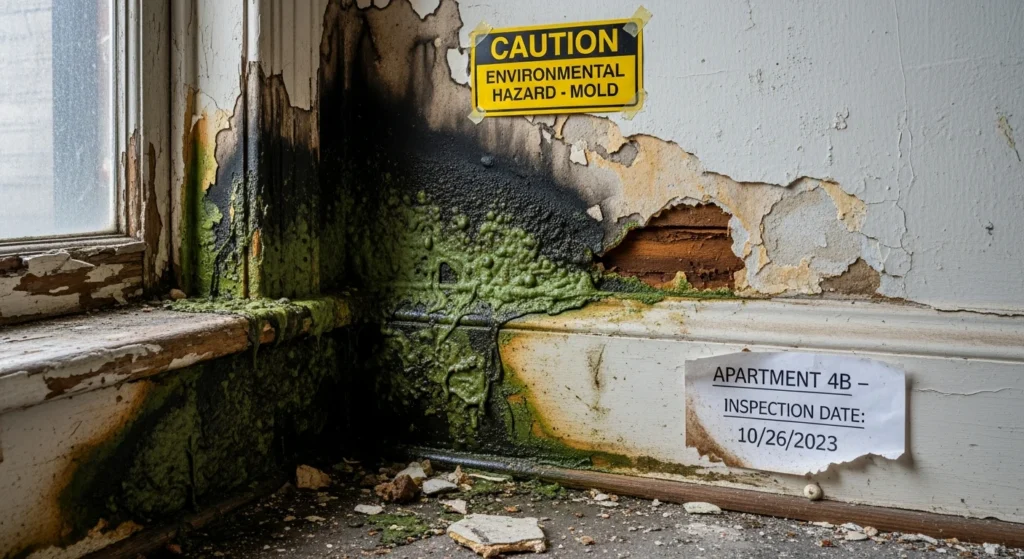
Riverhead’s mold landscape is shaped by its unique position at the head of the Peconic River and the bay system. The Peconic River’s documented flooding of downtown Riverhead during Sandy, and in subsequent significant rainfall events, produces mold risk in the commercial and residential structures along the river corridor that is rooted in freshwater flooding rather than the coastal surge events that define mold risk to the west. Riverhead’s agricultural character and its more rural residential stock also contribute mold scenarios — older farm structures, historic village buildings, and rural cottages with wood-framed construction and limited mechanical systems — that differ significantly from Nassau County’s dense Cape Cod suburbs. For the regulatory framework, see the Long Island Mold Remediation Master Guide.
Peconic River Corridor: Downtown Riverhead Mold
Downtown Riverhead’s lowest-elevation commercial and residential blocks along the Peconic River face recurring freshwater flooding that produces mold in mixed-use building stock. Historic commercial buildings along Main Street in Riverhead — some dating to the 19th century — have basements and below-grade spaces that have been repeatedly wetted by Peconic flooding and may contain decades of accumulated mold in original brick, stone, and timber assemblies. These structures require mold assessment approaches adapted to historic commercial construction: bulk sampling that accounts for the variety of original building materials, and remediation protocols that preserve historic character while achieving Article 32 clearance standards.
Agricultural and Rural Residential Mold
Riverhead’s North Fork agricultural landscape includes farm structures — barns, storage buildings, packing houses — with varying degrees of moisture management, and rural residential cottages that were built as seasonal or low-cost housing without the thermal and moisture control systems of modern construction. Mold in agricultural structures is common and often extensive because these buildings experience wide temperature swings, high humidity from stored produce and livestock, and limited mechanical ventilation. While most agricultural mold is not within Upper Restoration’s primary residential and commercial remediation scope, the rural residential properties in Riverhead’s Calverton, Aquebogue, and Jamesport areas carry legitimate residential mold needs from aging construction and limited moisture management infrastructure.
Wading River: Sound Shore Mold Risk
Wading River on Riverhead’s northern border with Brookhaven township faces Long Island Sound shore humidity amplification similar to the north shore communities west along the Sound corridor. The 1970s–1990s development of Wading River’s residential neighborhoods produced Colonial and split-level construction that now carries the standard post-war mold risk profile for that era: attic mold in inadequately ventilated roofs, below-grade family room mold in split-levels, and humid basement ambient mold during the summer season.
Cost Benchmarks
- Downtown Riverhead historic commercial — Peconic River flood mold: $8,000–$35,000 depending on extent of historic fabric involvement and scope of affected commercial space.
- Rural Riverhead residential — aging construction mold: $4,000–$15,000 for standard residential Article 32 scope in older rural construction.
- Wading River standard suburban mold: $3,500–$9,000 for attic or below-grade scope in 1970s–1990s construction.
See also: Hazardous Material Remediation on Long Island