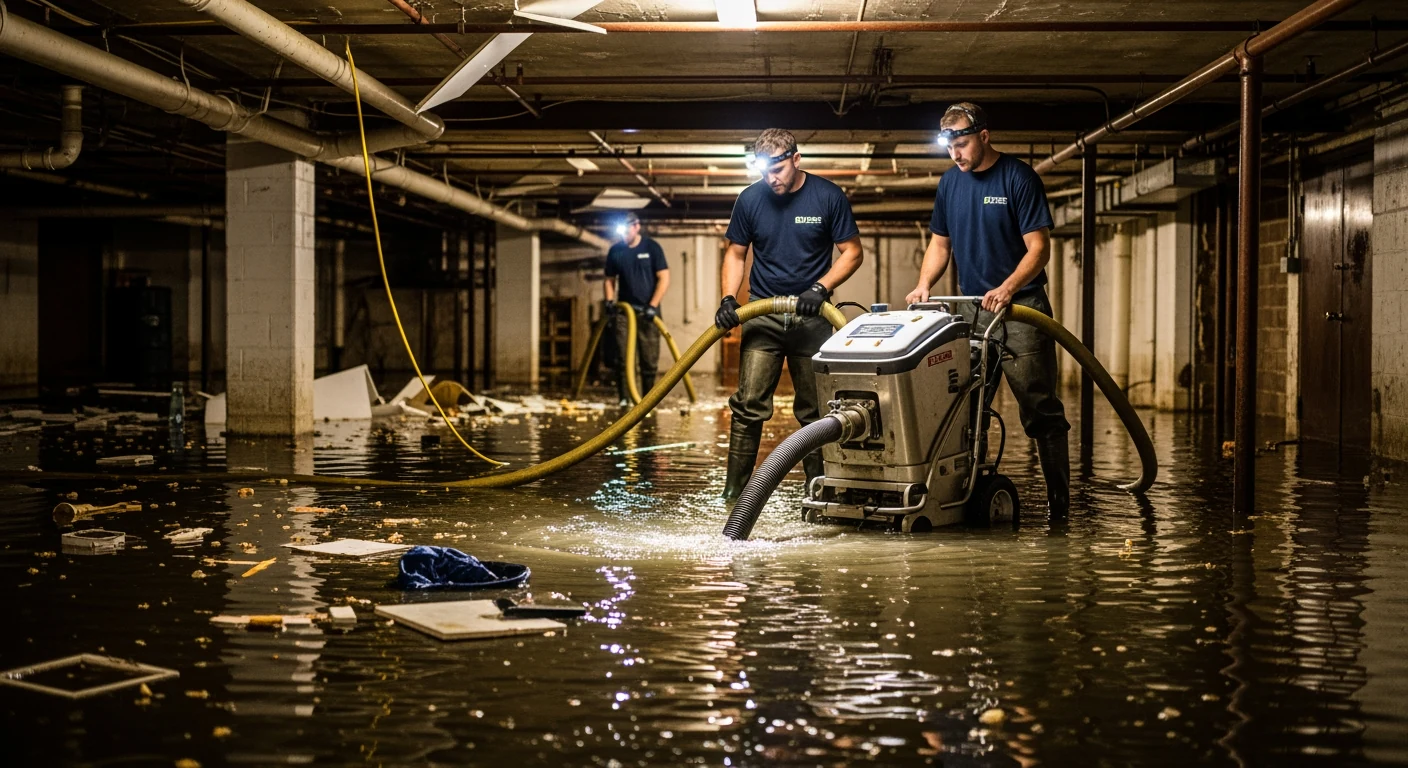
Burst pipes are the most common winter water emergency in Long Island homes, and the response in the first 48 hours determines more about the ultimate scope and cost of restoration than almost any other factor. Water damage that is extracted and dried within 24 to 48 hours of a burst pipe can often be remediated without significant demolition. The same loss discovered four or five days after the event — a common scenario in vacation homes or with residents who travel — requires substantially more extensive work.
Why the First Hours Matter
Water migrates continuously through building materials. A burst supply line releasing 8 gallons per minute (typical for a 3/4-inch line) can introduce more than 10,000 gallons of water into a structure before the main supply is shut off. This water follows the path of least resistance — it flows through floor assemblies, runs along joists, saturates insulation, and migrates across floor plates into wall cavities. The further water travels and the longer it remains in contact with building materials, the more material must be removed rather than dried in place.
Shutting Off the Water Supply
The first action in any burst pipe event is shutting off the water supply. Every homeowner should know the location of the main water shutoff for their home — this is not information to be searching for while water is flowing into the structure. For Long Island homes on municipal water, the main shutoff is typically at the water meter location, either in the basement, crawl space, or utility area. Older gate valve shutoffs may not fully stop water flow if they have not been used for years; if the shutoff is not working effectively, call the utility to shut off at the street.
What Professional Assessment Reveals
After extraction of standing water, professional moisture mapping defines the actual scope of the loss. Thermal imaging reveals wet wall cavities, wet subfloor systems, and affected insulation that is invisible to visual inspection. This mapping determines which materials can be dried in place and which must be removed. A properly performed moisture assessment prevents both over-remediation (removing dry material unnecessarily) and under-remediation (leaving wet material that will develop mold).
Winter-Specific Complications
Burst pipe losses in winter present specific complications that summer losses do not. Re-freezing of wet structural components before they are fully dried is a risk when exterior temperatures are below freezing and HVAC is interrupted. Drying equipment that relies on ambient air dehumidification is less efficient in cold conditions. Temporary heating to maintain drying conditions adds to project cost and must be maintained continuously until drying is complete.
Frequently Asked Questions
Does homeowners insurance cover burst pipe damage in Long Island?
Yes. Sudden and accidental pipe bursts are a covered peril under standard homeowners insurance. The damage caused by the water release is covered, but the cost of repairing or replacing the pipe itself is generally not covered unless a specific endorsement exists. Gradual leaks or leaks caused by deferred maintenance may be excluded.