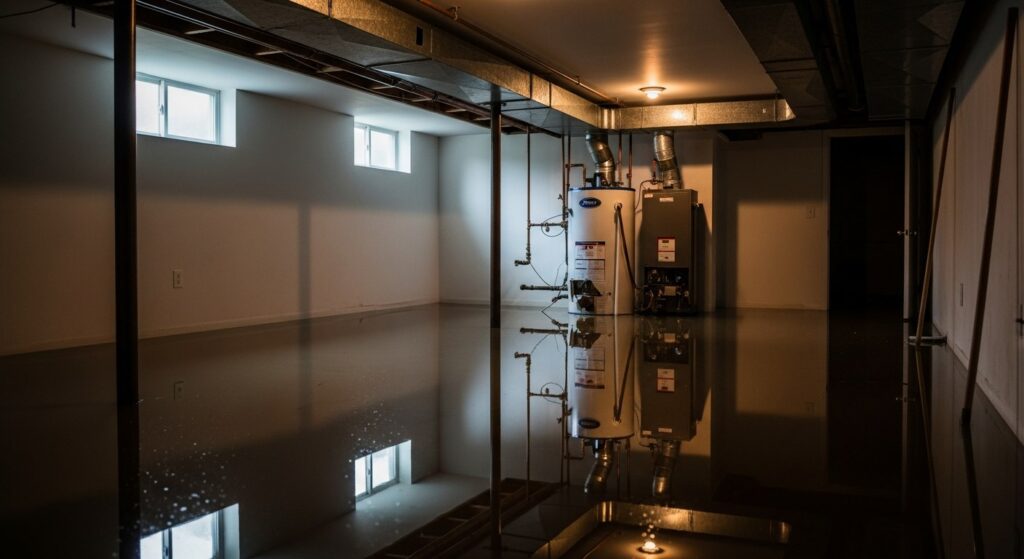
The first 24 hours of a water emergency determine almost everything about the restoration that follows. Decisions made and not made in this window decide whether the job is a routine dry-out or a multi-month rebuild. Here’s what actually happens, hour-by-hour, when a professional emergency response team arrives.
Hour 0-1: The call
The homeowner calls. The dispatcher gathers basic information: location, type of water (clean supply line, gray water, sewage, external flooding), volume, time of discovery, and any active hazards. The team is dispatched with equipment matched to the scenario.
What the homeowner should be doing in parallel: locate and turn off the water source if possible. Photograph everything before any cleanup begins. Move undamaged contents away from the wet area. Open windows if weather allows. Open a claim with the insurance carrier.
Hour 1-3: Arrival and initial assessment
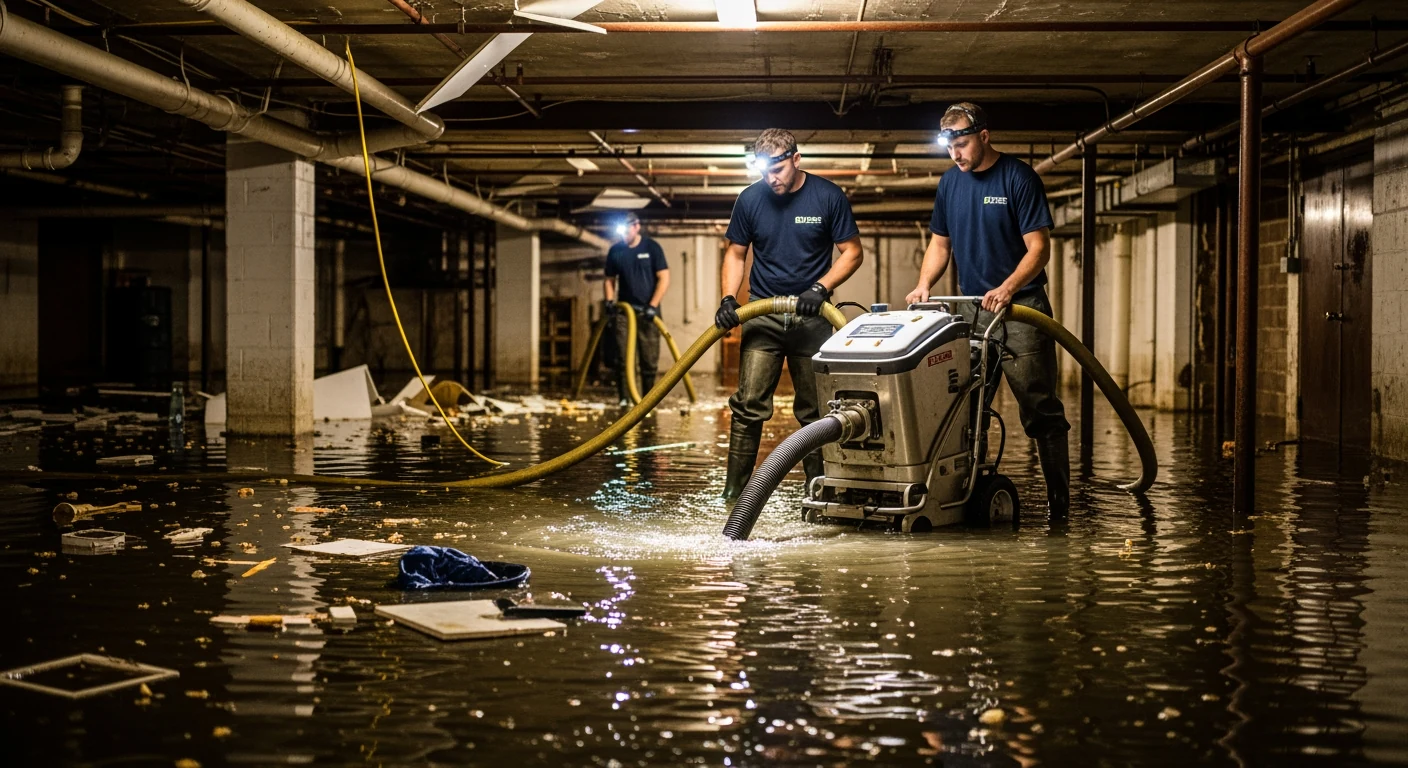
The response team arrives, typically with a truck-mounted extraction unit, dehumidifiers, air movers, moisture meters, and PPE matched to the water category. The first task on site is a rapid safety walk: power isolation if water is near outlets or fixtures, structural integrity check, and identification of any hazardous materials present.
The lead technician walks the affected area with a moisture meter and thermal camera, mapping the saturation. The output is a moisture map that defines the scope of work. This map is referenced throughout the dry-out to track progress.
Hour 3-6: Water extraction
Standing water is removed first, with truck-mounted extractors capable of high-volume removal. Carpet padding, if present and saturated, is typically removed at this stage; carpet itself may be lifted, extracted from the back, and either restored or replaced depending on condition and water category.
For Category 1 (clean water) events, extracted water is straightforward to dispose of. For Category 2 and 3 events, the water is hazardous waste with specific disposal protocols.
Hour 6-12: Demolition decisions and material removal
By this point, the team has enough information to make demolition decisions. Drywall that is saturated and unlikely to dry in place is cut out — typically four feet up from the floor, sometimes higher depending on the water line. Insulation behind affected drywall is removed and disposed of. Wet baseboards come off. Affected subfloor sections may be removed if they are unsalvageable.
The decisions made here are governed by the IICRC S500 standard and by the moisture readings. Drywall that reads above a defensible threshold for an extended period typically must be removed; drywall that can be dried in place is left and dehumidified.
Hour 12-18: Drying equipment placement
With saturated material removed, the team places drying equipment for the structural drying phase. This includes:
— Air movers (high-velocity fans) sized to the affected area
— Dehumidifiers (LGR or desiccant) sized to the cubic footage and saturation level
— HEPA air scrubbers if airborne contamination is a concern
— Moisture monitoring sensors at strategic points
Equipment placement is engineering, not guesswork. Air movement patterns, dehumidification capacity, and temperature management all matter. A correctly engineered dry-out brings affected materials to dry standard within 3-5 days. An undersized or misconfigured one takes weeks and produces secondary mold problems.
Hour 18-24: Documentation and first monitoring
The technician completes initial documentation: photos of all damage, moisture readings at every monitoring point, a written scope of work, and the equipment manifest. This documentation is the foundation of the insurance claim.
The first monitoring visit happens roughly 24 hours after equipment placement. Moisture readings are compared to baseline and to dry standard; equipment is repositioned if any areas are not drying as expected. Subsequent monitoring continues daily until dry standard is reached.
What the homeowner should be doing in parallel
Document independently. Take your own photos. Save receipts for any expenses (lodging if displaced, damaged contents, emergency purchases). Keep notes of conversations with the carrier and the restoration company.
Communicate with the insurance carrier. Open the claim immediately. Get the claim number. Stay in touch with the adjuster as the scope develops.
Move undamaged contents. The restoration team will work around contents but can’t move everything. Items not yet wet should be moved to dry parts of the home or to offsite storage if displacement is required.
Identify the source. If the source is plumbing, the homeowner may need a plumber to do the actual repair before the restoration team can move into reconstruction phases. Coordinate this early.
Stay out of the work area. Walking through a wet area spreads contamination, drives water into materials that hadn’t been wet, and complicates the dry-out. Let the team work.
Why time matters
Mold growth on saturated cellulose materials begins at 48-72 hours of unaddressed moisture. The first 24 hours of professional response is what prevents the water event from becoming a water-and-mold event. Every hour of delay before mitigation begins shifts the cost curve up.
The cost differential is real and measurable. A 24-hour-response Category 1 event in a typical residential setting is a fraction of the cost of the same event addressed seven days later, after mold has begun to develop.
The closing read
Emergency water extraction is a discipline. The first 24 hours, done right, set up a clean restoration. Done wrong or delayed, they set up an expensive secondary problem. The homeowner’s job in this window is to call promptly, document independently, and let the response team execute. Most water events restore cleanly when this sequence holds. Most that don’t are stories of delays.
When to call Upper Restoration
Upper Restoration is licensed and insured for residential and commercial restoration across NYC, Nassau County, and Suffolk County. We provide free on-site assessments, work directly with most major insurance carriers, and respond to emergencies 24/7. Request a free assessment or call our 24/7 emergency line.