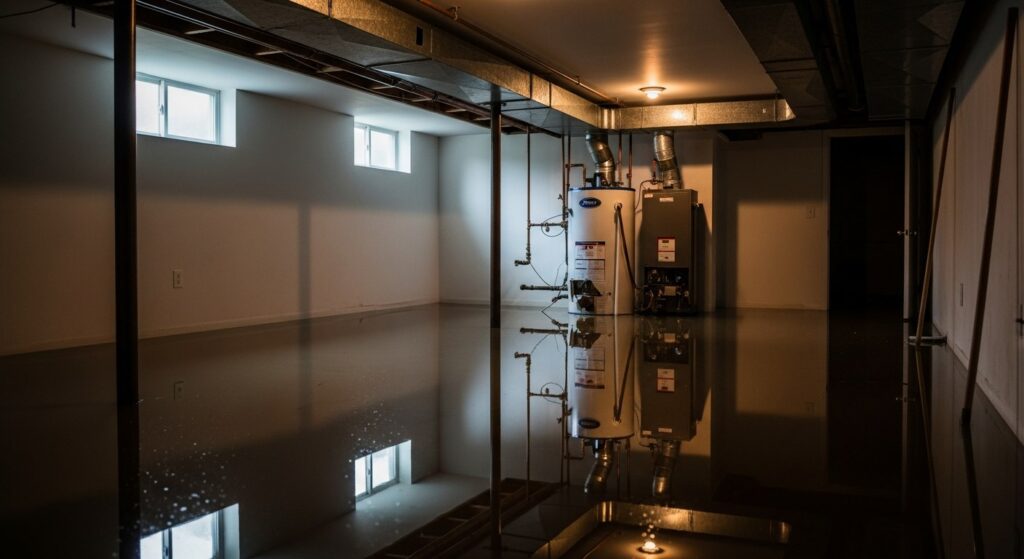
Basement flooding is the most common water damage event in Nassau County. The combination of high groundwater tables in many areas, aging drainage infrastructure, and the volume of housing stock with finished or semi-finished basements creates frequent and costly water events. Understanding why Nassau County basements flood, what you can do to reduce the risk, and what professional restoration involves helps homeowners make informed decisions before and after an event.
Why Nassau County Basements Are Particularly Vulnerable
Several factors converge to make Nassau County basements especially flood-prone. Much of the county sits on a substrate with relatively high groundwater tables, meaning the water table during heavy rain events may be only a few feet below finished basement floors. The storm drainage systems in many communities date to the mid-20th century and lack the capacity for current rainfall events. Many homes have foundation drain tiles that have deteriorated over decades. And the prevalence of finished basements — used as living space, home offices, and recreation rooms — increases the value at risk when flooding occurs.
Primary Causes of Nassau County Basement Flooding
The most common flooding mechanisms are surface water infiltration through window wells and door openings, lateral water pressure pushing through foundation cracks, sump pump failure during extended power outages (common during nor’easters and tropical storms), sanitary sewer backup when municipal systems are overwhelmed, and foundation drainage system failure in older homes where perimeter drain tiles have collapsed or been crushed.
Prevention Measures Worth the Investment
A battery backup sump pump is the single most cost-effective flood prevention measure for most Nassau County basements. Standard sump pumps fail when power is out — exactly when heavy rainfall events are most likely. Battery backup systems add $300 to $800 installed and provide continuous protection during outages. Window well covers and door threshold barriers prevent the most common surface infiltration pathways. Foundation crack injection with polyurethane foam seals active cracks against lateral water entry. For chronic flooding, interior drainage systems with perimeter channels and a dedicated sump are the more permanent solution.
The Restoration Process After Basement Flooding
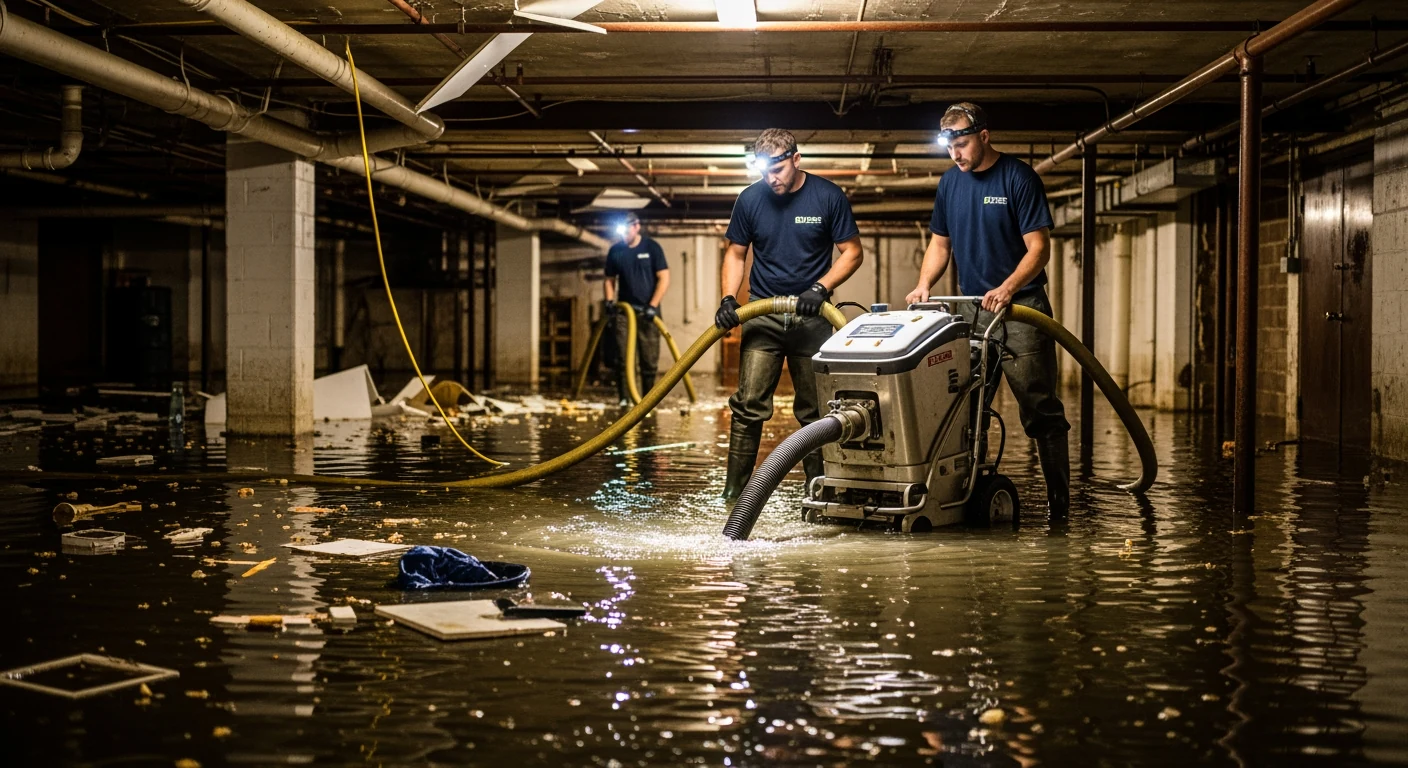
Upper Restoration’s basement flood response follows a structured process: emergency water extraction with truck-mounted units capable of removing thousands of gallons, moisture mapping with calibrated meters and thermal imaging to identify all affected materials, controlled demolition removing wet drywall and insulation to the flood line plus a safe margin, industrial drying with dehumidifiers and air movers calibrated to the specific structural conditions, antimicrobial treatment of structural surfaces, and clearance testing before reconstruction begins.
Frequently Asked Questions
Can I dry out a flooded basement myself with a shop vac and fans?
Consumer equipment is insufficient for professional structural drying. A shop vac removes standing water but does not have the extraction capacity for saturated subfloors or the dehumidification power for building cavities. Inadequate drying leads to concealed moisture retention that causes mold growth 24 to 48 hours after the event — a secondary loss that is more expensive to remediate than the original flood.