Quick Answer: Asbestos insulation typically appears as fluffy gray-white loose fill, silvery-gold gravel-like granules (vermiculite/Zonolite), chalky white pipe wrap, or rigid block panels — but visual identification alone cannot confirm asbestos. The only definitive test is laboratory analysis by a certified professional.
If your home was built before 1990 — especially on Long Island or in NYC — there is a real possibility that asbestos-containing insulation is present somewhere in the structure. Knowing what each type looks like, and where to find it, is the first step toward protecting your household.
Why Identifying Asbestos Insulation Is So Difficult
Asbestos fibers are microscopic. Once they are mixed into a manufactured product — insulation, tile, compound — you cannot see the fibers with the naked eye. What you can observe is the appearance of the insulation material itself, which varies by type. The challenge is that many asbestos-containing materials look nearly identical to safe modern alternatives. That said, knowing the visual hallmarks of each insulation type narrows down what you are likely dealing with and tells you when to call in a certified inspector.
The 4 Main Types of Asbestos Insulation — What Each Looks Like
1. Loose-Fill (Blown-In) Insulation
What it looks like: Fluffy, fibrous material in gray, white, or off-white. It is poured or blown into attic floors and wall cavities and may look similar to cotton or shredded paper. Unlike cellulose insulation (which looks like gray recycled newspaper), asbestos loose-fill has a more mineral appearance — slightly denser, with no visible paper fragments.
Where it is found: Attic floors, wall cavities, and ceiling spaces in homes built between the 1930s and 1970s. This is one of the most hazardous types because it is easily disturbed by air movement, foot traffic above it, or any renovation work.
2. Vermiculite / Zonolite Insulation
What it looks like: Pebble-like granules that resemble gravel. Color ranges from silvery-gold to gray-brown. It has a slightly reflective, mica-like sheen. If your attic insulation looks like small rocks rather than fluffy fill, it is likely vermiculite.
Why this matters: Approximately 70% of all vermiculite insulation sold in the U.S. came from the Libby, Montana mine, which was contaminated with tremolite asbestos. This insulation was sold under the brand name Zonolite from the 1920s through 1990, when the mine closed. If you have Zonolite in your attic, the EPA recommends treating it as if it contains asbestos until tested otherwise.
Where it is found: Attic floors in homes built or renovated before 1990. It was installed by pouring it directly over the attic floor joists.
3. Pipe, Duct, and Boiler Wrap (Thermal Insulation)
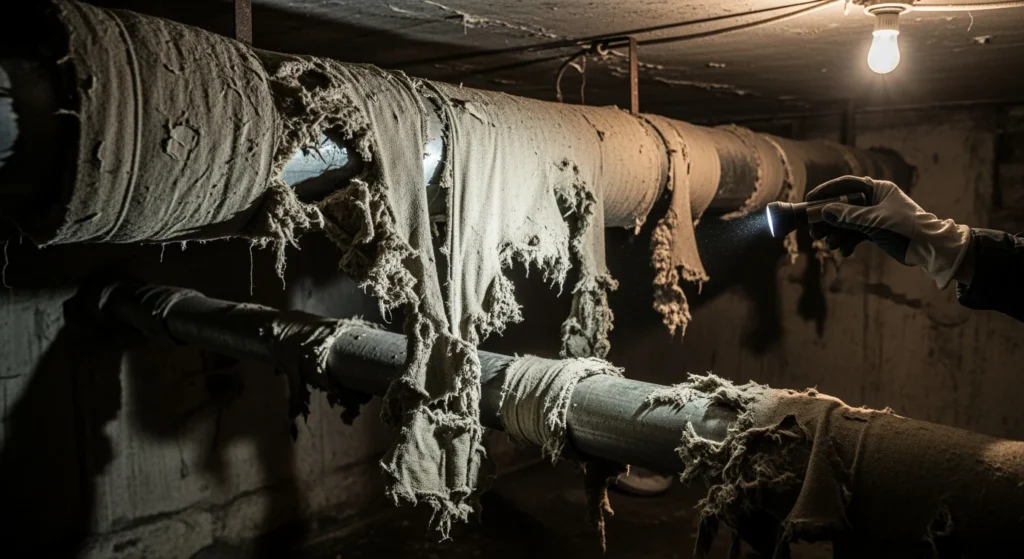
What it looks like: White, gray, or beige corrugated or fibrous material wrapped around pipes, boilers, furnaces, and ductwork. It may appear chalky or powdery if it has aged and begun to deteriorate. Sometimes it is encased in a canvas or foil jacket. Older wrap insulation that is crumbling or flaking is in its most dangerous state — the “friable” condition where fibers can become airborne.
Where it is found: Basements, mechanical rooms, boiler rooms, and anywhere hot water pipes or heating ducts run through pre-1980 construction. This is particularly common in older NYC apartment buildings, brownstones, and Long Island homes with oil or steam heat systems. Learn more about what to look for in our guide to identifying asbestos hazards in your basement.
4. Block and Batt Insulation
What it looks like: Rigid slab or board-like panels. In older construction, these blocks may be cream, gray, or off-white and were used to insulate boilers, furnaces, and structural walls. Unlike modern insulation batts (which are pink or yellow fiberglass), asbestos block insulation has a dense, mineral appearance with no springiness.
Where it is found: Boiler rooms, industrial spaces, and commercial properties. Also occasionally found insulating interior structural walls and equipment rooms in pre-1970s buildings.
Visual Comparison: Asbestos vs. Common Safe Alternatives
Here is how asbestos-containing insulation compares visually to the safe alternatives you may encounter:
| Insulation Type | Color | Texture | Asbestos Risk? |
|---|---|---|---|
| Vermiculite (Zonolite) | Silvery-gold, gray-brown | Gravel-like granules, slightly shiny | High — assume yes, test first |
| Asbestos loose-fill | Gray, white, off-white | Fluffy, dense mineral fibers | High |
| Fiberglass batt | Pink, yellow, white | Fluffy, springy, cotton-candy-like | No |
| Cellulose (blown-in) | Gray | Shredded paper appearance, no mineral sheen | No |
| Rock wool | Brownish-white, off-white | Dense fiber bundles, no sheen | No |
| Pipe wrap (pre-1980) | White, beige, gray | Chalky, corrugated, may be crumbling | High if pre-1980 |
Where to Look in Long Island and NYC Homes
Asbestos insulation tends to concentrate in specific locations based on how and when it was installed. In the Long Island and NYC housing stock, where a significant portion of homes were built between 1940 and 1980, the highest-risk areas are:
- Attic floors — Zonolite/vermiculite was commonly poured here through the 1980s
- Basement boiler and pipe systems — Pipe wrap and block insulation were standard until the mid-1970s
- Wall cavities in pre-1970s construction — Blown-in asbestos fiber was used in some wall insulation systems
- Around HVAC ducts — Especially in larger homes and apartment buildings with central heating
- Behind older plaster walls — Particularly in brownstones and pre-war apartment buildings throughout the five boroughs
For a comprehensive overview of all the places asbestos may be hiding in older properties, see our guide to common asbestos hiding spots in Long Island properties.
Warning Signs That Insulation May Be Disturbed
- Crumbling, flaking, or powdery pipe wrap
- Disturbed or displaced attic insulation from rodent activity, foot traffic, or renovation work
- Air ducts or insulation showing cracks or gaps near HVAC vents
- Water damage that has soaked into or eroded insulation material
- Recent renovation, drilling, or demolition near suspected areas
What to Do If You Suspect Asbestos Insulation
The single most important rule: do not disturb it. Asbestos that is intact and undisturbed poses minimal risk. The danger comes from disturbance — cutting, drilling, demolishing, or even vacuuming near friable material can release fibers that remain hazardous for hours.
- Leave the area. If you have already disturbed the material, evacuate and ventilate by opening windows.
- Call a certified asbestos inspector. In New York, inspectors must be certified by the NYSDOL. They collect samples using proper containment protocols and submit them to an accredited laboratory.
- Get laboratory confirmation. Only PLM (Polarized Light Microscopy) analysis can confirm the presence and percentage of asbestos fibers.
- Hire a licensed abatement contractor. In NYC and Long Island, asbestos abatement requires licensed contractors working under strict DEP and OSHA protocols. Upper Restoration is fully licensed and certified for residential and commercial asbestos abatement throughout the region.
Learn more about what the process involves in our overview of asbestos insulation removal, or get pricing context in our 2026 asbestos removal cost guide for Long Island and NYC. When you are ready to move forward, our asbestos abatement services page explains how we handle the full process.
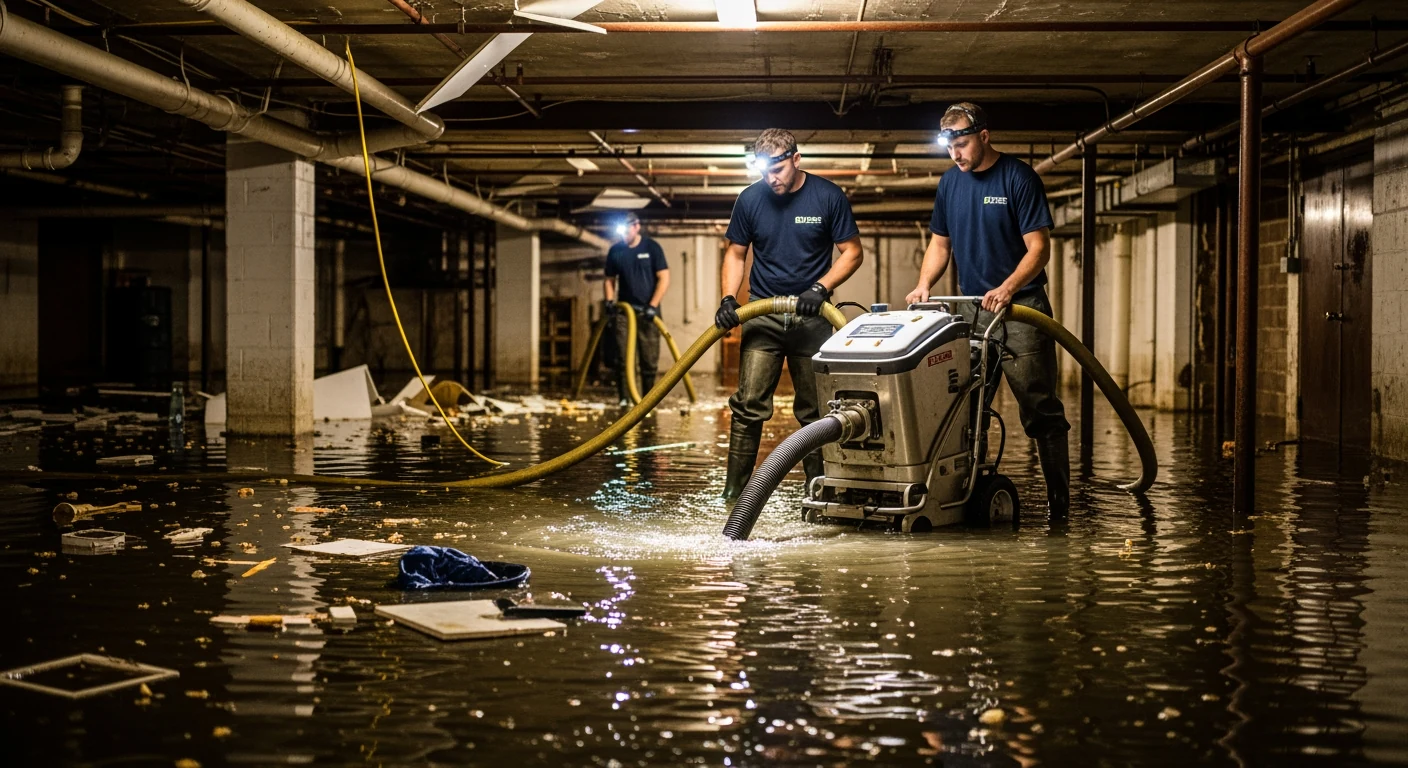
Upper Restoration provides professional water and flood damage restoration services across Nassau County, Suffolk County, and all five NYC boroughs — available 24/7.
Frequently Asked Questions: Identifying Asbestos Insulation
Q: What does asbestos insulation look like in an attic?
A: Asbestos attic insulation most commonly appears as silvery-gold or gray-brown pebble-like granules (vermiculite/Zonolite) or as gray-white fluffy loose-fill. If your attic has gravel-like insulation installed before 1990, treat it as suspected asbestos until tested.
Q: How do I tell the difference between asbestos insulation and fiberglass?
A: Fiberglass insulation is pink or yellow, springy, and has a cotton-candy-like texture. Asbestos loose-fill is denser, grayer, and more mineral in appearance with no springiness. Visual inspection is not reliable — only laboratory testing confirms asbestos content.
Q: Is Zonolite insulation always contaminated with asbestos?
A: Not definitively — but the EPA advises homeowners to treat all Zonolite as if it contains asbestos because approximately 70% of the U.S. supply came from the contaminated Libby mine in Montana. Testing is the only way to confirm.
Q: Can I remove asbestos insulation myself in New York?
A: No. New York State and NYC require licensed asbestos abatement contractors for any removal work. DIY removal is illegal and extremely dangerous. See our guide to contractor licensing requirements in New York.
Q: How much does asbestos insulation removal cost on Long Island?
A: Costs vary by scope, access, and material type. Vermiculite attic removal and pipe wrap abatement are priced differently. See our 2026 asbestos removal cost guide for current ranges.
Need professional asbestos abatement on Long Island? Upper Restoration provides licensed asbestos abatement and removal services across NYC and Long Island. Contact us for a free assessment.
Same-Week Testing Available — Serving NYC & Long Island
Found Suspicious Insulation? Get It Lab-Tested by a Licensed Pro.
Serving NYC & Long Island — Nassau & Suffolk Counties
📞 Call (516) 777-7001
Or fill out our free assessment form →