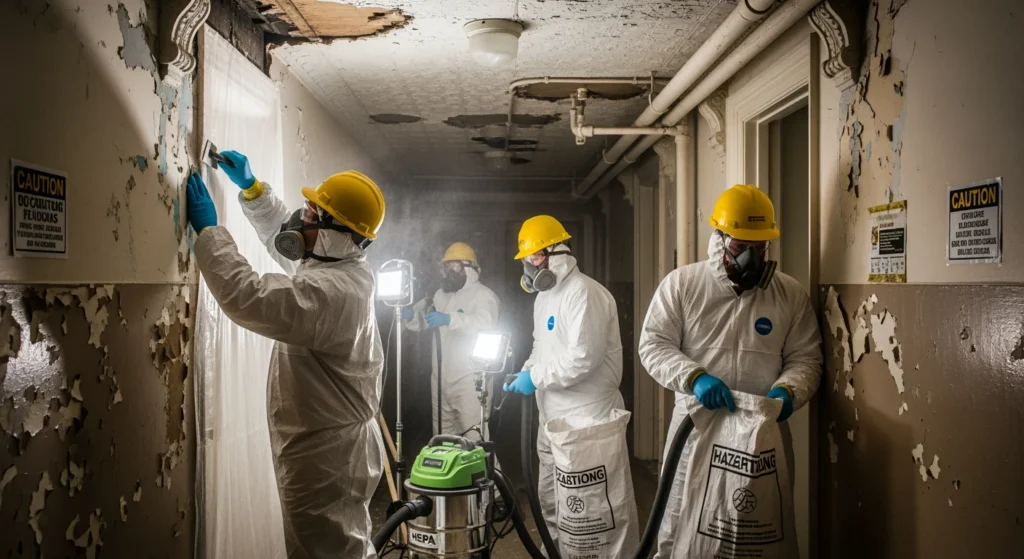
That old warehouse, your charming pre-war home, or the office building from the 70s—they all could be harboring asbestos in places you might never expect. Before you start any renovation or demolition project, it’s crucial to know the most common hiding spots for this hazardous material.
Here are some of the top places we find asbestos in older Long Island properties:
- In the Basement & Boiler Room: This is often ground zero for asbestos. Look for white or grey insulation wrapped around boilers, furnaces, and pipes (often called “asbestos wrap”). Old 9×9 inch floor tiles and the black mastic adhesive used to glue them down are also highly suspect.
- In the Attic: Vermiculite insulation, which can look like small, pebbly, or flaky gray-brown material, may be contaminated with asbestos. We cover this in depth in our article on identifying asbestos in your home’s insulation.
- Walls and Ceilings: The joint compound used on drywall seams and some older plaster walls contained asbestos for strength. Additionally, “popcorn” or textured acoustic ceilings installed before the 1980s are prime suspects.
- The Exterior: Cement-asbestos siding and roofing shingles were incredibly common for their durability and fire resistance.
If your property was built before 1985, it’s wise to assume asbestos could be present and schedule a professional inspection before undertaking any work that could disturb these materials.
Frequently Asked Questions About Asbestos Locations
If my house was built in the 1980s, is it safe from asbestos? Not necessarily. While the use of asbestos was being phased out, some products containing asbestos were still available and used in construction into the late 1980s. If your home was built before 1990, it’s still a good idea to test suspicious materials before disturbing them.
My floor tiles are 12×12, not 9×9. Could they still contain asbestos? Yes. While 9×9 inch tiles are the most notorious for containing asbestos, some 12×12 inch vinyl or asphalt tiles manufactured before the 1980s also contained it. The age of the tile is a more important factor than its size. For more details, explore our guide on asbestos tiles.
Upper Restoration provides professional licensed asbestos abatement services across Nassau County, Suffolk County, and all five NYC boroughs — available 24/7.
Is the black mastic under my tiles dangerous? It can be. Black mastic or “cutback” adhesive used for older flooring often contained asbestos. This mastic can become brittle over time, and scraping or sanding it can release fibers. It should be tested along with the tiles themselves.
Need professional asbestos abatement on Long Island? Upper Restoration provides licensed asbestos abatement and removal services across NYC and Long Island. Contact us for a free assessment.