When a hurricane warning is issued for the New York City and Long Island region, taking the right steps at the right time can protect your family, minimize property damage, and speed your recovery. The tri-state area has experienced devastating storms — Superstorm Sandy (2012) reshaped entire Long Island communities, and Hurricane Ida (2021) proved that inland flooding kills as readily as coastal surge.
This guide from Upper Restoration covers exactly what NYC and Long Island residents should do in each phase of a hurricane event.
Before the Hurricane: Preparation Phase
Know Your Risk Level
Check your NYC evacuation zone at NYC.gov/hurricanezone. Long Island residents should consult Nassau and Suffolk County OEM evacuation maps. Coastal South Shore communities (Long Beach, Fire Island, Babylon), waterfront Brooklyn and Queens neighborhoods, and low-lying areas of Staten Island face the highest storm surge risk. Even if you’re not in a flood zone, inland wind damage and rainfall flooding (as Ida demonstrated) can devastate properties miles from the coast.
Prepare Your Property
Secure all outdoor items — patio furniture, grills, trash cans, and decorations become dangerous projectiles in hurricane winds. Board windows with 5/8″ plywood or install storm shutters. Clear gutters and downspouts completely. Ensure your sump pump works and has battery backup. Move valuables from basements to upper floors. If you have a generator, test it and stock fuel safely. Trim dead tree branches that could strike your roof — Long Island’s mature tree canopy makes falling limbs one of the most common causes of storm damage in Nassau County.
Protect Documents and Valuables
Photograph every room in your home for insurance documentation. Store insurance policies, deeds, IDs, and medical records in waterproof containers or cloud storage. Create a home inventory video showing your possessions. This documentation is essential for insurance claims after storm damage — many Long Island homeowners after Sandy were underpaid because they couldn’t prove what they’d lost.
Stock Emergency Supplies
Prepare for 72+ hours without power, water, or access to stores: one gallon of water per person per day, non-perishable food, flashlights, batteries, first aid supplies, medications (7+ day supply), portable phone chargers, cash, and a battery-powered radio. Fill vehicle gas tanks — after Sandy, gas shortages lasted two weeks across Long Island. Fill bathtubs with water for flushing toilets if water service fails.
During the Hurricane: Sheltering Phase
If Ordered to Evacuate — Leave Immediately
Do not ignore evacuation orders. NYC evacuation zones exist because storm surge in those areas will be life-threatening. Follow designated evacuation routes. If you’re on Long Island’s barrier beaches or in a flood-prone area, leave before roads become impassable. Bring your emergency kit, medications, phone chargers, and pet supplies. Turn off gas and electricity at the main breakers before leaving.
If Sheltering in Place
Stay in an interior room on the lowest floor that won’t flood — away from windows, skylights, and glass doors. In NYC high-rises, move to an interior hallway or bathroom away from exterior walls. Do not go outside during the eye of the storm — dangerous winds return rapidly. Monitor official emergency channels: Notify NYC, Nassau County OEM, or NOAA Weather Radio. Keep phone use minimal to preserve battery. If rising water threatens your floor level, move upward — never into a closed attic without an escape route to the roof.
Power and Utility Safety
If you lose power, unplug major appliances to prevent surge damage when power returns. If you smell gas, leave immediately and call 911 from outside — do not flip light switches or use electronics. Never run generators indoors or in enclosed spaces — carbon monoxide poisoning killed multiple New Yorkers during past hurricanes. Keep generators at least 20 feet from windows and doors.
After the Hurricane: Recovery Phase
Safety Assessment Before Re-Entry
Wait for official all-clear announcements before returning to evacuated areas. When approaching your property, watch for downed power lines, unstable structures, and contaminated standing water. Do not enter a building that shows signs of structural damage — leaning walls, sagging roof, shifted foundation. If you smell gas or see sparks, stay out and call 911.
Document Everything Before Cleanup
Before moving or discarding anything, photograph and video all damage from multiple angles. Document waterlines on walls, damaged belongings, structural issues, and debris. This evidence is critical for insurance claims. Contact your insurance company within 24 hours to initiate your claim. Keep all receipts for emergency repairs and temporary housing expenses — these are typically reimbursable.
Emergency Water Extraction and Drying
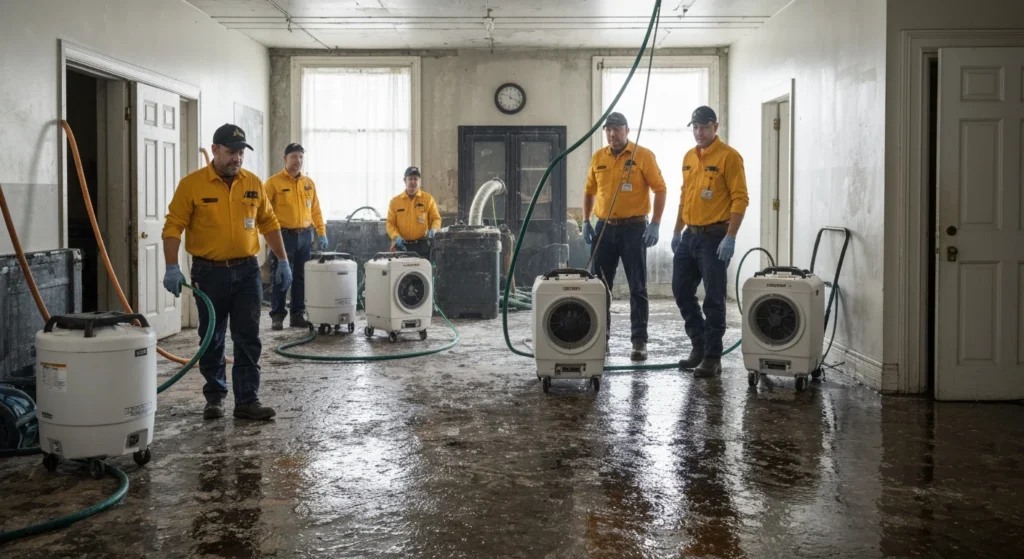
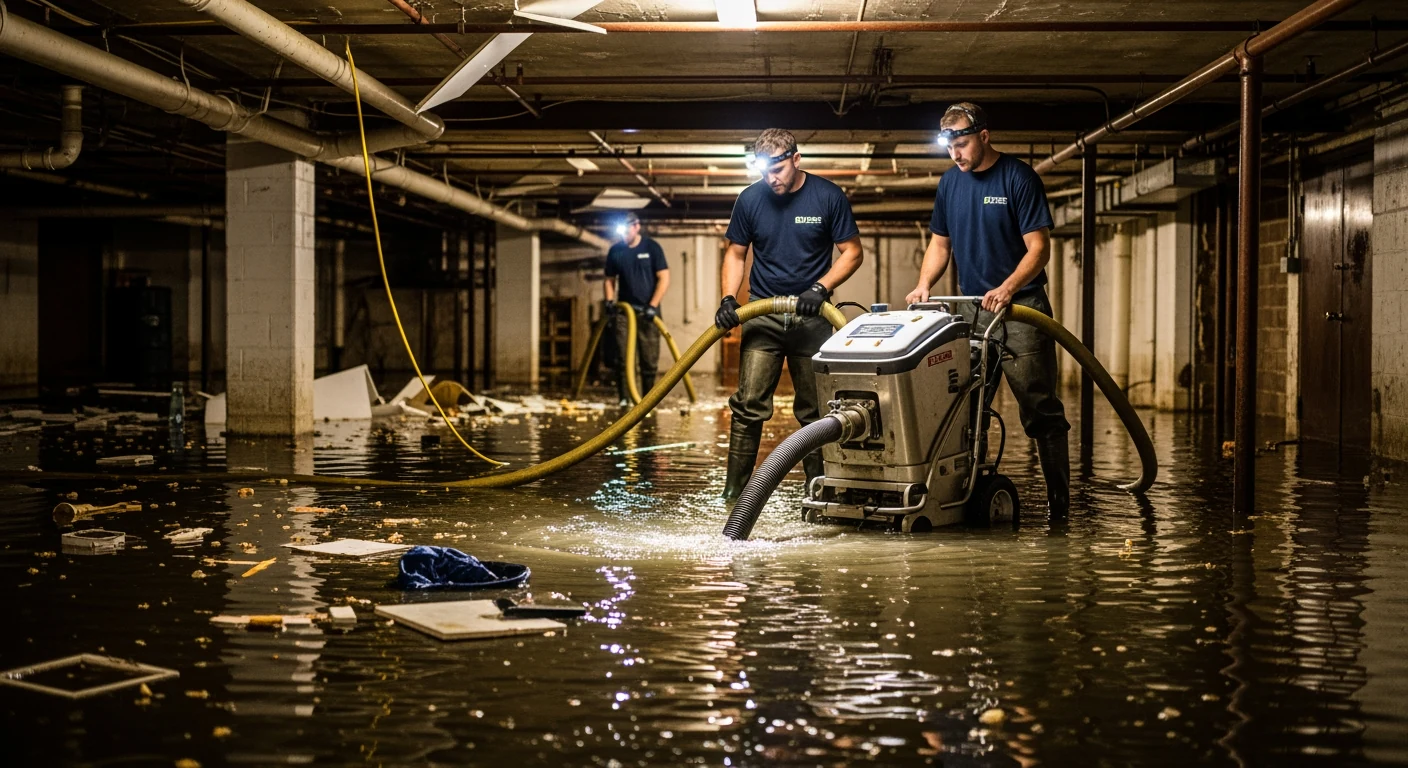
The first 24–48 hours after flooding determine whether your home develops mold. Standing water must be extracted immediately, followed by professional structural drying with industrial dehumidifiers and air movers. Do not rely on household fans or open windows — they cannot remove moisture trapped inside walls, under floors, and in insulation. Upper Restoration’s emergency water extraction team responds 24/7 across NYC and Long Island with commercial-grade equipment.
Mold Prevention
Mold begins colonizing wet materials within 24–48 hours in humid conditions. Any porous materials (drywall, carpet, insulation, upholstered furniture) that were submerged typically require removal and replacement. Hard surfaces can often be saved with proper antimicrobial treatment. Do not paint over or seal water-damaged materials without professional assessment — mold behind walls causes ongoing health issues and structural deterioration.
Structural Assessment and Restoration
After water is extracted and the property is dried, a professional structural assessment determines what can be repaired versus what must be replaced. On Long Island, many post-Sandy homes required subfloor replacement, new electrical systems, and complete drywall replacement on affected floors. Upper Restoration handles full storm damage restoration in Suffolk County and across the metro area, from emergency extraction through final reconstruction.
Frequently Asked Questions
How long does it take to restore a home after hurricane damage on Long Island?
Timeline depends on severity. Minor water intrusion with quick professional response: 3–7 days. Moderate flooding requiring drywall and flooring replacement: 2–6 weeks. Severe structural damage: 3–12 months. The single biggest factor in timeline is how quickly water extraction and drying begin — delays of even 48 hours can double restoration scope due to mold.
Should I turn off my electricity before a hurricane in NYC?
If you’re evacuating or if flooding is expected to reach electrical outlets, yes — shut off power at the main breaker. If you’re sheltering in place on an upper floor with no flood risk, you can keep power on but should unplug sensitive electronics. Never touch electrical panels while standing in water.
Does FEMA help NYC homeowners after hurricanes?
Yes, if a federal disaster is declared. FEMA provides grants for temporary housing, home repairs, and personal property loss — but these are grants of last resort, not replacements for insurance. FEMA assistance typically covers far less than actual damages. Having adequate homeowners and flood insurance is essential for NYC and Long Island residents.
What should I NOT do after a hurricane?
Do not: enter a structurally damaged building, walk through standing flood water (electrical/contamination risk), use electrical appliances that were wet, run generators indoors, drink tap water until cleared by authorities, or discard damaged items before photographing them for insurance. Do not attempt to dry your home with household equipment alone — professional structural drying is critical to prevent mold.
How do I find a reputable restoration company after a hurricane?
Look for IICRC-certified firms with verified local presence (not storm-chasing contractors). Check that they’re licensed and insured in New York State. Ask for references from recent hurricane/flood projects in your area. Reputable companies like Upper Restoration will provide a detailed scope of work before beginning and work directly with your insurance adjuster on documentation.