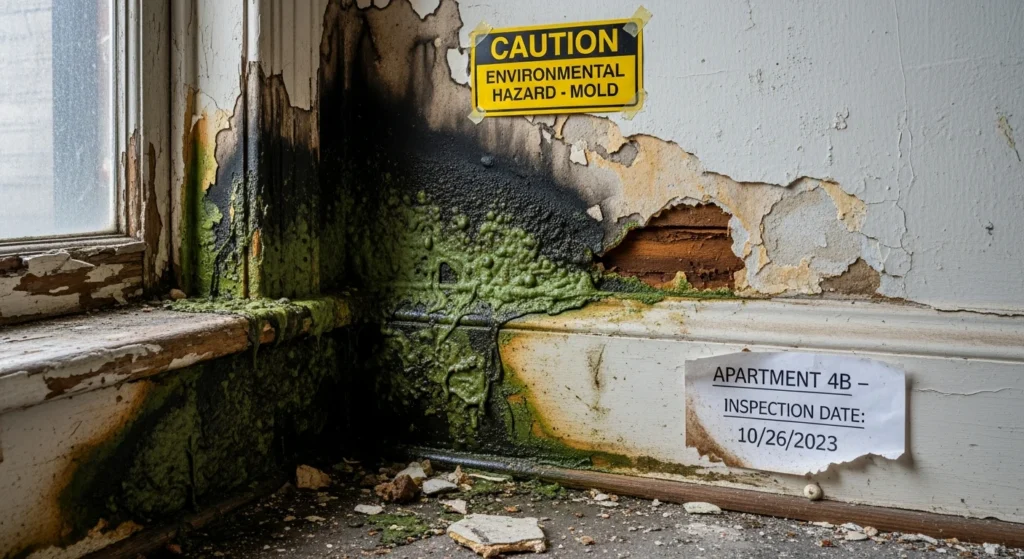
Every February and March, NYC and Long Island restoration companies get the same call: “I don’t know where this smell is coming from, but it started about two weeks ago.” They know exactly where it’s coming from. Mold that established in wall cavities, crawlspaces, and mechanical rooms during winter moisture events takes two to four weeks to reach visible or olfactory detection. The Blizzard of 2026 — 20+ inches of heavy wet snow on February 22, followed by a Governor-declared disaster emergency — created exactly the conditions that produce widespread hidden mold growth. If you’re detecting it now, the colonization likely began in late February.
Why Mold Grows in Winter in NYC Buildings
The standard assumption is that mold needs warmth. What it actually needs is moisture, a food source (any organic building material — drywall paper, wood framing, insulation facing), and time. Winter in NYC and Long Island buildings provides all three in abundance, particularly in specific microenvironments.
Exterior walls in NYC buildings run cold on the outside face while remaining warm on the interior — creating a dew point zone inside the wall cavity where moisture condenses out of air that migrates through the assembly. In pre-war buildings with lathe and plaster, this condensation accumulates in the air gap between plaster and exterior masonry. In postwar gypsum drywall construction, it accumulates in the stud cavity. Either way, the result is sustained elevated moisture content in materials that contain mold’s food source.
Low wintertime ventilation compounds the problem. Windows stay closed. Bathroom fans run less. Cooking and bathing moisture stays in the building envelope longer. Relative humidity in NYC apartments during winter commonly runs 50–65% — well into the range that supports mold growth on cold surfaces.
The Mold Growth Timeline: Hours, Days, Weeks
Understanding the mold colonization timeline matters because it determines both what you’re dealing with and what the remediation scope will be:
0–24 hours: Spores land on a surface with adequate moisture (material moisture content above 20% for wood, above 1% for drywall). No visible growth. No detectable odor.
24–48 hours: Germination begins. Hyphae (root-like structures) penetrate porous material surfaces. Still no visible growth, but the colony is established and cannot be addressed by surface cleaning alone.
3–12 days: Mycelial growth visible as fuzzy patches. Species-specific coloration begins developing. Musty MVOCs (microbial volatile organic compounds) become detectable — this is the “mold smell” that precedes visible growth becoming obvious.
2–4 weeks: Surface colonization visible to casual inspection. Sporulation begins, releasing new spores into the air. This is when most NYC residents and property owners first notice the problem — and it means the underlying moisture issue and colony establishment have been present for weeks.
The Species Most Common in NYC Winter Mold Events
Not all mold is the same. The species found in winter NYC building mold events differ from summer events because temperature and moisture source differ:
Cladosporium: The most common winter mold in NYC. Thrives at cold temperatures (can grow at 39°F) and on condensation moisture. Typically appears as dark green or black surface growth on window frames, exterior walls, and inside closets on exterior walls. Allergenic but generally lower health risk than other species.
Chaetomium: Found in water-damaged drywall and cellulose materials. Recognizable by its musty, earthy odor and gray-olive coloration. Produces mycotoxins and is associated with neurological symptoms in heavily exposed individuals. Commonly found in wall cavities where condensation or slow leaks have been present for extended periods.
Stachybotrys chartarum: The so-called “black mold.” Requires sustained high moisture (material consistently above 90% relative humidity saturation) and slower growth — typically 8–12 days to visible colonies. Found in chronically water-damaged gypsum drywall and paper-faced insulation. Produces potent mycotoxins. Presence indicates a sustained moisture problem, not a recent event — if you’re finding Stachybotrys now, moisture infiltration has been ongoing since at least late fall.
Where to Look: NYC and Long Island’s Winter Mold Hotspots
Based on the failure patterns specific to NYC and Long Island building stock, these are the locations where winter mold establishes first and spreads hardest:
Behind furniture on exterior walls. The furniture blocks air circulation and creates a cold, humid microenvironment against the wall. Move furniture six inches off exterior walls and check behind it.
Inside closets on exterior walls. Identical mechanism — low air circulation, cold wall surface, sustained humidity. Check the back wall and baseboard of all exterior-wall closets, especially in bedrooms and hallways.
Crawlspaces on Long Island. Ground moisture during snowmelt saturates crawlspace soils. The humid air rises into the crawlspace and contacts cold floor framing. Vapor barriers that are torn, improperly installed, or absent make this dramatically worse.
Building mechanical rooms and basement utility areas. These spaces run cold, have high surface area of organic materials, and are rarely inspected. HVAC ductwork condensation is a common moisture source in these areas during winter.
Under kitchen and bathroom sinks. Slow drainline leaks that develop over winter concentrate moisture in the cabinet base. Check for soft or discolored cabinet flooring and musty odor.
New York State Article 32: What the Law Actually Requires
New York State enacted Article 32 of the Labor Law (the Mold Law) in 2010, creating a licensing and certification regime for mold assessment and remediation in residential and commercial buildings. Understanding what it requires protects you from both mold damage and regulatory liability:
When Article 32 applies: Any mold remediation project affecting more than 10 square feet in a building with one or more residential units in New York State. This threshold is lower than many people realize — a 10-square-foot patch is roughly a 3×3-foot section of drywall.
What it requires: A licensed mold assessor must inspect the affected area, take air or surface samples if indicated, and write a written Mold Remediation Protocol specifying the scope, methods, and clearance criteria. A licensed mold remediator (a separate entity from the assessor) executes the protocol. The original assessor or another licensed assessor performs post-remediation clearance testing. The assessment and remediation cannot be performed by the same entity — this is the law’s most important consumer protection.
What to ask a contractor: Request their New York State Mold Assessor or Mold Remediator license number before any work begins. Verify it at the NYS Department of Labor website. Unlicensed mold work in New York is a violation — and if your property is in a tenant-occupied building, performing unlicensed remediation exposes you to additional HPD enforcement liability.
What Post-Remediation Clearance Testing Actually Costs
Budget ranges for the Article 32 process in NYC and Long Island (2026):
Mold assessment (initial inspection + sampling): $400–$900 for a standard residential unit or single apartment. Includes visual inspection, moisture readings, and 2–4 air or surface samples sent to accredited laboratory. Lab results typically returned in 3–5 business days for standard analysis, 24 hours for rush analysis.
Remediation: $1,500–$8,000 for a contained residential mold event (one to two rooms, minor structural involvement). $15,000–$50,000+ for building-wide events with structural drywall removal and framing treatment across multiple units.
Post-remediation clearance testing: $350–$700. Includes visual clearance inspection and air samples compared against outdoor baseline. A clearance report is issued stating whether the remediation met the protocol standards.
Frequently Asked Questions About Winter Mold in NYC
What does mold smell like before you can see it? A musty, earthy, or slightly sweet odor — sometimes described as similar to wet cardboard or soil. The smell comes from MVOCs (microbial volatile organic compounds) produced by growing mold colonies. It is typically strongest near the source and in still air (closets, under sinks, against walls).
Can mold really grow in winter in NYC? Yes. Several common mold species, particularly Cladosporium, grow at temperatures as low as 39°F. Winter condensation on exterior walls and around windows is sufficient moisture for colonization. Buildings with poor vapor control or known water intrusion history are high risk regardless of outdoor temperature.
Do I need a mold inspector or a mold remediator? You need an assessor first — they determine the scope of the problem. Under New York State Article 32, the assessor and remediator must be separate entities. Never hire a single contractor to do both assessment and remediation on the same project; this is illegal in New York State and removes the independent verification of remediation completeness.
Can I clean mold myself? For projects under 10 square feet, New York State does not require licensed contractors. However, surface cleaning without addressing the underlying moisture source will not solve the problem — mold will return. For any project above 10 square feet or in a multi-unit residential building, Article 32 licensing requirements apply.
Is mold covered by homeowners insurance in New York? It depends. Mold resulting from a covered sudden and accidental water event (burst pipe, appliance failure) is typically covered. Mold from long-term moisture infiltration or maintenance neglect is typically excluded. Document when you first noticed the problem and what caused it — this documentation determines coverage eligibility.
Related reading: Why March Is the Most Dangerous Month for NYC Properties (March 2026) | Water Leaking from the Ceiling After Rain — NYC Diagnosis Guide | New York State Mold Law 2026: Inspector vs. Remediator | The April Property Assessment for NYC and Long Island Owners