The spray-painted “ASBESTOS” on an abandoned building is a clear warning, but in most homes and businesses, the danger is hidden in plain sight. One of the most common questions property owners ask is, “What does asbestos look like?” The frustrating but true answer is: it can look like almost anything.
Asbestos is a microscopic fiber that was mixed into thousands of building materials for strength and fire resistance. Because it’s an additive, you cannot identify it with the naked eye. However, you can learn to identify the types of materials that are highly likely to contain it, especially in properties built before the 1980s.
Common Materials That May Contain Asbestos
- Insulation: Fluffy, greyish-white insulation found around pipes, boilers, and in attics is a major red flag. This includes the infamous Zonolite insulation. You can learn more by reading our guide on identifying asbestos in your home’s insulation.
- Ceiling & Floor Tiles: Old 9×9 inch floor tiles are the most common culprits, but some 12×12 inch tiles and the black mastic adhesive used to glue them down also contained asbestos. Textured “popcorn” or acoustical ceiling tiles are also highly suspect.
- Siding and Roofing: Older cement siding and roofing shingles were incredibly durable and fire-resistant precisely because they were reinforced with asbestos fibers.
- Grout, Plaster, and Joint Compound: Asbestos was sometimes added to increase the durability of tile grout. It was also a common ingredient in the joint compound used for drywall seams and in some older plaster walls. We have a detailed guide on identifying and dealing with asbestos in grout.
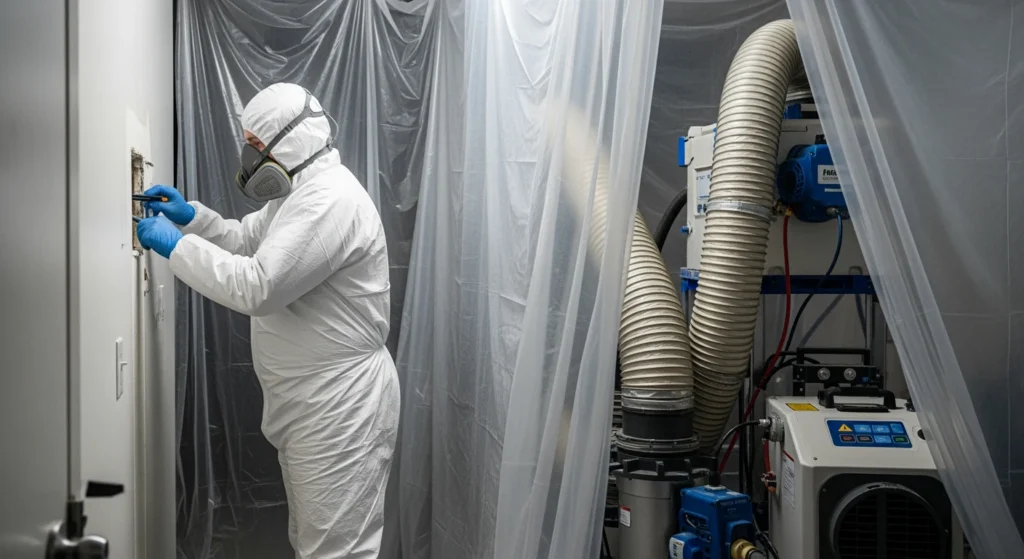
If you suspect a material in your home contains asbestos, the most important thing to do is leave it alone. Do not touch, scrape, sand, or break it. The only way to be 100% sure is to have a sample professionally tested.
Frequently Asked Questions About Identifying Asbestos
Can I take my own asbestos sample to a lab? While it is technically possible, it is strongly discouraged. Scraping or breaking a material to get a sample can release dangerous fibers into the air if you don’t have the proper training and protective equipment. It is much safer to hire a certified asbestos inspector to collect samples for you.
My house was built in the late 1980s. Am I in the clear? Not necessarily. While the use of asbestos was phased out, some products containing asbestos were still available and used in construction into the late 1980s. If your home was built before 1990, it’s still a good idea to test suspicious materials before disturbing them.
Upper Restoration provides professional licensed asbestos abatement services across Nassau County, Suffolk County, and all five NYC boroughs — available 24/7.
Are asbestos tiles dangerous if they aren’t broken? If asbestos-containing materials are in good condition and are not disturbed (i.e., not crumbling, cracked, or being sanded), they are generally not considered an immediate hazard. The danger arises when the material is damaged or disturbed, causing fibers to become airborne. Learn more about the risks in our guide to asbestos tiles.
Need professional asbestos abatement on Long Island? Upper Restoration provides licensed asbestos abatement and removal services across NYC and Long Island. Contact us for a free assessment.