Sewage Backup Cleanup Cost in NYC & Long Island: 2026 Pricing Guide
A sewage backup is one of the most urgent and costly home emergencies you can face. Raw sewage contains bacteria, viruses, parasites, and toxic gases — and every hour it sits, contamination spreads deeper into flooring, walls, and subfloor materials. In NYC and Long Island, where older sewer infrastructure and post-storm surges are common triggers, sewage backups happen more often than most homeowners expect.
This guide breaks down exactly what sewage cleanup costs in 2026, what drives prices up or down, how insurance works, and what to look for in a licensed contractor.
Sewage Backup Cleanup Cost by Job Size
The single biggest cost driver is square footage of affected area. Sewage is classified as Category 3 water — the most dangerous contamination class under the IICRC S500 standard — which requires full personal protective equipment, contained removal of contaminated materials, and EPA-registered disinfection protocols at every job size.
| Job Size | Affected Area | Typical Cost Range | Common Scenario |
|---|---|---|---|
| Small | Under 50 sq ft | $2,000–$3,500 | Single bathroom backup, contained to tile floor |
| Medium | 50–200 sq ft | $3,500–$6,500 | Basement bathroom + laundry room overflow |
| Large | 200–500 sq ft | $6,500–$10,000 | Full basement backup, drywall and subfloor affected |
| Major | 500+ sq ft | $10,000–$20,000+ | Multi-room sewage event, structural material replacement |
Note: Costs above reflect NYC metro and Long Island labor rates, which run 20–35% higher than national averages due to licensed contractor requirements and disposal regulations.
What’s Included in Sewage Cleanup Cost?
A professional sewage remediation job is not a single service — it’s a multi-phase process. Here’s what legitimate contractors charge for:
1. Emergency Response & Containment ($300–$800)
The first crew on-site establishes a contamination perimeter, sets up negative air pressure to prevent cross-contamination, and stops the source (or confirms the plumber has). This phase also includes moisture mapping with thermal imaging to identify all affected zones — including hidden areas behind walls and under flooring.
2. Sewage Extraction & Solid Waste Removal ($500–$2,000)
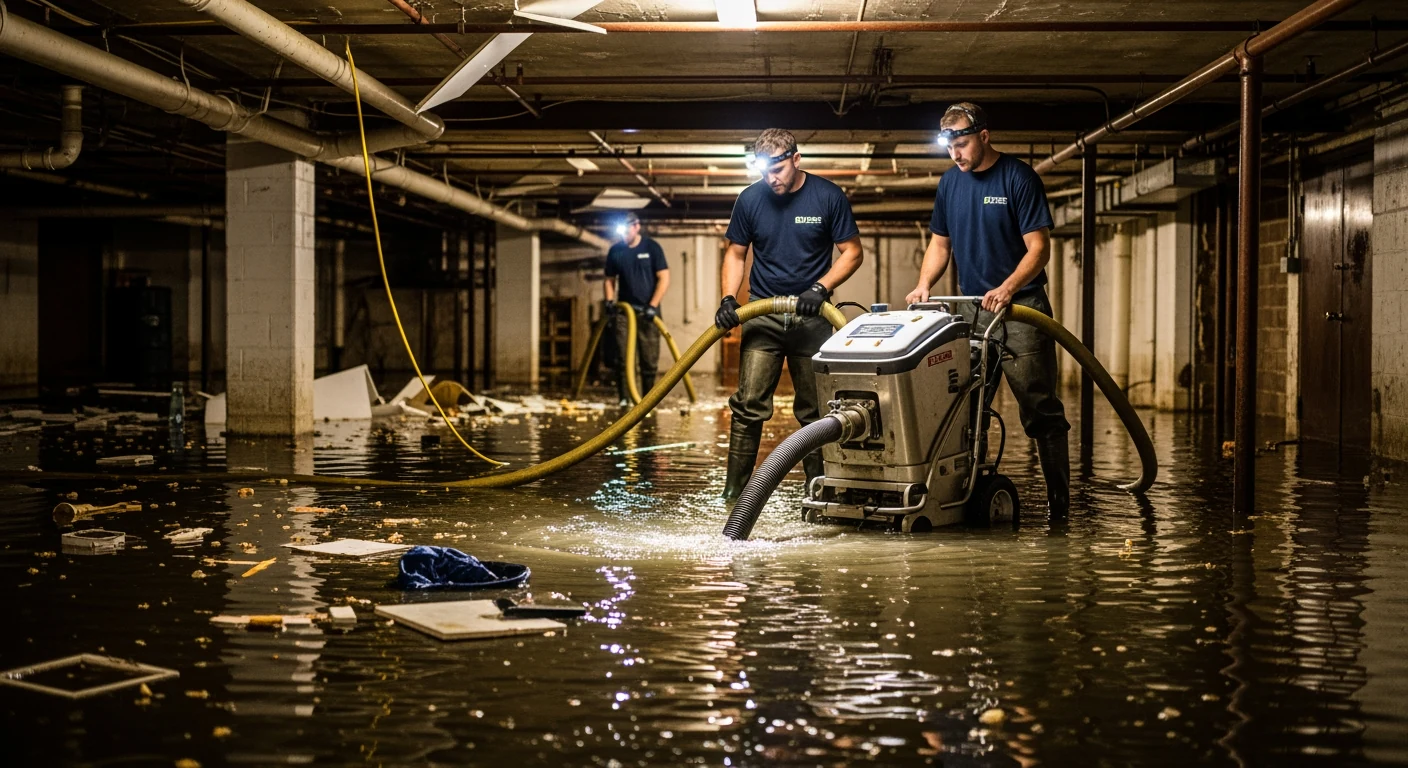
Truck-mounted extraction units remove standing sewage. Solid waste is bagged as regulated biohazard waste and disposed of per New York State DEC requirements. This is not standard garbage — improper disposal creates legal liability.
3. Contaminated Material Removal ($800–$4,000)
Category 3 contamination requires removing all porous materials the sewage contacted: drywall, carpet, carpet pad, insulation, and often wood subfloor. These materials cannot be disinfected — they must come out. This is the most variable cost line because structural depth of contamination varies widely.
4. Antimicrobial Treatment & Decontamination ($400–$1,200)
Remaining surfaces — concrete slab, framing, joists — are treated with EPA-registered hospital-grade antimicrobials. Two-pass application is standard: a broad-spectrum bactericide followed by a mold preventative to stop secondary mold growth.
5. Structural Drying ($600–$2,000)
Commercial dehumidifiers and air movers run for 3–5 days minimum to bring moisture readings down to acceptable IICRC S500 thresholds. Drying logs document daily readings — these are required for insurance claims and are what distinguish professional work from a mop job.
6. Post-Remediation Clearance Testing ($300–$600)
A third-party industrial hygienist collects air and surface samples to verify contamination has been fully eliminated. Without a clearance certificate, your insurance claim may not close — and you have no documentation that the space is safe to reoccupy.
Additional Cost Factors That Drive Bills Higher
Mold Remediation
If the backup went undetected for 24–48 hours, mold growth is nearly certain. Mold remediation adds $1,500–$6,000 depending on spread. In NYC, mold remediation contractors must hold a New York State Article 32 license — verify this before hiring. See our full guide on mold remediation cost in NYC and Long Island for detailed pricing.
Finished Basement Reconstruction
Removing contaminated drywall, flooring, and insulation is only half the battle — it all has to go back in. Reconstruction after a major sewage event commonly runs $5,000–$15,000 on top of remediation costs, depending on finish level.
HVAC Contamination
If sewage reached an air handler, ductwork, or HVAC equipment, the system requires full decontamination or replacement. HVAC sewage cleanup adds $1,000–$4,000 and requires a licensed HVAC contractor working alongside the remediation team.
After-Hours & Emergency Response Premium
Sewage backups that happen overnight, on weekends, or during holidays carry emergency service premiums of 15–25%. Upper Restoration provides 24/7 response across NYC and Long Island — the premium is real but delays cost far more in secondary damage.
Does Homeowners Insurance Cover Sewage Backup Cleanup?
This is the question every homeowner asks immediately — and the answer depends on your specific policy language.
Standard homeowners insurance (HO-3) does NOT automatically cover sewage backup. The base policy typically covers water damage from internal sources like burst pipes, but sewage backup from a municipal main or drain line reversal is classified separately and usually excluded unless you carry a sewage backup rider.
What to check in your policy:
- Water backup and sump overflow endorsement — This is the specific rider that covers sewage backup. Typical annual premium: $50–$150/year. Coverage limits: $5,000–$25,000.
- Flood insurance (NFIP) — Does not cover sewage backup from internal plumbing or municipal line reversal. Only covers flooding from external surface water.
- Cause of loss — If the backup was caused by a municipal sewer main failure, you may have a third-party claim against the city or utility. Document everything.
Our team works directly with insurance adjusters and can provide complete documentation packages including moisture logs, photo evidence, waste manifests, and clearance certificates. Learn more about how Upper Restoration works with insurance adjusters.
NYC & Long Island: Local Cost Factors
New York City (Manhattan, Brooklyn, Queens, Bronx, Staten Island)
NYC jobs carry the highest costs in the region. Labor rates run 30–40% above national averages. NYC DEP requires proper biohazard waste manifests for all Category 3 disposal. High-rise buildings add complexity — elevator access, building management coordination, and neighbor notification requirements all add time and cost. Typical NYC residential sewage cleanup: $4,000–$12,000.
Long Island (Nassau & Suffolk Counties)
Nassau County costs are roughly 15–20% below NYC rates due to easier site access and less regulatory friction. Suffolk County adds complexity in eastern townships where septic systems are more common — backup source diagnosis matters because a failed septic system has different remediation requirements than a sewer line backup. Typical Long Island residential sewage cleanup: $2,500–$8,000.
For water damage restoration services across Nassau County, see our Nassau County water damage restoration guide. For Suffolk County, see our Suffolk County water damage restoration guide.
How to Choose a Sewage Cleanup Contractor
Not every company that advertises sewage cleanup is qualified to handle Category 3 contamination properly. Here’s what to verify:
- IICRC certification — Look for WRT (Water Restoration Technician) and ASD (Applied Structural Drying) at minimum. For sewage specifically, AMRT (Applied Microbial Remediation Technician) certification matters.
- NYS Article 32 mold license — Required for any job that may involve mold remediation concurrent with sewage cleanup.
- Biohazard waste disposal documentation — Ask for proof of licensed disposal. Contractors who skip this step create legal liability for the homeowner.
- Written scope of work — Should reference IICRC S500 standards explicitly.
- Insurance-approved status — Ask if they can provide a complete insurance documentation package including drying logs, moisture readings, and clearance test results.
For a deeper guide on evaluating restoration companies, see how to choose a water damage restoration company on Long Island.
What to Do Immediately After a Sewage Backup
- Do not enter the affected area without rubber boots and gloves at minimum — sewage contains E. coli, Hepatitis A, and other pathogens.
- Call a licensed remediation contractor — not just a plumber. The plumber stops the source; the remediation team handles decontamination.
- Call your insurance company to open a claim and ask specifically about your water backup endorsement.
- Document everything with photos and video before any cleanup begins — this protects your insurance claim.
- Do not run HVAC — circulating air spreads contamination to other areas of the home.
- Open windows if possible to reduce dangerous hydrogen sulfide gas buildup.
Upper Restoration responds 24/7 across NYC and Long Island. If you’re dealing with a sewage backup right now, call us immediately — every hour of delay increases both health risk and remediation cost.
Sewage Backup Cleanup Cost: Frequently Asked Questions
How much does it cost to clean up a sewage backup?
Professional sewage backup cleanup costs $2,000–$12,000 for most residential jobs in NYC and Long Island, with the average falling between $4,500–$6,500. Costs depend on affected square footage, whether structural materials need removal, and whether mold remediation is required alongside the sewage cleanup.
Does homeowners insurance cover sewage backup cleanup?
Standard homeowners insurance does not automatically cover sewage backup. You need a specific water backup and sump overflow endorsement, which typically costs $50–$150/year and provides $5,000–$25,000 in coverage. Check your policy declarations page or call your agent to confirm whether you have this rider.
How long does sewage backup cleanup take?
Most sewage cleanup jobs take 3–7 days from initial response to completed drying. Day 1–2 covers extraction, material removal, and antimicrobial treatment. Days 3–5 are structural drying with commercial equipment. Day 5–7 includes clearance testing. Reconstruction (drywall, flooring) happens after the clearance certificate is issued and adds additional time.
Can I clean up a sewage backup myself?
No — not safely. Sewage is IICRC Category 3 “black water” containing E. coli, Hepatitis A, Salmonella, and other pathogens. Proper cleanup requires biohazard PPE, EPA-registered disinfectants, and licensed disposal of contaminated materials. DIY cleanup also voids most insurance claims and creates liability if the space later shows contamination.
What is Category 3 water damage?
Category 3 is the IICRC S500 classification for grossly contaminated water — any water source that may carry pathogens. Sewage backups, floodwater from outside, and overflow from toilet waste lines are all Category 3. It requires the most comprehensive cleanup protocol, including removal of all porous materials the water contacted.
How quickly does mold grow after a sewage backup?
Mold can begin growing within 24–48 hours of a sewage event in NYC and Long Island’s humid conditions. If the backup was not discovered immediately or cleanup was delayed, mold remediation is almost always required alongside sewage decontamination. The two are typically bundled as concurrent scopes of work.
Who pays if a city sewer main caused my backup?
If a municipal sewer main failure caused the backup, you may have a third-party negligence claim against the city or sewer authority. Document the timeline carefully, get the utility’s incident report, and consult a property damage attorney. Your remediation contractor can provide documentation supporting your claim.
Is sewage cleanup covered by flood insurance?
No. NFIP flood insurance covers damage from external surface flooding — not sewage backup from internal plumbing or municipal line reversal. You need a separate water backup endorsement on your homeowners policy for sewage backup coverage.
Upper Restoration is a licensed, IICRC-certified restoration contractor serving New York City and Long Island. We handle sewage backup cleanup, water damage restoration, mold remediation, and full reconstruction under one roof — with complete insurance documentation from day one. Available 24/7 for emergency response.