After water damage, the pressure to act fast is real – and that urgency is exactly what dishonest contractors exploit. Choosing the right water damage restoration company on Long Island is one of the most important decisions you’ll make after a loss, and making it quickly doesn’t mean making it carelessly. Here’s what to look for, what to avoid, and the questions that separate professional restoration companies from storm chasers.
Key Certifications to Look For
Water damage restoration is a technical discipline, not just a cleaning service. Look for these industry credentials:
- IICRC Certification (Institute of Inspection, Cleaning and Restoration Certification): The gold standard for restoration professionals. The WRT (Water Damage Restoration Technician) and ASD (Applied Structural Drying) certifications are the most relevant for water damage work. Verify credentials at iicrc.org.
- NYS Mold Remediation License: Required under Article 32 of New York Labor Law for any mold remediation work. If the company will be handling mold (common after water damage), they must be licensed – not just certified.
- General Liability and Workers Comp Insurance: Non-negotiable. Ask for certificates of insurance with your company named as additionally insured for the project.
- EPA RRP Certification: If work involves a pre-1978 home and painted surfaces will be disturbed, RRP certification is required by federal law.
Red Flags to Watch For
The restoration industry attracts a disproportionate share of predatory contractors, particularly in the aftermath of storms and floods. Watch for these warning signs:
- “We waive your deductible”: Insurance fraud – illegal in New York State and a sign the contractor’s business model depends on inflated claims
- No physical address or local presence: Storm-chasing contractors from out of state appear after major weather events, take deposits, and disappear
- Pressure to sign an Assignment of Benefits (AOB): Signing this transfers your insurance claim rights to the contractor, removing you from the negotiation entirely
- No written scope of work before starting: Any reputable company provides a written estimate before beginning work
- Demanding large upfront cash payments: Standard practice is to collect payment milestones tied to completed phases of work, not large lump sums upfront
Questions to Ask Before Hiring
Before signing anything, ask every candidate these questions:
- “Are your technicians IICRC-certified? Can I see their certification numbers?”
- “Do you carry general liability and workers compensation insurance? Can you provide certificates?”
- “Will you provide a written scope of work and Xactimate estimate before starting?”
- “Do you use moisture meters and thermal imaging to verify drying completion?”
- “Do you have experience working directly with insurance adjusters in New York?”
- “Can you provide references from recent Long Island projects?”
A contractor who hedges or gets defensive about any of these questions should be disqualified.
Local vs. National Franchise: Which Is Better?
Large national franchise companies (SERVPRO, ServiceMaster, PuroClean) are well-known brands with established training programs. But franchise quality varies significantly by owner – the brand guarantees training standards, not execution. A locally owned, IICRC-certified company with deep roots in Nassau or Suffolk County will typically have:
- Faster response times (local crews, not dispatched from a hub)
- Direct accountability to the local community
- Existing relationships with Long Island-area adjusters and code enforcement
- Knowledge of local building codes, construction methods, and permitting requirements
What to Expect from the Restoration Process
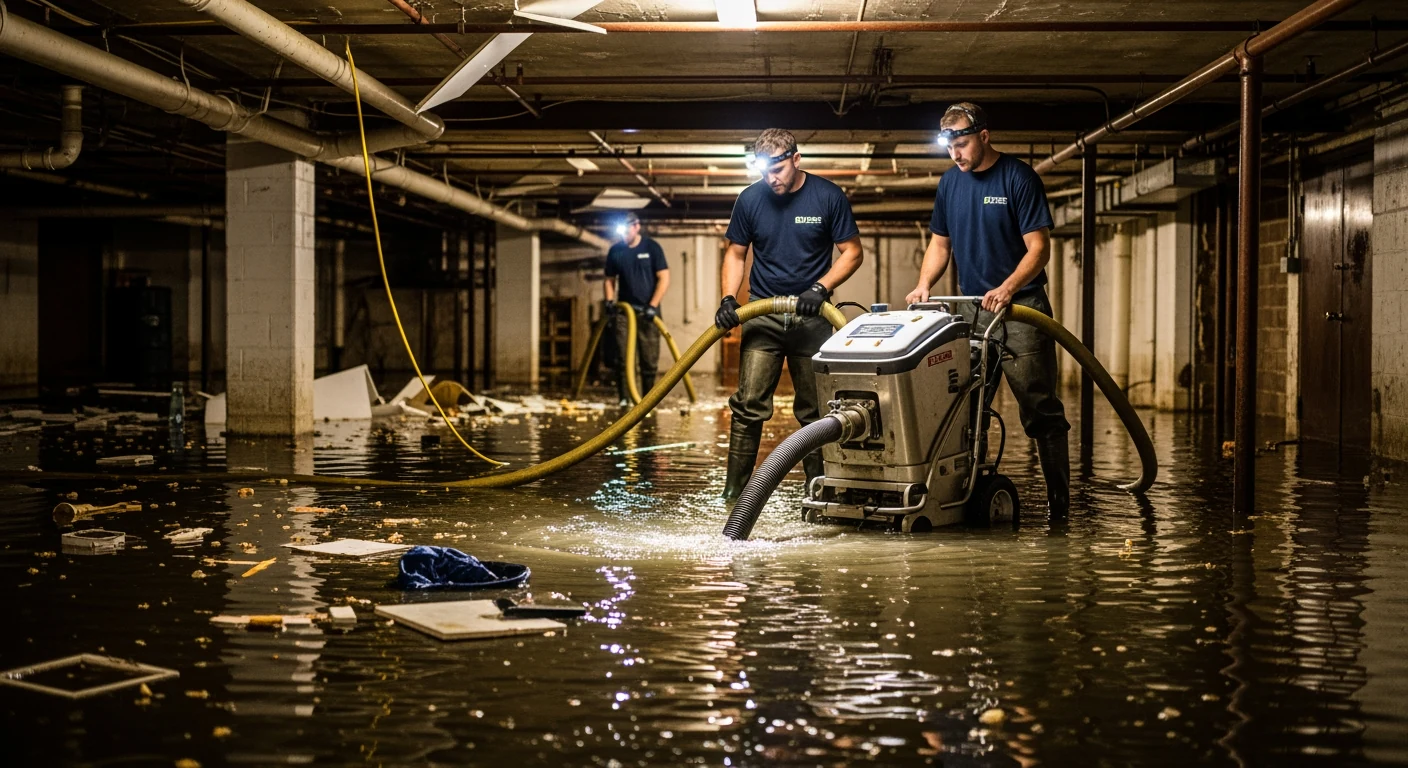
A professional water damage restoration company follows the IICRC S500 standard, which governs the science of structural drying. The process includes water extraction, containment (if contaminated water is involved), placement of air movers and dehumidifiers, daily moisture monitoring, and clearance testing when target moisture levels are reached. Learn more about the full process in our guide to water damage restoration on Long Island.
Frequently Asked Questions
How quickly should a restoration company respond to water damage?
Within 2-4 hours for emergency response, ideally sooner. Mold can begin developing within 24-48 hours of water intrusion, and every hour of delay increases the scope of structural damage. Any company promising 24/7 emergency response should be able to actually deliver it – ask what their typical arrival time is in Nassau and Suffolk County.
Should I call my insurance company before calling a restoration company?
You can do both simultaneously. Calling your insurer starts the claims process, but you don’t need to wait for adjuster approval to begin emergency mitigation – your policy requires you to prevent further damage. A good restoration company can communicate directly with your adjuster once work begins.
What does water damage restoration cost on Long Island?
Costs range from ,000-,000 for minor water intrusion to ,000+ for major flooding with structural damage. Most homeowners insurance policies cover water damage restoration minus the deductible, provided the source is a sudden and accidental event (burst pipe, appliance failure) rather than gradual leakage or flooding (which requires separate flood insurance).
Conclusion
Choosing the right restoration company after water damage protects your home, your insurance claim, and your family’s health. Look for IICRC certification, proper licensing, local presence, and transparent communication – and trust your instincts if something feels off. Upper Restoration is a Long Island-based, IICRC-certified restoration company serving Nassau and Suffolk County. Call us anytime – we respond 24/7.