Fire Damage Restoration Process: Step-by-Step Guide for NYC & Long Island Homeowners
After a house fire, the restoration process begins before the flames are fully out. Time is not on your side: smoke residue starts permanently etching surfaces within hours, water from firefighting soaks into walls and subfloors, and soot continues corroding metals and discoloring materials days after the fire ends. Understanding what a professional restoration company does — and why — helps you make better decisions during one of the most stressful events a homeowner can face.
This guide walks through every phase of fire damage restoration as it actually happens in NYC and Long Island, including realistic timelines, cost ranges, and what to watch for when hiring a contractor.
Phase 1: Emergency Stabilization (Hours 1–24)
Board-Up and Tarping
Before any interior work begins, the structure must be secured. Fires frequently compromise windows, doors, and roof sections — leaving the property exposed to weather, vandalism, and liability. A licensed restoration contractor installs plywood board-ups over openings and heavy-duty tarps over any compromised roof sections within hours of the fire being extinguished.
This step is not optional — it’s required by most insurance policies as part of your “duty to mitigate.” Failure to secure the property can give your insurer grounds to deny subsequent weather-related damage as a separate, uncovered event.
Utility Isolation
Gas, electrical, and water lines are verified off before any crew enters the structure. In NYC, this often requires coordination with Con Edison and NYC DEP. A licensed electrician must certify the electrical system before power can be restored to any section of the home.
Structural Safety Assessment
A structural engineer or experienced project manager conducts a safety walkthrough before full crew entry. Compromised joists, load-bearing walls with char damage, and unstable chimneys are identified and shored before remediation begins. In NYC, this assessment may also trigger NYC DOB notification requirements depending on structural damage extent.
Phase 2: Damage Assessment and Documentation (Day 1–2)
A thorough damage assessment is the foundation of both the restoration scope of work and the insurance claim. Cutting corners here causes problems at every subsequent stage.
Moisture Mapping
Firefighting water — typically thousands of gallons — has soaked into every porous surface. Thermal imaging cameras and pin-type moisture meters map the full extent of water intrusion, including hidden pockets in wall cavities, under flooring, and in ceiling assemblies. Areas that feel dry to the touch are often saturated behind the surface.
Smoke and Soot Mapping
Smoke travels through the entire structure via HVAC systems, wall penetrations, and pressure differentials — reaching rooms far from the fire origin. Every affected surface is catalogued: what type of residue (wet smoke, dry smoke, protein residue, fuel oil soot), how severe, and what cleaning protocol is required.
Contents Inventory
All contents — furniture, clothing, electronics, valuables — are inventoried for insurance purposes before removal. Salvageable contents are packed out to an off-site restoration facility; non-salvageable contents are documented and listed for replacement value claims.
Xactimate Scope of Work
The restoration contractor produces a line-item Xactimate estimate — the industry-standard software insurance adjusters use — documenting every repair and replacement cost. This document drives your insurance settlement. See our guide on fire damage restoration and insurance claims on Long Island for what to expect from the Xactimate process.
Phase 3: Water Extraction and Emergency Drying (Day 1–3)
Water from firefighting must be addressed immediately — it creates a secondary damage event that can rival the fire damage itself. Wet structural materials left unaddressed for more than 24–48 hours begin growing mold, which adds remediation cost and complexity to an already substantial claim.
Standing Water Extraction
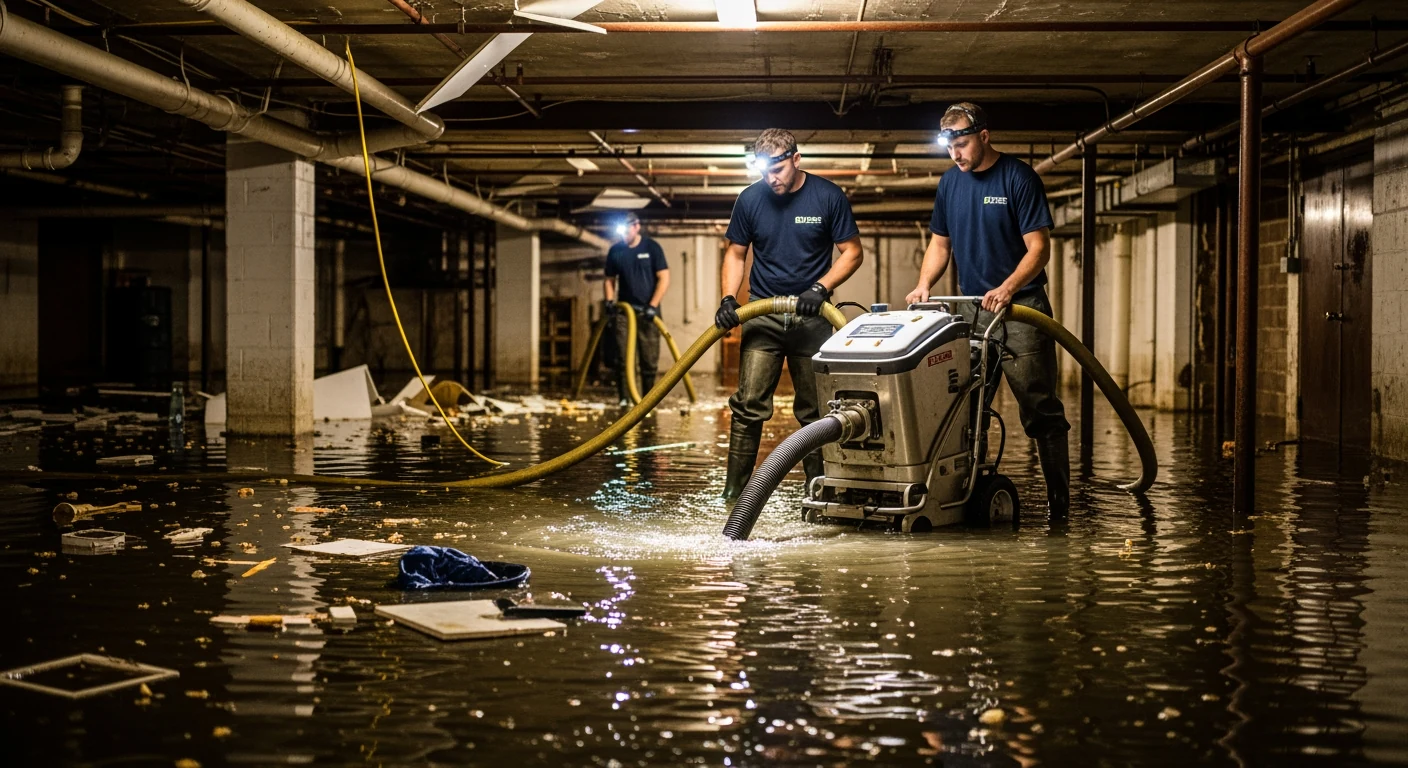
Truck-mounted extraction units remove standing water from floors. In basements and ground-floor spaces, significant volumes of water may have accumulated. This step is completed within the first hours of mobilization.
Wet Materials Assessment
Not all wet materials can be dried in place. Saturated drywall, insulation, and flooring materials are often removed immediately — both because they cannot be adequately dried and because they may have been compromised by smoke residue and heat regardless. The decision to remove vs. attempt drying is guided by moisture readings and material type.
Commercial Drying Equipment Placement
High-capacity dehumidifiers (LGR or desiccant) and directed air movers are placed throughout the structure. Drying typically runs 3–5 days continuously. Daily moisture readings are logged — these drying logs are a required deliverable for insurance claims. Learn more about the water mitigation process and cost in NYC and Long Island.
Phase 4: Soot, Char, and Debris Removal (Day 2–5)
This is the most labor-intensive phase of fire damage restoration and the one most directly tied to long-term odor outcomes. Incomplete soot removal is the primary reason fire-restored homes retain smoke smell for years.
Structural Debris Removal
Charred framing, burned drywall, damaged insulation, and destroyed flooring are demolished and removed. In NYC, fire debris disposal is regulated — waste manifests are required and materials go to licensed facilities. This is not a dumpster-and-truck operation; it is managed demolition with contained removal.
Soot Cleaning — Surface by Surface
Different soot types require different cleaning protocols:
- Dry smoke residue (fast-burning, high-temperature fires): dry chemical sponges followed by HEPA vacuuming. Water-based cleaners can smear dry soot and permanently stain surfaces.
- Wet smoke residue (slow-burning, smoldering fires): stronger chemical cleaners, more labor-intensive. Wet smoke residue has a pungent, sticky character that penetrates deeper into porous surfaces.
- Protein residue (kitchen fires): nearly invisible but extremely pungent. Requires enzymatic cleaners specifically formulated for protein breakdown.
- Fuel oil soot (furnace puffbacks): oil-based residue that smears easily. Requires dry cleaning first, then chemical degreasing.
HVAC System Cleaning
Smoke circulates through ductwork and deposits soot throughout the HVAC system. If the air handler ran during or after the fire, contamination may extend to every room in the home. HVAC cleaning after a fire requires full duct cleaning, filter replacement, and often air handler component replacement. This step is frequently underestimated in scope and cost.
Phase 5: Odor Neutralization (Day 3–7)
Smoke odor is one of the most persistent challenges in fire restoration. Surface cleaning alone does not eliminate odor — smoke molecules penetrate deeply into wood framing, concrete, and HVAC systems. Professional odor neutralization uses multiple technologies in sequence:
Thermal Fogging
A petroleum-based deodorizing agent is heated to produce a fog that penetrates the same pathways smoke traveled — into wall cavities, subfloor voids, and HVAC systems. Thermal fogging is the most effective treatment for penetrating odor sources that cannot be physically cleaned.
Hydroxyl Generators
Hydroxyl generators produce hydroxyl radicals that chemically break down odor-causing molecules. Unlike ozone machines, hydroxyl generators are safe to operate while occupants and pets are present and do not damage rubber, electronics, or fabrics. They run continuously throughout the remediation process.
Ozone Treatment (Unoccupied Structures)
High-concentration ozone treatment is highly effective for severe smoke odor but requires complete evacuation of the structure — including all plants, pets, and people. It is typically the final odor treatment in severely affected structures before reconstruction begins.
Encapsulant Sealer on Framing
Exposed framing and substructural wood that cannot be replaced is sealed with an oil-based encapsulant (typically BIN shellac-based primer) that locks remaining odor molecules into the substrate. This is applied after cleaning and before any new drywall or flooring installation.
Phase 6: Mold Remediation (If Required)
In NYC and Long Island’s humid climate, any structure with significant water intrusion that was not dried within 48 hours will require mold remediation concurrent with fire restoration. This is common — firefighting water soaks into structures faster than drying equipment can address it, and fires that occur at night or in unoccupied buildings may not receive restoration response until 12–24 hours after the event.
In New York State, mold remediation requires a contractor licensed under Article 32 of the New York Labor Law. Verify this license before allowing any contractor to perform mold work. Our mold remediation cost guide covers what Article 32 compliance requires and what licensed remediation costs in this market.
Phase 7: Reconstruction (Week 2–8)
Once all remediation phases are complete and a clearance inspection confirms the structure is clean, dry, and odor-free, reconstruction begins. The scope varies enormously based on fire severity:
| Fire Severity | Reconstruction Scope | Typical Timeline | Cost Range (NYC/LI) |
|---|---|---|---|
| Minor (1 room) | Drywall, paint, flooring in affected room | 1–2 weeks | $8,000–$25,000 |
| Moderate (partial floor) | Multiple rooms, some framing, full repaint | 3–5 weeks | $25,000–$75,000 |
| Severe (structural damage) | Structural repair, full interior rebuild | 6–16 weeks | $75,000–$250,000+ |
| Total loss | Full demolition and rebuild | 6–18 months | $200,000–$1M+ |
In NYC, reconstruction also requires permits from the NYC Department of Buildings (DOB) for structural work, electrical, and plumbing. Permit timelines add weeks to the reconstruction phase — a reality that separates experienced NYC restoration contractors from those unfamiliar with the local permitting environment.
Phase 8: Final Inspection and Certificate of Occupancy
Before the property is reoccupied, a final inspection verifies all work meets code and the structure is safe and clean. In NYC, a Certificate of Occupancy (CO) may be required for properties where structural work was performed. For residential properties in Nassau and Suffolk Counties, local building department sign-off is required for permitted work.
A professional restoration contractor manages the inspection process — scheduling, preparing the property, and responding to any deficiency notices — so the homeowner doesn’t have to navigate the regulatory process alone.
How Long Does Fire Damage Restoration Take?
The honest answer: it depends on severity, but almost always longer than homeowners expect. Here are realistic timelines for different fire scenarios in NYC and Long Island:
- Kitchen fire, contained to one room: 2–4 weeks total (1 week remediation, 1–3 weeks reconstruction)
- Fire affecting multiple rooms, smoke throughout home: 4–8 weeks
- Fire with structural damage: 8–16 weeks
- Near-total or total loss: 6–18 months
Delays in NYC are common due to permit timelines, DOB inspection scheduling, and trade contractor availability. An experienced local restoration contractor — one who has navigated NYC’s permitting system repeatedly — will manage these variables more efficiently than a national franchise unfamiliar with the local regulatory environment.
Working With Your Insurance Company During Fire Restoration
Fire damage claims are the largest residential property insurance claims most homeowners ever file. The claims process runs parallel to the physical restoration — and how well it’s managed directly affects your settlement.
What Your Restoration Contractor Should Provide
- Xactimate estimate covering all remediation and reconstruction line items
- Daily moisture readings and drying logs
- Photo documentation at each phase
- Contents inventory and pack-out documentation
- Subcontractor invoices (HVAC, electrician, structural engineer)
- Permits and inspection records
- Post-remediation clearance certificate
Supplemental Claims
The initial adjuster estimate is rarely the final number. Hidden damage is discovered during demolition, additional mold is found behind walls, and reconstruction costs shift. A good restoration contractor files supplemental claims as additional damage is identified — this is standard practice, not aggressive billing. Learn more about how Upper Restoration works with insurance adjusters to close complex fire claims.
Frequently Asked Questions
What is the first step in fire damage restoration?
The first step is emergency stabilization — board-up of windows and doors, tarping of any compromised roof sections, and utility isolation. This happens within hours of the fire being extinguished and before any interior remediation work begins. It secures the structure against weather and additional damage and is required under most insurance policies as part of the homeowner’s duty to mitigate.
How long does fire damage restoration take?
A contained single-room fire takes 2–4 weeks from initial response to completed reconstruction. Multi-room fires with smoke throughout the home take 4–8 weeks. Fires with structural damage take 8–16 weeks. In NYC, permit and inspection timelines add to these estimates. Near-total losses can take 6–18 months to fully restore.
Can smoke-damaged walls be cleaned or do they need to be replaced?
It depends on the type of smoke residue, the severity of penetration, and the material. Light dry smoke on hard surfaces (concrete, brick, tile) can often be cleaned. Drywall with heavy wet smoke or protein residue penetration is typically replaced because cleaning cannot fully eliminate odor from porous gypsum. Wood framing that cannot be replaced is sealed with encapsulant primer after cleaning.
How is smoke odor removed from a house after a fire?
Professional smoke odor removal uses a multi-step approach: physical removal of all charred and smoke-saturated materials, surface cleaning with chemistry matched to the soot type, thermal fogging to penetrate cavities, hydroxyl generator treatment, ozone treatment in unoccupied structures, and encapsulant sealer on exposed framing. No single treatment eliminates smoke odor — the full sequence is required.
Does fire damage restoration include reconstruction?
Yes, full-service restoration contractors handle both the remediation phases (cleanup, drying, soot removal, odor treatment) and the reconstruction phases (drywall, flooring, painting, cabinetry, structural repairs). Using a single contractor for both phases simplifies insurance claims, eliminates scope gaps between trades, and typically results in faster completion.
What certifications should a fire damage restoration contractor have?
Look for IICRC Fire and Smoke Restoration Technician (FSRT) certification at minimum. For water damage work concurrent with fire restoration, WRT (Water Restoration Technician) and ASD (Applied Structural Drying) are also relevant. In New York, mold remediation requires a separate NYS Article 32 license. For NYC work, verify the contractor holds the required NYC DOB licenses for structural, electrical, and plumbing work within their scope.
Will insurance pay for temporary housing during fire damage restoration?
Most HO-3 homeowners policies include Additional Living Expenses (ALE) or Loss of Use coverage that pays for temporary housing, meals, and other increased living costs while your home is being restored. ALE coverage typically has a time limit (often 12–24 months) and a dollar limit. File for ALE coverage immediately when you open your fire claim — do not wait until you’ve already spent money on a hotel.
What is the difference between fire restoration and fire reconstruction?
Fire restoration refers to the remediation phases — removing damage, cleaning, drying, and neutralizing odor. Fire reconstruction refers to rebuilding the physical structure — installing new drywall, flooring, cabinetry, and finishes. Both are typically required after a significant fire, and the best contractors handle both under a single contract with unified insurance documentation.