Asbestos floor tile removal is one of the most common abatement projects in pre-1980 Long Island homes. Whether you’ve discovered old vinyl tiles during a renovation or you’re doing due diligence before a sale, this guide covers the full removal process, what New York law requires, and what licensed contractors actually charge.
Can You Remove Asbestos Floor Tiles Yourself in New York?
No. New York State prohibits unlicensed individuals from performing asbestos abatement, including floor tile removal. This applies to homeowners as well as unlicensed contractors. The regulation exists because improper removal is far more dangerous than leaving tiles in place—disturbing friable asbestos without proper containment, respirators, and disposal procedures creates serious health risk and potential criminal liability.
Beyond the health risk: waste from asbestos abatement must be disposed of at a licensed hazardous material facility. Unlicensed disposal is a violation of EPA and NYS regulations. The penalties—for both the contractor and the property owner—are significant.
The Professional Asbestos Tile Removal Process
Here is what a licensed abatement team does when removing asbestos floor tiles:
- Pre-work setup: The work area is isolated with plastic sheeting and negative air pressure units. HVAC is shut off for the affected area. Workers wear full protective suits and supplied-air respirators.
- Wet method removal: Tiles are wet down to suppress fiber release before and during removal. Tiles are removed whole where possible to minimize breakage.
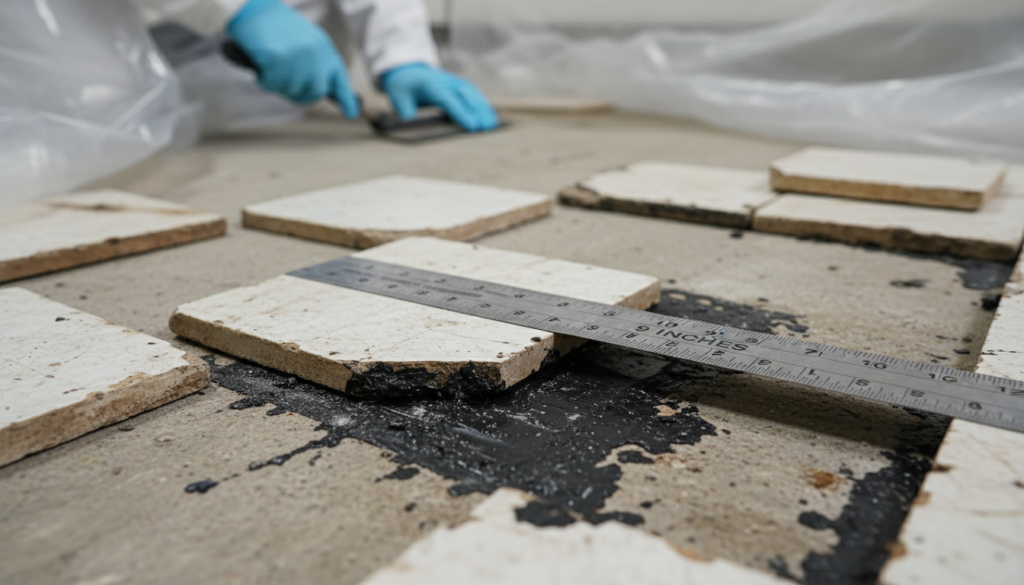
- Mastic treatment: The black adhesive (cutback mastic) remaining on the subfloor is either mechanically removed using appropriate equipment, chemically treated, or encapsulated depending on project requirements and the condition of the substrate.
- HEPA vacuuming: The work area is HEPA-vacuumed throughout the process. Asbestos waste is double-bagged in approved asbestos disposal bags.
- Waste disposal: Waste is transported to an approved hazardous material landfill. The contractor maintains chain-of-custody waste manifests.
- Post-abatement air clearance: For NYC projects and many Long Island projects, an independent inspector performs air sampling after removal. The area cannot be reoccupied until clearance testing passes.
Cost of Asbestos Floor Tile Removal in New York
| Project | Typical Cost (LI/NYC) |
|---|---|
| 200 sq ft (one room, tiles + mastic) | $2,000–$4,000 |
| 300–500 sq ft (basement or kitchen) | $2,500–$6,000 |
| Whole house (1,000–2,000 sq ft) | $6,000–$15,000 |
| Mastic-only encapsulation (when tiles removed by others) | $3–$8 per sq ft |
| Post-abatement clearance testing | $600–$1,200 |
What Happens to the Black Mastic Adhesive?
This is the part of asbestos tile removal that surprises most homeowners. The black cutback adhesive used to install vinyl asbestos tiles frequently contains its own asbestos content—sometimes at higher concentrations than the tiles themselves.
There are three approaches to the mastic:
- Mechanical removal: The adhesive is ground or scraped off the subfloor using appropriate equipment under wet conditions. This is the most complete option but most labor-intensive and expensive.
- Chemical treatment: Specific solvents break down the adhesive. Must be done under containment.
- Encapsulation: If the mastic is intact and the new flooring installation doesn’t require a perfectly clean substrate, the adhesive can be encapsulated with a sealant and new flooring installed over it. This is acceptable under NY regulations for certain project types.
Discuss the mastic treatment approach with your contractor before work begins. The chosen method affects both cost and your future renovation flexibility.
New York Regulations for Asbestos Tile Removal
The key regulatory requirements:
- NYC DEP notification: Required at least 10 business days before abatement begins in NYC. A project monitor may be required for large projects.
- NYS DOL contractor certification: Required statewide. Verify your contractor’s current certification before work begins.
- Disposal documentation: Waste manifests and chain-of-custody records must be maintained and provided to the property owner.
- Post-abatement clearance: Required by NYC DEP for most commercial projects and many residential projects. Verify with your contractor whether it applies to your specific scope.
How Long Does Asbestos Tile Removal Take?
A single room (200–300 sq ft) of floor tile removal typically takes 1–2 days for the abatement work, plus 24–48 hours for post-abatement clearance testing results. A whole-house floor abatement project can take 3–7 days depending on accessibility, the condition of the tiles, and how many crews are on site.
Plan your renovation timeline around the abatement schedule. Flooring installation and other renovation work cannot proceed in the affected area until clearance testing passes.
Upper Restoration is NYS-licensed and NYC DEP-certified. We provide free site consultations and written estimates for floor tile abatement projects across Nassau County, Suffolk County, and the five boroughs.
Call: | Get a Free Quote
Frequently Asked Questions
Can I install new flooring over asbestos tiles instead of removing them?
Yes, if the tiles are intact and in good condition. Installing new flooring directly over undisturbed asbestos tiles is an accepted encapsulation method under EPA guidelines. The tiles and adhesive must not be cut, drilled, sanded, or disturbed during installation. This option works for hard surface and floating floor products but may not work if the new floor requires adhesive or a level substrate achieved by grinding.
Do asbestos floor tiles have to be removed before selling a house?
No mandatory removal requirement exists for a residential home sale in New York. Buyers may negotiate removal or an abatement credit as a condition of sale. If tiles are intact and covered by newer flooring, this often doesn’t become a transaction issue at all.
What happens if a contractor removes asbestos tiles without a license in NY?
Unlicensed asbestos removal is a violation of NYS DOL and EPA regulations. Both the contractor and the property owner can face fines. If contamination results, the cost of remediation falls on the property owner. Always verify a contractor’s current NYS certification before work begins.
Need professional asbestos abatement on Long Island? Upper Restoration provides licensed asbestos abatement and removal services across NYC and Long Island. Contact us for a free assessment.