Asbestos is not a historical footnote on Long Island — it is a present-tense reality in the building stock that houses most of the island’s residents today. The post-war suburban development that filled Nassau County and western Suffolk County between 1945 and 1980 used asbestos-containing materials extensively and legally throughout the entire build period. Chrysotile (white asbestos) was the standard insulating and fireproofing material in floor tiles, pipe wrap, joint compound, ceiling texture, roof underlayment, and boiler insulation during this era. A Long Island home built in 1955 or 1965 almost certainly contains asbestos somewhere in its original construction assembly — not as an anomaly, but as a design feature of the era.
This creates a specific regulatory and practical context for every renovation, restoration, and emergency repair project in Nassau County and western Suffolk County. The question in pre-1980 Long Island construction is not whether asbestos is present — it almost certainly is — but where it is, whether it is friable (able to release fibers when disturbed), and whether the planned work will disturb it. This guide is the authoritative county-level reference for asbestos abatement across Long Island’s 13 townships, covering the regulatory framework under NYS DEC Code Rule 56, the building stock locations where asbestos is found, cost benchmarks, and the intersection of asbestos abatement with water damage, fire, and renovation work.
Where Asbestos Is Found in Long Island’s Housing Stock
The materials that contain asbestos in Long Island’s post-war homes follow predictable patterns by construction era:
Pre-1960 Cape Cods (1945–1959)
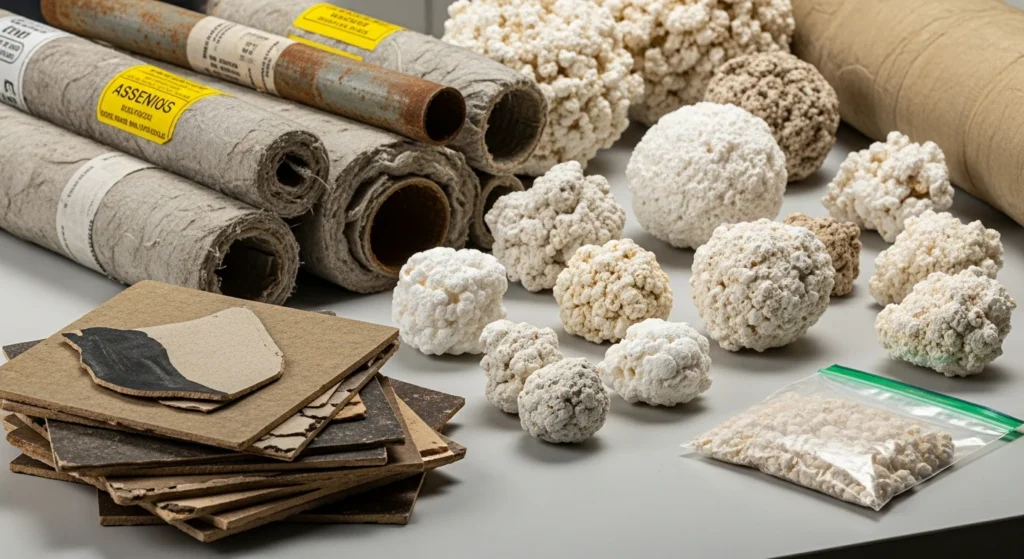
The earliest post-war Cape Cods relied heavily on chrysotile asbestos in their mechanical systems. Pipe insulation on steam and hot water heating systems in these homes is often wrapped in white or gray corrugated paper containing 15 to 30 percent chrysotile by weight — this is among the highest-risk asbestos application because pipe insulation becomes friable as it ages and vibrates. Boiler block insulation in oil-fired systems from this era is similarly high-risk. The floor tiles in kitchens, bathrooms, and basement floors of 1940s and 1950s Cape Cods are typically 9-inch vinyl asbestos tile (VAT) or 12-inch VAT — virtually all 9-inch floor tile from this period contains asbestos at levels between 10 and 30 percent. Original ceiling texture in some homes from this era was applied as a slurry containing chrysotile and is now friable.
1960–1980 Split-Levels and Colonials
Joint compound is the dominant asbestos concern in Long Island homes from the 1960s and 1970s. Premixed joint compound sold under major brand names including Murco, USG, and National Gypsum contained chrysotile at approximately 2 to 6 percent by weight through the mid-1970s. Every taped drywall joint in a 1960s or 1970s Long Island home — and there are thousands of linear feet of them in a typical split-level or colonial — potentially contains asbestos-bearing joint compound. The compound is not friable when undisturbed, but sanding, water damage that softens the compound, or demolition that cracks and breaks the joints releases fibers. This makes joint compound asbestos the most common abatement trigger in Long Island water damage and renovation projects from this era.
Vinyl floor tile in the 9-inch and 12-inch formats continued through the 1970s. Roof shingles on homes built through the mid-1970s frequently contain chrysotile as a reinforcing fiber — these are typically non-friable in good condition but become a disturbance risk during re-roofing or storm damage repair. Exterior transite board (a cement-asbestos composite) was used as exterior siding on some homes from the 1950s through the early 1970s — it weathers over decades and, when weathered, becomes a source of fiber release without any active disturbance.
The Regulatory Framework: NYS DEC Code Rule 56
Asbestos abatement in New York State is governed by NYS Department of Environmental Conservation Code Rule 56 (6 NYCRR Part 56), which establishes licensing requirements, work practice standards, notification requirements, and disposal protocols for all asbestos abatement work in the state. Code Rule 56 applies to all Long Island projects — Nassau and Suffolk Counties have no more restrictive local overlay, but state enforcement through the NYS DEC and the NYS Department of Labor applies fully.
Licensing Requirements Under Code Rule 56
All asbestos abatement work in New York State must be performed by a licensed contractor using licensed workers. The NYS DEC issues four relevant license types: Asbestos Contractor License, Asbestos Supervisor Certificate, Asbestos Handler Certificate, and Air Monitoring Technician Certificate. Before performing any asbestos abatement, the licensed contractor must file a notification with the NYS DEC at least 10 working days before the project begins for projects above the regulatory threshold (generally 10 linear feet of pipe insulation, 10 square feet of other ACM, or 1 cubic foot of other ACM for demolition or renovation projects). Emergency notification requirements exist for emergency abatement situations — typically a 48-hour notice.
What Triggers Code Rule 56 on Long Island
Any renovation, demolition, or restoration project that will disturb materials that contain or are suspected to contain asbestos requires compliance with Code Rule 56. Practical triggers in Long Island renovation and restoration contexts include: removal of floor tiles in pre-1980 homes (even to install new flooring over existing tile requires analysis if the new flooring installation will cut or break the existing tiles), water damage repair that requires removal of joint compound-taped drywall in pre-1978 homes, re-roofing projects on pre-1975 homes, any demolition work as part of a renovation or fire restoration project in pre-1980 construction, and HVAC work that disturbs pipe insulation in homes with original oil-fired or steam heating systems.
Asbestos Risk Profile Across Long Island’s Townships
The asbestos risk profile of Long Island’s townships follows directly from the age distribution of their housing stock:
Nassau County (Hempstead, North Hempstead, Oyster Bay): Nassau County has the highest concentration of pre-1960 housing stock on Long Island — the townships that absorbed the 1945–1965 post-war migration are now home to the island’s oldest and most asbestos-dense residential construction. The Town of Hempstead’s post-war Cape Cod communities — the Levittown model replicated across Uniondale, East Meadow, Franklin Square, and dozens of adjacent communities — represent one of the largest concentrations of pre-1960 residential construction in the United States. Virtually every original Cape Cod in these communities that has not been extensively renovated retains original asbestos-containing floor tiles, pipe insulation if the original heating system remains, and potentially joint compound in walls that were drywalled in the 1960s and 1970s during basement conversions. Oyster Bay’s Hicksville, Plainview, and Massapequa communities and North Hempstead’s Great Neck and New Hyde Park neighborhoods carry similar profiles.
Western Suffolk (Babylon, Islip, Huntington): The 1960s and 1970s split-level and colonial construction that dominates Babylon, Islip, and Huntington carries a different asbestos profile than Nassau’s older Cape Cods — less pipe insulation and boiler block risk, more joint compound and floor tile risk. The drywall joint compound issue is pervasive in this era’s construction. Any water damage restoration project in a Lindenhurst, Bay Shore, or Huntington Station split-level that requires drywall removal should include joint compound bulk sampling before demolition begins.
Central and Eastern Suffolk: The risk diminishes as construction age decreases moving east. Brookhaven’s large township area includes both 1950s south shore communities with full Nassau-equivalent risk and 1980s north shore construction where asbestos is far less prevalent. The East End townships — Southampton, East Hampton, Riverhead, Southold — have more heterogeneous building stock including both historic pre-war construction in their village centers and newer construction in their rural areas. High-value renovation projects in East Hampton and Southampton villages should include asbestos surveys as standard pre-construction practice given the age and complexity of village-area structures.
Cost Benchmarks for Asbestos Abatement on Long Island
- Bulk sampling and laboratory analysis: $600–$1,800 for a residential property survey covering 10–20 samples with 24–48 hour turnaround. This is the mandatory first step for any renovation or restoration project in pre-1980 construction. Results determine whether abatement is required and what scope.
- Floor tile abatement (typical kitchen or bathroom, 100–200 sq ft of VAT): $1,800–$4,500 including containment setup, tile removal, disposal in regulated manifested waste containers, and clearance air monitoring. Code Rule 56 notification required.
- Pipe insulation abatement (basement mechanical room, typical residential scope): $2,500–$7,500 depending on linear footage and whether the insulation is friable or non-friable. Friable pipe insulation requires full containment with negative air pressure and full-suit respiratory protection. Non-friable insulation that can be removed intact may qualify for a less intensive protocol.
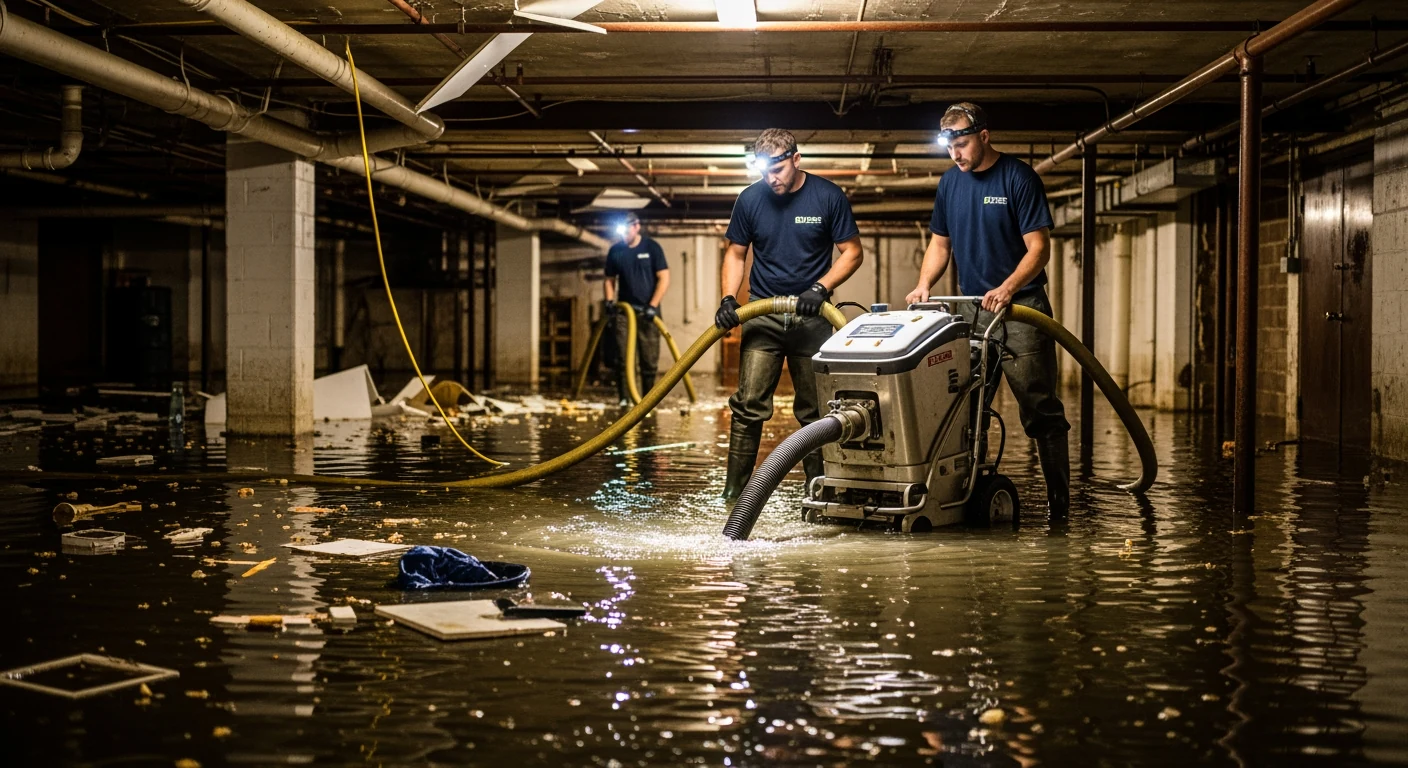
- Joint compound abatement (integrated with water damage drywall removal): $800–$2,500 as an add-on to a water damage or renovation demolition scope. When joint compound tests positive for ACM, the drywall removal work is reclassified as asbestos abatement — requiring licensed personnel, containment, and disposal upgrades.
- Full pre-demolition asbestos survey and abatement (whole-house renovation or fire loss): $8,000–$35,000+ for a comprehensive pre-demolition abatement scope in a Nassau County Cape Cod or split-level with original materials throughout. These projects require the full Code Rule 56 framework: survey, notification, licensed abatement contractor with licensed supervisor and workers, air monitoring, regulated disposal, and clearance certification.
Asbestos and Insurance Claims on Long Island
Standard homeowners policies typically exclude asbestos abatement as a covered restoration cost. This creates a significant cost exposure for Long Island homeowners whose water damage or fire restoration projects trigger asbestos abatement requirements: the restoration costs covered by insurance may exclude the asbestos scope, leaving homeowners to fund abatement out of pocket before the insurance-covered restoration work can begin.
The exception is asbestos abatement that is directly necessary to access and repair covered damage. When a pipe failure in a pre-1980 home requires removal of asbestos-insulated pipe to complete the covered pipe repair, the abatement cost may be argued as necessary to complete the covered repair. This is an active area of Long Island claims dispute — insurers resist including asbestos scope; restoration contractors familiar with the insurance claims process push for inclusion as part of the restoration necessity. Upper Restoration’s estimating team documents the asbestos abatement scope as part of the required restoration sequence and works directly with adjusters to support coverage inclusion wherever the claim supports it.
Township Asbestos Data Files
Upper Restoration maintains township-specific asbestos abatement data files for all 13 Long Island townships. Each file addresses building stock age profile, primary ACM types by construction era in that township, regulatory requirements, and cost benchmarks. Links coming as township files are published.