Fire Damage Restoration on Long Island: Cape Cod Risks, NYSDFS Claim Rights, and the Xactimate Line Items Your Adjuster Will Try to Skip
A fire in a Long Island home is not just a fire. It is a fire in a house built between 1945 and 1980, with oil heat, original electrical, knob-and-tube wiring in the attic, asbestos floor tiles in the basement, and a kitchen that has been renovated twice without anyone pulling permits. When the fire department leaves and the restoration contractor arrives, those specifics drive every decision: what can be saved, what must be demolished, what requires asbestos abatement before a single wall can come down, and — critically — what your insurance company’s adjuster will try to write out of the Xactimate estimate (see also: Xactimate line items Long Island contractors fight for).
This guide covers the fire risks specific to Long Island’s housing stock, how the restoration process unfolds in Cape Cods, split-levels, and Colonials, what New York State law guarantees you in the insurance claim process, and the specific Xactimate line items that Long Island fire restoration contractors fight for on every job — and that adjusters routinely omit on a first-pass estimate.
Why Long Island Cape Cods, Split-Levels, and Colonials Burn Differently
The NFPA reports that heating equipment accounts for approximately 13 percent of all residential fires nationally and that cooking is the leading cause at roughly 49 percent. On Long Island, those national numbers play out in a building stock with specific structural characteristics that shape both how fires spread and how extensively they damage the home.
The Cape Cod Attic Problem
Long Island’s most prevalent residential form — the post-war Cape Cod found in Levittown, Hicksville, Massapequa, Babylon, Bay Shore, Brentwood, and across the South Shore — has an inherent fire spread dynamic that separates it from two-story Colonials and ranch-style homes. The Cape’s defining structural feature is its 1.5-story configuration: the main living space occupies the ground floor, and the upper floor consists of bedrooms tucked under steeply pitched roof slopes, connected to a small central attic space between the knee walls and the ridge.
That central attic cavity is effectively an unobstructed horizontal void running the full length of the house above the second-floor ceiling. When a fire starts on the first floor — a kitchen grease fire, an electrical fault in the walls, a furnace event — heat and combustion gases rise into that attic void and travel laterally across the entire footprint of the home before breaking out through the roof. The result: a Cape Cod with a contained first-floor fire origin can still sustain smoke and heat damage to the entire second-floor ceiling assembly and roof structure before the fire department arrives. The attic void is both a fire highway and a concealment zone for damage that won’t be obvious during a superficial walk-through.
Restoration implications are significant. In a Cape Cod fire loss, the scope of work almost always extends into the attic sheathing and rafters regardless of where the fire originated. This means the Xactimate estimate must account for attic access, insulation removal, and inspection of the full roof deck — scope that adjusters frequently limit to the room of fire origin on an initial walk-through.
Electrical System Age and Oil Heat
The NFPA reports an estimated average of 38,881 home heating equipment fires annually across the U.S. (2019–2023 data), resulting in $1.1 billion in property damages. On Long Island, the heating equipment profile is specific: oil-fired systems dominate the pre-1980 housing stock. Furnace puffback — the explosive ignition of accumulated unburned fuel oil in the combustion chamber — produces one of the most labor-intensive smoke remediation jobs in residential restoration. Oil soot is petroleum-based, not carbon-based like wood fire soot. It smears on contact with water or conventional cleaning agents, permanently staining any porous surface it reaches if not treated with the correct chemistry in the correct sequence (dry removal first, chemical treatment second).
Puffback events typically trigger whole-house soot distribution through the duct system within minutes. Every register in the home becomes a distribution point for oily black residue. The entire HVAC system — supply and return ducts, air handler coil, heat exchanger, and blower — requires professional decontamination before the system can run again. Attempting to run a contaminated HVAC system re-distributes soot throughout cleaned spaces, requiring re-remediation of every affected room.
Electrical fires from original wiring present a different challenge. Homes built before 1940 that were not rewired sometimes still contain knob-and-tube wiring, which lacks grounding and has insulation that degrades with age. Homes from the 1940s through 1970s may have aluminum wiring in branch circuits — aluminum expands and contracts differently than the copper used in connections and fixtures, creating loose contacts that arc over time. A fire originating in a wall from deteriorated aluminum wiring or failing knob-and-tube leaves no obvious external burn pattern on the first walk-through, but the fire has typically traveled through wall cavities before it becomes visible. Scope includes opening wall sections for inspection and documentation — work adjusters often resist authorizing without pushback from a knowledgeable contractor.
Asbestos: The Hidden Co-Factor in Every Long Island Fire Restoration
Any Long Island home built before 1980 — which encompasses the majority of the South Shore and significant portions of Nassau County and western Suffolk County — should be assumed to contain asbestos-containing materials until testing proves otherwise. In a fire restoration context, this means demolition cannot begin until a pre-demolition asbestos survey is completed under New York State Code Rule 56. Friable asbestos materials disturbed during fire-related demolition require abatement by a licensed NYS DOL contractor before any reconstruction work can proceed.
Common asbestos-containing materials in Long Island’s fire-damaged homes include: floor tiles (9×9 and 12×12 vinyl composite tile from the 1950s–70s), pipe insulation on basement heating lines, duct wrap on oil furnace systems, joint compound in drywall installed before 1978, textured ceiling treatments (including popcorn ceilings), and roof shingles on homes with original or early replacement roofing. The fire itself may have disturbed these materials, releasing fibers. The abatement requirement is not optional and is typically billable to the insurance claim as a necessary step in the restoration process — but only if the contractor documents it correctly and includes it in the scope.
The NYSDFS Fire Insurance Claim Process: Your Legal Rights in New York
New York State homeowners have legal protections in the insurance claim process that most never invoke because they don’t know they exist. The New York State Department of Financial Services (NYSDFS) enforces mandatory timelines and consumer rights that apply to every fire damage claim filed against a homeowners policy in the state.
Mandatory Insurer Response Timelines
Under NYS Insurance Law and NYSDFS regulations, your insurance company is legally required to acknowledge your claim in writing within 15 business days of receiving notice. After you submit a completed claim with all requested documentation, the insurer must either accept or deny the claim within 15 business days. If they require more time to investigate, they must provide written notification of the reason and are allowed up to 90 days — but they must update you throughout that period.
For fire claims specifically, you must notify your insurer immediately after the loss. The 60-day Proof of Loss deadline is triggered when the insurer sends you the forms — not from the date of the fire. Read the forms carefully when they arrive and track that 60-day window explicitly; missing it can complicate your recovery even though New York courts have sometimes provided relief.
The Appraisal Process: Your Built-In Dispute Mechanism
Every homeowners, tenant, cooperative apartment, and condominium policy issued in New York State contains an appraisal clause. If you and your insurance company cannot agree on the amount of a covered loss — which is common in fire claims when the adjuster’s Xactimate estimate and the contractor’s estimate diverge significantly — either party can invoke the appraisal process.
In the appraisal process, you select a competent and disinterested appraiser. The insurance company selects their own appraiser. The two appraisers together select an umpire. Each appraiser evaluates the loss independently; disagreements between them go to the umpire for resolution. The decision of any two of the three (both appraisers, or one appraiser and the umpire) is binding. Costs of the appraisal process are shared between you and the insurance company.
This process is separate from litigation and is often faster. If your contractor has documented the full scope in a detailed Xactimate estimate and the adjuster has written a materially lower scope, invoking appraisal with a qualified public adjuster or your contractor’s detailed estimate as the basis is often the most efficient path to a fair settlement.
Public Adjusters: What New York Law Allows
In New York, public adjusters are licensed by the NYSDFS and represent you — not the insurance company. A public adjuster’s fee is capped by law at 12.5 percent of the recovery amount and is negotiable below that ceiling. If you face a major fire loss and are struggling to document scope, navigate the adjuster process, or respond to a low initial estimate, a licensed public adjuster can take over day-to-day claim management, negotiate directly with the insurer’s adjuster, and pursue supplemental claims for items the initial estimate missed.
One important nuance: hiring a public adjuster does not prevent you from also invoking the appraisal process if negotiations stall. Both tools are available to New York homeowners. If the insurer’s conduct seems unreasonable or in bad faith, you can file a complaint directly with the NYSDFS at dfs.ny.gov — the department has the authority to impose penalties on insurers for unfair claim handling.
Additional Living Expenses (ALE): What Your Policy Covers
If your home is uninhabitable after a fire, standard homeowners policies include Additional Living Expenses (ALE) coverage — also called Loss of Use coverage — that pays for temporary housing, meals above your normal food costs, laundry, storage, and other costs you incur because you cannot live in your home. ALE coverage is typically 20 to 30 percent of your dwelling coverage limit, though higher amounts are available on some policies.
ALE claims require documentation: receipts for every expense, hotel bills, restaurant receipts when they exceed your normal food budget. Keep a daily log from the moment you are displaced. Insurance companies are entitled to audit ALE expenses and will disallow undocumented or non-qualifying costs. Long Island fire restoration projects for significant losses commonly run 90 to 180 days — that is a substantial ALE exposure that most homeowners underestimate when they first assess the situation.
Xactimate: The Line Items Your Long Island Adjuster Will Try to Skip
Xactimate is the industry-standard estimating software used by virtually all property insurance adjusters in North America to price fire, water, mold, and storm damage claims. Your contractor’s estimate is almost certainly also written in Xactimate — which means both sides are speaking the same language, and disagreements come down to which line items are included in the scope and what quantities are assigned to each.
The following are the categories and specific line items that Long Island fire restoration contractors most commonly fight for — and that adjusters routinely omit or undervalue on first-pass estimates. Homeowners who understand these categories are far better positioned to evaluate their adjuster’s estimate and identify where supplemental claims are warranted.
1. Soot and Smoke Cleaning by Material Type
Fire soot is not uniform, and Xactimate has separate line items for cleaning different materials and surface types for a reason: the labor and chemistry required differs significantly. Adjusters frequently write a single cleaning rate across all surfaces rather than differentiating by material. The correct scope separates cleaning of painted drywall, wood trim, wood cabinetry, concrete block, brick, and metal — each requiring different cleaning chemistry, different equipment, and different labor times.
Protein smoke from kitchen fires requires a specific line item for sealing surfaces before repainting — without an encapsulant primer, smoke odor bleeds through standard paint coats regardless of how many are applied. This is a legitimate, necessary, and billable step that adjusters frequently omit because it is not visible damage in the conventional sense. Documenting it with photographic evidence of the kitchen involvement and written protocol justification is the path to getting it approved.
2. Structural Drying and Water Damage from Suppression
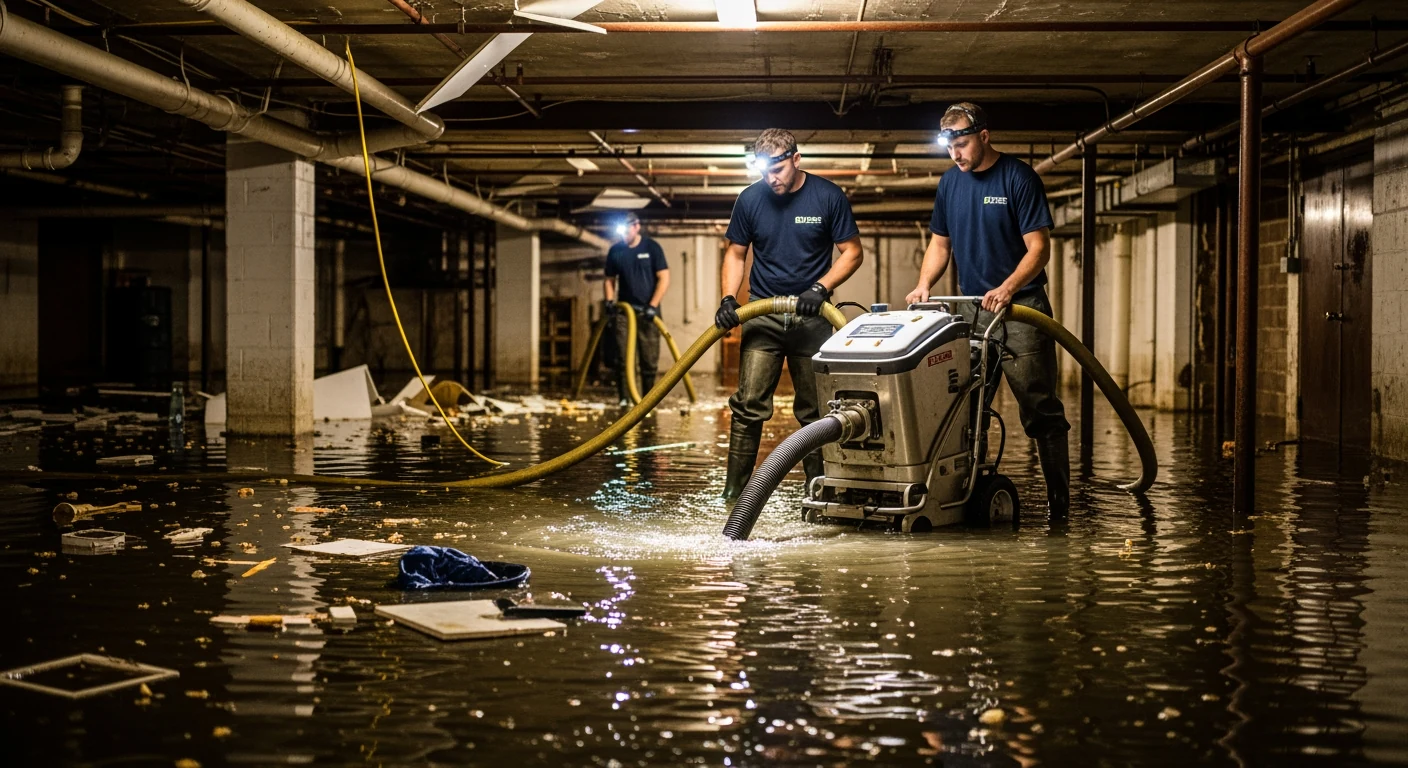
Every fire that is extinguished with water creates a water damage claim inside the fire claim. The suppression water that soaked the structure must be extracted and dried under IICRC S500 protocols before reconstruction can begin — wet framing concealed behind new drywall will grow mold within weeks, creating a second, separate claim months later. Adjusters frequently underfund the structural drying scope, authorizing three or four days of equipment when the structure requires seven to ten, or omitting daily monitoring charges that are standard and necessary under S500.
The line items to watch: air mover placement and daily rate, dehumidifier capacity and daily rate, daily monitoring and moisture log documentation, and antimicrobial application to structural assemblies after drying. Each of these is separately billable and separately supported in Xactimate’s price list — and each is routinely reduced or omitted in adjuster-generated estimates.
3. Contents Pack-Out, Storage, and Cleaning
When a home has sustained smoke or soot contamination throughout the living areas, moving your belongings out of the property for off-site professional cleaning — a contents pack-out — is both necessary for the restoration process and covered under standard homeowners policies. Pack-out allows the restoration team to work throughout the home without contaminating or re-contaminating cleaned contents, and it allows contents cleaning specialists to treat items in a controlled environment with appropriate equipment.
The pack-out scope in Xactimate includes: inventory and documentation of every item removed, packing labor and materials, transportation to and from the cleaning facility, contents cleaning by item type (hard goods, soft goods, electronics, documents), climate-controlled storage during the restoration period, and re-delivery and setup. Adjusters commonly approve pack-out transportation but omit storage, or approve pack-out labor but undercount the item inventory. A detailed room-by-room contents inventory with photographs of every item taken before pack-out is the single most important documentation step for maximizing contents recovery — and it must be done before cleaning begins, because once items are cleaned, the pre-loss damage state cannot be documented retroactively.
4. Demolition: Full Scope Including Concealed Areas
The demolition scope in a fire restoration must account for more than the visibly burned areas. In Long Island’s Cape Cods and split-levels, the areas that require inspection and potential demolition after even a contained fire include: the attic void above the fire floor (especially in Cape Cods), wall cavities adjacent to the fire origin where smoke migrated, HVAC ductwork attached to the fire floor, and any assembly where fire suppression water traveled.
Adjusters write demolition scope based on the visible burn pattern during the initial walk-through. Experienced restoration contractors know that smoke damage in concealed spaces is not visible on that walk-through — it requires invasive inspection, which itself must be authorized in the initial scope. The line items to ensure are included: exploratory demolition for concealed area inspection, not just final demolition of confirmed damaged assemblies; demolition of duct sections that contacted fire or soot; and attic access and inspection as a line item even when the fire origin was a lower floor.
5. Asbestos Abatement as a Line Item in the Fire Claim
When pre-demolition testing confirms the presence of asbestos-containing materials in the fire-affected areas, asbestos abatement is a necessary and billable precondition to demolition. It is not a separate property claim or a health-and-safety add-on that lives outside the fire restoration scope — it is a required step in the fire restoration process for pre-1980 homes and should appear as a line item in the Xactimate estimate with appropriate unit costs and supporting documentation from the pre-demolition survey.
Adjusters sometimes attempt to classify asbestos abatement as a pre-existing condition issue rather than a fire-triggered cost, on the theory that the asbestos was present before the fire. The correct counterargument: the abatement would not have been required but for the fire damage necessitating demolition. It is a fire-triggered cost and belongs in the fire claim. Get the pre-demolition survey documented with photographs and the written lab report attached to the estimate.
6. Overhead and Profit (O&P)
Overhead and profit is a standard addition to Xactimate estimates — typically 10 percent overhead and 10 percent profit applied to the subtotal — and reflects the general contractor’s cost of managing a multi-trade restoration project. Adjusters sometimes omit O&P on restoration projects, particularly when the claim involves primarily specialty trade work (soot cleaning, asbestos abatement) without structural reconstruction. The appropriate standard is that O&P applies when the restoration requires coordination of multiple trades or significant project management — which describes virtually every significant fire loss on Long Island. O&P on a $60,000 project adds $12,000 to the legitimate recovery; it is not a negotiating chip but a standard line in a properly scoped Xactimate estimate.
7. Code Upgrades: What the Policy Must Cover
When reconstruction after a fire requires bringing the building up to current code — and in Long Island’s pre-1980 housing stock, it almost always does — many homeowners policies include ordinance or law coverage that pays for the cost differential between restoring to pre-loss condition and meeting current building code requirements. Common code upgrades in Long Island fire restorations include: GFCI outlets and arc-fault circuit interrupters required by current NEC standards, bathroom exhaust fans that must now vent to the exterior (not the attic), updated smoke and carbon monoxide detector placement, and insulation R-values in reconstructed assemblies that exceed what the original home had.
If your policy includes ordinance or law coverage (check your declarations page — it appears as a separate coverage with its own limit), document every code-required upgrade in the Xactimate scope with a supporting code citation. These costs are separately reimbursable above the actual cash value or replacement cost of the damaged elements themselves.
Fire Damage Restoration Costs on Long Island: 2026 Pricing Tiers
Fire restoration costs on Long Island run above both the national average and most other New York metro submarkets because of the complexity of pre-1980 housing stock, the frequency of asbestos abatement requirements, local disposal costs for hazardous materials, and the labor market in Nassau and Suffolk Counties. The national average for residential fire restoration is approximately $27,000 (HomeAdvisor 2025 data); Long Island projects routinely run higher given the specific factors above.
Minor fire loss — contained kitchen fire, puffback, or isolated electrical event with limited structural damage: $8,000–$25,000. This tier covers emergency stabilization and board-up, soot and smoke cleaning throughout affected rooms, HVAC decontamination, pack-out and cleaning of affected contents, odor neutralization, and cosmetic reconstruction (paint, trim, limited drywall). Puffback events with whole-house soot distribution commonly run $15,000–$25,000 because the cleaning scope is the entire heated space.
Moderate fire loss — one to two rooms with structural involvement, suppression water damage, attic damage in a Cape Cod: $25,000–$80,000. This tier adds structural demolition, framing inspection and possible repair, complete HVAC replacement if contaminated beyond cleaning viability, full contents pack-out, and reconstruction of affected rooms. Asbestos abatement for floor tiles, pipe insulation, or drywall joint compound in demolished areas adds $3,000–$10,000 depending on scope.
Major fire loss — multi-room structural damage, roof involvement, or whole-house smoke distribution requiring full pack-out and reconstruction: $80,000–$250,000+. This tier encompasses complete demolition of affected areas, full asbestos survey and abatement, complete contents pack-out, whole-house odor treatment, full structural reconstruction, HVAC replacement, and all interior finishes. A heavily damaged Long Island Cape Cod or split-level at this tier can approach or exceed the home’s insured value, which triggers the total loss threshold in many policies.
One figure worth knowing from the contractor side: a kitchen grease fire in a 2,500-square-foot home — Class K, oily soot, smoke through the HVAC, suppression water, and protein smoke odor on all surfaces — commonly totals $40,000–$65,000 in Long Island in 2026 when the full legitimate scope is written. An adjuster’s first-pass Xactimate estimate for the same loss, written without contractor input, often comes in at $20,000–$30,000. That gap is the supplemental claim opportunity — and it is recoverable with the right documentation and the right contractor advocating for the correct scope.
Frequently Asked Questions: Fire Damage Restoration on Long Island
How much does fire damage restoration cost on Long Island?
Fire damage restoration on Long Island costs $8,000–$25,000 for minor losses (contained kitchen fire, puffback, isolated electrical event), $25,000–$80,000 for moderate losses with structural involvement, and $80,000–$250,000 or more for major losses with multi-room structural damage and full reconstruction. Long Island costs run above the national average of approximately $27,000 due to pre-1980 housing complexity, asbestos abatement requirements, and local labor rates.
Why do Cape Cod homes on Long Island sustain more fire damage?
Long Island’s post-war Cape Cod homes have a central attic void above the second floor that runs the full length of the house. When fire starts on the ground floor, heat and smoke travel through this void laterally before breaking out through the roof, causing smoke and heat damage throughout the attic assembly and second-floor ceiling even when the fire origin is contained. This structural characteristic means Cape Cod fire scopes almost always include attic inspection and remediation regardless of where the fire started.
What are my rights under New York State law when filing a fire insurance claim?
New York State requires your insurer to acknowledge your claim in writing within 15 business days and accept or deny it within 15 business days of receiving a completed claim submission. Every NYS homeowners policy includes an appraisal clause — if you and the insurer disagree on the loss amount, either party can invoke a binding appraisal process. Public adjusters licensed by the NYSDFS can represent you; their fee is capped at 12.5 percent of recovery by law. You can file complaints about insurer misconduct directly with the NYSDFS at dfs.ny.gov.
What Xactimate line items do Long Island fire adjusters most commonly skip?
The most commonly omitted or undervalued line items are: protein smoke encapsulant primer before repainting (required after kitchen fires), full structural drying scope including daily monitoring, contents pack-out storage charges, exploratory demolition for concealed area inspection in attics and wall cavities, asbestos abatement as a fire-triggered scope item in pre-1980 homes, overhead and profit on multi-trade projects, and code upgrade costs covered under ordinance or law provisions. Each of these is legitimate, billable, and worth pursuing in a supplemental claim with proper documentation.
Does homeowners insurance cover asbestos abatement after a fire?
Yes — when asbestos abatement is required as a precondition to fire-related demolition, it is a fire-triggered cost and belongs in the fire insurance claim. Adjusters sometimes attempt to classify it as a pre-existing condition, but the correct position is that the abatement would not have been required but for the fire damage necessitating demolition. Document it with the pre-demolition survey report and lab results attached to the Xactimate estimate.
What is a furnace puffback and how is it different from a structural fire?
A puffback occurs when unburned oil accumulates in the combustion chamber of an oil-fired furnace and ignites explosively, ejecting oily soot through the ductwork throughout the entire heated space. Unlike a structural fire, a puffback typically causes no structural damage but distributes petroleum-based soot across every surface in the home. Oil soot smears on contact with water or standard cleaners; it requires specialized dry removal chemistry first. Whole-house puffback cleanups on Long Island typically cost $15,000–$25,000 because every room in the home requires treatment.
What is Additional Living Expenses (ALE) coverage and how long does it last?
ALE coverage pays for temporary housing, excess meal costs, laundry, and other living expenses you incur because your home is uninhabitable after a fire. Standard policies typically cover 20 to 30 percent of your dwelling limit; higher amounts are available. ALE coverage lasts until your home is restored to habitability or the policy limit is exhausted — whichever comes first. Long Island fire restorations for significant losses commonly take 90 to 180 days, requiring careful ALE documentation from day one. Keep receipts for every expense and maintain a daily log.
How long does fire damage restoration take on Long Island?
Minor fire losses with no structural damage take two to four weeks. Moderate losses with structural involvement and reconstruction typically take six to twelve weeks. Major losses requiring full demolition, asbestos abatement, and whole-house reconstruction can take four to twelve months. The asbestos survey and abatement requirement in pre-1980 Long Island homes adds one to three weeks to the timeline that does not apply in newer construction — this is the most common source of timeline surprise for Long Island homeowners navigating their first significant fire loss.