For a business or Commercial Property owner, discovering asbestos requires immediate and professional action. Seeing your property sealed off with caution tape during an abatement can be concerning, especially when considering the impact on your operations. However, understanding the strict, regulated process can provide peace of mind that the job is being done safely, legally, and efficiently.
While every commercial project has unique requirements, a professional asbestos abatement process always follows these key steps to ensure the safety of your employees and tenants, and maintain full legal compliance.
The 5 Critical Steps of Commercial Asbestos Removal
- Professional Asbestos Survey: Before any work begins, a certified inspector conducts a comprehensive survey of the property to identify all asbestos-containing materials (ACMs). Samples are sent to a lab to confirm the presence and type of asbestos. This step is a legal requirement before any renovation or demolition of a commercial property.
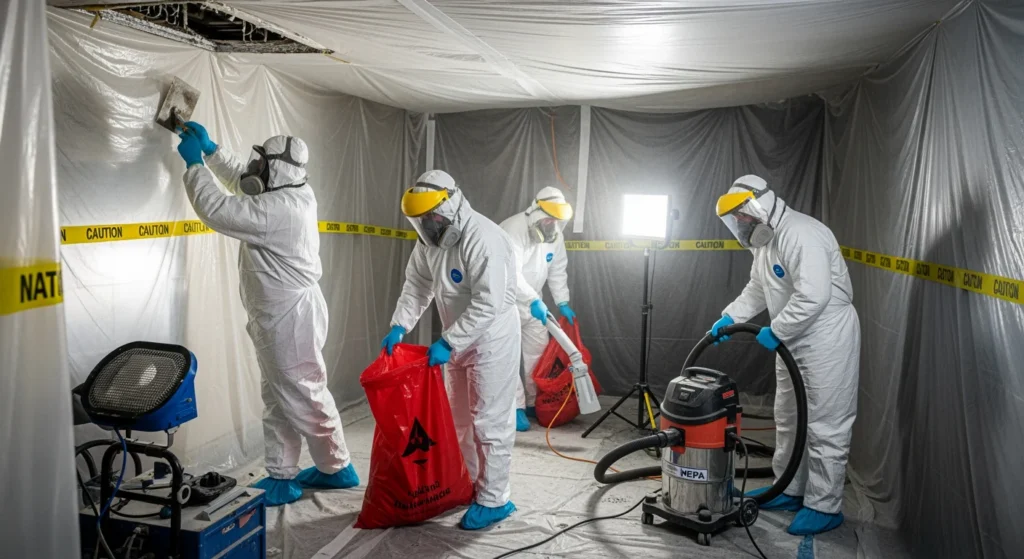
- Containment and Work Area Preparation: This is arguably the most critical phase for a business. The work area is completely sealed off from the rest of the building using heavy plastic sheeting and negative air pressure machines. This prevents any disruption or contamination to business operations in other parts of the property.
- Safe and Compliant Removal: Licensed technicians, wearing full personal protective equipment (PPE), carefully remove the ACMs. They use specialized techniques, such as wetting the materials, to prevent fiber release and ensure the safety of everyone on site.
- Secure Transportation and Disposal: The removed asbestos is immediately sealed in special, leak-proof bags that are clearly marked as hazardous waste. It is then transported by a licensed hauler to a designated EPA-approved facility. All disposal is documented to protect your business from future liability.
- Decontamination and Air Clearance: Once removal is complete, the containment area is meticulously cleaned with special HEPA vacuums. An independent third-party air monitoring firm then conducts thorough air sampling. Only after this testing certifies the area is safe can it be reopened for business activities.
Frequently Asked Questions for Commercial Abatement
How will this process affect my business operations? The goal is always to minimize disruption. The work area will be completely sealed off and inaccessible. Depending on the location of the asbestos, you may need to cease operations in that specific section of the building, but other areas can often remain functional. A good contractor will work with you to create a schedule that minimizes downtime.
Do I need to inform my employees or tenants about the asbestos removal? Yes. As a property owner or employer, you have a legal obligation (a “duty to inform”) to notify employees, tenants, and contractors about the presence of asbestos and any planned abatement work. Clear communication is essential for both safety and legal compliance.
Upper Restoration provides professional licensed asbestos abatement services across Nassau County, Suffolk County, and all five NYC boroughs — available 24/7.
What kind of documentation should I receive after the project is complete? Upon completion, you should receive a comprehensive report that includes the air clearance certificate from the independent testing firm and waste disposal records from the hazardous waste facility. These documents are your legal proof that the asbestos was removed and disposed of safely and according to all regulations.
Need professional asbestos abatement on Long Island? Upper Restoration provides licensed asbestos abatement and removal services across NYC and Long Island. Contact us for a free assessment.