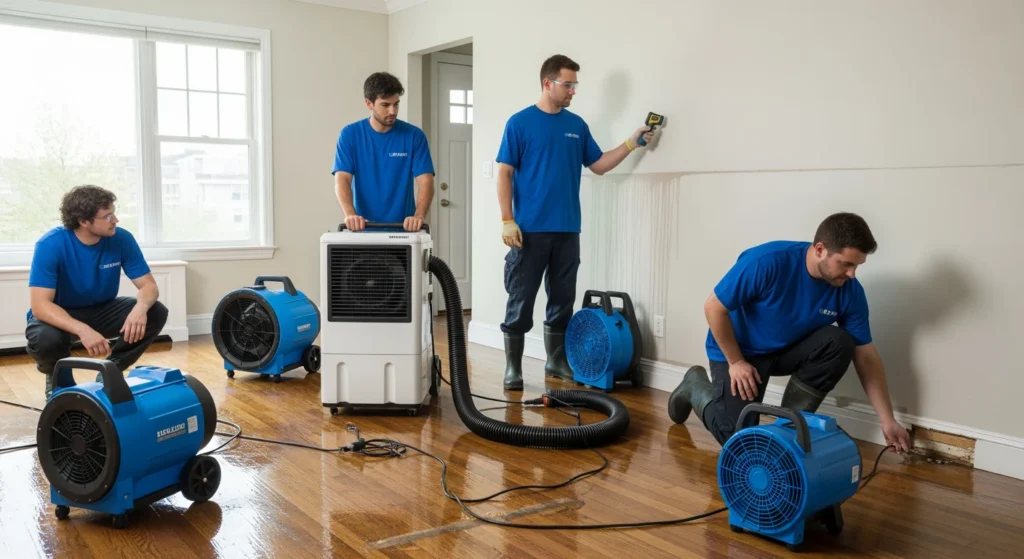
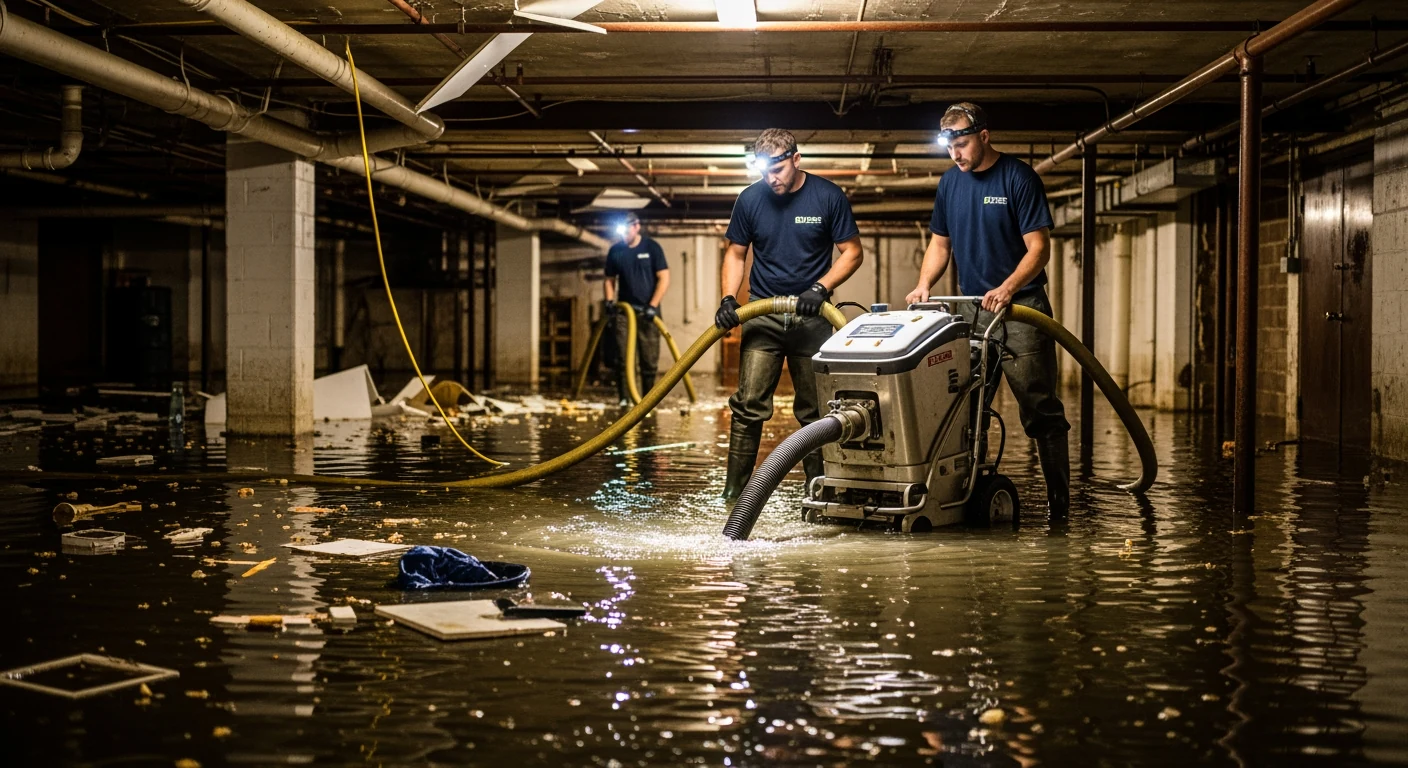
Water damage and flood damage sound interchangeable. For insurance purposes, they are fundamentally different — and the distinction can mean the difference between a covered claim and tens of thousands of dollars in out-of-pocket losses. Every New York homeowner needs to understand this before a loss event, not after.
The Core Distinction: Source and Policy Type
| Water Damage | Flood Damage | |
|---|---|---|
| Source | Internal — pipes, appliances, roof penetrations | External — rising water, storm surge, overflow |
| Coverage | Standard homeowners policy (HO-3) | Separate flood insurance policy required |
| Water category | Category 1 (clean) to Category 2 | Category 3 (contaminated) by default |
| Common cause in NYC/LI | Burst pipes, appliance failure, roof leaks | Storm surge, tidal flooding, sewer backup |
| NFIP required? | No | Yes — NFIP or private flood policy |
What Insurers Call “Water Damage”
Water damage in insurance terms refers specifically to damage caused by water that originates inside the structure from a sudden, accidental event. Covered sources under a standard HO-3 policy typically include burst or frozen pipes, overflowing toilets, sinks, or bathtubs, failed dishwashers, washing machines, or water heaters, roof leaks caused by wind or hail damage, and HVAC condensate line failures.
Two critical qualifiers: the event must be sudden (not gradual), and it must be accidental (not the result of deferred maintenance or neglect). A burst pipe that fails catastrophically overnight is covered. A slow leak under a sink that has been dripping for months and is finally discovered when the cabinet floor rots through is typically excluded as a maintenance issue. The physical evidence — tide lines, mineral deposits, mold growth patterns — tells adjusters whether the event was recent and sudden or long-term and gradual.
What Counts as “Flood Damage”
FEMA’s National Flood Insurance Program defines a flood as a general and temporary condition of partial or complete inundation of normally dry land areas from overflow of inland or tidal waters, unusual and rapid accumulation of surface waters from any source, or mudflow. The practical test: did the water enter from outside the structure? If yes — storm surge, tidal flooding, overflowing storm drains, or groundwater rising through foundation walls — it is flood damage, and it is not covered under standard homeowners insurance.
Superstorm Sandy in 2012 illustrated this distinction with devastating clarity for tens of thousands of NYC metro area homeowners. Properties that flooded from storm surge had no coverage under their homeowners policies. Only those with separate NFIP or private flood policies received reimbursement for flood losses. Many homeowners learned this distinction for the first time when filing claims after the storm.
The Sewer Backup Problem: Neither and Both
Sewer backup — water backing up through floor drains, toilets, or basement fixtures from a overwhelmed municipal sewer system — occupies an ambiguous middle ground. It is not a flood in the technical NFIP definition (it enters through the plumbing system, not through the structure envelope). But it is also not covered under most standard HO-3 policies without a specific sewer backup endorsement. In NYC and Long Island, where combined sewer systems regularly overflow during heavy rain events, sewer backup is a significant and underinsured risk. Check your policy for a sewer backup rider — if you don’t have one and live in an area with a history of sewer surcharging, add it.
NYC and Long Island Flood Risk: What You Need to Know
FEMA flood zone designation determines whether flood insurance is required by your mortgage lender and affects your premium. Properties in Special Flood Hazard Areas (SFHAs) — designated Zones A and V — face a 1% annual flood chance (100-year floodplain) and lenders require NFIP coverage. Significant sections of Nassau and Suffolk County’s South Shore, Jamaica Bay communities in Queens, coastal Brooklyn, and Staten Island fall within SFHA zones.
Following Sandy, FEMA revised flood maps for the NYC metro area — many properties were added to SFHAs that were not previously designated, increasing required coverage. Check your current FEMA flood zone designation at FEMA’s Flood Map Service Center (msc.fema.gov) and verify your insurer has your current designation. Zone changes can affect both coverage requirements and premiums.
Even outside SFHA zones, flood insurance is worth considering. FEMA data shows that more than 20% of flood claims come from properties outside high-risk zones. Moderate-risk zone premiums (Zones B, C, X) are substantially lower than SFHA premiums and provide coverage that standard policies don’t.
What to Do Immediately After Water or Flood Damage
- Document the source before cleanup begins — photograph the origin point (burst pipe, storm entry point, flood line on walls) before any water is removed. Source documentation is how you establish whether the event is covered under homeowners or requires flood coverage.
- Call your insurer within 24 hours — most policies require prompt notification. Get a claim number and confirm adjuster assignment.
- Do not wait on water extraction — clean water degrades to Category 2 within 24–48 hours and Category 3 within 72 hours. Floodwater is Category 3 from the first moment of contact. Begin extraction immediately while the claim process runs in parallel.
- Preserve all damaged materials until the adjuster visits — do not discard water-damaged contents before documentation. Adjuster sign-off is required for contents claims.
- Contact a certified restoration company — professional documentation (moisture logs, photos, damage reports) supports both homeowners and flood claims.
Upper Restoration responds within 90 minutes, 24/7. We work directly with all major carriers and NFIP adjusters, and provide the Xactimate-compatible documentation required for both claim types. See our related guide on how insurance companies work with restoration claims and our overview of the 5 most common forms of water damage.
Upper Restoration provides professional water damage restoration services across Nassau County, Suffolk County, and all five NYC boroughs — available 24/7.
Frequently Asked Questions
Does homeowners insurance cover basement flooding?
It depends on the source. Basement flooding from a burst pipe or failed sump pump (where the failure itself is sudden) may be covered. Basement flooding from groundwater seeping through foundation walls, or from surface water during a storm, is flood damage — not covered under HO-3. Sewer backup through a basement floor drain is covered only if you have a sewer backup endorsement.
How is storm damage water different from flood damage water?
Wind-driven rain that enters through a damaged roof or window is typically covered as a windstorm claim under HO-3. Water that enters from ground-level rising water — even during the same storm — is flood damage requiring a flood policy. A home that experiences both in the same storm event may have two separate claims under two separate policies.
What does NFIP flood insurance cover?
NFIP policies cover the building structure (up to $250,000) and contents (up to $100,000) separately — you must purchase both. Coverage is for direct physical loss from flooding; it does not cover additional living expenses, temporary housing, or business interruption. Private flood policies often provide higher limits and may include these additional coverages.
If my neighbor’s sump pump overflows onto my property, is that covered?
Surface water overflow from a neighboring property entering your structure is treated as flood damage under most policies — not covered under HO-3 without a flood or surface water endorsement. You may have a negligence claim against the neighbor depending on whether the overflow resulted from improper installation or maintenance, but that’s a separate legal matter from your insurance coverage.
How long does flood damage restoration take compared to water damage?
Flood (Category 3) restoration takes significantly longer than clean water events of equivalent volume because all porous materials that contacted floodwater must be removed rather than dried. A flooded basement that would take 3–5 days to dry after a clean pipe burst can require 2–3 weeks of demolition, decontamination, and drying for a comparable flood event. Floodwater also requires hazmat-level PPE and disposal protocols that extend the timeline.