
Water Damage Restoration in Valley Stream, NY
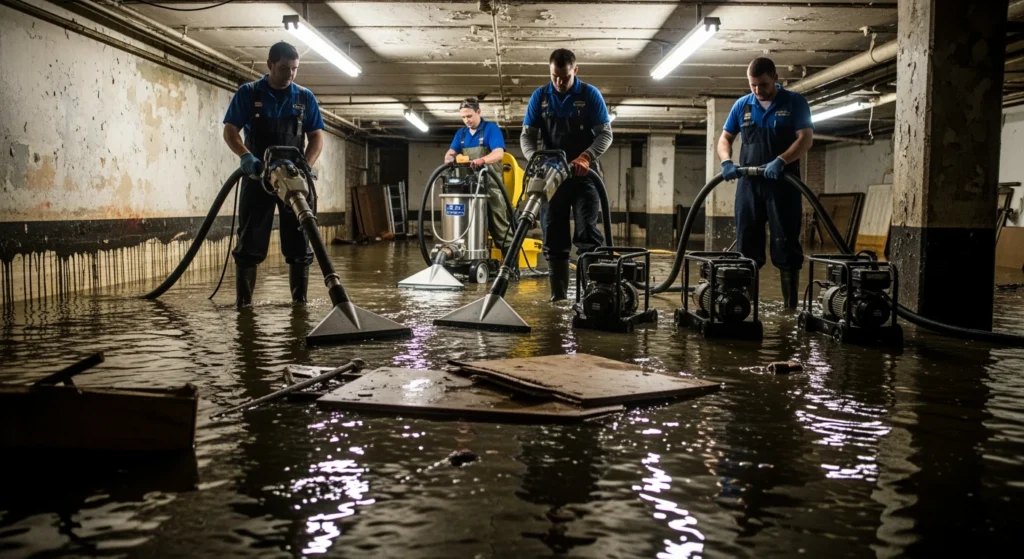
Valley Stream’s position at the edge of the Jamaica Bay watershed — with the oldest sewer infrastructure in Nassau County and a housing stock built primarily between 1940 and 1965 — creates persistent water damage demand from aging pipe failures, municipal sewer backup, and tidal influence from Jamaica Bay during storm events.
Water Damage Restoration in Freeport, NY
Freeport’s canal community and Nautical Mile waterfront make it one of the most frequently flooded incorporated villages in Nassau County — the Nautical Mile on Guy Lombardo Boulevard has documented two to three tidal flooding events per year, and Reynolds Channel storm surge produces Category 3 flooding in the bay-front residential neighborhoods.
Water Damage Restoration in Hicksville, NY
Hicksville’s 41,547 residents live in one of Nassau County’s densest interior communities — predominantly 1950s-1970s split-levels and Colonials with aging galvanized plumbing, oil-fired heating, and municipal sewer laterals that produce consistent backup events during heavy spring rainfall.
Water Damage Restoration in Levittown, NY
Levittown’s 17,000+ original 1947-1951 Cape Cods carry 75-year-old galvanized plumbing, oil-fired heating, and basements sitting within feet of Nassau’s water table — making water damage restoration here a matter of aging infrastructure rather than random events.
Water Damage Restoration on Shelter Island, NY
Shelter Island — an island within an island, completely surrounded by the waters of Peconic Bay — presents the most logistically complex water damage restoration scenario on Long Island: every contractor, every piece of equipment, and every material must cross by ferry, and the island’s bi-directional Peconic tidal exposure means storm surge can arrive from multiple compass points simultaneously.
Water Damage Restoration in the Town of Southold, NY
The Town of Southold at Long Island’s North Fork tip faces bidirectional tidal exposure — Long Island Sound to the north and Peconic Estuary to the south — in a township where 22,000 permanent residents share the landscape with tens of thousands of seasonal visitors, and historic village construction from the 17th century coexists with mid-20th-century residential development.
Water Damage Restoration in the Town of Riverhead, NY
Riverhead occupies a unique geographic position at the fork of Long Island — where the North and South Forks diverge at the head of Peconic Bay — creating water damage risk from both the Peconic River watershed flooding and Peconic Bay tidal surge, in a township where agricultural land, rural residential, and suburban development coexist.
Water Damage Restoration in the Town of Southampton, NY
Southampton’s 60-mile Atlantic and Shinnecock Bay coastline, its Westhampton Beach barrier island communities that bore the full force of the 1938 hurricane, and Hampton Bays’ Shinnecock Inlet exposure create a water damage landscape defined by direct coastal storm vulnerability and high-value seasonal construction across the South Fork’s most populated township.
Water Damage Restoration in the Town of East Hampton, NY
The Town of East Hampton faces direct Atlantic hurricane exposure at the eastern tip of Long Island’s South Fork, with high-value seasonal construction that experiences unique water damage risks during vacancy periods — humidity-driven moisture intrusion without climate control, and delayed discovery of water events in homes not regularly occupied.
Water Damage Restoration in the Town of Smithtown, NY
Smithtown’s water damage profile is shaped by the Nissequogue River watershed — one of Long Island’s last free-flowing rivers — which drains through Kings Park, Smithtown, and Nesconset and creates inland flooding risk during heavy rainfall entirely distinct from the south shore bay flooding that defines western Suffolk’s restoration landscape.
