The Town of Smithtown is one of the smaller Long Island townships by population — approximately 117,000 residents — but its water damage risk profile is shaped by one of the island’s most significant hydrological features: the Nissequogue River. The Nissequogue is one of the few undammed, free-flowing rivers on Long Island, draining a watershed that encompasses parts of Huntington, Smithtown, and Brookhaven townships. The river’s headwaters in the Hauppauge and Commack area drain southward through the center of Smithtown township, creating a creek and river flooding pattern that produces recurring inland water damage in communities along its corridor — Kings Park, Smithtown hamlet, St. James, and the lower river basin communities near the river’s Sound outlet at the Caleb Smith State Park. For the county-level context, see the Long Island Water Damage Restoration Master Guide.
Building Stock Profile
Smithtown’s housing stock is predominantly 1960s–1980s Colonial and split-level construction, somewhat newer on average than the Nassau townships to the west. Kings Park, Smithtown, and St. James contain 1950s–1970s construction in their older neighborhoods; Nesconset, Hauppauge, and Lake Grove (partly within Smithtown) contain more 1970s–1990s development. The pre-1980 construction throughout the township carries standard asbestos and lead paint risk profiles — joint compound asbestos in 1960s–1970s drywalled split-levels and Colonials is the most common asbestos trigger in Smithtown water damage restoration projects.
Environmental Risk: Nissequogue River and Creek Flooding
The Nissequogue River watershed drains approximately 50 square miles of central Suffolk County, and its ability to deliver significant flood volumes to communities along its course during major rainfall events is well documented. The August 2024 storm that flooded St. Andrew’s Cooperative Nursery School in Smithtown was a convective rainfall event — not a coastal surge event — demonstrating that Smithtown’s primary water damage risk driver is watershed flooding, not ocean or bay exposure. This is a fundamentally different insurance and restoration context from south shore townships: Smithtown flooding is more often covered by homeowners policies as sudden water damage than categorized as the excluded flood peril that drives south shore claim disputes.
Regulatory Context
Town of Smithtown Building Department, 99 West Main Street, Smithtown, NY 11787; (631) 360-7520. Smithtown contains the Incorporated Village of Nissequogue with its own building permit authority. The town follows FEMA Substantial Damage rules for flood zone properties, which in Smithtown primarily affects properties along the Nissequogue River corridor and the Sound shore communities near Stony Brook Bay (shared boundary with Brookhaven).
Cost Benchmarks
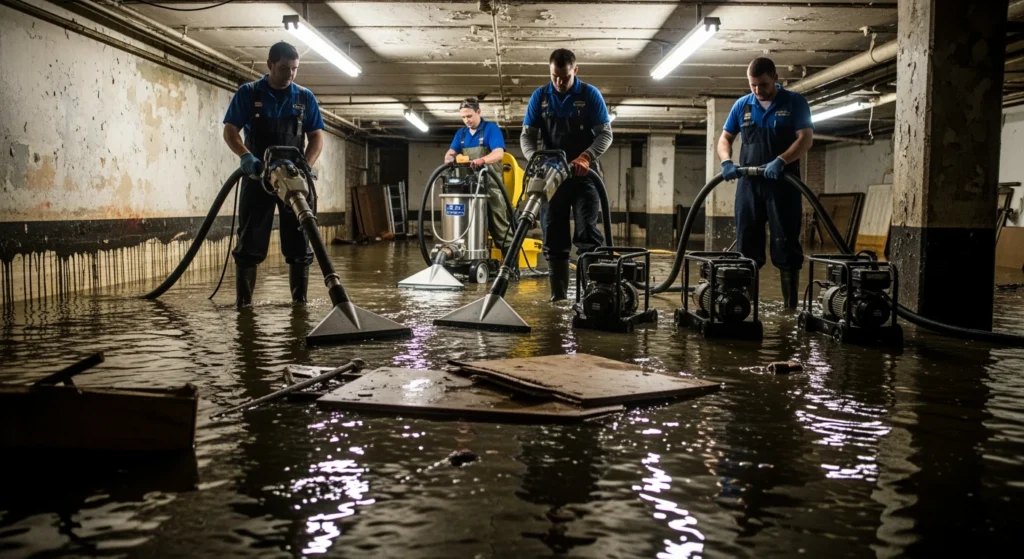
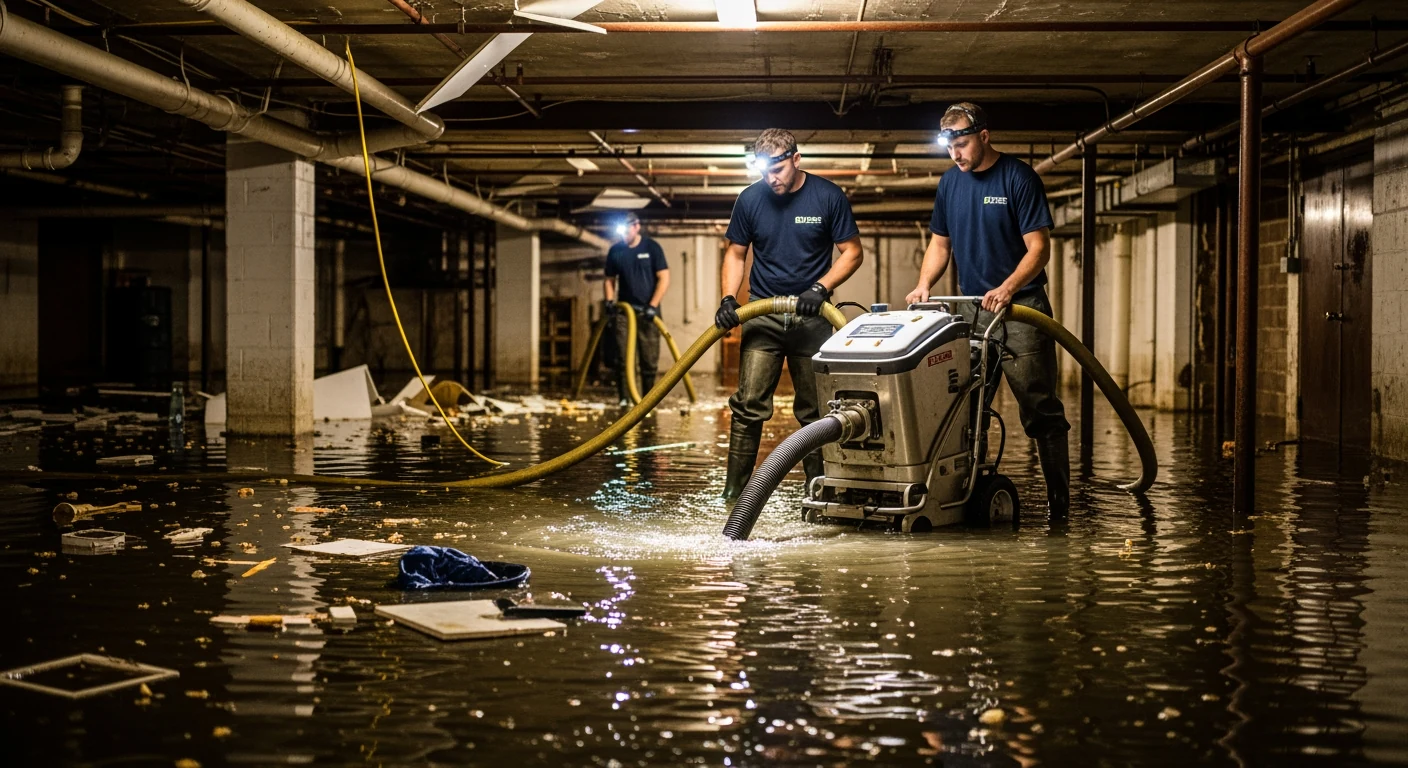
- Nissequogue River corridor flooding (Kings Park, Smithtown hamlet) — inland creek surge: $9,000–$22,000 for Category 1–2 freshwater flooding scope. River and creek water during a rainfall event is typically Category 1 (clean) unless the event is severe enough to overwhelm sewer systems, in which case Category 2 protocols apply.
- Interior Smithtown basement (split-level or Colonial) — pipe failure or high water table: $6,500–$15,000 for standard residential Category 1 scope.