
Why Mold Returns After Remediation: The Assembly Correction Requirement
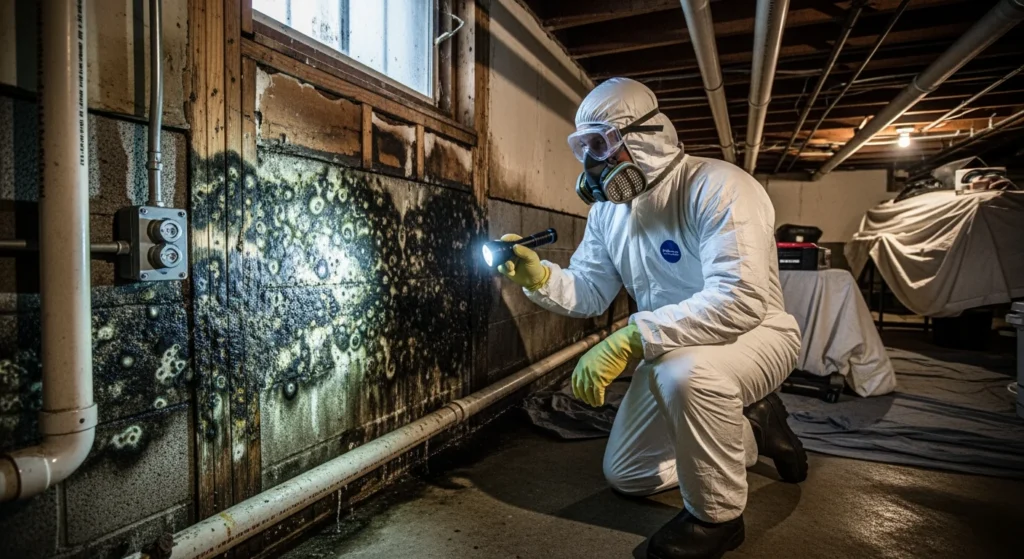
Mold remediation without assembly correction is the most common cause of mold recurrence in Long Island homes — the remediator removes the mold but leaves the moisture source intact, guaranteeing regrowth within one to two seasons. This is how to identify whether your remediation includes the correction that prevents recurrence.
Article 32 Work Plans: What a Compliant NYS Mold Remediation Plan Must Include
NYS Article 32 requires that a licensed mold assessor write a formal work plan before any mold remediation project of 10 square feet or more can proceed. This is what that work plan must include, what happens without one, and why Long Island homeowners should never hire a mold remediator who skips this step.
Post-Remediation Verification: What a Passing Mold Clearance Test Looks Like
NYS Article 32 requires post-remediation clearance testing by a licensed mold assessor separate from the remediator. Understanding what passing clearance tests actually require — and what constitutes a failed clearance — protects Long Island homeowners from contractors who sign off their own work.
Stachybotrys Chartarum (Black Mold) in Long Island Homes: Facts vs. Myths
Stachybotrys chartarum — called ‘black mold’ — is the most feared mold species in residential restoration, but it is also the most misunderstood. This is what Long Island homeowners actually need to know about where it grows, what health effects are established by research, and when it is genuinely present versus misidentified.
Mold Remediation in Stony Brook, NY
Stony Brook’s mold profile spans its residential community — standard 1960s-1990s Brookhaven suburban mold in attics and below-grade spaces — and Stony Brook University’s institutional mold concerns, where federal AHERA requirements govern mold assessment in academic buildings alongside NYS Article 32.
Mold Remediation in Sayville, NY
Sayville’s Victorian and early 20th-century housing stock carries the historic assembly mold risk common to Long Island’s older shore communities — original plaster-on-lath absorbing moisture slowly, fieldstone and brick foundations without vapor management, and the south shore’s summer ambient humidity driving mold initiation in poorly ventilated below-grade and attic spaces.
Mold Remediation in Farmingdale, NY
Farmingdale’s mix of pre-war and post-war residential construction creates a dual mold risk profile — pre-war homes with plaster walls and fieldstone basements that absorb and hold moisture from original building systems, and post-war Cape Cods and Colonials with the standard Nassau County attic and basement mold pattern.
Mold Remediation in Huntington Station, NY
Huntington Station’s dense split-level stock carries endemic below-grade family room condensation mold — the most common residential mold scenario in Huntington’s interior — where fiberglass batts against uninsulated block produce reliable summer mold colonization that recurs without assembly correction.
Mold Remediation in Patchogue, NY
Patchogue’s historic commercial district and bay-front residential communities carry mold risk from tidal flooding, while the village’s older masonry commercial buildings present mold remediation challenges specific to brick and stone construction that absorbs and releases moisture on different timescales than modern drywall assemblies.
Mold Remediation in Lindenhurst, NY
Lindenhurst’s canal community carries the most severe recurring flood mold profile on Long Island outside of Mastic Beach — two to three Category 3 bay water flooding events per year, each re-wetting assemblies that were incompletely dried from the previous event, producing multi-generation mold accumulation in the same wall cavities.
