
How to Prevent Mold After Water Damage: Prevention Guide

Prevent mold after water damage within the critical 72-hour window. Step-by-step actions: stop water, remove standing water, ventilate, deploy drying equipment.
Water Damage Restoration in Long Island: Complete Recovery Guide

Complete guide to water damage restoration on Long Island. Understand local risks, response times, costs, and how to choose a trusted restoration company.
Commercial Mold Remediation for Long Island Businesses: OSHA, Insurance, and ROI
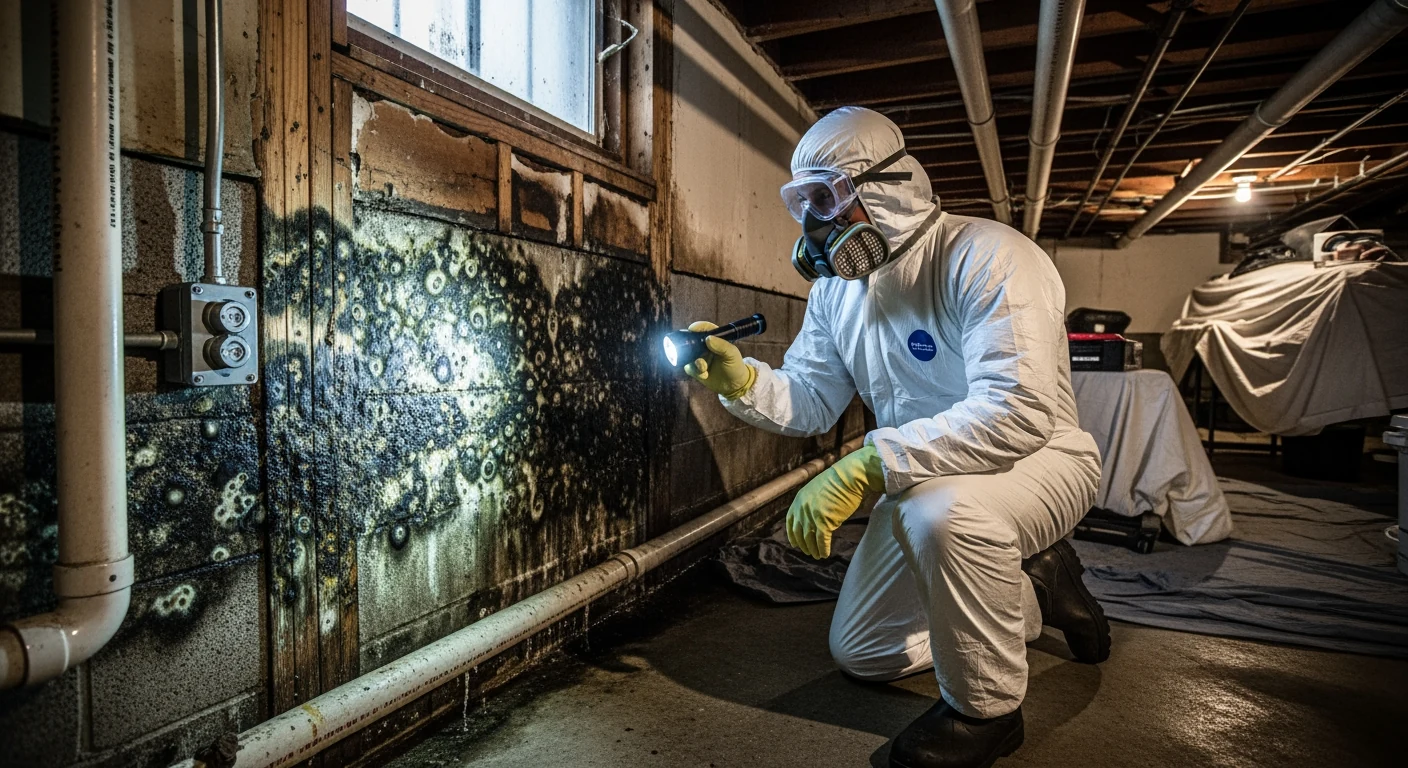
Commercial mold in a Long Island office, retail, or restaurant space creates simultaneous OSHA worker exposure compliance obligations, insurance claim documentation requirements, and business interruption cost calculations — all of which must be managed concurrently rather than sequentially.
Mold in HVAC Ductwork: Detection, Remediation, and Long Island Humidity Context
HVAC ductwork mold on Long Island is driven by the island’s 70%+ summer ambient relative humidity and the specific failure mode of improperly insulated supply ducts — when cold supply air flows through ductwork in humid space, condensation forms on the duct exterior and interior mold initiates. This is what detection and remediation looks like in Long Island’s residential systems.
Mold and Property Sales in New York: Disclosure, Remediation, and Closing Timelines
Mold discovery during a Long Island real estate transaction is one of the most time-pressured remediation scenarios — buyers, sellers, attorneys, and inspectors are all operating on contract timelines that may not align with Article 32 assessment and remediation requirements. This is what every party to a Long Island property transaction should know.
Cladosporium vs. Penicillium vs. Aspergillus: Long Island’s Three Most Common Mold Species
Three mold genera account for the overwhelming majority of residential mold found in Long Island homes — Cladosporium, Penicillium, and Aspergillus. Understanding where each thrives, what it looks like, and what its presence indicates about moisture conditions helps Long Island homeowners interpret assessment findings accurately.
Why Mold Returns After Remediation: The Assembly Correction Requirement
Mold remediation without assembly correction is the most common cause of mold recurrence in Long Island homes — the remediator removes the mold but leaves the moisture source intact, guaranteeing regrowth within one to two seasons. This is how to identify whether your remediation includes the correction that prevents recurrence.
Article 32 Work Plans: What a Compliant NYS Mold Remediation Plan Must Include
NYS Article 32 requires that a licensed mold assessor write a formal work plan before any mold remediation project of 10 square feet or more can proceed. This is what that work plan must include, what happens without one, and why Long Island homeowners should never hire a mold remediator who skips this step.
Post-Remediation Verification: What a Passing Mold Clearance Test Looks Like
NYS Article 32 requires post-remediation clearance testing by a licensed mold assessor separate from the remediator. Understanding what passing clearance tests actually require — and what constitutes a failed clearance — protects Long Island homeowners from contractors who sign off their own work.
Stachybotrys Chartarum (Black Mold) in Long Island Homes: Facts vs. Myths
Stachybotrys chartarum — called ‘black mold’ — is the most feared mold species in residential restoration, but it is also the most misunderstood. This is what Long Island homeowners actually need to know about where it grows, what health effects are established by research, and when it is genuinely present versus misidentified.
