
Asbestos Abatement in the Town of Huntington, NY
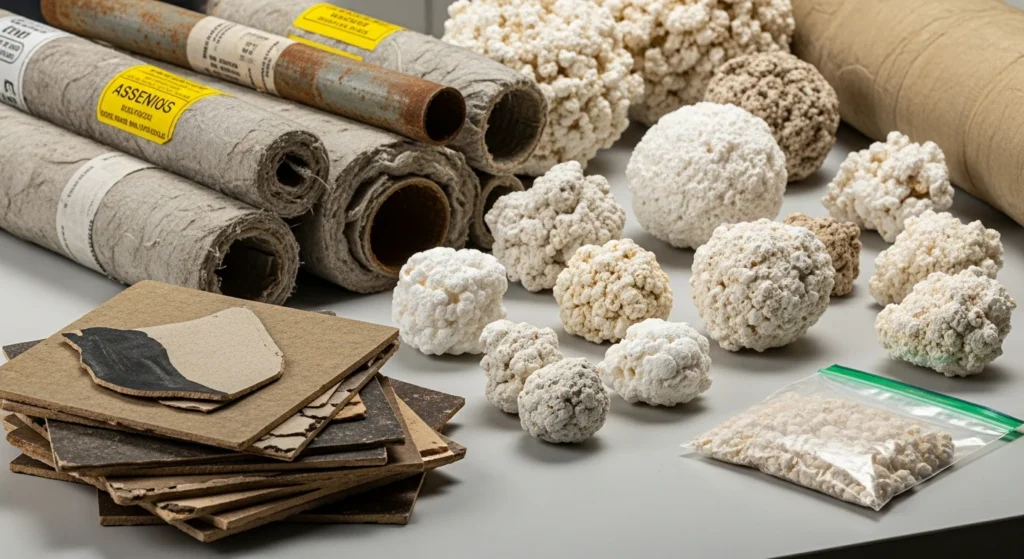
The Town of Huntington’s asbestos abatement requirements under NYS DEC Code Rule 56 — applied to its specific construction stock, renovation patterns, and operational context — are detailed in this township-specific data file.
Asbestos Abatement in the Town of Islip, NY
The Town of Islip’s asbestos abatement requirements under NYS DEC Code Rule 56 — applied to its specific construction stock, renovation patterns, and operational context — are detailed in this township-specific data file.
Asbestos Abatement in the Town of Babylon, NY
The Town of Babylon’s asbestos abatement requirements under NYS DEC Code Rule 56 — applied to its specific construction stock, renovation patterns, and operational context — are detailed in this township-specific data file.
Asbestos Abatement in the Town of Oyster Bay, NY
Oyster Bay’s housing stock spans the full asbestos risk era — from pre-war north shore estates with steam pipe chrysotile and vermiculite to the 1950s–1970s south shore and interior Cape Cods and split-levels with floor tile, joint compound, and pipe insulation asbestos — making the township one of Nassau County’s most active asbestos abatement markets.
Asbestos Abatement in the Town of North Hempstead, NY
North Hempstead’s pre-war estate construction extends the asbestos risk profile beyond the standard post-1945 material list — original steam pipe insulation, vermiculite attic insulation, and renovation materials added during mid-century updates — while the interior communities carry the standard Nassau County joint compound and floor tile asbestos burden from 1960s-1970s construction.
Asbestos Abatement in the Town of Hempstead, NY
The Town of Hempstead contains the highest concentration of pre-1960 Cape Cod construction in the United States — Levittown-era homes built with 9-inch vinyl asbestos floor tiles, chrysotile pipe insulation on oil-fired systems, and joint compound applied before the mid-1970s phase-out — making asbestos abatement a routine prerequisite for virtually every renovation and restoration project in the township.
Asbestos Abatement Long Island: The Complete Nassau & Suffolk County Guide
With the majority of Long Island’s Nassau County housing stock built before 1980, asbestos-containing materials are present in most residential structures — pipe insulation, floor tiles, joint compound, and roof underlayment — requiring NYS DEC Code Rule 56 licensed abatement before any renovation or restoration work.
Identifying Asbestos in Pre-1980 Drywall and Joint Compound
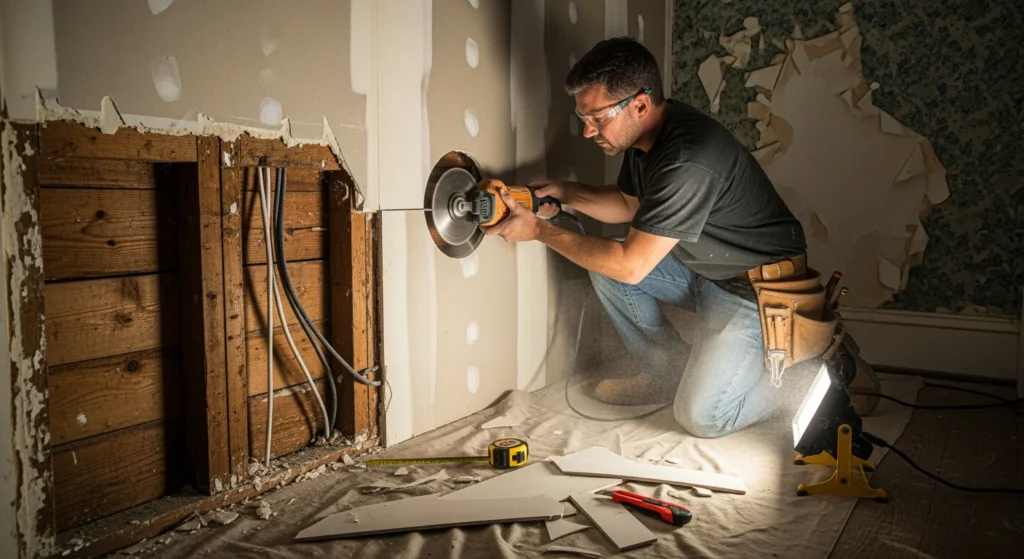
Asbestos in pre-1980 drywall is most commonly found in joint compound, not the gypsum board — and it is one of the highest inhalation risks in renovation work. A certified Environmental Safety Officer explains how to identify it, why visual inspection is insufficient, what NYS Industrial Code Rule 56 requires, and what professional abatement looks like for Long Island and NYC homeowners.
Post-Abatement Reconstruction: Budgeting for the Rebuild
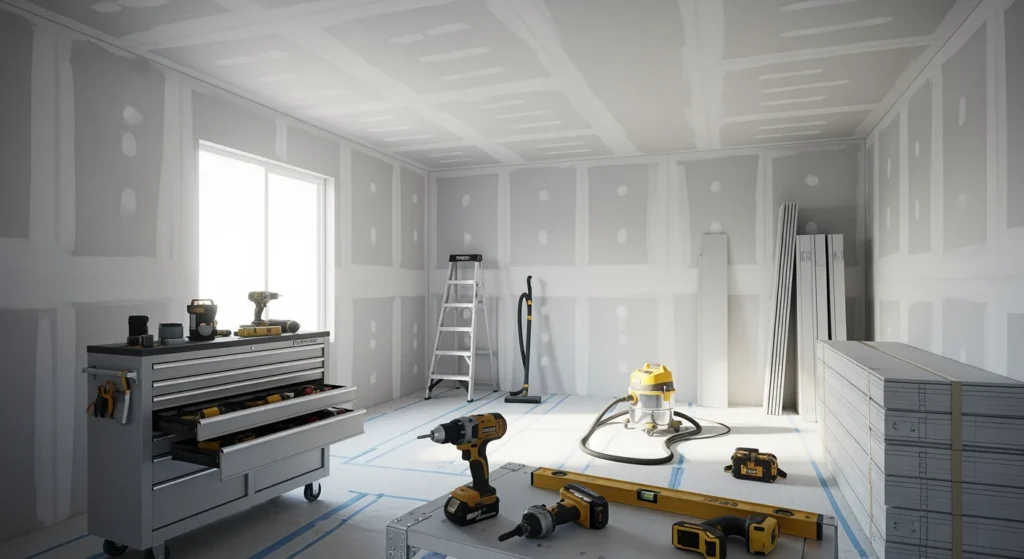
After the asbestos or mold is gone, the rebuilding begins. Learn how to budget for reconstruction and coordinate with insurance.
After the Flood: Steps to Take for Safe and Effective Cleanup
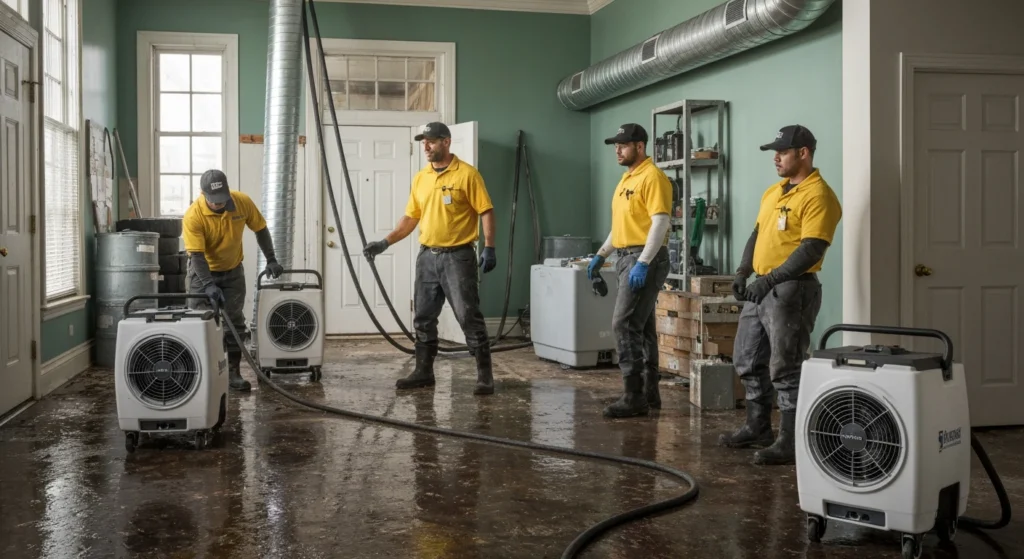
Introduction Flooding is a natural disaster that can wreak havoc on homes and communities. Once the waters recede, the process of cleaning up can be overwhelming. water damage can lead to mold growth, structural damage, and health hazards. It’s important to take the right steps to ensure a safe and effective cleanup. Understanding the Risks […]
