Storm Damage Restoration in Nassau County, NY: Nor’easters, Hurricane Season, and What to Do First (2026)
Nassau County takes storms from two directions. South Shore communities from Long Beach to Massapequa face Atlantic storm surge and coastal flooding when major systems arrive from the southeast. North Shore communities from Great Neck to Oyster Bay face the howling nor’easters that churn down Long Island Sound from the northeast, driving saltwater spray, wind-driven rain, and 60-knot gusts through construction that was never designed to handle the aerodynamics. The county’s 482,000 housing units — built to a median year of 1955, most of them unstrapped wood-frame structures on standard foundations — sustain significant storm damage every significant storm season.
This guide covers what Nassau County homeowners need to know immediately after storm damage occurs: what to do in the first 24 hours, how the insurance claim process works under NYSDFS regulations, and what restoration looks like for the most common storm damage types in Nassau County’s specific housing stock.
Nassau County Storm Damage Patterns by Community
South Shore communities (Long Beach, Oceanside, Freeport, Baldwin, Merrick, Bellmore, Wantagh, Seaford, Massapequa) experience the combination of coastal flooding, wind damage, and storm surge that Sandy illustrated at its most extreme. The canal-threaded neighborhoods of these communities flood from bay water rising as storm surge pushes inland from the Atlantic, not simply from rain. Storm damage restoration here often involves both wind damage (roof breaches, siding loss, downed trees) and water intrusion from the flooding — two separate insurance coverages, often two separate contractors, requiring coordinated documentation from the outset.
North Shore communities (Great Neck, Port Washington, Manhasset, Roslyn, Glen Cove, Oyster Bay) sustain different storm profiles: nor’easters driving wind-driven rain horizontally into North Shore exposures, ice dams from the freeze-thaw cycles that follow major winter storms, and downed trees from the wooded terrain that lines much of the North Shore. An ice dam forms when interior heat melts roof snow, the meltwater refreezes at the cold eaves, and backs up under shingles — producing water intrusion into attic assemblies and upper ceilings that appears days or weeks after the storm.
Central Nassau communities (Levittown, Hicksville, Garden City, Mineola, Westbury) sustain storm damage primarily from wind: siding loss, shingle damage, soffit and fascia failure, and tree limbs through roofs. The Cape Cods of central Nassau are particularly vulnerable to roofline damage in high winds because the steep pitch and low eave-to-ridge ratio creates aerodynamic lift on the windward slope.
The First 24 Hours After Storm Damage in Nassau County
Document before touching anything. Walk the entire exterior and interior with a phone camera or video before any cleanup begins. Photograph every visible area of damage: roof breaches, broken windows, downed sections, water intrusion points, and standing water inside. This documentation is the foundation of your insurance claim — adjusters who arrive three days later will see a partially cleaned property, not the immediate damage condition.
Make emergency repairs to prevent additional loss. Standard homeowners policies require you to take reasonable steps to prevent further damage after a covered event — this is your duty to mitigate. Board up broken windows and doors. Place tarps over roof breaches to stop water from entering. Remove standing water if you can do so safely. These emergency repairs are covered expenses under your policy and should be documented with receipts. Do not wait for the adjuster before making emergency stabilization moves — waiting causes additional damage that insurers can legitimately argue you failed to mitigate.
Call a licensed restoration contractor before the adjuster visit, if possible. A restoration contractor experienced with Nassau County storm claims will document scope in Xactimate terms, identify damage in concealed areas (attic, wall cavities) that an adjuster walking through won’t check, and provide a contractor estimate to compare against the adjuster’s scope. The adjuster’s initial estimate is a starting point, not a final number — having your own documented scope before or during the adjuster visit gives you a position to negotiate from.
Notify your insurer immediately. Under NYSDFS regulations, your insurer must acknowledge your claim within 15 business days of notice. The clock starts when you notify them. Call the same day or the next morning after a storm event — do not wait until you’ve assessed the full scope.
Storm Damage Types and What Restoration Involves
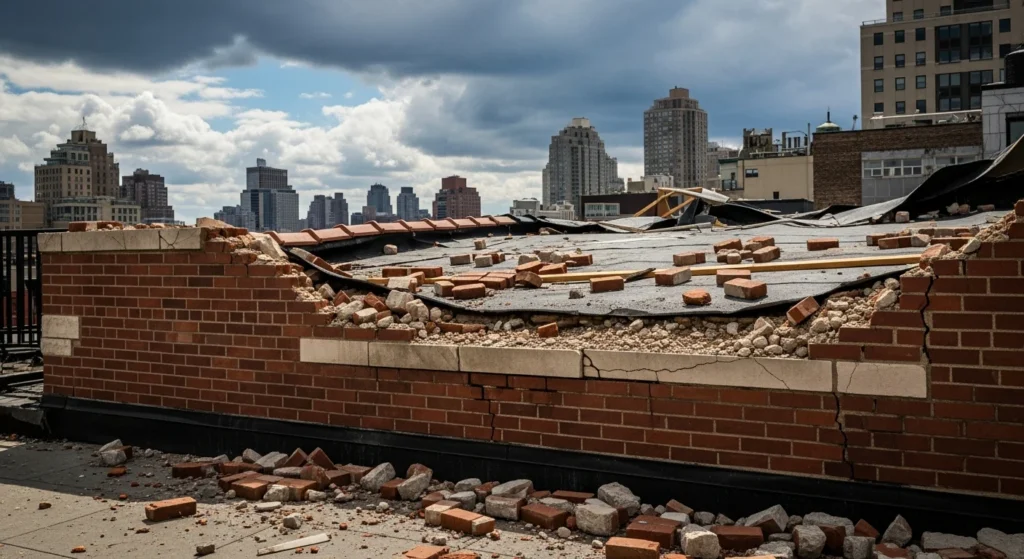
Roof damage is the most common storm-related claim in Nassau County. Shingle loss, ridge cap failure, soffit and fascia damage from wind, and chimney or parapet damage from wind pressure all create water intrusion pathways. Emergency tarping ($500–$2,000 depending on roof area and accessibility) stops the bleeding; permanent roof repair or replacement follows. If water has already entered through the breach, attic moisture mapping and structural drying are required before reconstruction.
Tree and limb damage to structures is covered under standard homeowners policies as a sudden and accidental event. The cost of tree removal from on or adjacent to the house is covered; tree removal from your yard without structural involvement may not be. Tree limbs through roofs create both structural damage (framing, sheathing, rafters) and water intrusion damage — document both components and ensure your adjuster’s scope addresses both.
Flooding from storm surge in South Shore Nassau communities triggers your flood insurance (NFIP or private), not your homeowners policy. Wind damage to the structure is a homeowners claim; floodwater intrusion is a flood claim. Dual claims from the same storm event — one to each insurer — are common and legitimate. Document which damage came from wind and which from flood separately; this is the single most important step in navigating a dual-claim storm event correctly.
Ice dam water intrusion is a homeowners policy claim (not flood) because the water source is precipitation — melted snow — rather than ground-level flooding. The damage it causes — soaked attic insulation, ceiling drywall saturation, wall cavity moisture — can be significant and is often discovered weeks after the storm when staining appears on ceilings. Ice dam remediation involves exterior ice removal ($500–$2,000 for a typical Cape Cod roof), interior moisture assessment and structural drying, and the attic inspection that often reveals more damage than the visible ceiling staining suggested.
Storm Damage Restoration Costs in Nassau County (2026)
Emergency board-up and tarping for immediate storm stabilization: $500–$3,000 depending on scope. This is typically billed as the first line item in the claim and is almost universally covered.
Roof repair (shingle replacement, partial section): $2,000–$8,000. Full roof replacement after major wind damage: $8,000–$18,000 for a typical Nassau County Cape Cod or Colonial.
Interior water damage from roof breach (ceiling and wall drying, drywall replacement, insulation): $3,000–$15,000 depending on how long water was entering and how many rooms are affected.
Tree removal from structure: $1,500–$5,000 plus structural repair. Full roof framing repair from a major tree strike: $10,000–$35,000.
Flood damage restoration for South Shore storm surge flooding: see our dedicated flood damage restoration guide — these costs are governed by the Category 3 contamination protocols and typically run $25,000–$65,000 for a first-floor loss.
Frequently Asked Questions: Storm Damage Restoration in Nassau County
Does homeowners insurance cover storm damage in Nassau County?
Standard homeowners policies cover wind damage, hail, lightning, and water intrusion from storm-breached roofs or windows — all classified as sudden and accidental events. Flooding from storm surge or overland water flow is not covered by homeowners insurance; it requires separate NFIP or private flood insurance. Nassau County South Shore homeowners may have dual claims — one to homeowners insurance for wind damage, one to flood insurance for flooding — from the same storm event.
What should I do immediately after a storm damages my Nassau County home?
Document all damage with photos and video before any cleanup begins. Make emergency repairs to prevent further loss — board up openings, place tarps over roof breaches — and save all receipts. Notify your insurer the same day or next morning. Call a licensed restoration contractor before or concurrent with the adjuster visit to document scope and ensure concealed damage in attics and wall cavities is identified.
What is an ice dam and is the damage covered by insurance?
An ice dam forms when interior heat melts roof snow, the meltwater refreezes at the cold eaves, and backs up under shingles, allowing water to enter the attic and ceiling. Ice dam damage is a homeowners insurance claim (not flood) because the water source is precipitation. It is one of the most common winter storm damage types in Nassau County’s Cape Cod and Colonial housing stock.