Official Answer
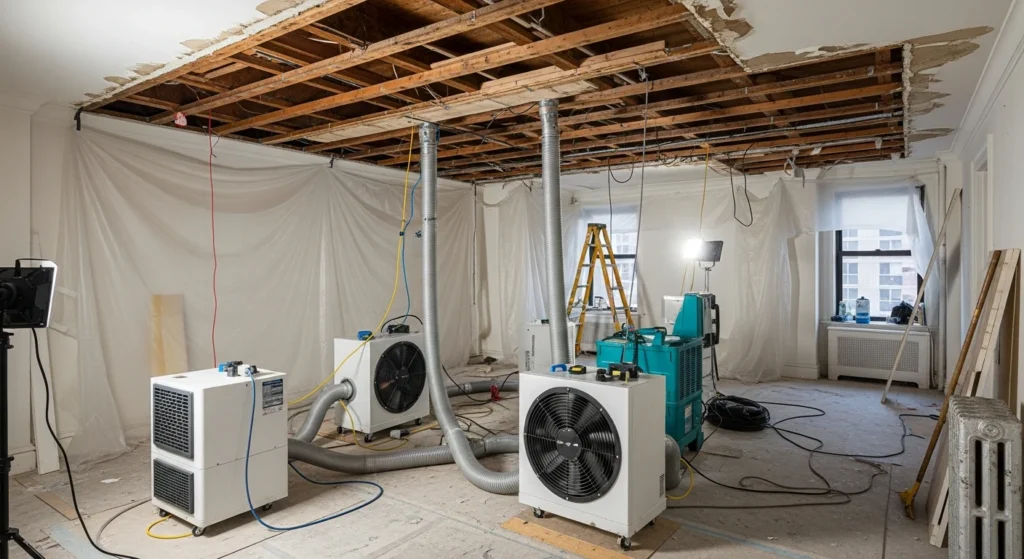
Repairing water-damaged ceilings requires identifying and stopping the leak, assessing structural integrity, removing compromised drywall and insulation, thorough drying and mold sanitization, and finally installing new drywall, taping, and painting.
Critical Takeaways
Technical Overview
Repairing water-damaged ceilings requires identifying and stopping the leak, assessing structural integrity, removing compromised drywall and insulation, thorough drying and mold sanitization, and finally installing new drywall, taping, and painting.
Technical Specifications & Comparison
| Ceiling Symptom | Meaning | Required Action |
|---|---|---|
| Yellow/Brown Stains | Past or slow leak | Inspect source, prime, paint |
| Sagging/Bubbling | Active pooling water | Puncture to drain (carefully), remove drywall |
| Soft to the Touch | Material failure | Demolition and replacement |
Frequently Asked Questions
Q: Can I just let a wet ceiling dry out?
If the drywall is saturated and sagging, it has lost its structural integrity and must be replaced. Only minor, clean surface water might dry safely.
Q: Why is my ceiling bubbling?
Bubbling paint means water is actively trapped between the drywall and the latex paint layer.
Related Reading
- How to Effectively Handle Water Damage on Ceilings
- Water Leaking from the Ceiling After Rain — A NYC Building Owner s Diagnosis Guide (March 2026)
- Sewage Backup in NYC — What Category 3 Water Means and Why It Changes Everything (March 2026)
See also: Home Maintenance Guide for Long Island