Mold in the attic is one of the most common—and most misunderstood—home problems on Long Island. Homeowners discover it during a home inspection, during insulation replacement, or when a musty smell finally leads them up there with a flashlight. This guide covers what attic mold looks like, why it forms in Long Island homes specifically, and when to call a licensed remediation contractor.
What Does Attic Mold Look Like?
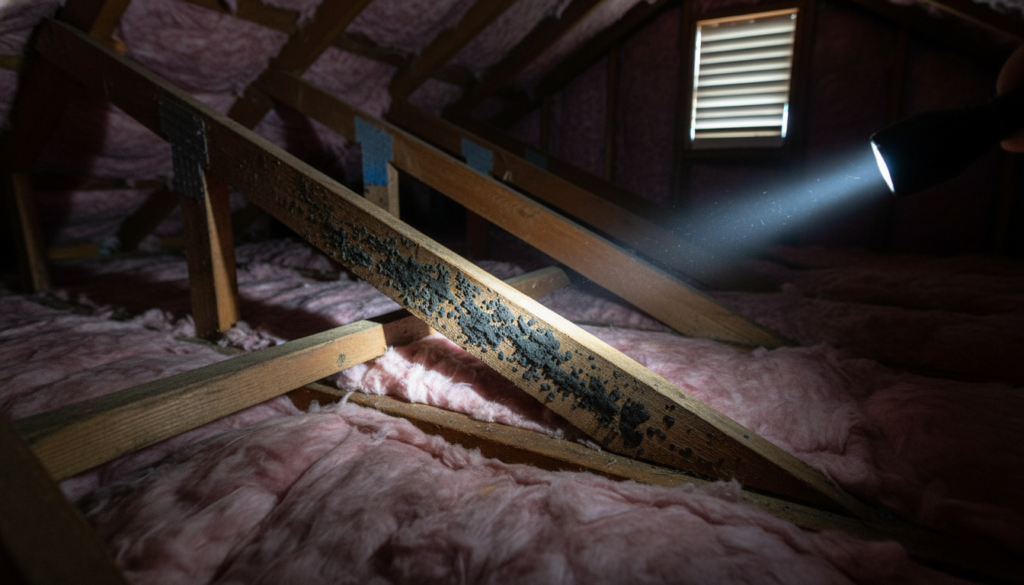
Attic mold appears on the underside of the roof deck—the bare wood sheathing and rafters visible when you look up from the attic floor. Unlike basement mold, which tends to grow on porous surfaces near water intrusion points, attic mold grows across entire sections of wood in patterns that follow condensation zones.
Color Variations
- Black or dark gray: The most alarming appearance. Often Cladosporium or Stachybotrys (toxic black mold), though color alone does not identify species. Any black growth on attic wood should be tested or treated by a professional.
- Green: Penicillium/Aspergillus species are common, particularly in humid conditions. Often has a fuzzy or powdery texture.
- White or gray: Can indicate early-stage mold or mold that has dried out. White growth on wood may also be efflorescence (mineral deposits), which is not mold.
- Blotchy gray-black across roof deck: The classic pattern of attic mold caused by ventilation failure. Covers large sections of sheathing rather than isolated spots.
The 3 Most Common Causes of Attic Mold in Long Island Homes
1. Bathroom Exhaust Fans Vented Into the Attic
This is the number one cause of attic mold on Long Island, particularly in homes built or renovated before code enforcement was consistent. Building codes require bathroom exhaust fans to vent through the roof to the exterior. When they terminate inside the attic—often because an installer cut corners—warm, humid air dumps directly into the attic space. In winter, that moisture condenses on the cold roof deck. Within months, you have mold.
Check your bathroom exhaust fans. Trace the duct from the fan housing. It should terminate at a roof vent cap or a gable vent directly to the exterior. If it terminates in the attic insulation or hangs loosely in the attic space, that’s your mold source.
2. Blocked Soffit Vents
A properly ventilated attic draws fresh air in through soffit vents (at the eaves) and exhausts it through ridge vents or gable vents at the peak. When insulation is added at the attic floor and blocks the soffit vent openings—extremely common in Long Island homes that have added blown-in insulation—the ventilation circuit is broken. Hot, humid air accumulates rather than circulating.
Soffit baffles (cardboard or foam channels installed at the soffit line) are supposed to prevent this. If your insulation job didn’t include baffles, your ventilation is likely compromised.
3. Ice Dams and Attic Bypasses
Long Island winters regularly produce ice dam conditions. When warm air from living spaces leaks into the attic (through attic hatch covers, recessed lights, plumbing chases, and other bypasses), it warms the roof deck unevenly. The resulting ice dam cycle—melt, refreeze, water infiltration—delivers liquid water to the attic deck, creating mold-favorable conditions that simple ventilation won’t fix.
Is Attic Mold Dangerous? Health Risks by Species
The health risk from attic mold depends on the species present, the extent of growth, and whether spores are making their way into living spaces. Attic mold that stays in the attic—with a well-sealed attic hatch and no HVAC equipment in the attic—poses less immediate risk than mold growing in living areas. However:
- Mold spores travel. If your HVAC air handler is in the attic, or if the attic hatch is poorly sealed, mold spores contaminate your living space air.
- Stachybotrys (true toxic black mold) requires professional remediation regardless of location.
- Large mold colonies on structural wood weaken the sheathing over time, creating a structural concern beyond the health issue.
- A home inspection will identify attic mold, and buyers will walk away or negotiate heavily if untreated mold is found.
DIY Inspection Checklist vs. When to Call a Professional
What you can check yourself:
- Bathroom exhaust fan duct routing (accessible from attic)
- Soffit vent visibility (clear or blocked by insulation)
- Attic hatch seal quality
- Visible mold on roof deck — area, color, pattern
- Any standing water or water staining on attic floor
When to call a licensed mold remediation contractor:
- Any visible mold covering more than 10 square feet
- Mold that’s returned after previous treatment
- Black mold anywhere in the attic
- Mold present when you have respiratory symptoms or family health concerns
- Pre-sale remediation required before listing
- Mold identified during a home inspection that’s delaying a transaction
How Much Does Attic Mold Removal Cost on Long Island?
Attic mold remediation pricing on Long Island runs $1,500–$8,000 for most residential projects, depending on the extent of mold, the accessibility of the attic, and whether structural wood replacement is needed. Additional costs include:
- Mold testing before and after remediation: $300–$800
- Bathroom exhaust fan rerouting: $200–$600 per fan
- Soffit baffle installation during remediation: often included or modest cost
- Roof deck board replacement (if structurally compromised): $500–$3,000
Under New York State’s Mold Law, mold assessment and mold remediation must be performed by separate licensed contractors. The company assessing cannot remediate, and vice versa. Always confirm your contractor’s NYS mold remediation license before work begins.
Can You Prevent Attic Mold From Coming Back?
Yes—but only if the moisture source is eliminated. Mold remediation without addressing ventilation, exhaust fan routing, or air sealing is temporary. The mold will return. A complete attic mold project addresses:
- Removal of existing mold (HEPA vacuuming, antimicrobial treatment, encapsulant)
- Root cause correction (exhaust fans rerouted, baffles installed, air sealing)
- Post-remediation clearance testing to confirm clearance
Upper Restoration coordinates all three stages. We do not consider a project complete until the moisture source is fixed and clearance testing passes.
Upper Restoration provides licensed mold remediation and free attic inspections across Nassau and Suffolk County. We identify the moisture source and fix it—not just the mold you can see.
Call: | Free Attic Inspection
Frequently Asked Questions
How do I know if my attic mold is toxic?
You cannot determine mold toxicity by color or appearance. Lab testing—either air sampling or surface swab sampling—is needed to identify species. Black mold appearance should always be tested by a professional. Upper Restoration can coordinate certified mold testing before remediation.
Can I treat attic mold with bleach myself?
Bleach kills surface mold but does not penetrate porous wood to kill mold at the root. It also does not remove dead spores, which can still trigger allergies and health responses. For mold covering more than 10 square feet, DIY treatment is not recommended and does not satisfy NYS mold remediation standards for real estate purposes.
Will insurance cover attic mold removal?
It depends on the cause. Mold resulting from a sudden covered event (roof leak from storm damage, burst pipe) may be covered. Mold from gradual ventilation failure or maintenance neglect is typically excluded. Review your policy and contact your insurer before assuming coverage.