How Long Does Water Damage Restoration Take? Complete Timeline Guide
One of the first questions homeowners ask after water damage is: “How long does water damage restoration take?” The answer depends on numerous factors, but understanding the typical water damage restoration timeline helps you set realistic expectations and plan your life around the repair process.
According to the Insurance Institute for Business & Home Safety, the fastest homeowners can expect comprehensive water damage restoration is 3-5 days for minor damage. More typical restoration timelines range from 1-2 weeks for moderate damage, and severe damage may take 4+ weeks. However, these are general ranges—your specific timeline depends on damage category, affected area size, materials involved, and your area’s weather conditions.
This guide walks you through the typical restoration process, what happens each day, and the factors that extend timelines. Understanding what to expect helps you plan next steps and know when your restoration company is on track.
Water Damage Categories and Initial Timeline
Water damage classification directly impacts restoration timeline. The first critical step is identifying your damage category:
Category 1 Water Damage
Definition: Clean water from sanitary sources (burst supply lines, water heater leaks, overflowing sink or tub)
Typical restoration timeline: 2-5 days for single room; 5-7 days for whole house
Why it’s faster: Water is clean (not contaminated), poses minimal health risk, and poses no biological hazard. Removal and drying can proceed without special protocols.
Process: Water extraction (hours), drying with equipment (2-7 days depending on affected area), monitoring/verification (1-2 days), reconstruction (varies)
Category 2 Water Damage
Definition: Gray water from sources with some contamination (washing machine overflow, dishwasher leaks, toilet overflow with some waste, aquarium leaks)
Typical restoration timeline: 5-10 days for single room; 1-2 weeks for whole house
Why it takes longer: Gray water contains contaminants requiring protective protocols. Affected materials may need removal rather than drying. Contamination risk requires more thorough cleaning.
Process: Water extraction with decontamination protocols (hours), affected material removal/cleaning (1-3 days), drying with equipment (3-7 days), verification/cleaning (1-2 days), reconstruction (varies)
Category 3 Water Damage
Definition: Black water from sewage, river/flood water, or water from hazardous sources
Typical restoration timeline: 2-4 weeks minimum; may extend to 6+ weeks for severe cases
Why it takes longest: Black water contains dangerous pathogens and requires strict biohazard protocols. Extensive material removal necessary. Professional decontamination required. Structural drying is more complex.
Process: Water extraction with hazmat protocols (hours), extensive affected material removal (2-5 days), biohazard decontamination (1-3 days), structural drying (5-10 days), moisture verification (2-3 days), restoration (variable)
The Water Damage Restoration Process: Day-by-Day Timeline
Day 1: Assessment and Emergency Water Removal
Timeline: Hours 1-8
What happens:
- Professional restoration company arrives and assesses damage scope
- Photographs taken for insurance documentation
- Moisture mapping identifies water spread and affected areas
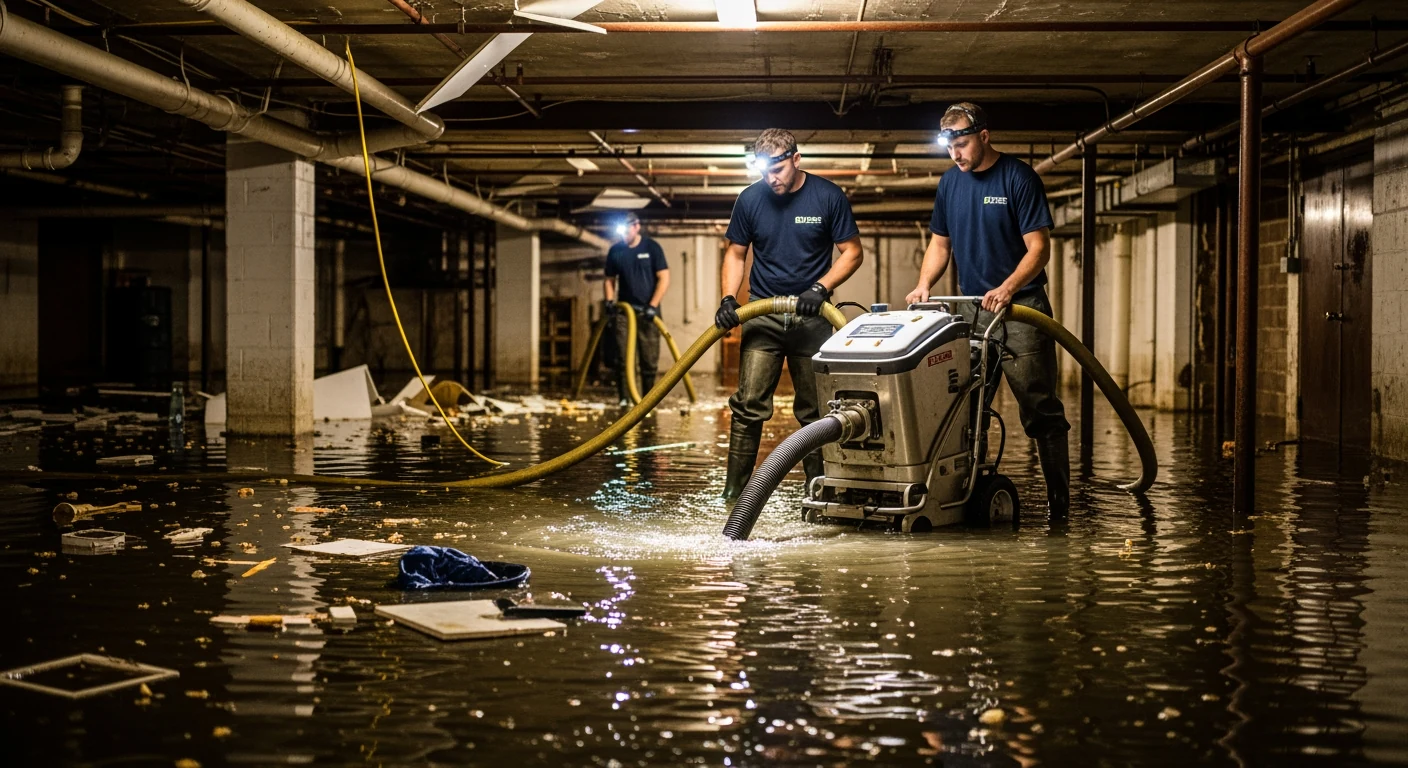
- Water extraction begins using commercial-grade pumps and wet vacs
- Electricity shutoff in affected areas for safety (wet areas near outlets/panels)
- Initial salvage of personal items and electronics if possible
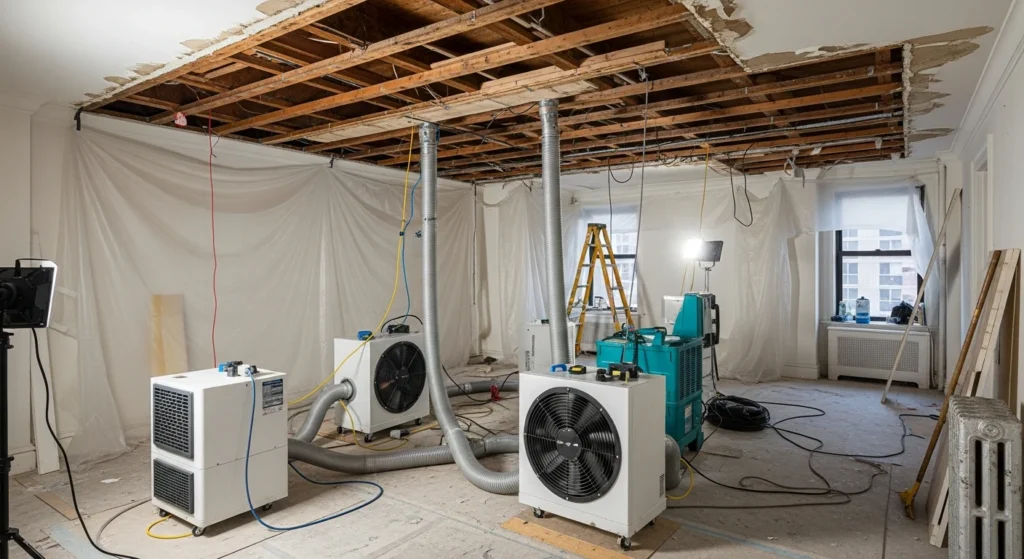
- Dehumidifiers and air movers deployed to begin drying process
Why it’s critical: Speed matters enormously. Water extraction within 24-48 hours prevents extensive mold growth and structural damage. This is why emergency restoration companies operate 24/7.
Typical duration: 2-8 hours depending on water volume and affected area size
Days 2-3: Continued Water Removal and Equipment Setup
Timeline: Hours 24-72
What happens:
- Additional water extraction if standing water remains
- Flooring removal begins if saturated (hardwood, laminate, carpet)
- Drywall removal starts if water damage extends up walls
- Cavity spaces (wall cavities, under floors) are opened for access to trapped moisture
- Insulation inspection and removal if wet (cannot be effectively dried in place)
- Comprehensive drying setup: dehumidifiers positioned throughout affected areas, air movers directed at surfaces
- Moisture monitoring begins with multiple sensors tracking humidity levels
Why material removal is necessary: Porous materials like drywall, flooring, and insulation trap water in their cellular structure. Even with powerful drying equipment, these materials often cannot be dried to safe levels before mold growth begins. Removal is faster and safer than attempting to dry them.
Typical duration: Ongoing; this is when most material removal occurs
Days 4-10: Intensive Drying Phase
Timeline: Hours 72-240 (10 days)
What happens:
- Continuous operation of drying equipment (24/7 in many cases)
- Daily moisture monitoring shows gradual humidity and moisture content decrease
- Remaining structural materials (studs, joists, subflooring) dry down to safe levels
- Contents restoration occurs: furniture, belongings moved to clean areas or off-site storage
- Special items (documents, photos) transported to specialized contents cleaning facilities
- Interim repairs: tarping, temporary barriers to contain affected areas and prevent contamination spread
- Professional cleaning and disinfection of all surfaces
Why this takes multiple days: Structural materials dry slowly. Wood studs, concrete, and foam insulation can take 5-10 days to reach target moisture levels even with professional equipment. The drier the target level needed, the longer the process.
Typical duration: 3-14 days depending on damage scope and materials
Days 10-14: Verification and Final Cleanup
Timeline: Days 10-14
What happens:
- Final moisture readings verify structural materials are at acceptable levels
- All drying equipment is removed from the home
- Professional cleaning of all surfaces using hospital-grade disinfectants
- Any remaining decontamination work (particularly important for Category 2 and 3 water)
- HVAC system inspection and cleaning if water-exposed
- Electrical systems inspection to verify it’s safe to restore power
- Final documentation for insurance purposes
Typical duration: 2-5 days
Days 14+: Reconstruction Phase
Timeline: Variable; typically 1-8 weeks
What happens:
- Drywall replacement (if removed)
- Flooring reinstallation (hardwood, laminate, tile, carpet)
- Painting and finishing
- Fixture replacement if damaged
- Contents restoration: furniture reupholstering, contents cleaning return
- Final inspection and handoff to homeowner
Why reconstruction is separate from restoration: The restoration phase focuses on water removal, drying, and decontamination—getting your home safe and dry. Reconstruction is rebuilding/replacing damaged materials. These are distinct phases with different timelines.
Typical duration: 2-8 weeks depending on damage extent and material availability
Timeline Factors: What Extends Water Damage Restoration?
Affected Area Size
Impact: Substantial. Small, localized damage (one bathroom, single bedroom) dries much faster than whole-house water damage.
Examples:
- Single room water damage: 3-7 days restoration (plus reconstruction time)
- Multiple rooms (1,000-3,000 sq ft): 1-2 weeks restoration (plus reconstruction)
- Whole-house water damage: 2-4 weeks restoration (plus reconstruction)
Water Category
Impact: Significant. Category 1 (clean) water restoration is fastest; Category 3 (sewage/hazard) is slowest due to biohazard protocols.
Time difference: Category 1 might be 5-7 days; Category 3 might be 3-4 weeks—nearly 5x longer.
Materials and Structure Types
Impact: Material composition directly affects drying timeline.
Fast-drying materials: Tile, concrete, vinyl
Slow-drying materials: Wood, drywall, insulation, carpet—these extend timelines significantly
Complex structures: Multi-story homes, homes with crawl spaces, or those with extensive wall cavities take longer to dry than single-story, open-concept homes.
Extent of Material Removal
Impact: Deciding to remove materials (vs attempting to dry them) accelerates the overall timeline in most cases.
Why: Removing saturated flooring and drywall allows drying equipment to access structural elements below/behind them. Drying stud cavities directly is faster than drying them through overlaying materials.
Environmental Conditions
Impact: Outdoor temperature and humidity significantly affect drying speed.
Best conditions: Warm (75-85°F), dry outdoor air speeds interior drying
Worst conditions: Cold, humid outdoor air (winter restoration, high humidity seasons) extends drying timelines by days or weeks
Time difference: Summer restoration might take 7-10 days; winter restoration of same damage might take 2-3 weeks
Moisture Depth in Materials
Impact: Deep moisture saturation takes longer to dry than surface moisture.
Example: Water that’s been sitting in cavity spaces for days is harder to dry than water that just soaked flooring.
IICRC Standards and Verification Requirements
Impact: Professional restoration must meet IICRC S500 standards, which specify exact moisture level targets. Reaching these targets precisely takes time.
How it works: Professionals take repeated moisture readings until all materials reach target levels—typically 60% relative humidity or lower. This verification process adds 2-5 days to timelines.
Timeline by Damage Scope
Minor Water Damage (Single Room, <500 sq ft)
Restoration phase: 2-7 days
Reconstruction phase: 1-4 weeks
Total timeline: 1-4 weeks
Example: Bathroom pipe burst; water contained to bathroom. Professional extraction same day, drying 3-5 days, reconstruction 1-2 weeks (new drywall, flooring, fixtures).
Moderate Water Damage (Multiple Rooms, 500-2,000 sq ft)
Restoration phase: 1-2 weeks
Reconstruction phase: 2-6 weeks
Total timeline: 3-8 weeks
Example: Kitchen water line failure; water spreads to adjacent rooms. Significant material removal necessary. Professional restoration 1-2 weeks, reconstruction 3-4 weeks (extensive drywall, flooring, cabinet replacement).
Severe Water Damage (Whole House or Large Area, >2,000 sq ft)
Restoration phase: 2-4 weeks
Reconstruction phase: 6-12+ weeks
Total timeline: 8-16+ weeks
Example: Basement flooding from storm; water affects multiple floors and systems. Complex material removal, extensive drying, reconstruction of multiple rooms and systems.
Sewage Backup (Category 3 Water)
Restoration phase: 2-4 weeks (includes biohazard protocols)
Reconstruction phase: 4-8+ weeks
Total timeline: 6-12+ weeks
Example: Sewage backup contaminating basement. Extensive material removal (drywall, flooring), biohazard decontamination, professional drying, then reconstruction.
What to Expect During Your Restoration: Living Arrangements
If Damage is Minor to Moderate (Single Room or Small Area)
You may be able to stay in your home during restoration, though the affected area will be unavailable. The rest of your home remains accessible. However, drying equipment creates noise and disruption for 1-2 weeks.
If Damage is Significant (Multiple Rooms or Whole House)
Many homeowners choose to relocate temporarily. Reasons include:
- Excessive noise from drying equipment operating 24/7
- Inability to access multiple rooms
- Dust and debris from material removal
- Potential odors from water-damaged materials
- Safety concerns with open wall cavities and electrical modifications
If temporary relocation is necessary, review your homeowners insurance policy. Most policies cover temporary housing costs (typically $100-$300/night up to policy limits) during restoration of covered events.
How Restoration Companies Accelerate Timelines
Professional restoration companies have strategies to optimize timelines:
- Large drying equipment deployment: Multiple industrial dehumidifiers and air movers maximize moisture removal speed
- Strategic material removal: Removing materials that trap moisture exposes structural elements for faster drying
- 24/7 equipment operation: Continuous drying (not just business hours) dramatically reduces overall timelines
- Experienced crews: Professional teams work efficiently, completing tasks faster than DIY attempts
- Advanced monitoring: Precise moisture tracking allows companies to optimize equipment placement and identify when drying targets are reached
Frequently Asked Questions
Can water damage restoration be rushed?
To a point. Professional companies can accelerate restoration with additional equipment and crew resources, but drying timelines are physically limited by material properties and moisture absorption rates. Rushing too much risks incomplete drying and subsequent mold growth.
Why does restoration take so long compared to the initial water removal?
Initial extraction removes pooled water (hours). Drying involves removing moisture absorbed deep into structural materials (days to weeks). The water you can see comes out fast; the hidden moisture takes time.
What if I start restoration in winter?
Winter restoration takes significantly longer—often 50% longer than summer restoration of comparable damage. Cold outdoor temperatures and high humidity limit drying speed. Consider temporary heat sources to warm exterior air intake (accelerates drying) if seasonal restoration cannot be delayed.
Will my home be safe during restoration?
Professional restoration includes safety measures: electricity shutoff in wet areas, pathways through work zones, and barriers preventing access to hazardous areas. However, your home will look chaotic, and some spaces won’t be accessible. Ask your restoration company about safety protocols before work begins.
Can mold start growing while restoration is ongoing?
This is why speed is critical. If water sits 24-48+ hours without drying, mold spores germinate. However, professional companies prevent this by beginning extraction and drying immediately. Mold growth typically begins during delays or incomplete restoration, not during active professional drying operations.
How do I know restoration is complete?
Professional restoration companies verify completion through moisture readings confirming materials meet IICRC standards. You’ll receive final documentation and clearance to return to your home. Trust this documentation—attempting to accelerate your return before drying is complete risks mold growth.
Conclusion: Understanding Your Water Damage Restoration Timeline
The water damage restoration timeline depends on numerous factors—damage category, affected area size, materials involved, and environmental conditions. While minor damage might be restored in 3-7 days, comprehensive whole-house restoration can take 2-4 weeks or longer.
Understanding this timeline helps you set realistic expectations and plan accordingly. The most important insight: don’t delay restoration. The first 24-48 hours are critical. Every day that passes increases mold risk, structural damage progression, and eventual repair costs.
Upper Restoration provides 24/7 emergency water damage response and comprehensive restoration services throughout Long Island, all five boroughs of NYC, and the surrounding tri-state area. Our IICRC-certified teams arrive within hours, begin immediate extraction and drying, and follow industry standards to complete restoration efficiently while ensuring thorough moisture removal and structural integrity.
Don’t let water damage linger in your home. Call Upper Restoration immediately when water damage occurs. Contact us now for emergency response. Call today or visit upperrestoration.com to learn more about our rapid restoration services and what to expect during your restoration timeline.
About Upper Restoration
Upper Restoration is a full-service property restoration company serving New York City and Long Island. Licensed by the NYC Department of Labor for mold remediation and the NYC Department of Environmental Protection for asbestos abatement, Upper Restoration provides 24/7 emergency response for water damage, fire damage, mold contamination, asbestos hazards, and storm damage. Our IICRC-certified technicians serve all five NYC boroughs — Manhattan, Brooklyn, Queens, the Bronx, and Staten Island — as well as Nassau County and Suffolk County communities across Long Island.
See also: Water Damage Restoration on Long Island