Emergency Water Removal: What to Do in the First 24 Hours
When water damage strikes your home—whether from a burst pipe, appliance failure, or sudden storm—the first 24 hours are critical. Every hour of delay dramatically increases damage, mold risk, and restoration costs. According to water damage experts, emergency water removal in the first 2–4 hours can reduce total damage and costs by 30–50%. This urgent action guide provides step-by-step instructions for homeowners facing active water intrusion, helping you stabilize the situation before professionals arrive and protecting both your safety and your insurance claim.
Step 1: Immediate Safety Assessment (First 5 Minutes)
Stop the Water Source (If Safe)
If water is from a burst pipe or appliance:
- Turn off the main water supply valve (usually located near water meter in basement or outside)
- If you cannot locate or cannot turn off main valve, call water company emergency line
- For appliance leaks: unplug the appliance or turn off power at circuit breaker
- For burst pipes: Know location of main shutoff BEFORE emergency (mark it now if you don’t)
If water is from external source (storm, flood):
- Do NOT attempt to stop external water (groundwater, surface runoff, river overflow)
- Focus on evacuation and emergency response
- Call 911 if water is rising or life safety is threatened
Critical Safety Considerations:
- Do NOT enter flooded basement if electrical panel is in water — risk of electrocution
- Do NOT use electrical equipment (vacuums, pumps) in standing water — fire/shock hazard
- Do NOT assume water is clean — assume contamination until verified
- Wear protective gear if water is visible: rubber gloves, boots, mask (especially if sewage smell present)
- If water level is rising rapidly, evacuate immediately
Assess Health and Safety
- Is anyone injured or in immediate danger?
- Is structural integrity compromised (ceiling sagging, walls cracking)?
- Is electrical system damaged (sparks, burns, smell)?
- Is gas smell present (natural gas leak)?
If yes to any of the above: Evacuate immediately and call 911.
Step 2: Protect Your Safety and Belongings (Minutes 5–15)
Protect High-Value Items
- Move electronics out of water path (laptops, servers, TVs)
- Elevate furniture and valuable items to higher ground
- Remove important documents, photos, medications
- Do NOT touch electrical items if standing in water
Mitigate Additional Damage
- Open windows and doors (if outside water source is not active) to begin air circulation
- Place towels at doorways to prevent water spread to unaffected areas
- If water is contained to one room, close doors to other rooms
- Turn off HVAC system if water is near furnace or air handler (prevents contaminated air spread)
Step 3: Contact Your Insurance Company (Minutes 15–20)
Call your homeowners insurance company immediately — do not wait.
Information to Provide
- Your policy number
- Date and time water damage began
- Cause of water damage (burst pipe, appliance leak, storm, etc.)
- Estimated amount of water and affected areas
- Current actions being taken to stop water and mitigate damage
- Request authorization for emergency water extraction and mitigation
Key Points
- Insurance often covers emergency mitigation (water extraction, dehumidification) as priority over other claims
- Getting immediate authorization prevents claim disputes later
- Obtain claim number and adjuster contact information
- Confirm coverage determination: Is this water damage covered by your policy?
Step 4: Document Everything (Ongoing Throughout First 24 Hours)
Thorough documentation is critical for insurance claims and determining damage scope.
Photograph and Video Everything
- Wide-angle photos: Overall view of each water-affected room
- Close-up photos: Water level on walls, affected items, damage details
- Video walkthrough: Narrate extent of water, what’s affected, damage progression
- Photos of water source: Burst pipe, damaged appliance, rain coming in window, etc.
- Before water removal: Document water extent BEFORE any extraction begins
- Time-stamped photos: Include timestamp or write date/time on back
Create Detailed Inventory
- List all water-affected items (furniture, electronics, clothing, etc.)
- Note whether items are salvageable or total loss
- For valuable items, locate purchase receipts or estimate replacement value
- Photograph damaged items close-up
Save All Documentation
- Store photos/videos on cloud storage (Google Photos, iCloud, Dropbox) in case you need local copies for adjuster
- Keep detailed notes on timeline: “Water discovered 2 PM Tuesday, main valve turned off 2:15 PM, professional extraction called 2:30 PM”
Step 5: Begin Water Removal (DIY vs. Professional)
When to Call Professionals Immediately (Do NOT DIY)
Call professionals within 2 hours for these scenarios:
- Large volumes of water (more than 1–2 inches across multiple rooms)
- Category 2 or 3 water (gray water from toilets, sewage, contaminated water)
- Water in basement/crawlspace (structural damage risk, electrical hazard)
- Water on upper floors (potential structural penetration to floors below)
- Water affecting electrical systems, HVAC, or major appliances
- Water mixed with sewage smell (biohazard)
Average professional emergency response time: 1–2 hours. Cost: $2,000–$5,000 for initial extraction.
When Limited DIY Removal May Help (Small Areas Only)
Only in these limited scenarios:
- Small standing water (under 1 inch) from clean source in single small area
- Water limited to hardwood floors or tile (not carpet or drywall)
- No electrical equipment in use near water
- You will still hire professionals for complete extraction and drying
DIY Water Removal Method (If Appropriate)
- Wet towels: Place on water; wring into bucket repeatedly
- Mop and bucket: Mop water into bucket; empty and repeat
- DO NOT use standard household vacuum — electrocution risk
- DO NOT use electrical pumps or equipment if standing in water
- Wear rubber gloves and shoes
- Dispose of dirty water down drain (if water is clean) or into bucket for safe disposal
Important Note on DIY Limitations
DIY removal addresses surface water only. Professional extraction is needed for:
- Water absorbed into drywall, insulation, flooring
- Water under flooring or in wall cavities
- Complete structural drying (prevents mold development)
Incomplete water removal leads to mold in 48–72 hours, adding $5,000–$20,000 to restoration costs.
Step 6: Call Professional Water Damage Specialists (Within 2–4 Hours)
What Professional Services Include
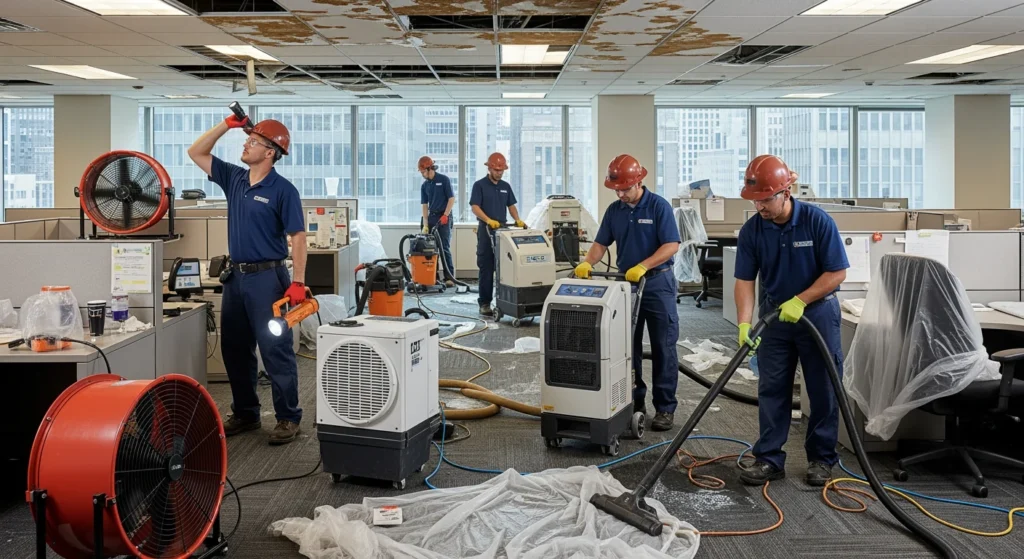
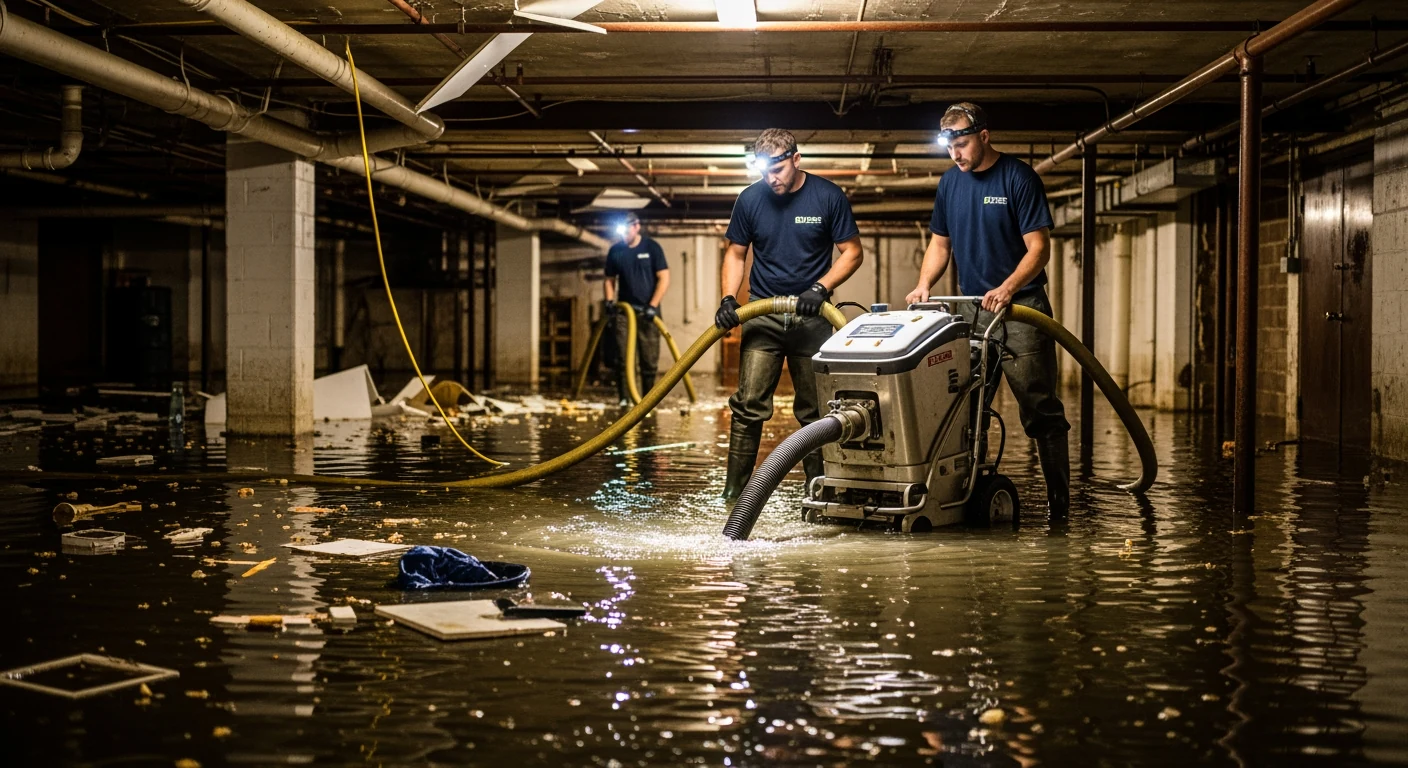
- Emergency water extraction: Industrial-strength pumps and wet vacuums remove standing water and water from materials
- Moisture assessment: Thermal imaging and moisture meters identify water in walls, under flooring, in cavities
- Dehumidification setup: Professional dehumidifiers remove moisture from air (critical for mold prevention)
- Air movement: Industrial air movers dry affected areas quickly
- Monitoring: Daily moisture readings ensure complete drying
- Insurance documentation: Photos, measurements, written reports for claims
Emergency Response Checklist
When you call for emergency water removal services:
- Provide your address and describe water damage extent
- Confirm response time (should be 1–2 hours)
- Ask if they accept insurance assignments (prevents out-of-pocket upfront costs in many cases)
- Obtain their license number and insurance information
- Request emergency authorization number for insurance billing
Step 7: Prepare for Professional Arrival (Hours 2–4)
Make Home Accessible
- Unlock gates, side doors, basement doors
- Move vehicles out of driveway if equipment trucks need access
- Clear pathways to water-affected areas
Prepare Information for Professionals
- Have insurance information ready (policy number, agent contact)
- Show professionals water source and extent
- Provide access to all affected areas, including basement, attic, crawlspace
- Show location of electrical panel and water shutoff valve
- Inform them of any hazardous materials (if older home, mention potential asbestos)
Ask Key Questions of Professionals
- How long will complete drying take? (Typically 3–7 days)
- What equipment will be used and how long will it run? (Generators, dehumidifiers often run 24/7)
- What noise level can we expect?
- When can we return to home? (Usually when moisture levels are normal)
- What’s your drying guarantee or warranty?
- Will they coordinate with adjuster?
Hours 4–24: What to Expect During Active Water Removal
First Few Hours (Extraction Phase)
- Equipment arrival: Trucks arrive with industrial pumps, wet vacuums, air movers, dehumidifiers
- Water extraction: Pumps and vacuums remove standing water (can take 2–8 hours depending on volume)
- Moisture assessment: Technicians use thermal imaging to locate hidden water
- Equipment setup: Air movers and dehumidifiers positioned throughout home
Next 24+ Hours (Drying Phase)
- Continuous operation: Equipment runs 24/7 (noise level similar to box fan)
- Daily moisture readings to track drying progress
- Equipment repositioned as drying progresses
- Technicians may visit daily to monitor and adjust
Health Hazards of Water Damage: What You Need to Know
Mold Growth Timeline
- Mold growth begins: 24–48 hours after water exposure
- 48–72 hours: Mold colonies visible and spreading
- 72+ hours: Extensive mold requiring professional remediation
Key takeaway: Professional drying must begin within 24–48 hours to prevent mold growth.
Health Hazards from Water-Damaged Materials
- Mold spores: Respiratory irritation, allergies, asthma exacerbation
- Bacterial growth: Especially in Category 2/3 water (gray/black water)
- Chemical off-gassing: From wet materials breaking down
- Increased humidity: Creates environment for dust mite and allergen proliferation
Protection During First 24 Hours
- Minimize time in water-affected areas
- If anyone has respiratory sensitivity (asthma, compromised immune), consider temporary evacuation
- Wear masks in water-affected areas (N95 or P100 rated)
- Wash hands thoroughly after handling wet items
- Avoid breathing directly over water or wet materials
When NOT to Attempt Water Removal Yourself
Absolute NO-DIY Scenarios
- Sewage water (blackwater) — biohazard, professional remediation required
- Water greater than 2–3 inches deep — volume exceeds DIY capability
- Water affecting electrical systems — electrocution risk
- Water in foundations or crawlspaces — structural and mold risk
- Water mixed with chemicals or hazardous materials — contamination hazard
- Your health is compromised (elderly, immunocompromised, respiratory issues)
Documentation for Insurance: Critical for Claim Approval
Photos and Videos Insurance Needs
- Before any cleanup or removal
- Water level marks on walls (shows extent)
- Affected items throughout home
- Damage to flooring, drywall, insulation
- Burst pipe, failed appliance, or other damage source
- Professional water removal equipment in action
Written Documentation
- Timeline: When water was discovered, what actions were taken, when professionals called
- List of damaged items with estimated values
- Professional estimates for water removal and restoration
- Any receipts for emergency services or temporary repairs
Professional Reports
- Water damage assessment report from restoration company
- Moisture readings and drying progress documentation
- Invoice showing services provided and timeline
Frequently Asked Questions
How long does emergency water removal take?
Initial extraction: 2–8 hours depending on water volume. Complete drying: 3–7 days of continuous equipment operation.
How much does professional emergency water removal cost?
Emergency water extraction: $2,000–$5,000. Equipment rental (dehumidifiers, air movers): $300–$800 per day. Most homeowners insurance covers these emergency mitigation costs after deductible.
Can I remove water myself to save money?
For small volumes (under 1 inch, single room), basic removal is possible, but professional extraction is needed for complete drying to prevent mold. Attempting full DIY drying typically results in mold damage, costing $8,000–$20,000 more than professional mitigation ($3,000–$6,000).
What if water damage affects my HVAC system?
Turn off HVAC immediately to prevent spreading contaminated air. Professional ductwork cleaning: $800–$2,000. This should be completed before system operation resumes.
How do I prevent mold after water removal?
Complete professional drying within 48 hours prevents mold. Dehumidifiers must run until moisture readings are normal (typically 3–7 days). Continue air circulation even after standing water is gone.
What if I don’t have emergency water removal insurance coverage?
Most standard homeowners policies cover emergency mitigation from sudden, accidental events (burst pipes, storms, appliance failure). Out-of-pocket cost without insurance: $3,000–$8,000 for initial response. Compare this to potential mold damage cost: $8,000–$35,000+.
Frequently Asked Questions (Continued)
How do I know if water damage is covered by insurance?
Sudden, accidental damage is covered: burst pipes, storm damage, appliance failure. Gradual leaks and flood damage are NOT covered. Call your insurance agent to confirm coverage determination.
Should I file a police report if water damage is intentional?
If you suspect intentional damage (sabotage, arson, etc.), yes, file a police report. Provide copy to insurance; claim will still be honored under homeowners policy.
Conclusion: Time is Your Most Valuable Asset
Emergency water removal success depends entirely on how fast you act. The first 24 hours determine whether damage is controlled or catastrophic.
The critical steps are: (1) Stop the water source immediately, (2) Ensure personal safety, (3) Contact insurance within 2 hours, (4) Document everything, (5) Call professional water removal specialists within 2–4 hours. Every hour of delay increases mold risk, structural damage, and total restoration costs.
Remember: Professional mitigation costs $3,000–$6,000 but prevents $8,000–$50,000 in additional damage from mold, structural rot, and secondary issues.
When water damage strikes, there’s no time to research contractors. Upper Restoration provides 24/7 emergency water removal across Long Island, all NYC boroughs, and the tri-state area. We respond within 1–2 hours of your call, perform immediate extraction and stabilization, coordinate with your insurance, and begin the drying process the same day. Call Upper Restoration immediately at [24/7 number] when water damage occurs—the first hour counts.
About Upper Restoration
Upper Restoration is a full-service property restoration company serving New York City and Long Island. Licensed by the NYC Department of Labor for mold remediation and the NYC Department of Environmental Protection for asbestos abatement, Upper Restoration provides 24/7 emergency response for water damage, fire damage, mold contamination, asbestos hazards, and storm damage. Our IICRC-certified technicians serve all five NYC boroughs — Manhattan, Brooklyn, Queens, the Bronx, and Staten Island — as well as Nassau County and Suffolk County communities across Long Island.
See also: Water Damage Prevention Guide