2026 NYC & Long Island Restoration Update. Restoration claim volume across NYC, Long Island (Nassau and Suffolk), and the broader Tri-State has continued to track water damage, sewage backup, fire and smoke, and mold remediation as the dominant categories through 2026. Insurance claim mechanics — particularly around water mitigation, IICRC certifications, and the documented chain of restoration steps — have remained the deciding factor in successful claims. For homeowners, building managers, and condo and co-op boards across NYC and Long Island, the restoration landscape rewards licensed, IICRC-certified providers with documented claim experience. The remainder of this article — originally published in an earlier cycle and updated for 2026 — covers the underlying restoration and claim detail.
The fire damage restoration process follows 7 steps: (1) Emergency assessment and securing the property, (2) board-up and tarping, (3) water removal and drying, (4) smoke and soot removal, (5) odor neutralization, (6) structural and content restoration, and (7) final inspection and clearance. In NYC and Long Island, the full process typically takes 2–8 weeks depending on the severity of damage.
If your property has suffered fire damage, the hours and days immediately after the fire are critical. The decisions you make — and how quickly you make them — directly affect how much of your property is salvageable, how long restoration takes, and what your insurance claim covers. This guide walks through every phase of the process so you know exactly what to expect.
How Long Does Fire Damage Restoration Take?
Before walking through the steps, it helps to understand the overall timeline. Minor fire damage with limited smoke and no structural impact can be resolved in 1–2 weeks. Moderate damage involving water from firefighting, significant smoke penetration, and some structural repair typically runs 3–5 weeks. Severe fires with major structural damage and full content loss can require 6–12 weeks or longer before the property is ready for occupancy.
Every day without professional intervention allows secondary damage — mold from firefighting water, smoke acid etching into surfaces, and soot setting into porous materials — to compound. Calling a restoration company within the first 24–48 hours is one of the highest-impact decisions you can make.
Step 1: Emergency Assessment
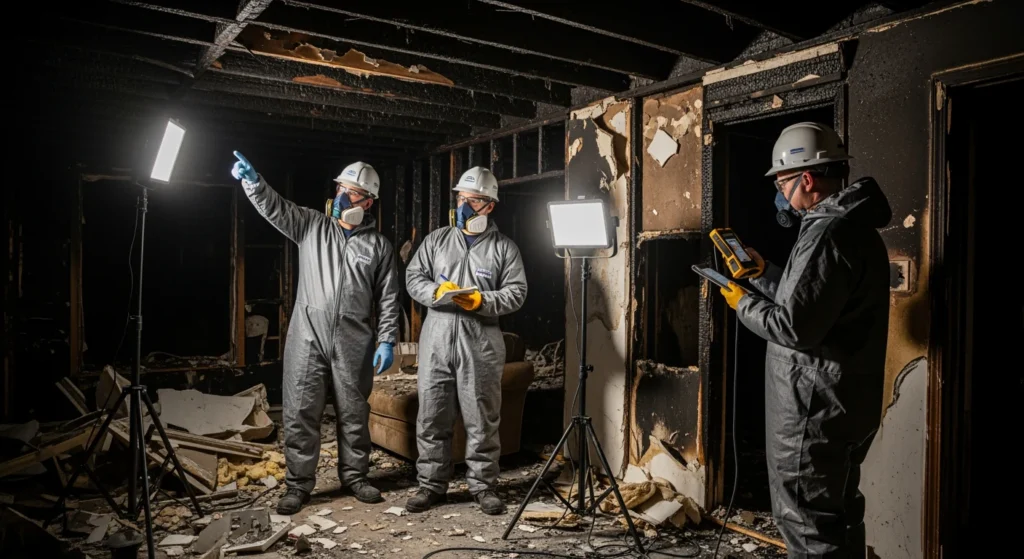
The first step begins the moment a restoration company arrives on site. A certified restoration professional conducts a comprehensive assessment of the property to understand the full scope of damage across three categories: fire and structural damage, smoke and soot damage, and water damage from suppression efforts.
This assessment determines which areas are safe to access, what materials are salvageable versus what requires replacement, and what emergency stabilization is needed immediately. The restoration professional will also document all damage with photos and measurements — this documentation is essential for your insurance claim and should begin before any remediation work starts.
What you should do during this step: Contact your insurance company immediately and let them know a restoration professional is on site documenting damage. Do not discard any damaged items before the adjuster has reviewed them — even severely damaged belongings need to be catalogued as part of your claim.
Step 2: Board-Up and Tarping
If the fire has compromised windows, doors, or the roof, emergency board-up and tarping must happen before any other work proceeds. Open breaches in the structure invite water intrusion, vandalism, and wildlife — all of which compound the damage and complicate the insurance claim.
Roof tarping is especially critical in New York, where seasonal weather can turn a contained fire loss into a catastrophic water loss within days. Structural openings from burned-through walls also need temporary support to prevent further collapse during the restoration process.
Upper Restoration provides 24/7 emergency board-up and tarping service throughout Long Island and NYC. Our board-up and tarping service is designed to be deployed immediately after fire department clearance, before secondary damage can set in.
Step 3: Water Removal and Structural Drying
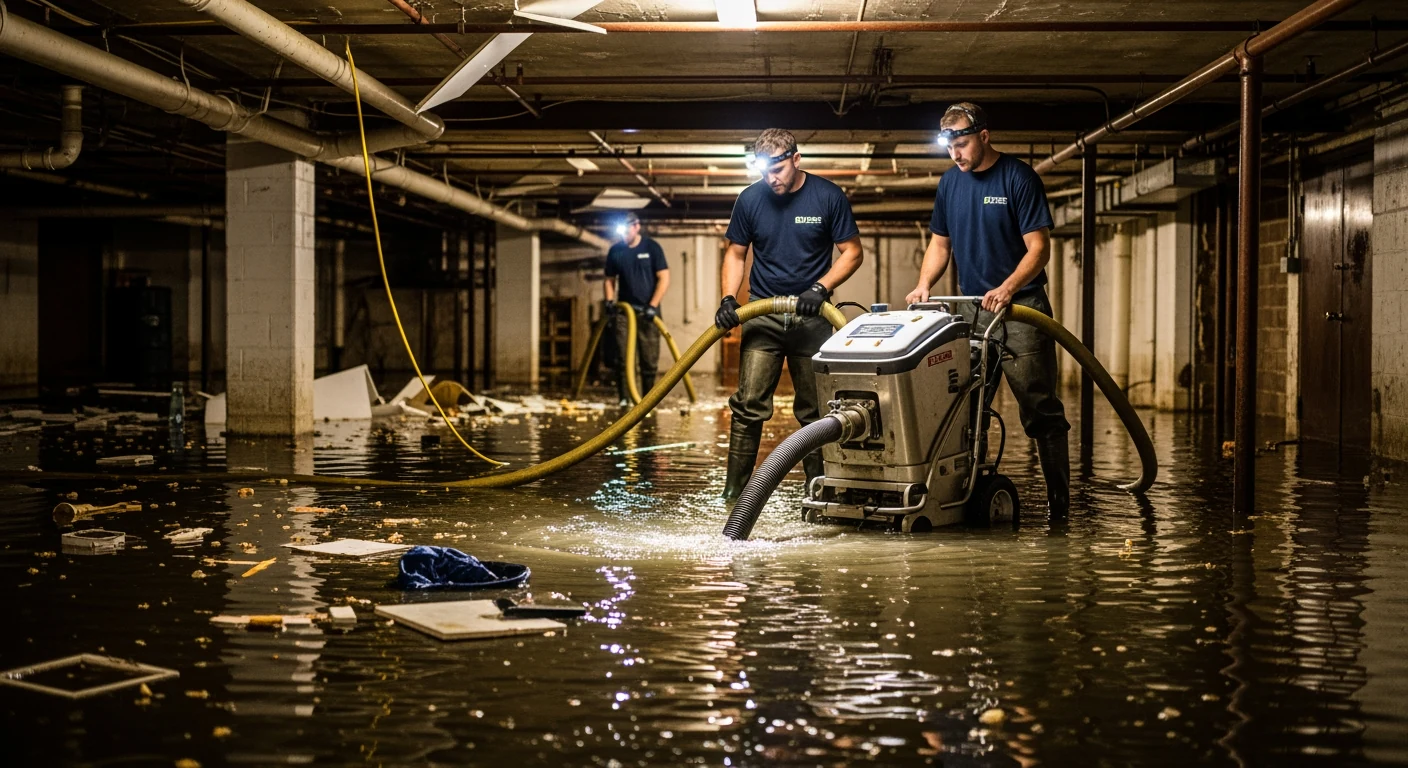
Firefighting leaves behind significant water — from hose lines, sprinkler systems, or both. Standing water must be extracted within 24–48 hours to prevent mold growth, which can begin forming in as little as 48 hours in wet conditions. Water that has penetrated walls, flooring, and subfloor materials requires targeted drying beyond what surface extraction can achieve.
Professional water removal at this stage uses:
- Truck-mounted and portable extraction units to remove standing water
- Industrial air movers positioned to accelerate evaporation within wall cavities and under flooring
- Commercial dehumidifiers to pull moisture out of the air and porous materials
- Moisture meters and thermal imaging to detect hidden water pockets behind walls and under floors
Drying is monitored with daily moisture readings until the structure returns to acceptable moisture levels — typically defined as within 2–4% of an unaffected reference area in the same building. Cutting corners on this step is one of the most common causes of mold problems appearing months after a fire is “resolved.”
Step 4: Smoke and Soot Removal
Smoke and soot damage is often more extensive than the fire damage itself. Smoke travels throughout a structure through HVAC systems, gaps in walls, and air pressure differentials — meaning rooms that were never near the fire can carry heavy smoke contamination. Soot deposits are acidic and will etch into surfaces — glass, metal, stone, and fabric — if not removed promptly.
Smoke removal is not a matter of airing out the property. Professional smoke and soot remediation involves:
- Dry soot sponging on walls, ceilings, and surfaces — wet cleaning soot before dry removal smears it deeper into porous materials
- HEPA vacuuming of all surfaces, HVAC ducts, and insulation to remove settled particles
- Chemical cleaning agents formulated specifically for smoke residue on different surface types (painted drywall, wood, concrete, metal)
- Content pack-out for furniture, clothing, and belongings that need off-site cleaning in a controlled environment
The health risks of smoke residue extend beyond odor. Fine soot particles contain carcinogens and heavy metals that pose long-term respiratory risks when disturbed. See our overview of the health effects of fire damage for a full breakdown of what smoke leaves behind.
Step 5: Odor Neutralization
Eliminating smoke odor is a distinct step from removing visible soot — and it is frequently underestimated. Smoke odor molecules penetrate porous materials including drywall, insulation, wood framing, upholstery, and ductwork. Painting over walls or using air fresheners does not remove the odor source; it temporarily masks it until conditions change.
Professional odor neutralization uses one or more of the following technologies depending on the severity:
- Thermal fogging — a deodorizing agent is vaporized and penetrates the same surfaces smoke did, neutralizing odor molecules at the source
- Hydroxyl generators — produce hydroxyl radicals that break down odor-causing molecules at the molecular level; safe for use while occupants are present in some configurations
- Ozone treatment — highly effective but requires complete evacuation of the space; not safe for people, plants, or pets during treatment
For a full comparison of these technologies, see our guide to ozone generators vs. hydroxyl technology for smoke odor removal. The right approach depends on the materials affected and whether the property needs to be occupied during treatment.
Step 6: Structural and Content Restoration
Once the property is clean, dry, and deodorized, structural restoration begins. This is where the property starts to visibly transform back toward its pre-loss condition. Depending on the extent of fire damage, this phase can involve:
- Removal and replacement of fire-damaged drywall, insulation, flooring, and structural framing
- Repairs to electrical systems, plumbing, and HVAC affected by heat or suppression water
- Refinishing and repainting of smoke-stained surfaces that were cleaned but not replaced
- Rebuilding of cabinets, trim, and architectural elements
Content restoration runs in parallel — belongings that were packed out in Step 4 are professionally cleaned using ultrasonic cleaning, dry cleaning, ozone treatment, or specialized electronics restoration depending on the item type. The goal is to restore rather than replace wherever possible, which directly affects your insurance settlement.
Insurance coordination at this stage: Your contractor and insurance adjuster should be aligned before structural work begins. Scope of work documentation, material selections, and labor costs all need to be pre-approved to avoid disputes during settlement. Upper Restoration works directly with insurance carriers and adjusters throughout this process to keep claims on track. See our guide on how insurance companies work with restoration claims for what to expect.
Step 7: Final Inspection and Clearance
The final inspection is the verification stage — confirming that all documented damage has been addressed, no secondary damage remains, and the property meets safety standards for occupancy. A thorough final inspection includes:
- Visual inspection of all restored areas against the original damage documentation
- Air quality testing to confirm smoke particle levels are within safe limits
- Moisture readings to confirm no residual water remains in walls or floors
- Systems testing — HVAC, electrical, plumbing — to confirm operational safety
- A final walkthrough with the property owner to review all completed work
In NYC and Long Island, permits pulled for structural work also require municipal inspection and sign-off before the property is considered legally cleared for occupancy. Your restoration contractor should coordinate this with local building departments as part of the close-out process.
Upper Restoration provides a written completion report at close-out, documenting all work performed, materials used, and clearance test results. This documentation is important for your insurance file and for any future sale or appraisal of the property.
Fire Damage Restoration in NYC and Long Island
Residential and commercial fire restoration in the New York metro area involves regulatory layers that differ from other markets. NYC requires permits for structural repairs, asbestos and lead testing in pre-1978 buildings before demolition begins, and compliance with the NYC Department of Buildings throughout reconstruction. Long Island municipalities similarly require permits for structural work and have specific disposal requirements for fire-damaged materials.
Working with a contractor who understands these requirements is not optional — it is the difference between a clean close-out and a property stuck in permit limbo months after the fire. Our guide to what licenses a restoration company should have explains what to verify before signing any contract. Our fire and smoke damage restoration service page covers the full scope of what Upper Restoration handles.
Upper Restoration provides professional water damage restoration services across Nassau County, Suffolk County, and all five NYC boroughs — available 24/7.
If you’re a homeowner navigating the recovery process yourself, see our companion guide: 10 Essential Steps to Recovering After Fire Damage — the homeowner-focused checklist that runs parallel to the contractor restoration process.
Frequently Asked Questions: Fire Damage Restoration
Q: What is the first thing I should do after a house fire?
A: Once the fire department clears the property as safe to enter, your first two calls should be to your insurance company (to open a claim) and a licensed restoration company (to begin emergency stabilization and damage documentation). Do not discard anything or attempt cleanup before professional documentation is complete.
Q: How long does fire damage restoration take?
A: Minor damage: 1–2 weeks. Moderate damage with water involvement and significant smoke penetration: 3–5 weeks. Major structural damage: 6–12 weeks or more. The timeline depends on the severity of damage, material availability, permitting, and insurance approval speed.
Q: Will my insurance cover fire damage restoration?
A: Standard homeowner’s and commercial property policies typically cover fire damage restoration, including smoke and water damage caused by firefighting. Coverage details — deductibles, replacement cost vs. actual cash value, contents limits — vary by policy. Working with a restoration company that communicates directly with your adjuster helps maximize your claim.
Q: Can smoke damage be fully removed?
A: Yes, in most cases. Professional smoke remediation using HEPA cleaning, thermal fogging, and hydroxyl or ozone treatment can eliminate smoke odor and residue from surfaces and contents. Severely charred structural materials that have absorbed smoke at depth are typically replaced rather than cleaned. See our guide to smoke damage repair for what the process involves.
Q: Do I need a permit for fire damage repairs in NYC?
A: Yes. Structural repairs, electrical work, plumbing, and HVAC modifications all require permits from the NYC Department of Buildings. In pre-1978 buildings, asbestos and lead surveys are also required before demolition begins. Your restoration contractor should handle permit coordination as part of the project scope.
Need professional asbestos abatement on Long Island? Upper Restoration provides licensed asbestos abatement and removal services across NYC and Long Island. Contact us for a free assessment.
The Complete Fire Damage Restoration Process: What Happens and Why
Most homeowners see fire damage restoration as a single event. In practice it’s a sequenced multi-phase operation — each phase must be completed before the next can begin, and skipping or compressing steps produces failures that show up months later. Here’s the complete process that certified restorers follow.
Phase 1: Emergency Stabilization (Hours 1–24)
Fire Department Clearance and Structural Assessment
No restoration work begins before fire department clearance. Once cleared, a structural engineer or experienced project manager assesses load-bearing integrity — particularly after attic or roof fires where the structural system may be compromised. In NYC, any fire affecting structural elements requires DOB notification before reconstruction can begin.
Emergency Board-Up and Roof Tarping
Any opening created by the fire — windows, walls, roof penetrations — is immediately secured against weather, vandalism, and wildlife. A roof compromise in a Long Island nor’easter can introduce more water than the fire itself. Board-up and tarping cost $500–$3,000 and are typically covered by homeowner’s insurance.
Utilities Isolation
Gas lines, electrical panels, and water supply are isolated and locked out before any crew enters the structure. Electrical systems in fire-affected areas are treated as compromised until a licensed electrician clears them — NEVER reactivate electrical before this clearance.
Phase 2: Water Damage Mitigation (Hours 12–48)
Fire suppression introduces thousands of gallons of water into the structure. Structural drying must begin within 24–48 hours to prevent mold colonization. Industrial dehumidifiers and air movers are deployed immediately — in Long Island’s coastal humidity, natural evaporation is essentially useless. Moisture readings are taken and logged daily until the structure reaches dry standard. This phase runs concurrently with smoke cleaning in non-water-affected areas.
Phase 3: Smoke and Soot Remediation (Days 1–7)
Scope Determination by Soot Type
Different fires produce different soot compositions requiring different cleaning approaches:
- Dry smoke (fast-burning wood/paper): Powdery, responds well to HEPA vacuuming and dry chemical sponge. Fastest to clean.
- Wet smoke (slow-burning synthetics/rubber): Thick, sticky, smears on contact. Requires specialized solvents and multiple treatments. Most common in modern homes with synthetic materials.
- Protein smoke (kitchen/organic material): Nearly invisible but coats all surfaces with a greasy film that produces persistent odor. Requires complete repainting of all affected surfaces — often the most expensive smoke type despite appearing minor.
- Fuel oil/chemical smoke (HVAC fires, synthetic materials): Contains carcinogens. Full HEPA remediation and air monitoring required.
HVAC Decontamination
Smoke travels through ductwork within 2–5 minutes of a structural fire, depositing residue on all duct surfaces, the air handler, and the heat exchanger. HVAC decontamination is mandatory before the system is operated post-fire. Running the HVAC before decontamination redistributes smoke throughout the structure. Cost: $800–$4,000 depending on system size.
Contents Inventory and Pack-Out
Salvageable contents are inventoried, packed, and transported to a climate-controlled cleaning facility. For insurance purposes, every item must be documented — photographed and listed — before moving. Items that cannot be restored (porous materials with heavy smoke saturation) are documented for replacement value claims.
Phase 4: Controlled Demolition (Days 3–10)
Structural materials that cannot be cleaned or restored are removed: charred framing, smoke-saturated drywall and insulation, compromised flooring. In pre-1980 Long Island homes, demolition materials must be tested for asbestos before removal — fire debris in older homes is presumptive ACM until proven otherwise. Asbestos-containing demolition waste requires licensed disposal under NYSDEC hazardous waste regulations.
Phase 5: Odor Elimination (Days 5–14)
After cleaning, persistent odor is addressed with specialized equipment:
- Thermal fogging: Generates a fine deodorizing fog that penetrates the same porous surfaces smoke entered. Most effective for dry smoke events.
- Hydroxyl generators: Produce hydroxyl radicals that chemically break down odor molecules. Safe for occupied spaces and contents. Takes longer than ozone but no evacuation required.
- Ozone treatment: Highly effective but requires full evacuation — people, pets, and plants cannot be present. Not suitable for all situations.
Phase 6: Reconstruction (Weeks 2–8+)
Rebuilding begins only after the structure passes dry standard, air quality testing confirms acceptable particulate levels, and all required permits are obtained. In NYC, structural reconstruction requires DOB permits and licensed contractors. On Long Island, Nassau and Suffolk County require building permits for work exceeding thresholds set by each municipality. Reconstruction scope varies from cosmetic drywall and paint (minor fires) to full framing, roofing, and MEP system replacement (severe fires).
Fire Damage Restoration Timeline on Long Island (2026)
| Fire Severity | Typical Timeline | Cost Range |
|---|---|---|
| Minor (single room, contained smoke) | 1–2 weeks | $3,000–$12,000 |
| Moderate (smoke throughout, limited structural) | 3–6 weeks | $12,000–$50,000 |
| Severe (structural involvement, major rebuild) | 2–6 months | $50,000–$200,000+ |
Choosing a Fire Damage Restoration Contractor in Long Island and NYC
Fire damage restoration is one of the most complex and fraud-prone categories of property insurance claims. When evaluating contractors:
- Verify IICRC certification — Fire and Smoke Restoration Technician (FSRT) certification is the industry standard minimum
- Check NYS contractor license — Home improvement contractor license required in Nassau and Suffolk Counties; NYC requires additional Home Improvement Contractor license from DCA
- Do not sign Assignment of Benefits documents at the door — these transfer your insurance rights to the contractor
- Get the scope in writing before work begins — verbal agreements are not enforceable for insurance claim purposes
- Verify asbestos protocol for pre-1980 homes — any contractor who proposes demolition without asbestos testing in an older home is creating legal and health liability
Upper Restoration is IICRC-certified and licensed in both NYC and Long Island. We provide 24/7 emergency response and work directly with all major insurance carriers. Call 888-720-8376 any time.
Related Restoration Services
- Fire Damage Restoration Cost on Long Island: What You’ll Actually Pay in 2026
- Fire & Smoke Damage Restoration in Brentwood, NY
- Fire & Smoke Damage Restoration in Central Islip, NY
For a comprehensive guide covering every property damage category Upper Restoration handles — fire, water, mold, asbestos, wood rot, and storm damage — see the complete guide to property damage restoration in NYC and Long Island.