
Floor tile discovery is one of the most common asbestos encounters for Long Island homeowners. You pull up old carpet, peel back laminate, or start a bathroom renovation — and underneath is a grid of square tiles you did not know existed. Are they asbestos? This guide shows you exactly what asbestos floor tiles and the adhesive beneath them look like, so you know what you are dealing with before you make your next move.
The Classic 9×9 Tile: What It Actually Looks Like
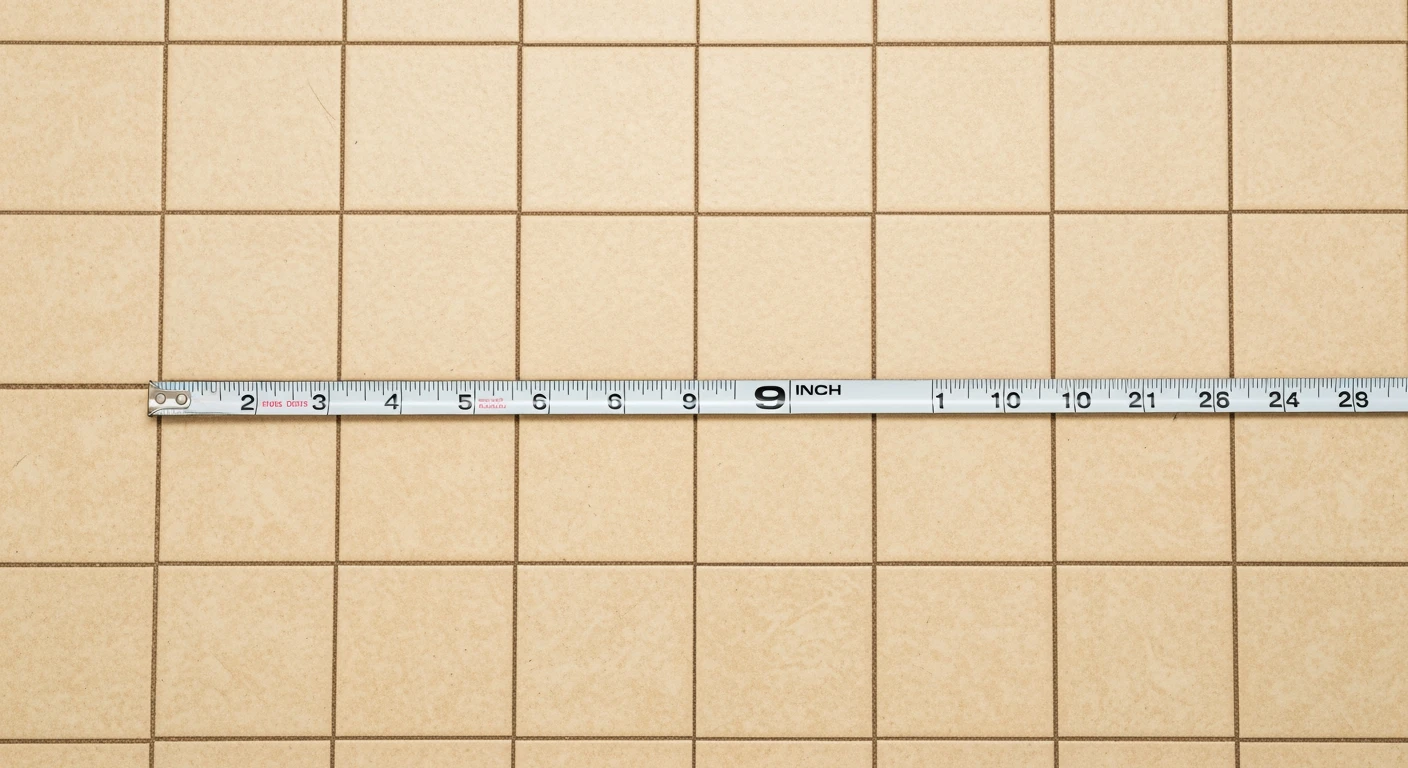
Size is your first and best clue. The 9-inch by 9-inch tile format is so strongly associated with asbestos that it functions as a reliable preliminary indicator. The vast majority of 9×9-inch vinyl floor tiles manufactured in the U.S. contained chrysotile asbestos. If your tiles measure exactly 9 inches square — not 12 inches, not 8 inches — treat them as asbestos-containing until proven otherwise by laboratory testing.
Thickness: VAT tiles are typically 1/8 inch thick — noticeably thinner than modern luxury vinyl plank (usually 3/16 to 1/4 inch) and much thinner than ceramic or porcelain tile. They feel rigid and dense, not flexible like modern vinyl sheet flooring.
Surface appearance: The surface is smooth with a slight sheen when new, though decades of wear may have dulled it. Some tiles have a faint marbled or swirled pattern visible in the surface. Others are solid color with uniform appearance. The tiles do not have the photographic pattern printing found on modern luxury vinyl — their patterns are integral to the material, not printed on top.
The Color Range: Asbestos Tiles Come in Many Colors
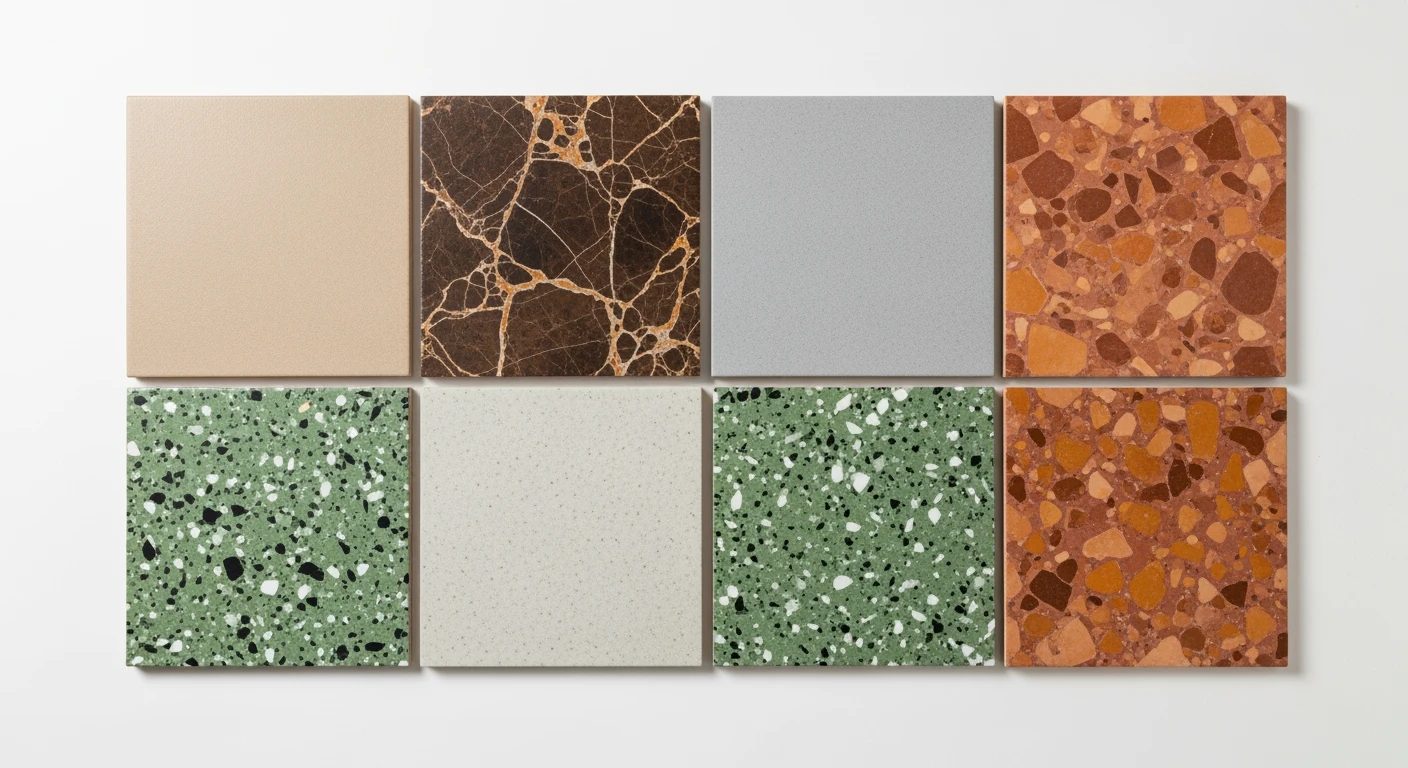
Do not assume that only beige tiles contain asbestos. Vinyl asbestos tiles were produced in the full spectrum of mid-century interior design colors:
Beige, tan, and cream — the most common residential colors, found in kitchens, bathrooms, and basements across Long Island. Dark brown and maroon — often with subtle marbling, common in formal living spaces. Gray — common in basements and utility areas. Green (olive, forest, mint) — popular in 1950s and 1960s kitchens. Terra cotta and rust — used in entryways and kitchens. Speckled and flecked patterns — colored chips in a solid base, common in commercial and institutional applications.
Every one of these colors and patterns was manufactured with asbestos during the production era. Color is not diagnostic.
The Hidden Layer: Black Mastic Adhesive
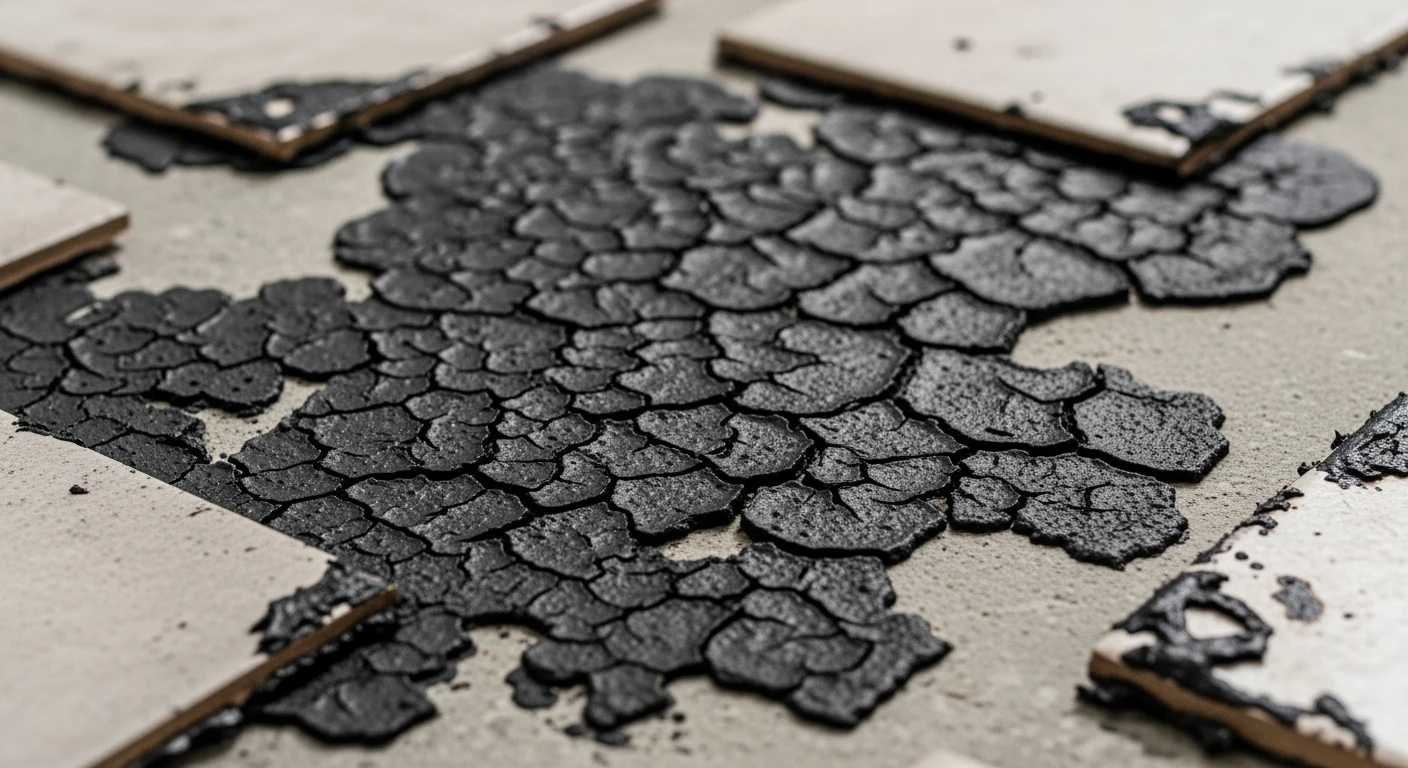
This is the material most people miss. Even homeowners who know about asbestos tiles often do not realize that the black adhesive beneath the tiles is a separate asbestos-containing material that requires its own testing and abatement. Cutback mastic is a petroleum-based adhesive that was manufactured with chrysotile asbestos to improve its performance characteristics.
What it looks like: Fresh cutback mastic is black and tar-like — similar in color and consistency to roofing tar. In older Long Island homes, the mastic has dried and become brittle over decades. It typically displays a distinctive cracked pattern resembling dried mud or alligator skin. The mastic is applied directly to the concrete slab or wood subfloor in a thin layer (up to 1/8 inch thick) and may cover the entire floor area where tiles were installed.
Why mastic matters for renovation budgets: Removing asbestos tiles alone costs $5-$15 per square foot. But if the mastic also tests positive — and it frequently does — mastic removal adds $3-$8 per square foot additional. This can nearly double the abatement cost on a floor project. Always test both tile and mastic before budgeting a floor renovation.
The Discovery Scenario: Tiles Under Newer Flooring
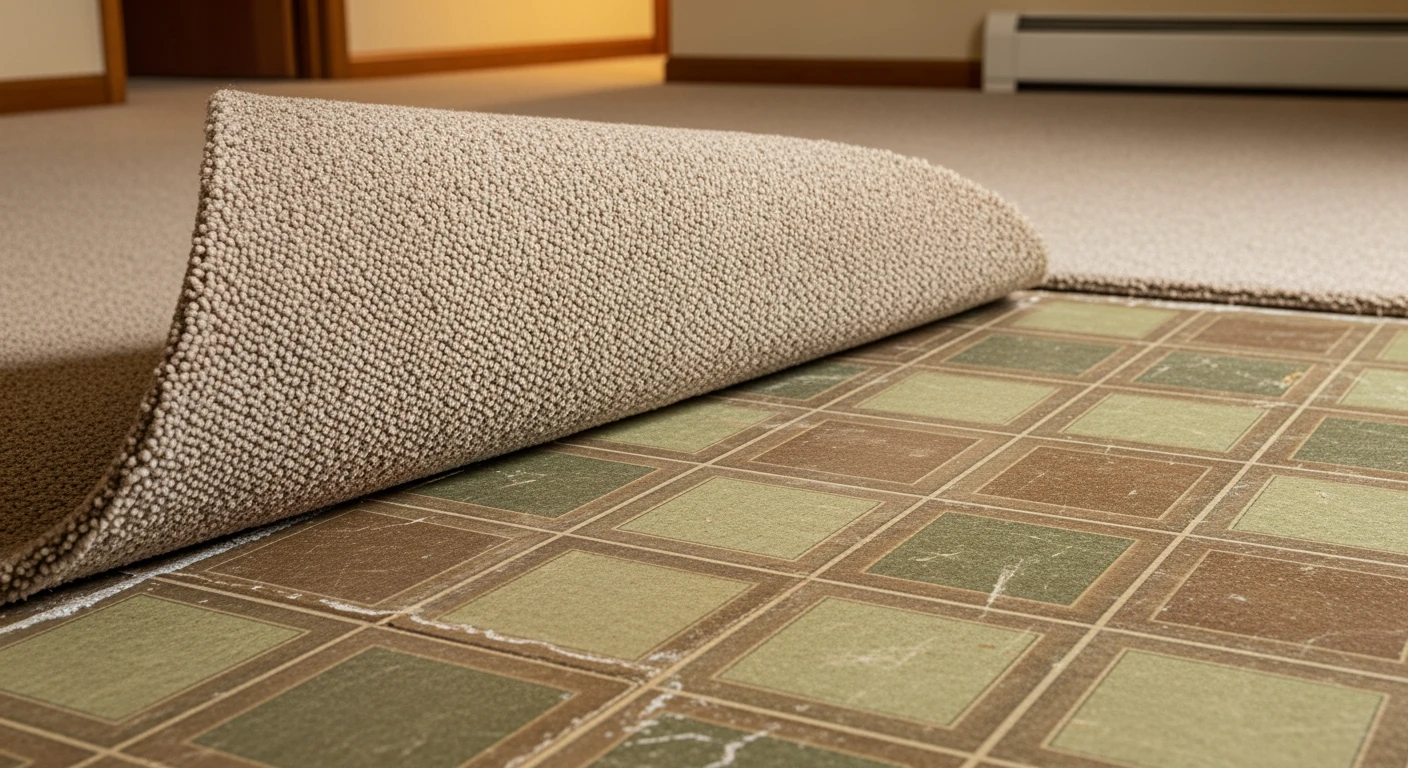
This is how most Long Island homeowners find asbestos tiles. Previous owners installed carpet, laminate, or vinyl sheet flooring directly over the original tiles rather than removing them. The tiles have been safely encapsulated and forgotten for years or decades. Then a renovation project or flooring replacement exposes them.
What to do in the moment: Stop work. Do not pry, break, or scrape the exposed tiles. They are safe as long as they remain intact and undisturbed. Contact a NYS DOH-certified asbestos inspector to collect samples for testing. Results take 3-5 business days.
Your options after testing: If tiles test positive, you can install new flooring directly over them (the most common and most cost-effective approach), have them professionally removed by a NYS DOL-licensed contractor, or encapsulate them with a sealant before overlay. See our floor tile identification guide and encapsulation vs. removal comparison for detailed cost and decision guidance.
Quick Size and Age Decision Matrix
| Tile Size | Installed Before 1981 | Installed After 1981 |
|---|---|---|
| 9×9 inches | Very high probability — test before disturbing | Unlikely but possible — test if unsure of date |
| 12×12 inches | Moderate probability — test before disturbing | Low probability — but test if vintage appearance |
| Other sizes (plank, large format) | Low probability — likely non-asbestos vinyl or linoleum | No risk — modern product |
What Does Asbestos Tile Flooring Look Like? The Complete Visual Breakdown
Asbestos tile flooring has a distinctive look once you know what to search for — but it is consistently mistaken for ordinary vinyl tile by homeowners and contractors alike. Here is the complete visual profile of asbestos tile flooring as it actually appears in Long Island and NYC homes:
- Size: 9×9 inches is the hallmark dimension. Place a tape measure on the tile — if it measures exactly 9 inches square, you are almost certainly looking at vinyl asbestos tile (VAT). Some 12×12 inch tiles from before 1975 also contain asbestos.
- Thickness: Approximately 1/8 inch — thinner than your fingernail width beyond two layers. Noticeably slimmer than modern LVP or ceramic.
- Surface: Smooth, slightly waxy or dull sheen. Not the photographic pattern of modern vinyl — the color and pattern go through the tile material.
- Edges: Square-cut, dense, sometimes brittle and crumbling at corners in older tiles. Edges may show yellowing or darkening from age.
- Adhesive beneath: If any tile is lifted or missing, look at the subfloor. Black, tar-like cutback mastic = another asbestos-containing material requiring separate testing.
Asbestos tile flooring does not look dangerous. It looks like ordinary mid-century floor tile — and that is precisely why so many homeowners disturb it during renovation without realizing what they have found.
What Does an Asbestos Tile Look Like Compared to Safe Alternatives?
This is the question that trips most people up. Asbestos tiles look nearly identical to non-asbestos vinyl tiles from the same era. Side by side, there is no reliable visual distinction. Both may be the same color, same size, same texture. The only reliable differences are:
| Feature | Vinyl Asbestos Tile (VAT) | Modern Vinyl Tile |
|---|---|---|
| Size | 9×9 inches (dominant); some 12×12 | 12×12, 18×18, plank formats |
| Thickness | 1/8 inch | 3/16 to 1/4 inch (thicker) |
| Flexibility | Rigid, brittle when cold | Flexible at room temperature |
| Pattern depth | Pattern through tile material | Photographic print layer on surface |
| Era | Pre-1981 production | Post-1985 (largely) |
| Adhesive | Black cutback mastic (may be ACM) | White/tan pressure-sensitive adhesive |
If your tile matches the VAT profile — 9×9, rigid, 1/8 inch thick, in a home built or renovated before 1981 — send a sample to an NVLAP-accredited laboratory before any floor work proceeds. Testing costs $25–$75 per sample. The alternative — disturbing ACM without containment — carries significant health and legal liability in New York.
Asbestos Floor Tile: What to Do After Visual Identification
Visual identification narrows probability; it does not confirm or rule out asbestos. After you have made a visual assessment, the decision tree is straightforward:
- Tiles intact and undisturbed? Leave them alone. Intact asbestos tile flooring that is not crumbling poses minimal airborne risk. The safest and most common approach is to install new flooring directly over it with appropriate documentation for future buyers.
- Renovation planned that will disturb the floor? Stop. Test before any drilling, cutting, sanding, or tile removal. In NYC, abatement requires DEP notification and a licensed contractor. On Long Island, NYS DOL rules apply.
- Tiles crumbling, damaged, or friable? Do not touch. Friable asbestos tile flooring can release fibers when walked on or disturbed. Call a licensed inspector immediately.
- Tiles found under carpet or another floor layer? They are encapsulated and safe in that state. You can leave them in place and install new flooring on top — this is frequently the most cost-effective outcome.
Upper Restoration provides free on-site assessments for Long Island and NYC homeowners who have found or suspect asbestos floor tile flooring. Our inspectors are NYS DOH-certified and can collect samples, submit them to an accredited lab, and walk you through your options once results are back.
Upper Restoration’s Floor Tile Abatement on Long Island
Upper Restoration provides licensed asbestos floor tile and mastic removal across Long Island. Whether you have discovered tiles under carpet or are planning a full floor renovation, our certified crews handle tile removal, mastic stripping, containment, air monitoring, and disposal in full compliance with NYS DOL requirements. We work with your flooring contractor to coordinate abatement timing so new flooring installation proceeds without delay. Serving Nassau and Suffolk Counties.
