Floor tile identification is one of the most common asbestos questions Long Island homeowners face during renovation projects. You pull up old carpet or laminate and discover a grid of tiles beneath — now what? This guide walks you through exactly how to assess whether those tiles might contain asbestos, when and how to test them, and what your options are if they do.
The 9×9 Rule: Your First Check
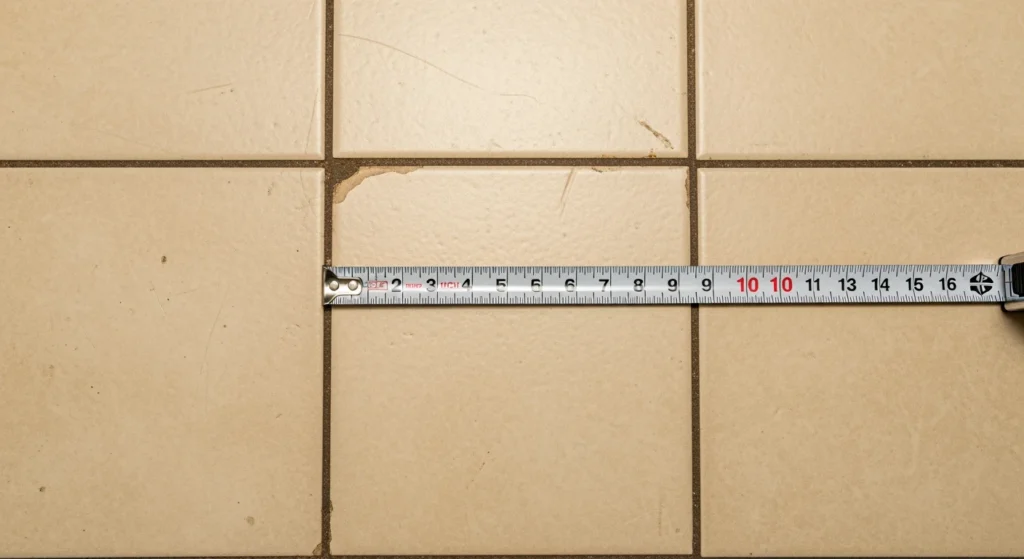
The fastest way to assess asbestos risk in floor tiles is to measure them. 9-inch by 9-inch tiles have the highest probability of containing asbestos. This size was the standard residential and light commercial format during the peak decades of asbestos floor tile production. If your Long Island home was built before 1981 and you find 9×9-inch tiles in the basement, kitchen, bathroom, or utility room, treat them as asbestos-containing until laboratory testing proves otherwise.
Why 9×9? The 9-inch format preceded the modern 12×12-inch standard. Tile manufacturers transitioned to 12-inch formats in the 1960s and 1970s, while simultaneously reducing and eventually eliminating asbestos content. The 9-inch size thus correlates strongly with the era of highest asbestos content.
Visual Identification by Color and Pattern
Vinyl asbestos tiles came in a range of colors and patterns. Common appearances on Long Island include solid beige, tan, or cream tiles (the most ubiquitous residential color), dark brown or maroon tiles with subtle marbling, gray tiles with faint streaking, green, blue, or terra cotta solid-color tiles, and speckled or flecked patterns (colored chips in a solid base). The tiles are typically 1/8-inch thick — noticeably thinner than modern luxury vinyl plank or porcelain tile. They feel rigid and dense, not flexible like modern vinyl sheet flooring.
Check Under the Tile: The Mastic Question
Even if floor tiles test negative for asbestos, the black cutback adhesive (mastic) beneath them may contain asbestos. This dark, tar-like adhesive was commonly used to glue floor tiles to subfloors in Long Island homes and is itself a frequently asbestos-containing material. When you test floor tiles, always request that the inspector sample the mastic separately. Mastic testing adds one more laboratory sample ($25-$50) and can significantly change your renovation approach.
Where to Look in a Long Island Home
Basement floors. The most common location. Many Long Island homes have original 9×9 tiles in finished or semi-finished basements, often partially covered by carpet.
Beneath newer flooring. Renovations in the 1990s and 2000s frequently installed new flooring directly over original tiles. Pulling up carpet, laminate, or vinyl sheet may reveal 9×9 tiles beneath.
Kitchens and bathrooms. Original kitchen and bathroom flooring in pre-1981 Long Island homes frequently used vinyl asbestos tiles.
Utility rooms and laundry areas. Often overlooked during previous renovations, these spaces frequently retain original flooring.
What to Do If Tiles Test Positive
Option 1: Leave them alone. Intact tiles that are not being disturbed can safely remain. If you are not renovating the floor, no action is needed beyond awareness.
Option 2: Install new flooring over them. This is the most common approach for Long Island homeowners. New carpet, laminate, luxury vinyl plank, or tile can be installed directly over intact asbestos tiles. The key requirement is that the installation method must not damage the underlying tiles — no grinding, sanding, or adhesive removal that would disturb the VAT.
Option 3: Professional removal. When renovation requires removing the floor system entirely — or when tiles are damaged and crumbling — a NYS DOL-licensed abatement contractor must perform the removal. This includes both tile and mastic abatement, containment, air monitoring, and waste disposal. Budget $5 to $15 per square foot for tile removal plus $3 to $8 per square foot for mastic removal on Long Island.
Upper Restoration’s Floor Tile Abatement Services
Upper Restoration provides licensed asbestos floor tile and mastic removal across Long Island. Whether you have a single room that needs abatement before renovation or a full-house floor tile removal project, our certified crews handle containment, removal, and disposal in full compliance with NYS DOL requirements. Serving homeowners and contractors throughout Nassau and Suffolk Counties.