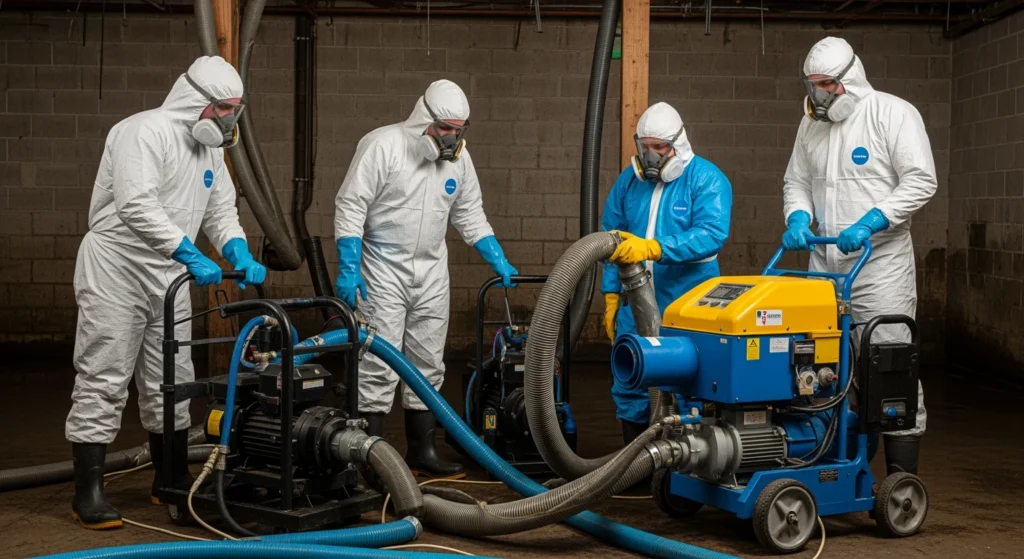
Sewage Backup Cleanup Cost: Sewage backup cleanup costs on Long Island range from $500–$3,000 for isolated toilet overflows to $8,000–$25,000+ for full basement sewage floods requiring demolition, biohazard remediation, and structural drying. The primary cost drivers are affected square footage, porous material removal scope (drywall, carpet, insulation), and mastic/concrete treatment requirements. Most homeowner policies cover sudden sewage backups — but only if a sewer backup rider is included.
Sewage Backup Cleanup Cost on Long Island (2026)
Sewage cleanup costs vary more than almost any other restoration service because the scope is driven by what the sewage touched, not just how much water was involved. A toilet overflow that contacted only a tile bathroom floor costs a fraction of a basement backup that saturated carpet, drywall, and wood framing.
| Scope | Typical Cost (LI/NYC 2026) | Key Cost Drivers |
|---|---|---|
| Isolated toilet overflow — tile floor, contained | $500–$1,500 | Extraction, disinfection, surface cleaning |
| Bathroom backup with subfloor contact | $1,500–$4,000 | Adds subfloor assessment, possible replacement |
| Partial basement backup (under 200 sq ft) | $3,000–$8,000 | Carpet/pad removal, drywall cut, disinfection, drying |
| Full basement sewage flood | $8,000–$20,000 | Full demo, biohazard remediation, structural drying, mold prevention |
| Sewage affecting multiple floors | $15,000–$40,000+ | Multi-zone containment, extensive drywall demo, reconstruction |
| Commercial sewage event | $10,000–$100,000+ | Larger square footage, business interruption, regulatory compliance |
What Determines Sewage Cleanup Cost on Long Island
Five factors drive the final number more than any other:
1. Material Contact — Porous vs. Non-Porous
The single biggest cost driver. Non-porous materials (ceramic tile, concrete, metal) can be disinfected and kept. Porous materials (carpet, carpet pad, drywall, insulation, wood) that contacted sewage must be removed — they cannot be adequately disinfected. A basement with bare concrete flooring and block walls costs significantly less to remediate than the same space finished with carpet, drywall, and wood framing.
2. Square Footage Affected
Sewage cleanup is generally priced per square foot for extraction and disinfection ($3–$8/sq ft for Category 3 water), with material removal priced separately per material type. A 400 sq ft finished basement easily hits $12,000–$18,000 all-in when drywall removal, carpet disposal, biohazard waste fees, and structural drying are factored.
3. Mastic and Subfloor Involvement
In older Long Island homes with asbestos-containing black mastic adhesive under finished floors, sewage cleanup triggers mandatory asbestos testing before demolition — and potentially asbestos abatement costs ($5–$15/sq ft) on top of sewage remediation. This is a common cost surprise in pre-1980 Nassau and Suffolk County homes.
4. Response Time
Every hour sewage sits in porous materials increases remediation scope. Drywall that absorbs sewage for 2 hours is a very different remediation challenge than drywall soaked for 24 hours. Fast response — within the first few hours — can meaningfully reduce total cost by limiting material saturation depth.
5. Mold Prevention Treatment
Professional sewage cleanup includes antimicrobial mold prevention treatment after structural drying — typically $1–$3/sq ft. Skipping this step saves money upfront and costs significantly more when mold emerges 3–6 weeks after “completed” remediation.
Sewage Cleanup Cost: What’s Included vs. Billed Separately
Understanding what’s included in a sewage cleanup quote prevents surprises:
- Usually included: Extraction, initial disinfection, containment setup, PPE disposal, air scrubbing during work, drying equipment deployment
- Usually separate line items: Material removal and disposal (drywall, carpet, insulation), content pack-out, asbestos testing, mold prevention treatment, post-remediation air quality testing, permit fees
- Reconstruction billed separately: Drywall replacement, flooring, painting — typically handled by a general contractor after remediation is complete and clearance testing passes
Does Insurance Cover Sewage Backup Cleanup Cost on Long Island?
Standard HO-3 homeowner’s policies typically exclude sewer backup unless a sewer backup endorsement (rider) is specifically added. This is one of the most common gaps in Long Island homeowner coverage — and one that only becomes apparent after a sewage event.
If you have the rider, coverage typically includes sewage extraction, biohazard remediation, material removal, structural drying, and mold prevention treatment — subject to your deductible and coverage limits. Additional Living Expenses (ALE) coverage applies if the property is uninhabitable during remediation.
What to do immediately after a sewage backup: photograph everything before cleanup begins, call your insurer to open a claim, and get a professional assessment in writing before authorizing any work. Insurers require documentation that work was necessary — a written scope from a certified contractor satisfies this requirement.
Sewage Cleanup Cost vs. DIY: Why Professional Remediation Is Required
Sewage is Category 3 Black Water — the highest biohazard classification in the IICRC S500 standard. It contains E. coli, Hepatitis A, Norovirus, Cryptosporidium, and dozens of other pathogens. In Nassau and Suffolk Counties, improper disposal of sewage-contaminated materials violates NYSDOH regulations and can result in fines.
The practical argument against DIY beyond health risk: household cleaning products are deactivated by the organic matter in sewage and cannot achieve the pathogen kill required for safe occupancy. Professional biocides applied at correct concentrations by trained technicians are the only way to achieve documented safe decontamination — which your insurance carrier requires for claim payment.
Frequently Asked Questions: Sewage Backup Cleanup Cost
Q: How much does sewage backup cleanup cost for a flooded basement?
A: A fully finished basement with carpet, drywall, and furniture typically costs $8,000–$20,000 for professional sewage remediation on Long Island. An unfinished basement with bare concrete costs $2,000–$6,000. The difference is entirely driven by porous material removal scope.
Q: Will my homeowner’s insurance cover sewage backup cleanup?
A: Only if you have a sewer backup rider added to your standard policy. Check your declarations page — look for “water backup” or “sewer backup” endorsement. If it’s not there, the cleanup cost comes out of pocket. Many Long Island homeowners discover this gap only after a backup occurs.
Q: How quickly do I need to call for sewage cleanup?
A: Within the first hour if possible. Category 3 sewage water begins degrading porous materials immediately and can trigger mold growth within 24–48 hours. Every hour of delay increases both remediation scope and total cost.
Q: How long does sewage cleanup take?
A: Extraction and initial disinfection: same day. Material removal: 1–2 days. Structural drying: 3–7 days. Mold prevention treatment: 1 day after drying is confirmed complete. Total: 5–10 days for a typical basement backup before reconstruction can begin.
Upper Restoration provides 24/7 emergency sewage backup cleanup throughout Nassau County, Suffolk County, and all five NYC boroughs. Call 888-720-8376 for immediate response.