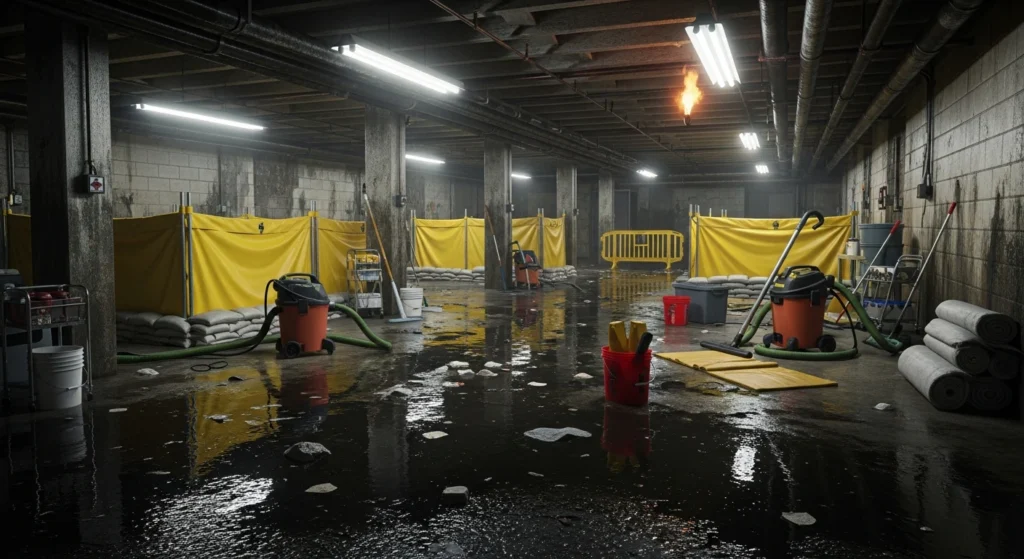
Sewage Damage Cleanup Defined: Sewage damage cleanup is the professional remediation of Category 3 “Black Water” contamination — sewage backups, sewer line failures, and toilet overflows that introduce human waste, pathogens, and biohazardous material into a structure. All porous materials that contact sewage must be removed. Surfaces require hospital-grade disinfection. In NYC and Long Island, sewage cleanup must comply with NYSDOH and OSHA biohazard handling regulations.
What Is Sewage Damage Cleanup?
Sewage damage cleanup is the professional process of containing, removing, and disinfecting a structure after a sewage backup or sewer system failure. Unlike standard water damage, sewage is classified as Category 3 Black Water — the most dangerous water damage category — because it contains human waste, bacteria, viruses, and parasites that pose direct health risks to anyone who contacts it without proper protection.
Common causes of sewage damage in Long Island and NYC homes include main line blockages from roots or grease buildup, municipal sewer surges during heavy rainfall, failed sump pumps, cracked or collapsed sewer laterals, and toilet or drain backups caused by clogs. In older NYC and Nassau/Suffolk County homes, cast iron drain lines that have corroded or bellied are a leading cause of recurrent backups.
Health Risks of Sewage Exposure
Sewage exposure is a genuine medical emergency. Black water contains a full spectrum of biological hazards:
- Bacteria: E. coli, Salmonella, Shigella, Leptospira — all capable of causing serious gastrointestinal illness, kidney failure, and in severe cases, death
- Viruses: Hepatitis A, Norovirus, Rotavirus — shed in human feces and stable in contaminated environments for days to weeks
- Parasites: Cryptosporidium, Giardia — resistant to standard disinfectants; require professional-grade biocide treatment
- Mold: Sewage introduces moisture; mold colonization begins within 24–48 hours in affected areas
- Hydrogen sulfide gas: Produced by sewage decomposition; toxic at low concentrations and detectable by its rotten egg odor
Symptoms of sewage exposure include nausea, vomiting, diarrhea, fever, and skin irritation. Anyone who has had direct skin contact with sewage backup water should wash thoroughly and consult a physician. Do not use contaminated areas until professional cleanup and clearance testing are complete.
The Sewage Damage Cleanup Process: Step by Step
Professional sewage damage cleanup follows a structured remediation protocol that addresses containment, extraction, demolition, disinfection, and drying — in that order. Skipping or combining steps produces failures that surface weeks later as mold growth or persistent odor.
Step 1: Containment and PPE Setup
Before any extraction begins, the affected area is isolated. This means sealing HVAC vents (to prevent pathogen spread through ductwork), establishing a decontamination corridor, and suiting up in full PPE — Tyvek suits, N95 or P100 respirators, nitrile gloves, and rubber boots. In occupied buildings, the sewage-affected zone is treated as a biohazard area and access is restricted.
Step 2: Sewage Extraction
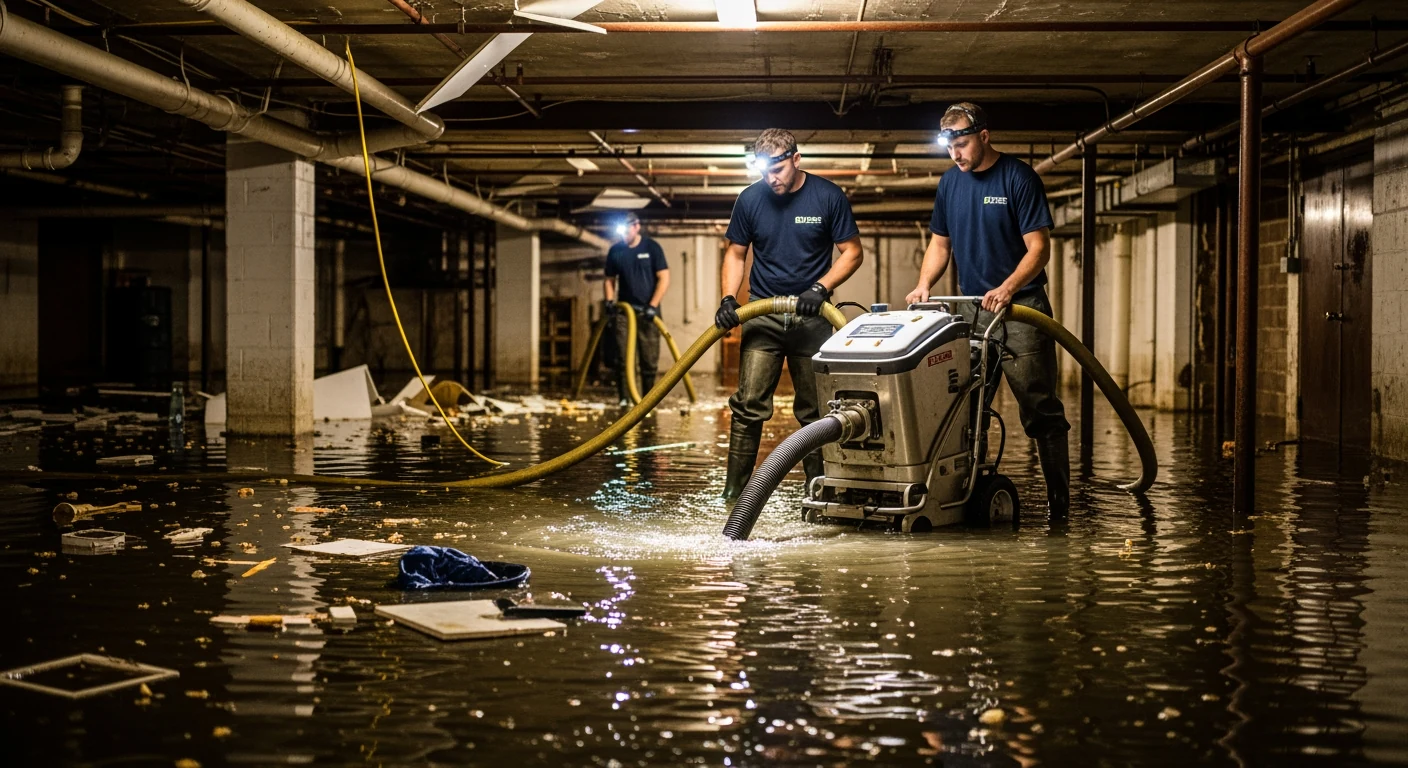
Standing sewage water is extracted using truck-mounted or portable extraction units with appropriate biohazard containment. The extracted material must be disposed of in compliance with local regulations — not dumped into storm drains or standard waste systems. In NYC, Category 3 water disposal follows DEP guidelines for hazardous liquid waste.
Step 3: Porous Material Removal
All porous materials that contacted sewage must be removed — not cleaned, not dried, removed. This includes:
- Carpet and carpet padding — even if the sewage appears to have been extracted from the surface
- Drywall — cut two feet above the highest visible contamination line
- Insulation — cannot be adequately disinfected; always removed
- Wood flooring, baseboards, and trim — if saturated or contacted by sewage water
- Upholstered furniture and mattresses that contacted sewage
Concrete slabs and block walls can typically be cleaned and disinfected rather than removed, but require multiple treatment passes.
Step 4: Hospital-Grade Disinfection
After material removal, all remaining hard surfaces — concrete, block, studs, joists — are treated with EPA-registered hospital-grade disinfectants effective against the full spectrum of sewage pathogens. Standard household bleach is not adequate: it is rapidly deactivated by organic matter and does not penetrate porous concrete. Professional biocides applied by trained technicians ensure complete pathogen kill across all surface types.
A second application of antimicrobial treatment is typically applied after initial disinfection and before structural drying begins.
Step 5: Structural Drying
After disinfection, industrial air movers and dehumidifiers are deployed to bring structural moisture down to acceptable levels. Sewage events saturate concrete slabs, subfloors, and wall framing — drying is monitored daily with moisture meters until readings return to dry standard. In Long Island’s coastal climate, achieving dry standard without industrial equipment takes weeks; with proper equipment, typically 3–7 days.
Step 6: Mold Prevention Treatment
Because sewage introduces both moisture and organic nutrients, mold growth risk is elevated compared to clean water events. After structural drying, affected framing and subfloor surfaces receive an antimicrobial mold-inhibiting treatment as a final protective layer before reconstruction begins.
Sewage Damage Cleanup Cost on Long Island and NYC
Sewage cleanup costs vary significantly based on the volume of sewage, materials affected, and square footage involved. Typical ranges for Long Island and NYC:
| Scope | Typical Cost Range | Notes |
|---|---|---|
| Isolated toilet overflow (bathroom only) | $500–$2,500 | Limited porous material; single room |
| Basement sewage backup (partial) | $3,000–$8,000 | Carpet, drywall, framing removal typical |
| Full basement sewage flood | $8,000–$20,000+ | Full demo, disinfection, drying, reconstruction |
| Main line failure affecting multiple rooms | $15,000–$40,000+ | Structural damage to multiple areas |
Sewage damage is typically covered by homeowner’s insurance when caused by a sudden backup — but not all policies include sewer backup coverage as a standard provision. Many require a specific sewer backup rider. Review your policy before assuming coverage, and contact your insurer immediately after any sewage event.
Sewage Cleanup in NYC and Long Island: Regulatory Requirements
In New York City, sewage cleanup that involves significant biohazard material may trigger DEP notification requirements depending on the volume and source. Commercial sewage events may require licensed biohazard remediation contractors. On Long Island, Nassau and Suffolk Counties follow NYSDOH guidance on biohazard remediation — contractors handling Category 3 water in occupied dwellings should carry appropriate liability coverage and follow IICRC S500 and S520 remediation standards.
Upper Restoration is IICRC-certified and carries full biohazard remediation coverage for sewage events throughout Long Island and NYC. We provide 24/7 emergency response, handle all insurance documentation, and coordinate the complete process from extraction through reconstruction.
Frequently Asked Questions: Sewage Damage Cleanup
Q: Can I clean up sewage backup myself?
A: Only for very minor events — a toilet overflow that contacted a small area of hard flooring and was extracted within minutes. Any sewage backup that has contacted carpet, drywall, wood, or extended across a significant area requires professional remediation. Without proper PPE, biocides, and extraction equipment, DIY cleanup creates health risk and typically leaves pathogen contamination behind.
Q: How long does sewage cleanup take?
A: Extraction and initial disinfection complete within 1–2 days. Structural drying takes 3–7 days. Total remediation including demolition and mold prevention treatment: 5–10 days for a typical basement backup. Reconstruction of removed materials (drywall, flooring) adds 1–3 weeks depending on scope.
Q: Will the smell go away after cleanup?
A: Yes — if remediation is done correctly. Persistent sewage odor after “cleanup” almost always means residual contamination remains in porous materials or structural cavities. If you smell sewage after a cleanup, it is a sign that either porous materials were not fully removed or disinfection was incomplete. A professional inspection can identify the source.
Q: Does homeowner’s insurance cover sewage backup?
A: Standard HO-3 policies typically exclude sewer backup unless you have added a sewer backup rider. Review your declarations page and call your insurer immediately after any sewage event. Do not wait — late notification can complicate claims. Upper Restoration works directly with insurance carriers and can provide complete documentation for claim submission.
Q: How quickly do I need to act after a sewage backup?
A: Immediately. Category 3 water begins colonizing porous materials within hours. Mold growth can begin within 24–48 hours in sewage-saturated drywall and carpet. Every hour of delay increases material loss and remediation scope. Call a professional within the first hour of discovery if possible.
Upper Restoration provides 24/7 sewage damage cleanup and biohazard remediation throughout Nassau County, Suffolk County, and all five NYC boroughs. Call 888-720-8376 any time for emergency response.