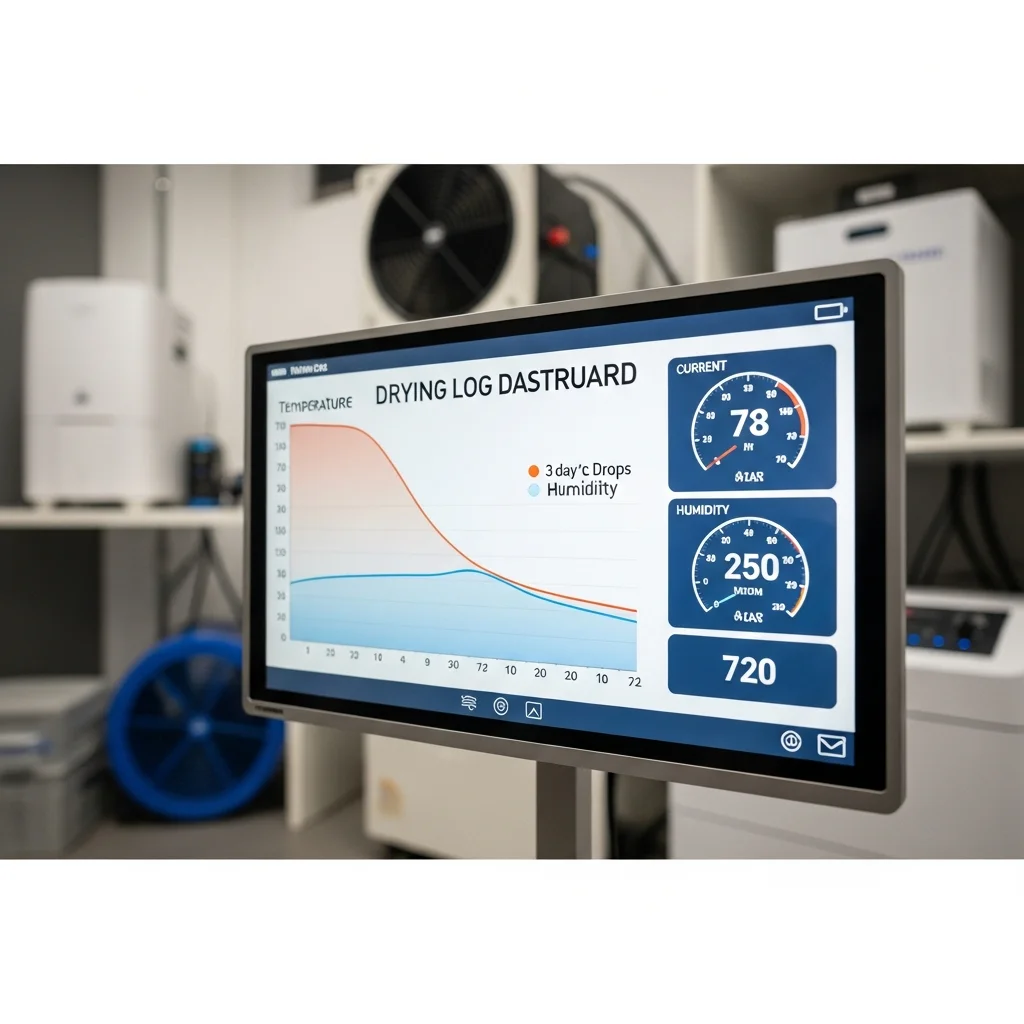
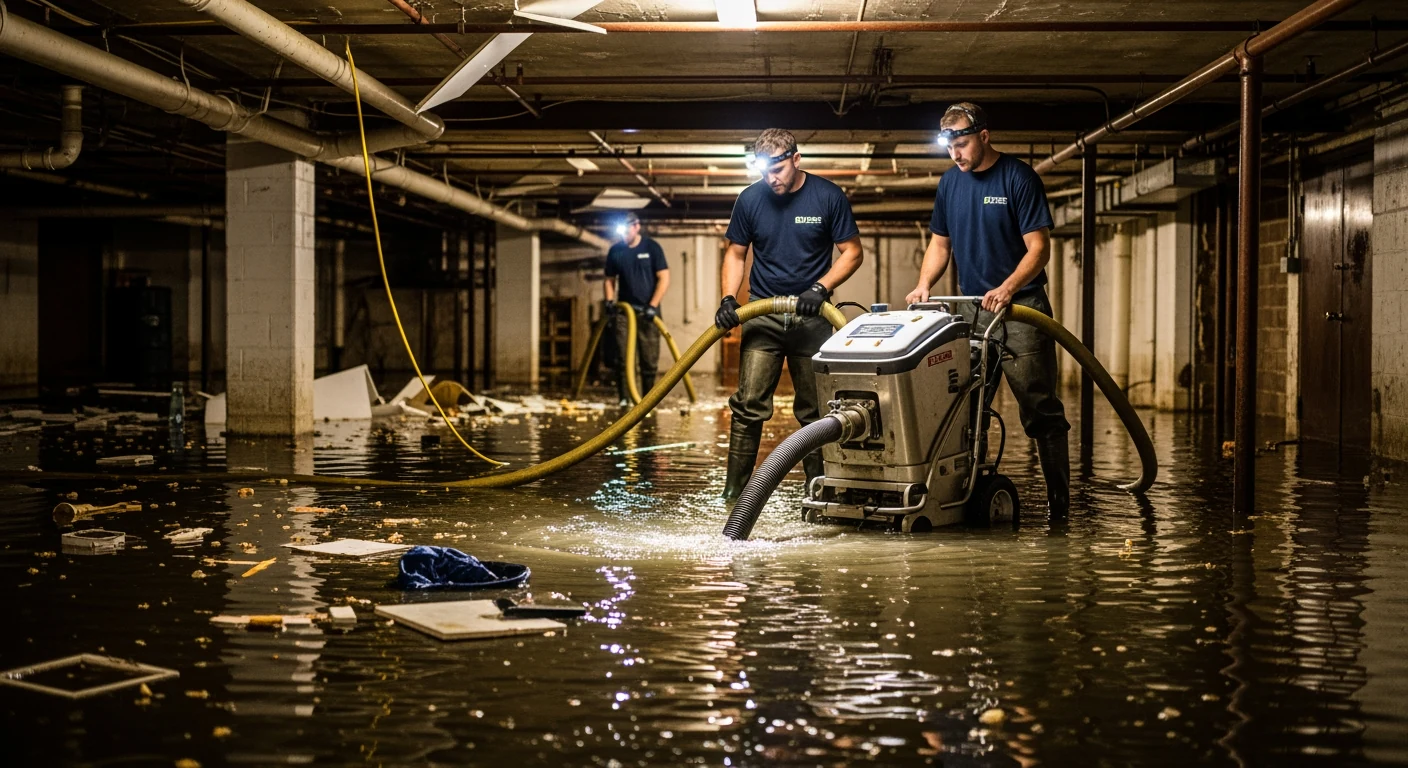
A drying log is the document that determines whether your water damage insurance claim is paid in full, disputed, or denied. Insurance carriers and their adjusters use drying logs as the primary evidence that professional IICRC-compliant water mitigation was performed — and that the scope of work charged on the contractor’s invoice is supported by documented measurements. Property owners who understand what a proper drying log looks like are in a significantly stronger position during the claims process than those who simply sign off on whatever paperwork a contractor presents.
What a Drying Log Actually Is
A drying log is a systematic daily record of moisture measurements, environmental conditions, and equipment status taken at the same documented locations throughout the drying process. It begins with the initial assessment (the baseline reading before drying equipment is placed) and ends with the final reading confirming all measurement points have reached dry standard. Every day in between, a technician visits the property, takes readings at each documented point, records them with the date and time, and notes equipment placement and any changes to the drying setup.
The IICRC S500 Standard requires drying logs for Class 2 and higher water events. Most insurance carriers require a drying log for any water damage claim above $5,000 to validate the mitigation scope. Without it, an adjuster has no basis for confirming that the drying took the number of days billed, involved the equipment claimed, or achieved the documented result. Disputed claims almost always trace back to inadequate or missing drying documentation.
The Components of a Complete Drying Log
Moisture mapping diagram. The first page of any drying log should be a floor plan or sketch of the affected area with measurement points numbered and labeled. Each numbered point corresponds to a specific location — “Point 7 = west wall drywall 18 inches above floor in bedroom, 3 feet from corner.” Without this diagram, the daily readings are disconnected numbers that cannot be verified against a physical location.
Baseline readings. The initial moisture measurements taken before any drying equipment is placed. These establish the starting point — the severity of the moisture intrusion. For wood framing, baseline readings above 30% indicate significant saturation. For gypsum drywall, readings above 5% indicate involvement. For concrete, above 5% on a pin meter indicates active moisture. These baseline readings, combined with the moisture category and class determination, are what justify the equipment quantity proposed.
Daily readings with date, time, and technician name. Each day’s entry must include the date, the time the reading was taken (relevant because readings taken at different times of day in active drying environments can show significant variance), and the name of the technician taking the reading. Entries without technician identification are red flags for fabricated logs.
Environmental readings. Temperature and relative humidity of the air inside the drying chamber, typically taken at a consistent point in the room (often near the dehumidifier return). These matter because drying rate is strongly affected by both — below 70°F and above 60% relative humidity, drying rate slows significantly. Environmental readings that are never recorded, or that show consistently perfect conditions throughout a March drying project, warrant scrutiny.
Equipment log. Date and time each piece of equipment was placed and removed, the model and serial number or unit identifier, and the location within the drying chamber. Insurance carriers verify equipment billing against this log — if the invoice charges for 4 LGR dehumidifiers and the equipment log shows only 2 units placed, the bill is subject to reduction.
Drying curve. When graphed, daily moisture readings at each measurement point should show a consistent downward trend from baseline through final reading. A proper drying curve doesn’t require perfectly linear decline — some variation day to day is normal, and readings sometimes plateau before resuming decline — but it should show clear overall progress toward dry standard. Flat curves (no change over multiple days) indicate either that the equipment is insufficient for the drying class, that there is an ongoing moisture source, or that the readings were not taken accurately.
Final clearance readings. The last entry documents that all measurement points have reached dry standard: below 19% for structural wood, below 1% for gypsum drywall, at or near the regional equilibrium moisture content for the building materials involved (typically 8–13% for NYC and Long Island). The technician’s signature on this entry confirms the drying is complete and equipment can be removed.
Red Flags in Drying Logs
These are the warning signs that a drying log has been poorly maintained or fabricated — and that your claim may face scrutiny from an adjuster:
Missing dates or times on individual entries. All readings at exactly the same value day after day (statistically implausible in a real drying environment). Final readings that exactly match dry standard on the nose rather than falling in a realistic range. No environmental (temperature/humidity) readings. Equipment log shows different equipment than what was on-site. No moisture mapping diagram correlating measurement point numbers to physical locations. Drying log delivered as a summary PDF rather than as daily field sheets.
How to Request Your Drying Log
Ask for the drying log before authorizing final payment or signing a certificate of satisfaction. Specifically, request the original field documentation — daily sheets or the technician’s device export — not a compiled summary. Many restoration software platforms (Xactimate, Encircle, DryBook) generate digital drying logs that export as timestamped PDFs with individual entry timestamps. These are preferable to handwritten logs because they show the actual time each entry was made.
If a contractor refuses to provide the drying log or delays producing it, that is a significant red flag. Any IICRC-certified contractor should produce complete drying documentation within 24 hours of a request — it’s required documentation for their certification compliance as well as for your claim.
Frequently Asked Questions About Drying Logs
Do I have a right to my drying log? Yes. The drying log documents work performed on your property. You are entitled to a complete copy. It is also typically required by your insurance carrier as part of the claim file — the carrier may request it directly from the contractor, but you should have your own copy.
What if my contractor says drying logs aren’t necessary for my claim? This statement should raise concern. For any Class 2 or higher water event, IICRC S500 requires drying documentation. Any carrier handling a significant water damage claim will ask for it. A contractor claiming logs aren’t necessary may be one who doesn’t keep them — which means your claim scope is unsupported and subject to reduction or denial.
Can I use the drying log to dispute a contractor’s invoice? Yes. If the equipment log shows fewer units than billed, or if the days of service don’t align with the documented daily entries, those are grounds for invoice dispute. Compare the drying log directly against the invoice line by line before authorizing payment.
What is the dry standard for different materials? Structural wood framing: below 19% moisture content. Gypsum drywall: below 1% (some references use 0.5–1% range). Hardwood flooring: within 2–4% of the regional equilibrium moisture content (typically 8–12% for NYC and Long Island). Concrete: the dry standard is comparative — readings should be close to readings from an unaffected reference area of the same concrete assembly.