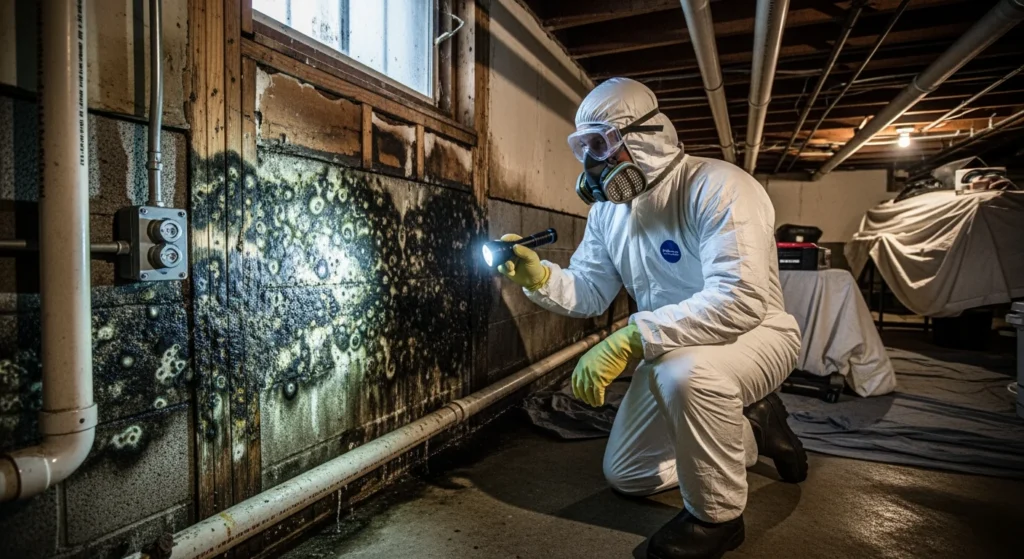
Upper Restoration receives calls from Long Island homeowners who have had mold remediated two, three, and in some cases four times in the same location. They are not wrong to be frustrated. The repeat remediation pattern is predictable when the root cause of the mold condition — the moisture source that allowed mold to grow in the first place — was not corrected as part of the original remediation scope. Removing visible mold growth without addressing the underlying moisture condition is the restoration equivalent of painting over rust without treating the rust: it looks better temporarily, and the problem returns.
The Most Common Recurring Mold Scenarios on Long Island
Split-level below-grade family room: The endemic Long Island mold scenario. Fiberglass batt insulation installed against uninsulated concrete block produces condensation on the cold block face every summer when interior humidity exceeds the block surface temperature’s dew point. Removing the mold from the paper facing of the insulation and the drywall does not change the thermodynamics of the assembly. The next summer, the condensation returns. The mold returns. Assembly correction — removing the fiberglass-against-block assembly and replacing it with exterior drainage board and rigid foam insulation — eliminates the condensation mechanism permanently.
Levittown Cape Cod attic: Attic mold from inadequate ventilation and bathroom exhaust fans discharging into the attic space. Blasting or scrubbing the mold from roof sheathing surfaces without correcting the ventilation deficiency and rerouting the exhaust fans leaves the moisture source intact. The next summer’s humidity cycle reinitializes the condition. Ventilation correction is required — not optional — for lasting attic mold remediation in Long Island Cape Cods.
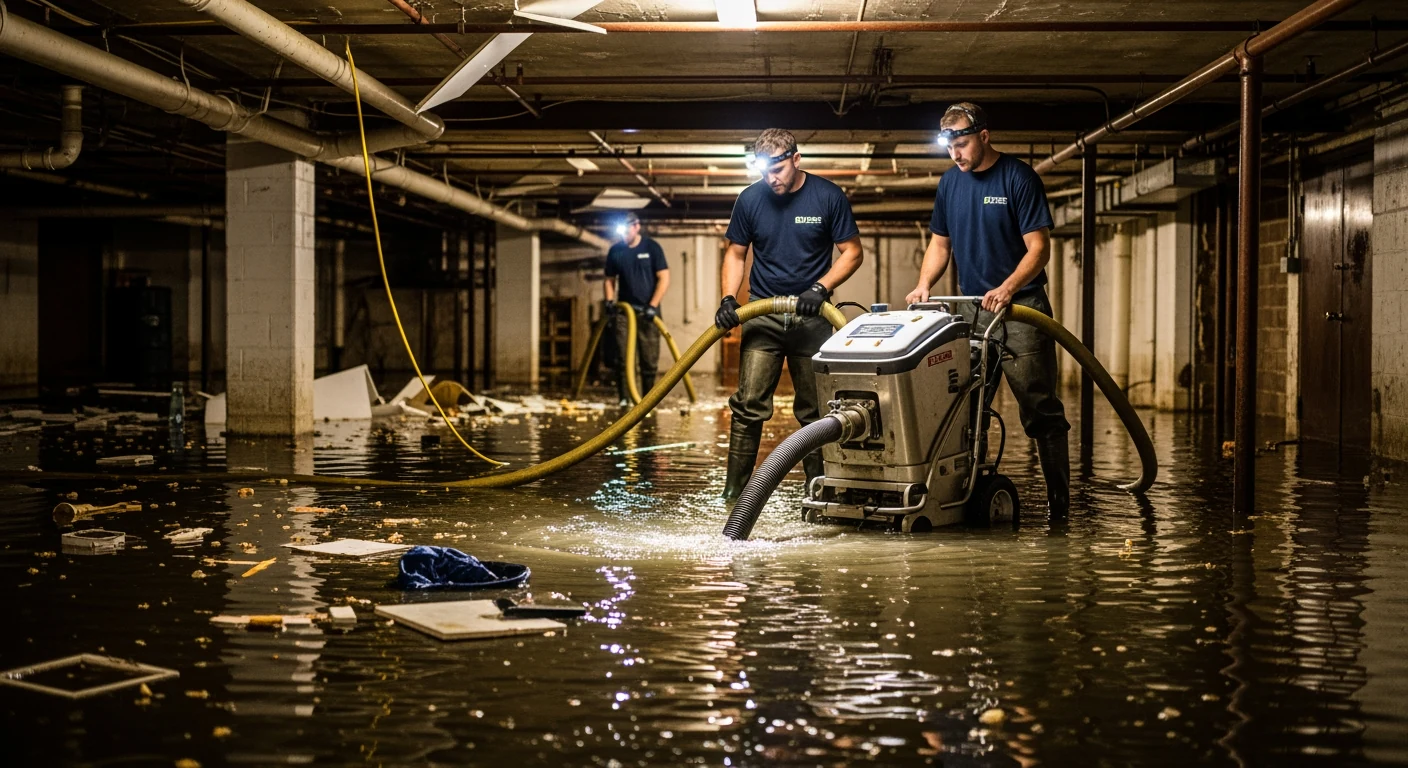
Post-Sandy south shore basement: Category 3 bay water contamination that was surface-cleaned rather than fully demolished in 2012 creates a mold condition that is not self-resolving. Each subsequent flooding event rewets the incompletely dried assemblies. Each rewetting event supports continued mold growth. The only correction is full demolition of the original flood-affected assemblies — a scope that should have been executed in 2012 but was not.
How to Evaluate Whether Your Remediation Includes Assembly Correction
Ask the assessor’s work plan specifically: what change to the building assembly is specified to prevent moisture reaccumulation? A compliant work plan for a below-grade family room mold project should specify the wall reconstruction approach that eliminates the condensation mechanism. A compliant work plan for an attic mold project should specify ventilation correction scope. If the work plan specifies mold removal only — without moisture source correction — the remediation is incomplete by design and recurrence should be expected.