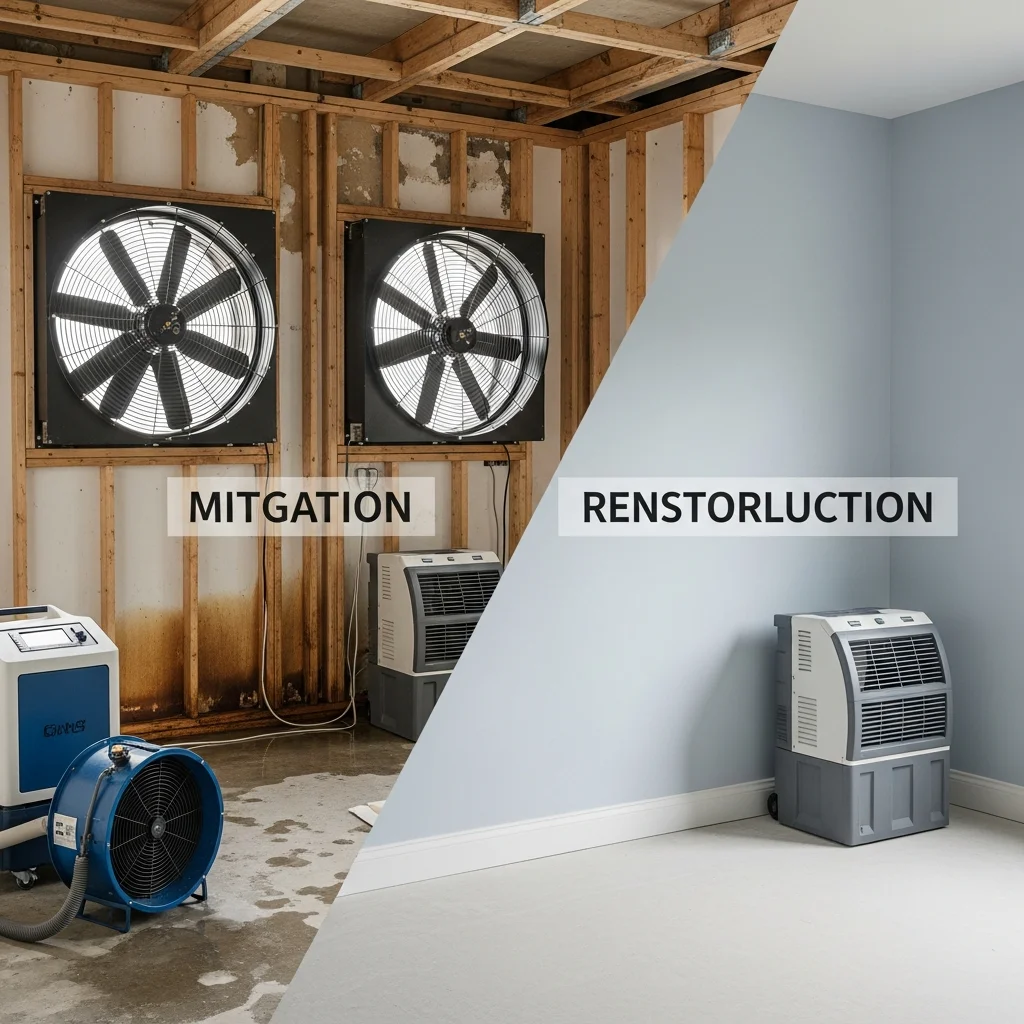
Water Mitigation Defined: Water mitigation is the professional process of stopping further water damage, extracting standing water, and drying a structure before materials deteriorate or mold establishes. It is the emergency response phase — distinct from water damage restoration, which is the rebuild phase that follows. In Long Island and NYC, water mitigation must begin within 24–48 hours of a water event to prevent mold colonization and minimize insurance claim scope.
When water enters a building — from a burst pipe, appliance failure, roof leak, or flooding — the damage it causes doesn’t stop when the water stops flowing. Without immediate intervention, progressive damage continues: materials swell and delaminate, structural components weaken, and mold colonies establish within 24 to 48 hours. Water mitigation is the professional response that stops this progression. Understanding what it involves helps property owners know what to expect, what to verify, and how to document the process for insurance purposes.
What Water Mitigation Means
Water mitigation is the emergency stabilization phase of property restoration — stopping the damage, not repairing it. It precedes reconstruction. The IICRC S500 Standard for Professional Water Damage Restoration defines the mitigation scope as: water extraction, structural drying, monitoring, and removal of materials that cannot be dried in place. What it does not include: replacing drywall, painting, reinstalling flooring, or any permanent repair. That’s the restoration phase, which begins after drying is complete and documented.
The distinction matters practically because insurance policies typically cover mitigation (stopping further damage) under the duty to mitigate clause, while restoration (permanent repair) is handled as a separate claim scope. Knowing which phase you’re in prevents both scope disputes and delays.
The 5 Steps of Professional Water Mitigation
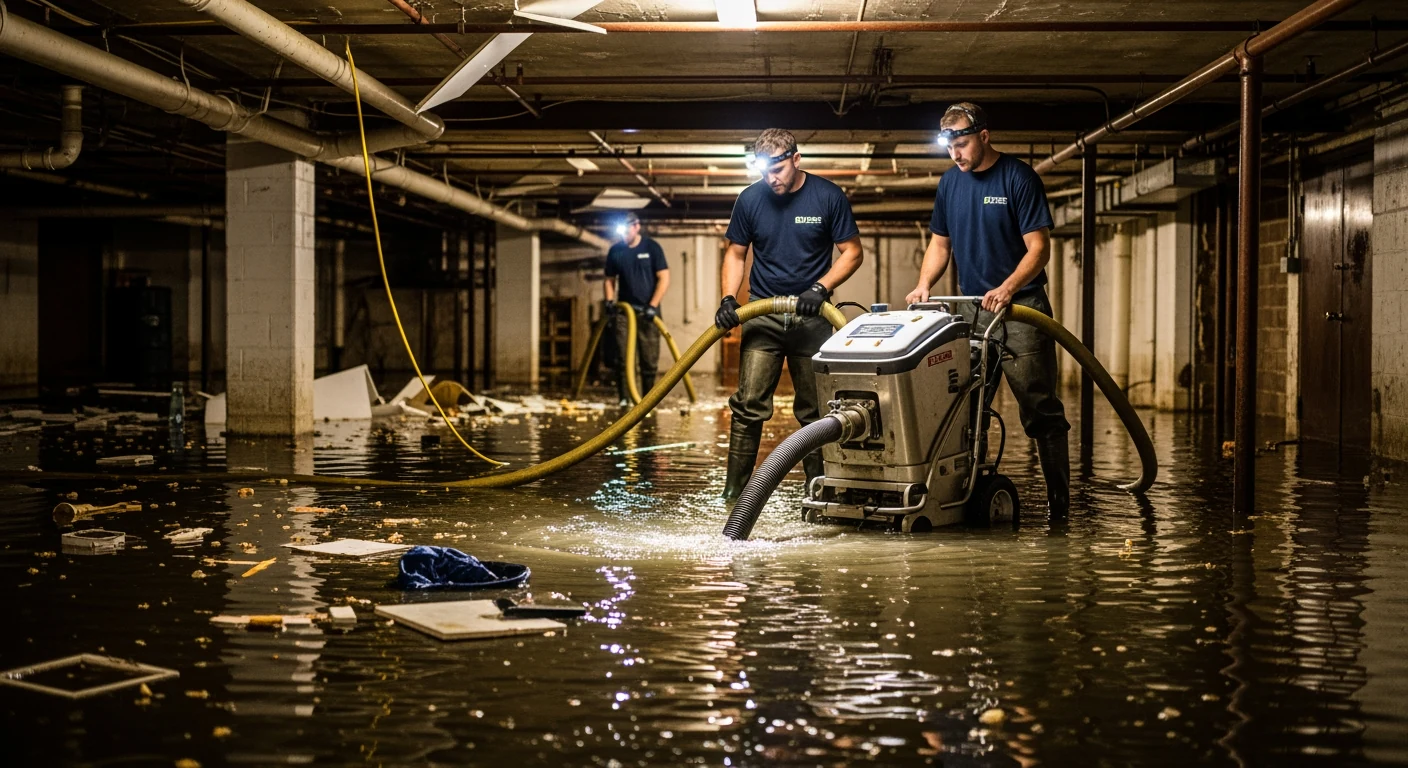
Step 1 — Emergency extraction. Standing water is removed using truck-mounted or portable extraction units. For carpeted spaces, weighted extraction tools apply pressure to pull water from carpet backing and pad. Extraction is the fastest way to reduce total drying time — every gallon removed mechanically is water that doesn’t have to evaporate, which would require days rather than minutes.
Step 2 — Moisture mapping. Before drying equipment is placed, a certified technician maps the affected area using penetrating moisture meters (direct contact with wood and drywall) and non-penetrating RF meters (detecting moisture behind surfaces without opening walls). This establishes the moisture baseline and identifies the full scope of affected materials — often extending significantly beyond the visually wet area.
Step 3 — Structural drying setup. Commercial LGR (low-grain refrigerant) dehumidifiers are placed to create a drying chamber. LGR units are rated for extracting 80–120 pints per day under AHAM conditions — significantly more efficient than consumer dehumidifiers. Air movers are positioned to create turbulent airflow across wet surfaces, accelerating evaporation rate. The quantity and placement of equipment is calculated based on the drying class (1–4) and the cubic footage of the affected space.
Step 4 — Materials assessment and removal. Porous materials that cannot be dried to acceptable moisture content within the standard drying window — or that have contamination concerns — are removed. Category 1 (clean water) events allow selective drying in place if addressed promptly. Category 2 (gray water) and Category 3 (sewage or floodwater) events require removal of all porous materials in contact with the water. This is the step that most often surprises property owners: walls open, flooring comes up, and the damage looks worse before it looks better. This is correct and necessary.
Step 5 — Daily monitoring and drying logs. Equipment runs continuously (24/7) and a technician returns daily to take moisture readings at the same measurement points, document them in a drying log, and adjust equipment placement as the drying curve progresses. The drying log is the documentation that insurance adjusters require to validate the mitigation scope. A claim without a drying log will be contested. Drying typically takes 3–5 days for Class 2 events, 7–10 days for Class 3–4.
Water Damage Classes: What Determines Your Drying Timeline
The IICRC classifies water events by the difficulty of drying, which directly correlates to timeline and equipment requirements:
Class 1: Minimal absorption. Water affected only part of a room and porous materials absorbed little moisture. Fastest to dry — typically 1–3 days.
Class 2: Significant absorption. Water affected an entire room and wicked up walls 12–24 inches. Carpet, pad, and structural materials involved. Typical drying: 3–5 days. This is the most common category for NYC and Long Island residential events.
Class 3: Greatest absorption. Water came from above (ceiling or overhead pipe) and saturated walls, insulation, and ceiling materials. Requires the most equipment and longest drying time: 5–10 days.
Class 4: Specialty drying situations. Materials with low permeance that require extended drying times — hardwood floors, plaster, concrete, or crawlspace soil. May require specialty drying systems beyond standard equipment setups.
What Mitigation Costs in NYC and Long Island
Water mitigation pricing in the New York metro area follows IICRC-derived unit cost schedules, which insurance carriers use as the basis for claim valuation. Typical ranges for 2026:
Emergency extraction: $500–$1,500 depending on volume and access. Equipment setup (dehumidifiers + air movers): $800–$2,500 for a typical residential room, per week of drying. Materials removal (drywall, flooring, insulation): $2–$6 per square foot for labor, plus disposal fees. Total mitigation scope for a typical NYC Class 2 residential event (one to two rooms): $4,000–$12,000. For Class 3 events with ceiling involvement: $8,000–$25,000.
Frequently Asked Questions About Water Mitigation
Is water mitigation the same as water damage restoration? No. Mitigation is the emergency phase — stopping the damage. Restoration is the repair phase — replacing what was removed and returning the property to pre-loss condition. They are sequential processes handled by the same contractor but billed separately and often under separate claim scopes.
Do I need to be home during water mitigation? Not continuously, but you should be present for the initial assessment and for the materials removal decision points. Daily equipment monitoring typically requires only a 15–30 minute technician visit. You will need to provide access.
How do I know if mitigation is complete? Mitigation is complete when moisture readings at all documented measurement points meet the dry standard for that material type — below 19% for wood framing, below 1% for gypsum drywall, at or near the regional equilibrium moisture content for the floor assembly. The contractor should provide a final drying log entry showing these readings before removing equipment.
Can I run my own fans instead of hiring a mitigation contractor? Household fans move air but don’t remove moisture from it — they redistribute humid air rather than dehumidifying the space. Without commercial LGR dehumidification, porous materials will not reach dry standard within the mold colonization window. DIY drying of a significant water event is the most common path to a mold remediation problem weeks later.