
When Long Island homeowners think about asbestos, they picture pipe insulation or floor tiles. What they rarely consider is that the walls themselves — or more precisely, the materials applied to walls — may contain asbestos. Joint compound on every drywall seam, textured coatings sprayed or rolled onto surfaces, plaster in older lath-and-plaster construction, and insulation hidden inside wall cavities can all harbor asbestos in homes built before the early 1980s.
This is the form of asbestos most commonly disturbed during renovation, because it is the least visible and the least expected. Every Long Island homeowner who plans to cut, sand, demolish, or drill into walls in a pre-1980 home needs to understand what asbestos looks like in these materials.
Asbestos Joint Compound on Drywall Seams
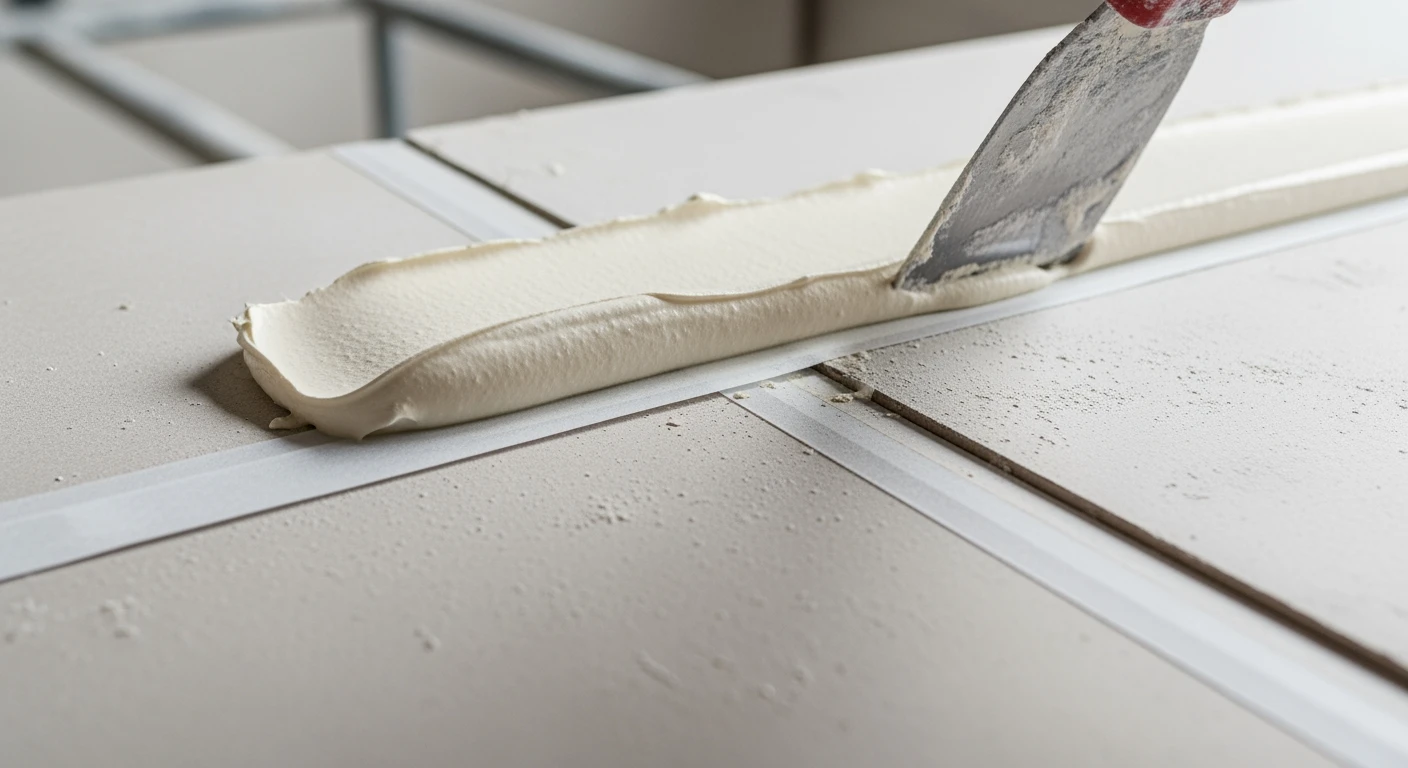
What it looks like: You cannot see asbestos joint compound by looking at a finished wall. The compound is applied over paper tape at every seam between drywall panels, feathered smooth, sanded, and painted. The finished result looks like a continuous flat wall. The only visual indicator is knowing that every drywall seam and screw dimple was finished with joint compound — and in pre-1980 homes, that compound may contain asbestos.
Why this matters on Long Island: Joint compound is the most universally present asbestos-containing material in post-1950 homes. Every room with drywall has it at every seam, corner, and screw point. The volume of joint compound in a typical Long Island home is enormous — hundreds of square feet of seam tape, dozens of inside corners, and hundreds of screw dimples. When you sand drywall compound during renovation, you generate fine dust that fills the room. If that compound contains asbestos, that dust contains respirable asbestos fibers.
High-risk activities: Sanding drywall seams (the highest risk — generates massive fine dust), cutting through drywall with a reciprocating saw or utility knife (cuts through compound at seams), demolishing walls (breaks compound into dust and fragments), and skim-coating over existing compound (usually safe, but sanding the skim coat may disturb underlying asbestos compound).
Textured Wall Coatings: Stipple, Knockdown, and Orange Peel
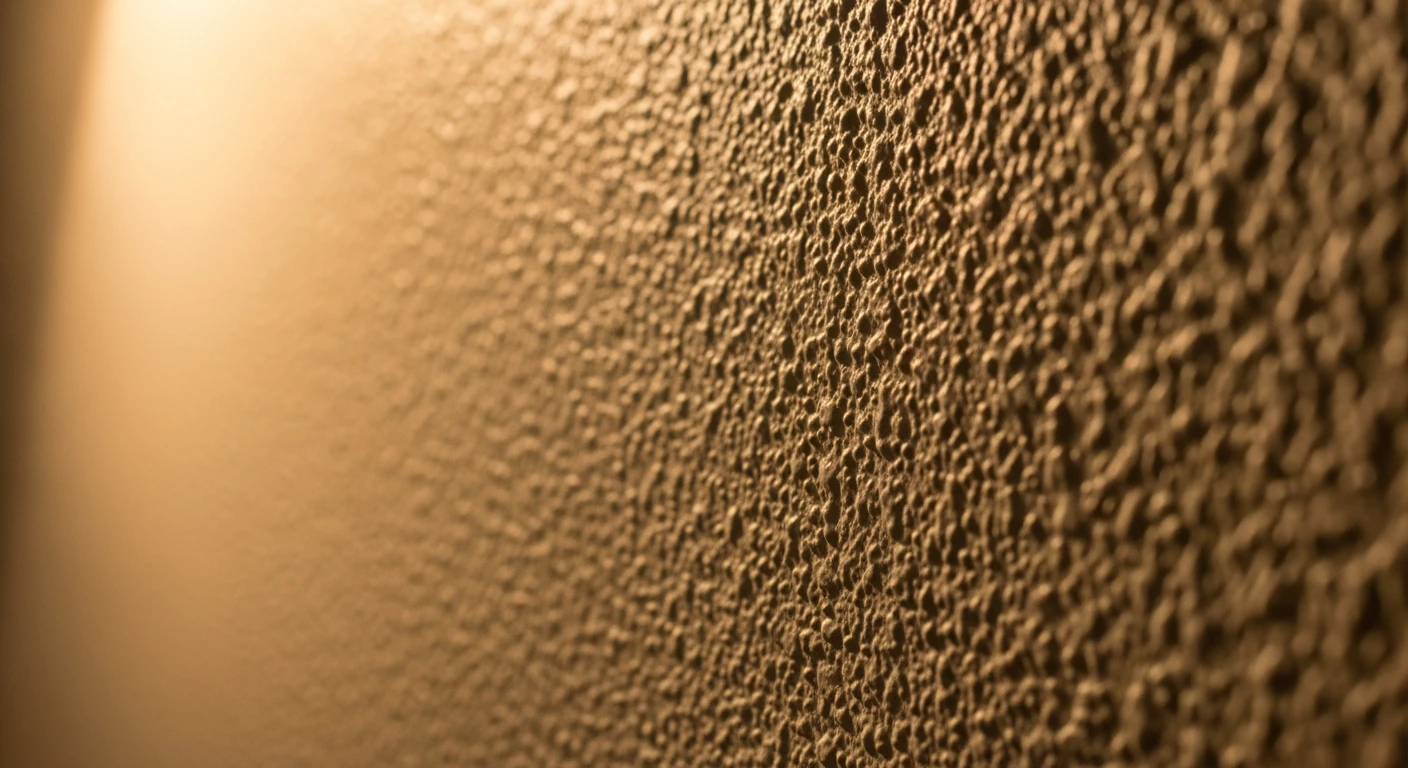
What it looks like: Textured wall finishes were popular in Long Island homes from the 1960s through the 1980s. Stipple texture appears as a raised, bumpy pattern — small rounded peaks covering the wall surface, often described as looking like the surface of a basketball. Knockdown texture is a flattened version — stipple peaks that have been smoothed with a wide blade, creating a mottled flat pattern. Orange peel texture has a finer, more uniform bumpy surface resembling citrus skin.
The asbestos connection: Textured wall coatings used the same type of premixed compound as joint compound, and many formulations contained chrysotile asbestos as a binding and strengthening agent. The texture is typically applied over the entire wall surface (not just seams), meaning the potential asbestos coverage is wall-to-wall, floor-to-ceiling.
The renovation trap: Homeowners who want to modernize textured walls by sanding them smooth are performing one of the highest-risk asbestos disturbance activities possible. Sanding textured walls generates enormous volumes of fine dust across the entire wall surface. Always test textured wall coatings before sanding, scraping, or removing them.
Plaster and Lath Walls in Older Long Island Homes
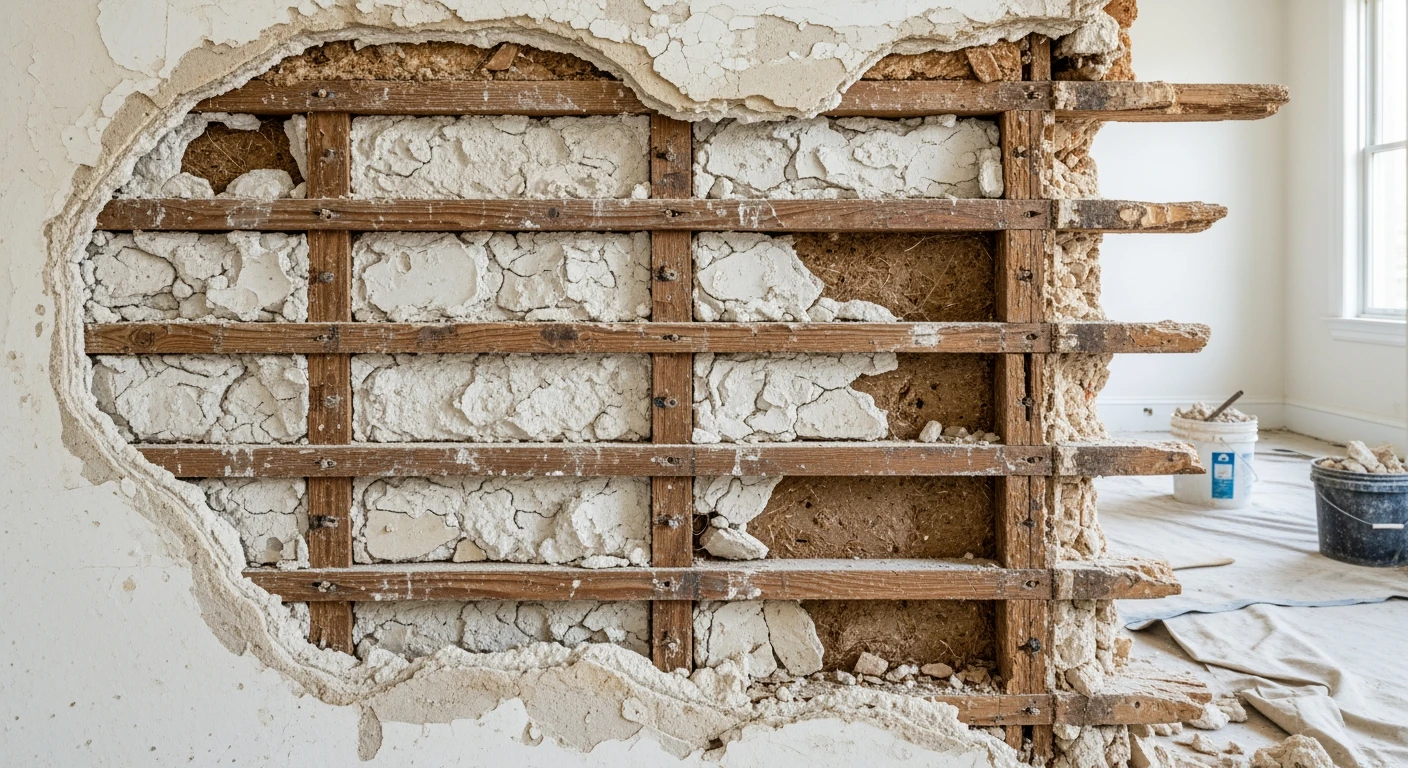
What it looks like: Homes built on Long Island before the widespread adoption of drywall (roughly pre-1960, though many homes used plaster into the 1970s) have walls constructed from thin wooden lath strips nailed to studs, covered with two or three coats of wet plaster that dried to a hard, smooth surface. The plaster is typically white to light gray, dense, and significantly harder than drywall compound. When damaged, plaster fractures into hard chunks rather than crumbling like drywall mud.
Why it may contain asbestos: Chrysotile asbestos was added to plaster mixtures as a reinforcing fiber that improved crack resistance and workability. Not all plaster contains asbestos, but plaster applied between the 1930s and 1960s has a meaningful probability of asbestos content. The only way to determine if your Long Island home’s plaster contains asbestos is laboratory testing.
Where this matters: Many Long Island homes in established communities — Levittown, Garden City, Rockville Centre, Freeport, Babylon, Patchogue — were built with plaster and lath before the transition to drywall. Renovation projects that involve demolishing plaster walls, cutting new openings, or removing plaster to expose brick or structure all risk disturbing asbestos-containing plaster.
Wall Cavity Insulation
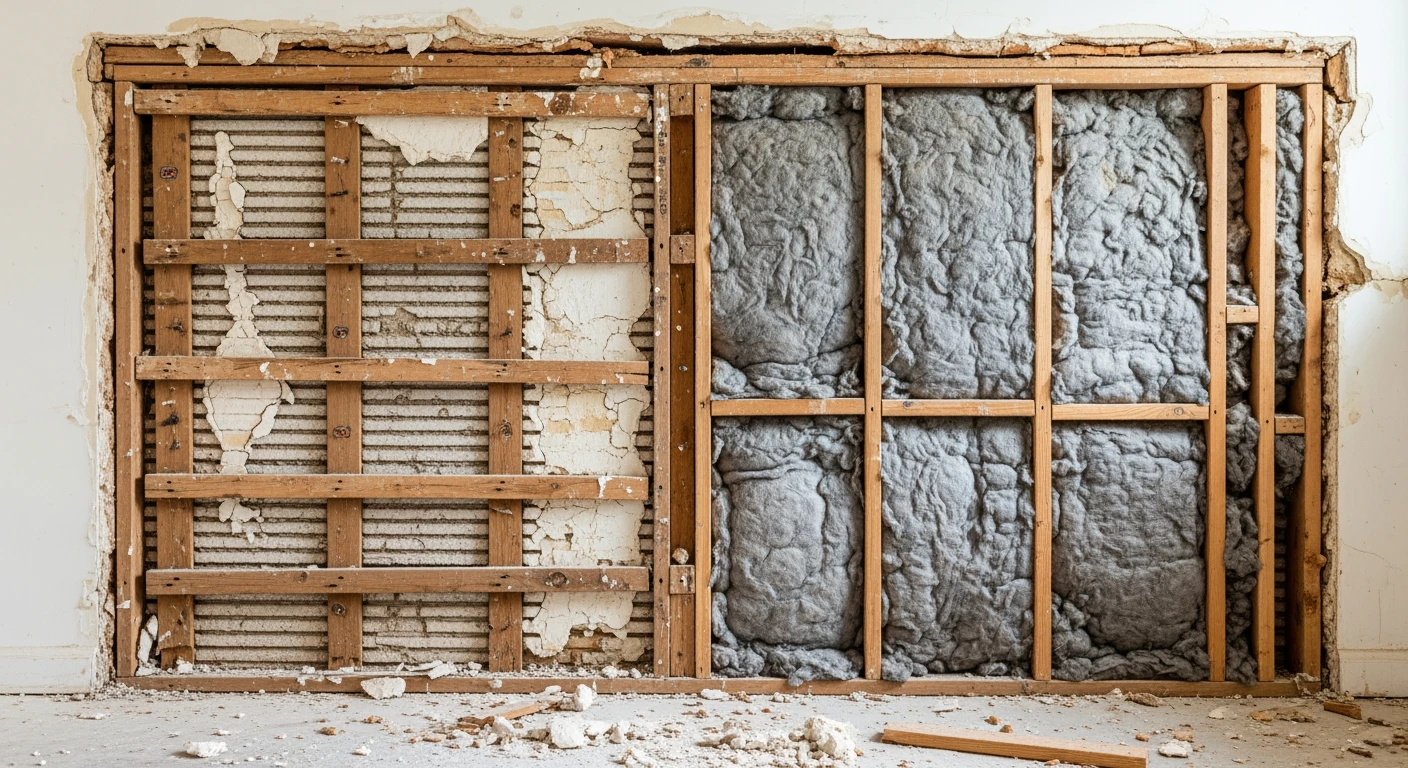
What it looks like: When you open a wall during renovation, you may find insulation in the cavity between studs. In pre-1980 Long Island homes, this insulation may be vermiculite loose-fill (the accordion-shaped granules discussed in our insulation identification guide), old fiberglass batts (usually safe but should be verified), or occasionally asbestos-containing batt or blanket insulation that appears as gray or white fibrous material, sometimes with a paper backing.
The discovery scenario: Most Long Island homeowners encounter wall cavity insulation unexpectedly — cutting into a wall for a renovation, opening a wall for electrical or plumbing work, or removing drywall to address water damage. When the wall is opened, dust and loose fibers from old insulation become airborne. If you open a wall and see unfamiliar insulation material, stop work, close off the area, and have the material tested.
What to Do Before Any Wall Work in a Pre-1980 Long Island Home
Test before you disturb. For renovation projects involving sanding, cutting, demolishing, or drilling into walls, have a NYS DOH-certified inspector collect samples of joint compound, texture coating, and/or plaster for laboratory analysis. This costs $200-$500 and takes 3-5 business days — a minor investment compared to the health risk and cleanup cost of disturbing unidentified asbestos.
Assume compound contains asbestos if you cannot test. For emergency work or situations where testing is not immediately feasible, treat all pre-1980 drywall compound and plaster as potentially asbestos-containing. Use wet methods, minimize dust, wear at minimum an N95 respirator, and clean up with damp cloths rather than sweeping or vacuuming.
Upper Restoration’s Wall Material Abatement on Long Island
Upper Restoration handles asbestos-containing wall material removal across Nassau and Suffolk Counties — from targeted joint compound abatement before renovation to full plaster-and-lath demolition under containment. Our licensed crews understand that wall materials generate the finest, most pervasive asbestos dust of any material type, and we design containment and ventilation accordingly. Contact us before any renovation that will disturb wall surfaces in a pre-1980 Long Island home.
