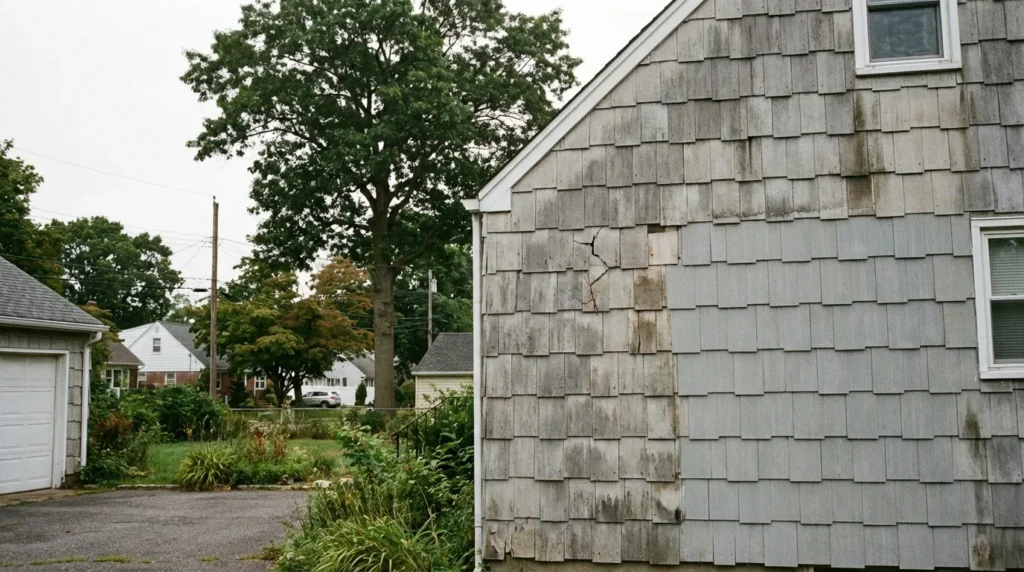
Asbestos cement siding — sold primarily under the brand name Transite — is one of the most widely misidentified hazardous materials on Long Island. From a distance, it looks like wood shingle siding or fiber cement board. Up close, the gray color, flat surface texture, and distinctive panel format are recognizable once you know what to look for. It was installed on tens of thousands of Long Island homes between the 1930s and 1970s, and it is still sitting on many of those houses today.
This guide shows you exactly what asbestos cement siding looks like on Long Island homes: the house-level view, the panel surface, the brand label that sometimes survives, what happens when panels crack or break, and the workbench comparison between intact and damaged material. If your home has siding that matches these images, have it tested before any renovation, power washing, or siding replacement project begins.
What Asbestos Cement Siding Looks Like on a Long Island Home
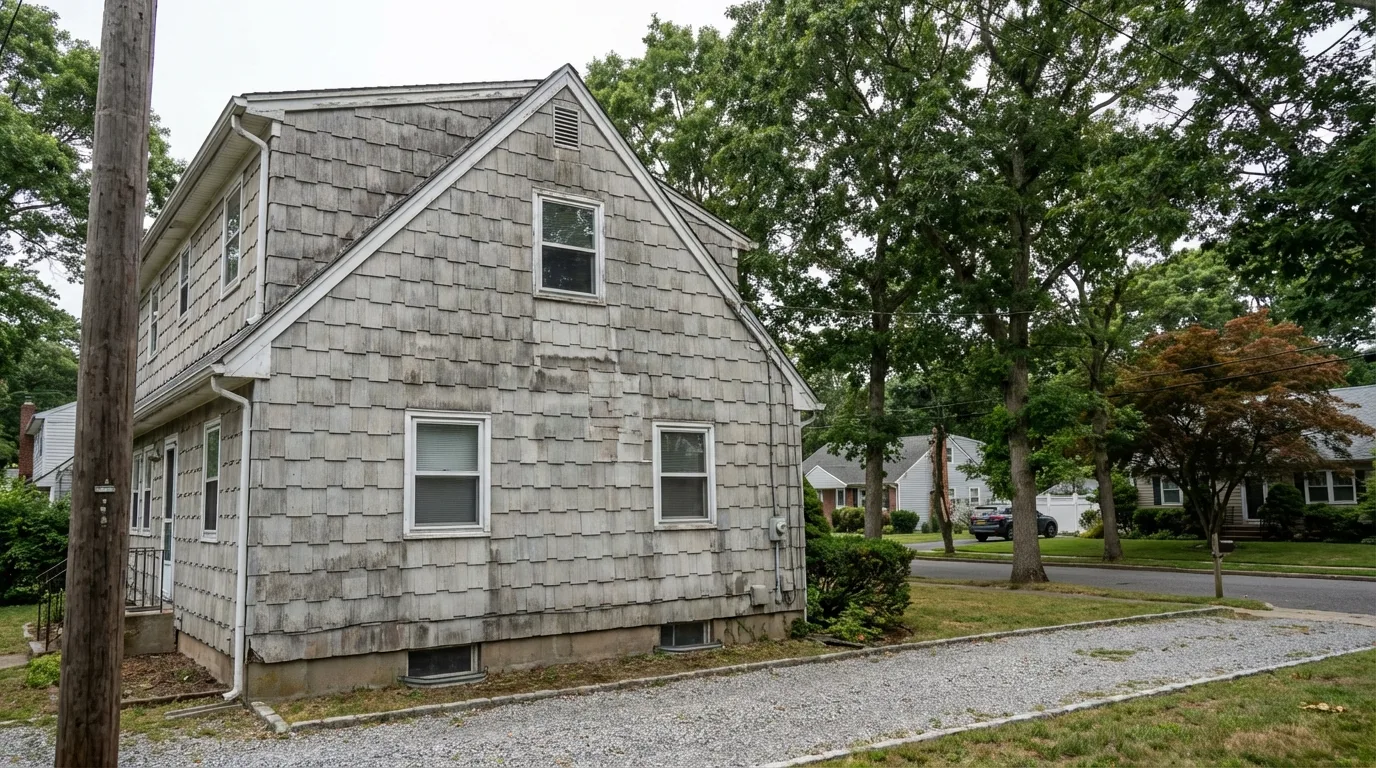
On Long Island homes, asbestos cement siding appears in two primary configurations: individual shingle panels and larger flat sheets. The shingle configuration — visible on the cape cod above — is by far the most common on residential properties. Key visual characteristics from the street:
Uniform gray color. Original asbestos cement siding is a consistent medium gray, often described as concrete-gray. Unlike wood siding, which shows grain and color variation, Transite siding has a flat, uniform surface. Decades of weathering shift this toward a lighter silver-gray, often with darker streaking where water runs from the nail holes.
Shingle-format panels. Each panel is approximately 12 inches tall with an exposed face of 10 to 11 inches, installed in horizontal overlapping rows like wood shingles. The bottom edge of each panel has a slight curve or bevel. From a distance, this pattern reads as normal shingle siding — the difference is the color uniformity and the slightly heavier, denser appearance compared to wood.
Nail holes and fastener staining. Asbestos cement panels were nailed through the face with galvanized nails. The nail holes and rust staining running below them are a distinctive identification marker on aged panels.
The Transite Label: When the Panel Identifies Itself
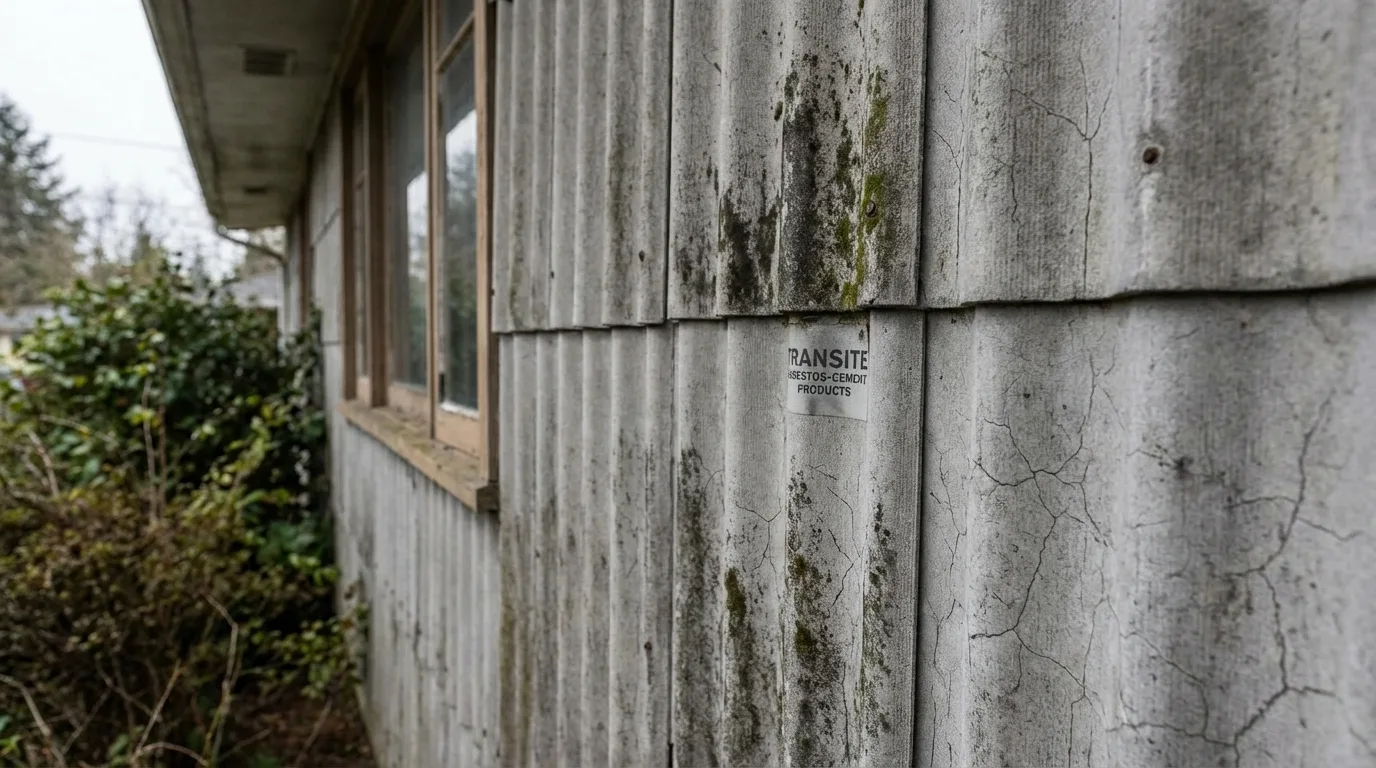
The brand name Transite was manufactured by Johns-Manville, the largest asbestos producer in the United States during the 20th century. While the product label rarely survives decades of weathering on exposed panels, it does occasionally appear on panels in sheltered locations — under deep eaves, behind downspouts, or on the protected sides of structures.
When the label is present, it is definitive identification. When it is not, visual identification relies on the material characteristics: the panel dimensions, the gray fiber-cement color, the surface texture, and the installation pattern. The corrugated ribbing visible on the panels in the image above is characteristic of Transite flat-sheet siding used on commercial buildings and some residential garages throughout Long Island.
What a Broken Panel Looks Like: The Fiber Exposure Risk
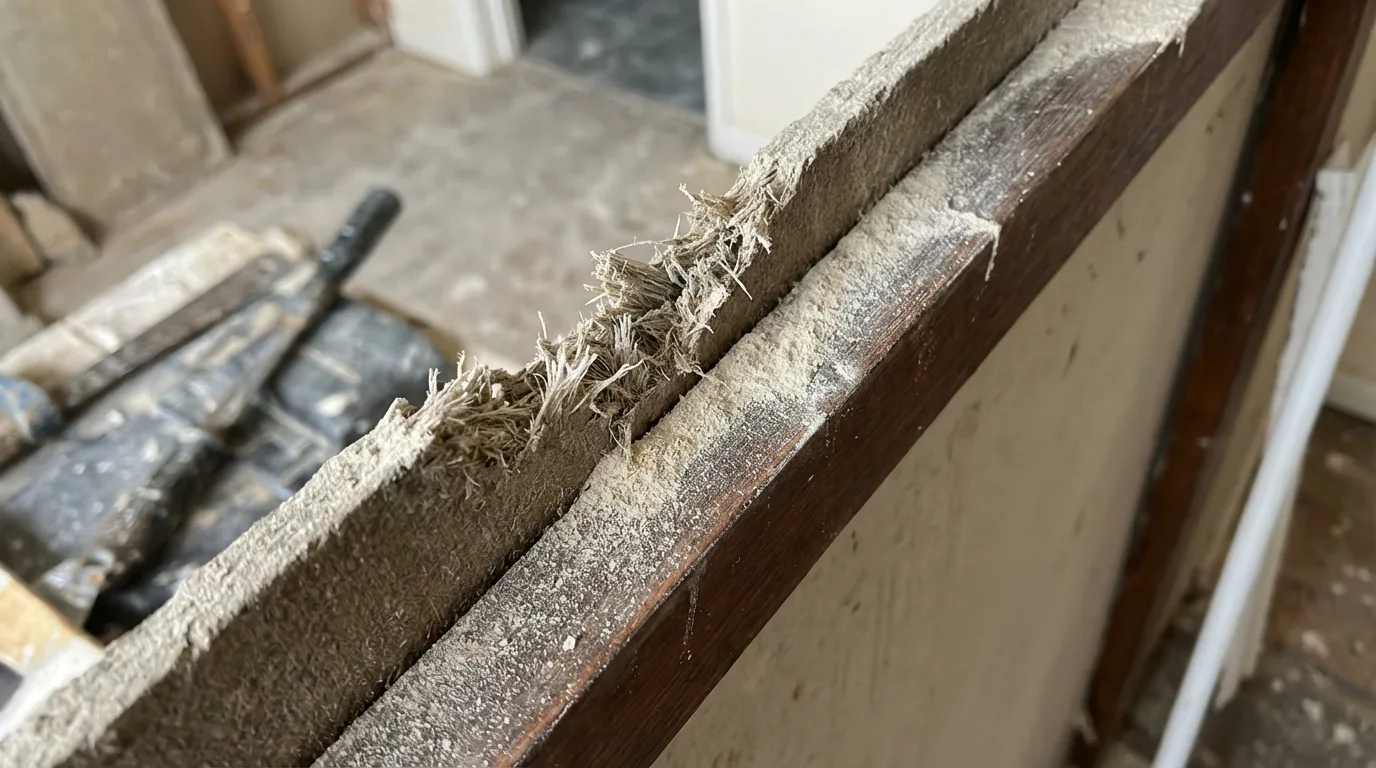
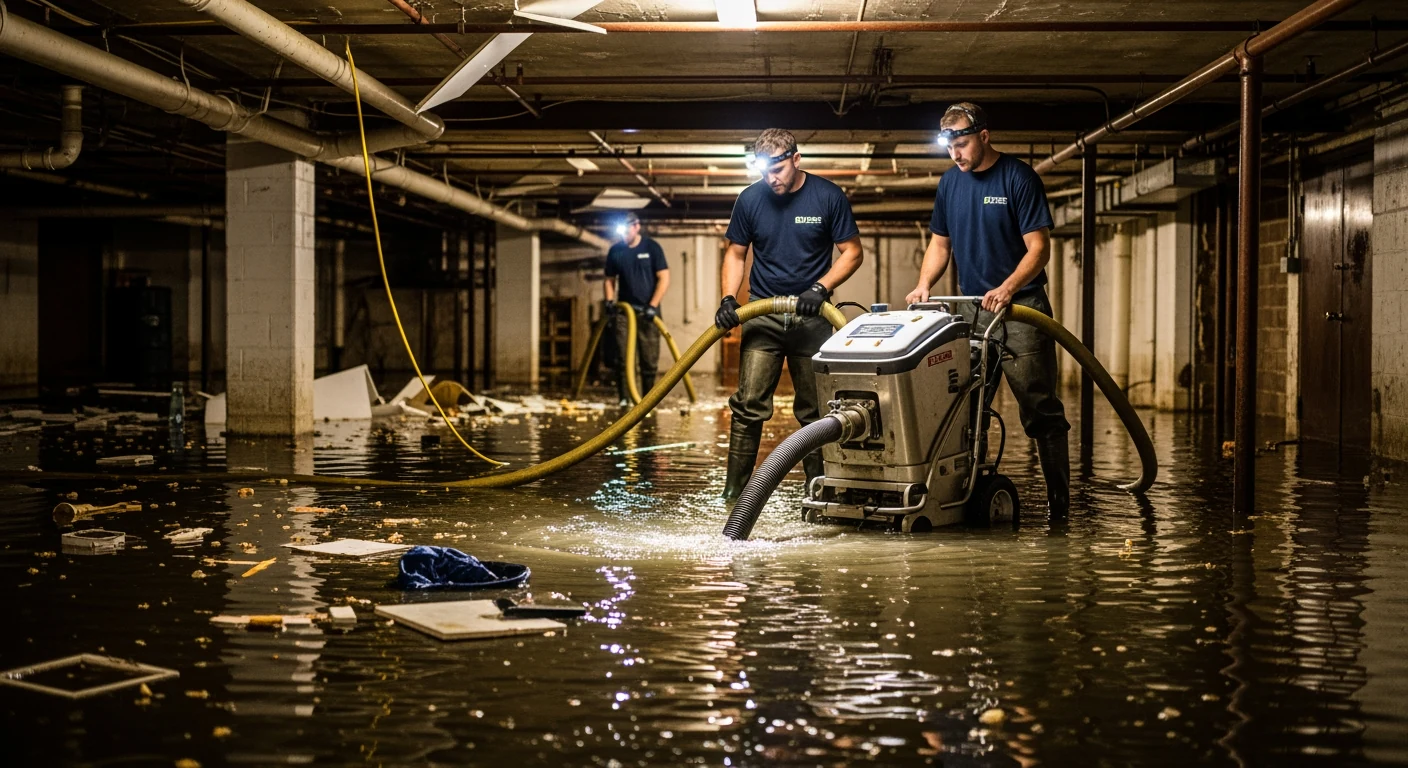
When asbestos cement panels are broken — whether by impact during removal, cutting, or structural damage — the fiber-cement matrix fractures and the mineral fibers become exposed and mobile. The image above shows what this looks like in a renovation context: the raw break exposes the fibrous interior, and asbestos dust has already settled on nearby surfaces.
This is the critical distinction between intact and disturbed asbestos cement siding. Intact panels pose minimal ongoing risk. But the renovation activities that disturb them — removing old siding to install new, repairing damaged sections, cutting panels to fit around windows, power washing — create the fiber release that causes exposure. Under NYS 12 NYCRR Part 56, any renovation activity that disturbs asbestos-containing siding requires a licensed abatement contractor.
The fiber dust visible on the framing in this image is not something that can be wiped away with a damp cloth. It requires HEPA vacuuming and contaminated surface wipe-down as part of a licensed abatement work scope.
Cracked and Weathered Panels: Surface Damage Over Decades
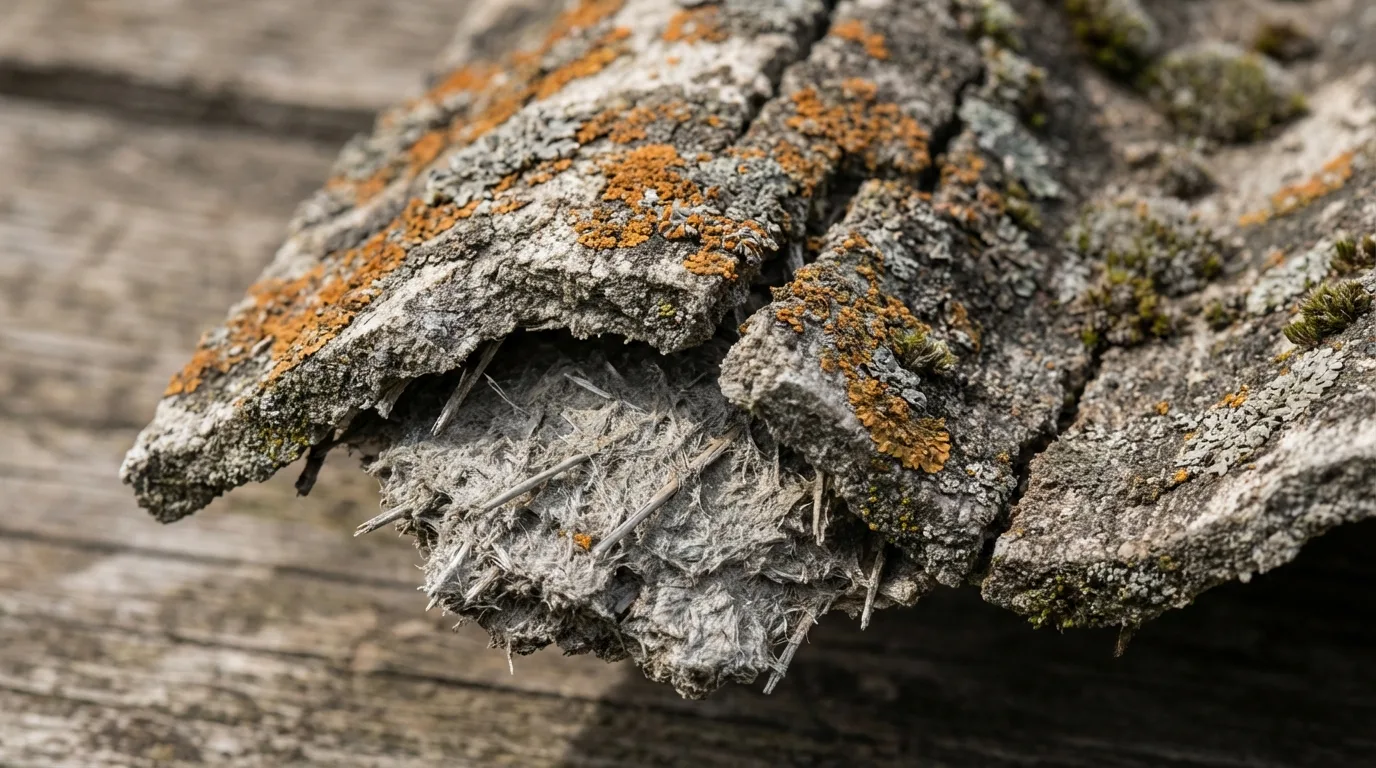
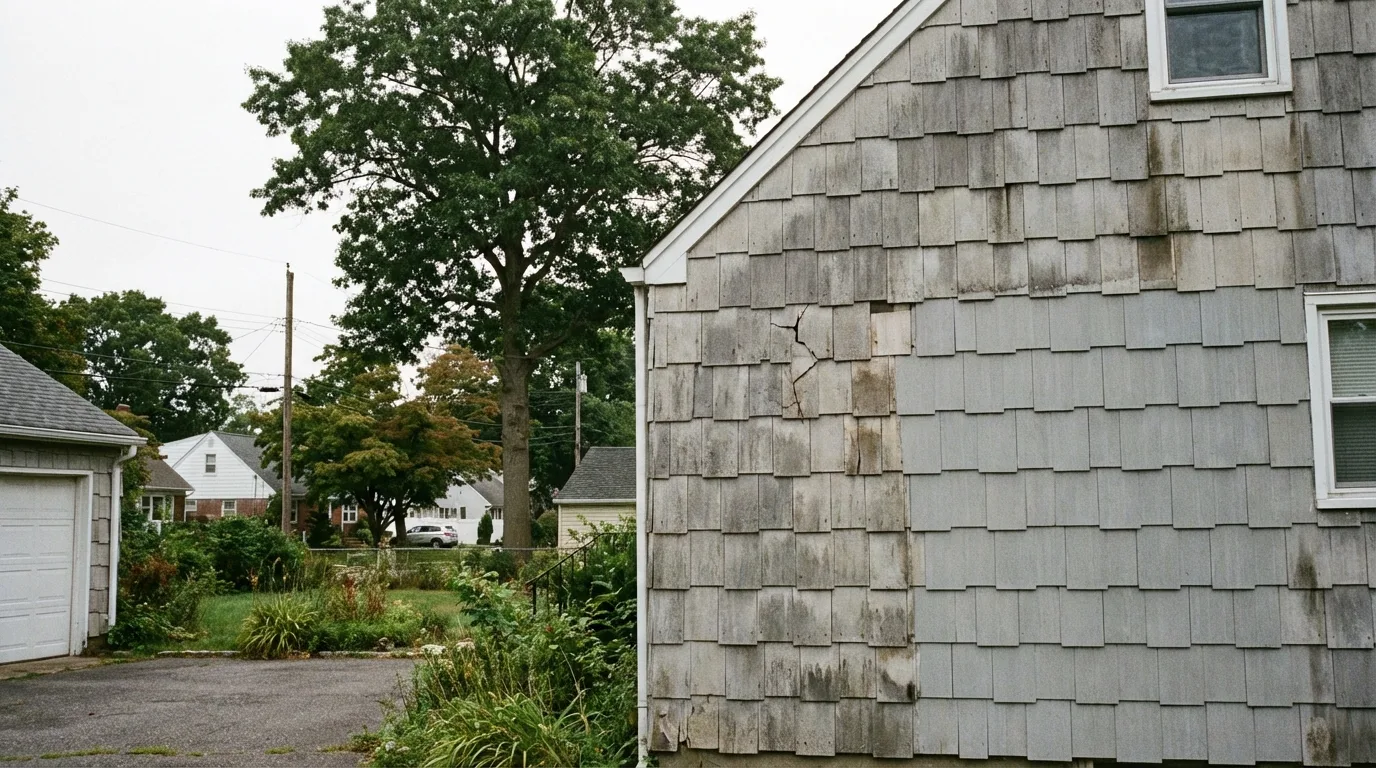
Asbestos cement panels that have been weathering for 50 to 80 years develop surface cracking as the cement matrix dries and contracts over repeated wet-dry cycles. The cracks themselves do not create an immediate airborne hazard under normal weather conditions — wind-driven rain and normal weathering do not typically generate respirable fiber concentrations from cracked panels.
However, cracked panels change the risk calculation for any planned renovation work. A panel that is already cracked will fracture more completely when disturbed and generate more fiber release than an intact panel. Renovation contractors who are not trained in asbestos handling will often proceed with removing cracked siding faster and less carefully — precisely the condition that generates the highest exposures.
The lichen growth visible on the panel above is also a useful identification indicator. Asbestos cement siding is a dense, mineral-based material that retains moisture in its surface irregularities, encouraging lichen and moss colonization in Long Island’s humid climate. This biological growth pattern, combined with the gray color and panel format, is a reliable visual indicator on homes throughout Nassau and Suffolk County.
Intact vs. Damaged: The Risk Comparison
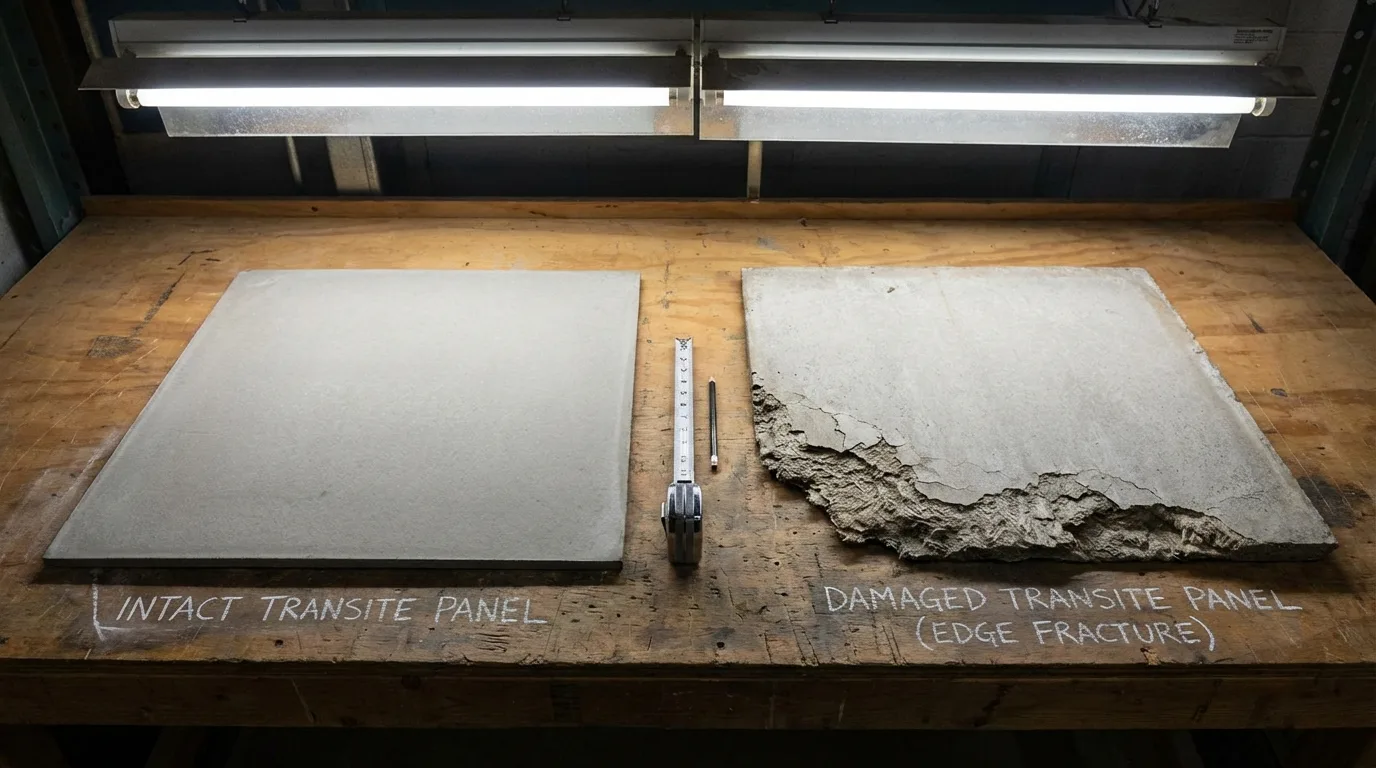
The workbench comparison above is the clearest illustration of why intact asbestos cement siding is managed differently from damaged material. The intact panel on the left is a non-friable material — the fibers are bound in the cement matrix, the surface is smooth, and normal handling does not release fibers. It can be left in place, encapsulated, or removed by licensed contractors without creating uncontrolled exposure if proper wet methods and containment are used.
The damaged panel on the right represents what happens when panels are broken — whether during improper removal, storm damage, impact, or structural failure. The rough fractured edge, the loose material along the break line, and the potential for further fracture all create a fiber release risk that the intact panel does not have.
For Long Island homeowners planning siding replacement: the decision to abate before re-siding is not just a legal requirement — it is the difference between the left panel scenario and the right panel scenario for every person on the job site.
Long Island Housing: Where Asbestos Cement Siding Is Found
Asbestos cement siding is concentrated in Long Island homes built between 1930 and 1970, with the highest density in the immediate postwar housing stock. The original Levittown houses were built with asbestos cement shingle siding as the standard exterior cladding. Many were later re-sided over the original asbestos siding — which means there are a significant number of Long Island homes where asbestos cement siding is hidden under vinyl or aluminum siding installed in the 1970s and 1980s.
When a homeowner plans to remove vinyl or aluminum siding from a pre-1970 house, the first question to answer is what is underneath. An asbestos survey before any siding removal project is standard practice and legally required under NYS DOL regulations for buildings with potential asbestos-containing materials.
Nassau County concentrations: Levittown, Hicksville, Westbury, Hempstead, Uniondale, Elmont, Valley Stream. Suffolk County: West Babylon, Bay Shore, Brentwood, Central Islip, Huntington Station. Pre-war neighborhoods in established communities — Garden City, Rockville Centre, Freeport — also have significant concentrations of original Transite siding.
What To Do Before Any Siding Work
Before any siding replacement, repair, or power washing project on a pre-1975 Long Island home, have the existing siding tested by a NYS-licensed asbestos investigator. If the siding tests positive, abatement must precede any removal work. Upper Restoration serves all of Nassau and Suffolk County and the five boroughs for asbestos siding testing, abatement, and post-abatement clearance. See our asbestos removal cost guide for 2026 siding abatement pricing, review our Long Island asbestos abatement services, or schedule a free consultation.
Frequently Asked Questions: Asbestos Cement Siding
How do I know if my house has asbestos cement siding?
Visual indicators include uniform gray color, shingle-format panels approximately 12 inches tall installed in overlapping horizontal rows, nail holes with rust staining below them, and a dense, non-wood surface texture. Homes built between 1930 and 1975 in Long Island’s postwar developments are high-probability sites. The only definitive confirmation is laboratory testing of a panel sample by a licensed asbestos investigator.
Is it safe to paint over asbestos cement siding?
Painting intact asbestos cement siding — without sanding, scraping, or power washing — is generally considered an encapsulation approach and is lower risk than removal. However, any preparation work that involves sanding, wire brushing, or pressure washing intact panels creates fiber release and requires licensed abatement handling. Consult a NYS-licensed asbestos contractor before any surface preparation work on suspected asbestos siding.
Can vinyl siding be installed over asbestos cement siding?
In some cases, vinyl siding can be installed over intact asbestos cement siding as an encapsulation approach, leaving the asbestos material undisturbed. This requires that the existing siding be structurally sound and that no cutting, removal, or disturbance of the asbestos panels occurs during installation. This approach should be reviewed with both a licensed asbestos contractor and a siding contractor before proceeding.
What is Transite siding?
Transite was a brand name for asbestos cement building products manufactured by Johns-Manville. Transite siding consists of Portland cement reinforced with chrysotile asbestos fibers, pressed into flat sheets or shingle panels. It was widely used for residential and commercial exterior cladding from the 1930s through the late 1970s. The Transite name appears on labels occasionally still found on sheltered panels.
How much does asbestos cement siding removal cost on Long Island?
Asbestos cement siding removal on Long Island typically runs $8,000 to $20,000 for a standard ranch or cape cod, depending on the square footage of siding, number of stories, and whether the siding is directly accessible or covered by a later layer of vinyl or aluminum. See our full asbestos removal cost guide for 2026 pricing by project type.
Is there asbestos siding under my vinyl siding?
Possibly. A significant number of Long Island homes had vinyl or aluminum siding installed over original asbestos cement siding in the 1970s and 1980s. If your home was built before 1970 and currently has vinyl or aluminum siding, the pre-renovation assessment for any siding project should include lifting or cutting a small section of the outer cladding to inspect what is underneath — and testing if asbestos cement siding is found.