What Does a Restoration Company Do? Complete Services Explained
If you’ve never needed professional restoration services, you might wonder: “What does a restoration company do?” The answer is more comprehensive than most homeowners realize. Modern restoration companies are multidisciplinary teams handling everything from water extraction and structural drying to biohazard remediation and full-scope reconstruction.
Understanding what restoration companies do—and how they differ from general contractors, cleaning services, or DIY approaches—helps you know when to call professionals and what to expect when they arrive at your home.
This guide explains the full range of restoration company services, how the restoration process works, industry certifications that matter, insurance relationships, and how to choose the right company for your emergency.
What is a Restoration Company?
A restoration company is a specialized firm focused on emergency response and professional remediation of property damage. Unlike general contractors who primarily build and renovate, or cleaning services that provide surface-level cleaning, restoration companies are trained and equipped to:
- Respond to emergencies 24/7 (water damage, fire damage, mold don’t happen during business hours)
- Stabilize damaged properties quickly to prevent secondary damage
- Remove contaminated water, debris, and materials professionally and safely
- Dry structures to industry standards preventing mold and structural failure
- Decontaminate biohazard areas using specialized protocols
- Coordinate with insurance companies and documentation for claims
- Manage complete restoration process from emergency response through full reconstruction
Core Restoration Services
Water Damage Restoration
What they do:
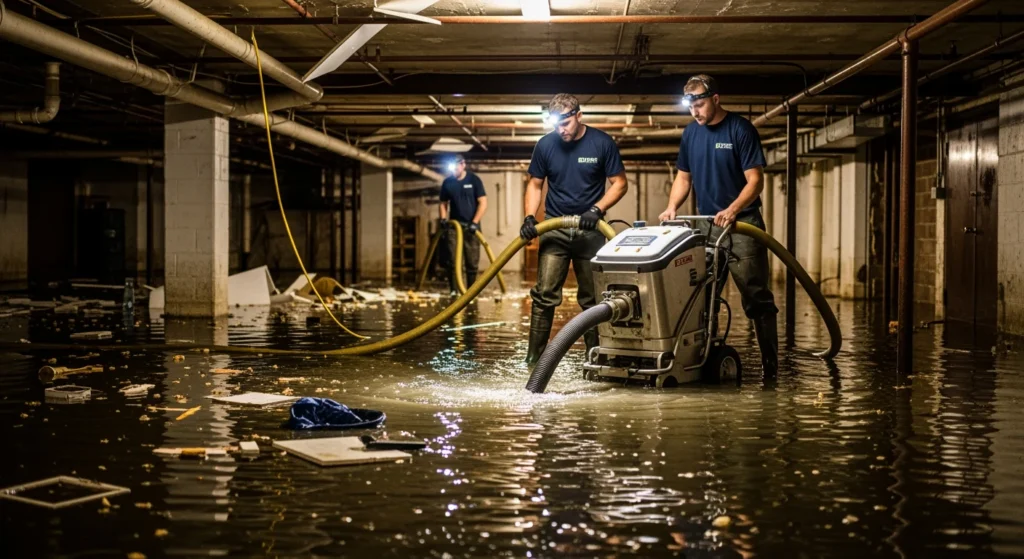
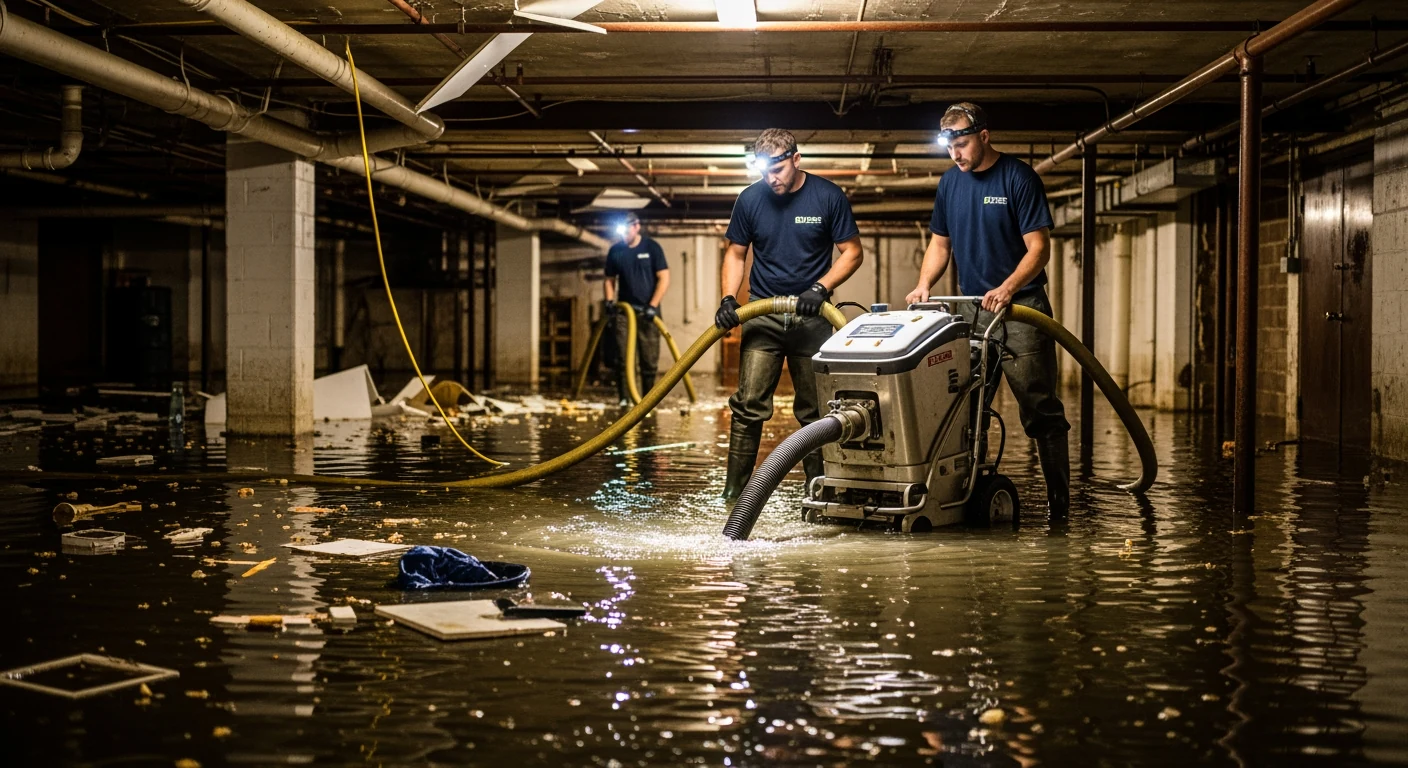
- Emergency water extraction: Remove standing water using industrial pumps and wet vacuums
- Moisture detection: Identify water penetration in walls, under floors, and hidden cavities
- Material removal: Remove saturated porous materials (carpet, drywall, insulation) that can’t be effectively dried
- Structural drying: Deploy industrial dehumidifiers and air movers to dry remaining materials to IICRC standards
- Decontamination: Clean and disinfect all water-exposed surfaces
- Humidity and moisture monitoring: Track drying progress with continuous monitoring; verify completion
- Contents preservation: Salvage and professionally clean furniture, documents, and personal items when possible
- Odor removal: Address musty smells from water damage using professional deodorization
Timeline: 3-14 days for restoration phase (depends on damage scope and category)
Certification: IICRC Water Restoration Technician (WRT)
Fire Damage Restoration
What they do:
- Emergency board-up: Secure burned areas, broken windows, and openings to prevent weather/pest entry
- Ash and debris removal: Remove burned materials and ash accumulation
- Smoke and soot remediation: Professional removal of smoke residue from surfaces, walls, and air
- Contents restoration: Professional cleaning of furniture, clothing, documents that can be salvaged
- Structural assessment: Evaluate fire damage extent and safety of remaining structure
- HVAC system cleaning: Clean and inspect heating/cooling systems exposed to smoke
- Deodorization: Remove smoke odors that permeate throughout home
- Water damage restoration: Address water damage from firefighting efforts (often more extensive than fire damage itself)
Timeline: 2-4 weeks for complete restoration
Certification: IICRC Fire & Smoke Restoration (FSR)
Mold Remediation
What they do:
- Mold assessment and testing: Professional inspection and lab testing to identify mold species and extent
- Containment: Isolate affected areas to prevent spore dispersal during remediation
- Mold removal: Safe removal of mold-contaminated materials using HEPA-filtered equipment
- Surface treatment: Professional disinfection of remaining materials using hospital-grade products
- Moisture source identification: Finding and addressing the water/moisture problem allowing mold to grow
- Structural drying: Complete drying to prevent mold recurrence
- Verification: Post-remediation testing confirms mold is eliminated to normal indoor levels
- Prevention recommendations: Guidance on preventing future mold growth
Timeline: 1-4 weeks depending on mold extent and moisture source complexity
Certification: IICRC Mold Remediation (MR) or equivalent
Storm and Weather Damage Restoration
What they do:
- Emergency board-up and tarping: Secure damaged roofs, windows, and openings immediately
- Debris removal: Clear fallen trees, branches, and wind-scattered debris
- Water intrusion management: Identify and stop water entry from damaged roof or walls
- Insurance coordination: Document damage, provide scope of work for insurance claim
- Temporary repairs: Weathertight your home until permanent repairs are completed
- Complete restoration: Roof repair/replacement, siding replacement, window replacement, structural repairs
Timeline: 1-8 weeks depending on damage severity and weather conditions
Note: Some restoration companies specialize in water/fire/mold; storm restoration may be referred to specialty contractors
Biohazard Cleanup and Remediation
What they do:
- Sewage backup cleanup: Professional removal and disinfection following sewage backups (Category 3 water)
- Hoarding cleanup: Safe removal of accumulated materials in severe hoarding situations
- Crime scene cleanup: Professional biohazard remediation following traumatic events
- Unattended death cleanup: Specialized disinfection and decontamination in situations of decomposition
- Infectious disease decontamination: Professional cleaning of areas exposed to serious infectious disease
- Chemical cleanup: Remediation following chemical spills or hazardous material exposure
- Full hazmat protocols: Use of personal protective equipment, specialized decontamination products, and proper biohazard disposal
Timeline: Varies widely; 1-4+ weeks depending on situation scope
Certification: IICRC Biohazard Remediation (BT), OSHA certification, state/local licensing
Restoration vs Renovation: What’s the Difference?
These terms are sometimes used interchangeably, but they mean distinctly different things:
| Aspect | Restoration | Renovation |
|---|---|---|
| Purpose | Return damaged property to pre-damage condition | Update or improve property; aesthetic upgrades |
| Timeline | Emergency response required; time-sensitive | Planned projects; flexible timelines |
| Insurance | Typically covered by homeowners insurance (if caused by covered event) | Not covered by insurance; homeowner expense |
| Scope | Addressing damage and health/safety hazards; specialized training required | Cosmetic and functional improvements; general contracting skills |
| Example | Water damage extraction, drying, mold prevention | Kitchen remodel, bathroom update, new flooring |
Key distinction: Restoration companies focus on emergency response and damage remediation; general contractors focus on planned projects and improvements. Restoration companies often transition damage remediation to general contractors for reconstruction phase.
The Professional Restoration Process
Phase 1: Emergency Response and Assessment (Hours 1-4)
- Company receives emergency call; dispatches team immediately (24/7)
- Team arrives and assesses damage scope and extent
- Photographs taken for insurance documentation
- Initial mitigation begins (water extraction, board-up, emergency stabilization)
- Estimate provided for insurance claim
Phase 2: Mitigation and Remediation (Days 1-14, varies)
- Water extraction and drying equipment deployed
- Contaminated materials removed
- Disinfection and decontamination conducted
- Moisture monitoring tracks drying progress
- Daily updates provided to homeowner and insurance adjuster
Phase 3: Verification and Sign-Off (Days 7-14)
- Final moisture readings verify drying targets reached
- Professional testing confirms remediation complete
- Final documentation provided
- Home cleared for reconstruction phase
Phase 4: Reconstruction (Weeks 2-12+, varies)
- Materials replaced (drywall, flooring, fixtures, cabinetry)
- Painting and finishing completed
- Final inspection and handoff to homeowner
Important Certifications and Training
IICRC Certification (Institute of Inspection, Cleaning and Restoration Certification)
What it means: IICRC is the most respected third-party certification for restoration professionals. Companies employing IICRC-certified technicians have met rigorous training standards and commit to industry best practices.
Key certifications:
- WRT (Water Restoration Technician): Standard for water damage professionals
- FSR (Fire & Smoke Restoration): Standard for fire damage professionals
- MR (Mold Remediation): Standard for mold remediation specialists
- BT (Biohazard Remediation): Standard for biohazard cleanup
- S500 Standard: Industry guideline for water restoration processes and standards
Why it matters: IICRC-certified professionals follow documented processes and industry standards, increasing the likelihood of proper remediation. Ask about certification when choosing a restoration company.
State and Local Licensing
Restoration companies must comply with state and local regulations:
- Business licensing
- Contractor licensing (varies by state and service type)
- Insurance (liability and workers compensation)
- OSHA compliance (occupational safety)
- Biohazard cleanup licensing (if offering these services)
Always verify: Ask for license verification and proof of insurance before hiring.
Restoration Companies and Insurance
How Insurance Relationships Work
Restoration companies work directly with homeowners insurance companies:
- Direct assignment: Some insurance companies directly assign water damage claims to preferred restoration vendors
- Estimate coordination: Restoration company provides detailed scope of work and estimate
- Insurance adjuster involvement: Adjuster inspects damage and approves scope/estimate
- Coverage determination: Insurance company determines what damage is covered
- Direct payment: Insurance pays restoration company directly (often after work is complete)
What You Should Know
- You choose your restoration company: You’re not required to use insurance company’s preferred vendor; you can select your own
- Get estimates: Get quotes from multiple companies if possible
- Understand coverage: Different policy types cover different damage (water damage, mold, fire, etc.)
- Document everything: Keep records of all communication and work done
- Supplemental claims: If damage discovery reveals more extensive issues, supplemental claims can be filed
How to Choose a Restoration Company
Critical Factors
- 24/7 availability: Emergencies don’t happen during business hours; company must respond immediately
- Fast response time: Aim for arrival within 1-2 hours of call
- IICRC certification: Technicians should carry current IICRC certification
- Insurance and licensing: Verify current business license, workers comp insurance, and general liability insurance
- Local expertise: Company familiar with your area, local building codes, and regional insurance practices
- Transparent communication: Company should explain process clearly and provide regular updates
- References and reviews: Check online reviews and ask for references from past clients
Red Flags
- No IICRC certification or reluctance to provide credentials
- Unusually low pricing compared to other estimates (may indicate inadequate work)
- No insurance verification or claimed cash-only payments
- Pressure to act immediately without assessment or estimate
- Negative online reviews or multiple complaints
- Unwillingness to work with insurance companies
Frequently Asked Questions
When should I call a restoration company?
Call immediately when water damage, fire damage, mold growth, or biohazard exposure occurs. Faster response prevents secondary damage and increases success. Don’t wait—24/7 emergency service is available.
Will my insurance cover restoration costs?
Coverage depends on your policy and damage cause. Sudden, accidental events (burst pipes, storms) are typically covered. Gradual damage from poor maintenance usually isn’t. Review your policy and contact your insurer when damage occurs.
Can restoration companies help with insurance claims?
Yes. Professional restoration companies provide detailed estimates and scope of work documentation that supports insurance claims. They communicate directly with insurance adjusters to facilitate the process.
What’s the difference between restoration and remediation?
These terms are often used interchangeably. Restoration typically refers to the complete process of returning property to pre-damage condition. Remediation is the active phase of removing contamination and hazards. Both are services restoration companies provide.
How much do restoration services cost?
Costs vary enormously based on damage scope, category, and materials involved. Minor water damage might be $1,000-3,000. Extensive water damage or fire damage could be $10,000-100,000+. Get multiple estimates; most are free.
Can I hire my own contractors instead of using insurance company recommendations?
Yes. You can choose your own restoration company. However, get approval from your insurance adjuster for the scope and estimate before work begins to ensure coverage.
Conclusion: Understanding Professional Restoration Services
A restoration company’s role is far broader than most people realize. These specialized firms provide emergency response, professional remediation, hazard elimination, insurance coordination, and complete project management—all focused on returning your damaged property to safe, livable condition as quickly as possible.
Understanding what restoration companies do helps you recognize when professional intervention is necessary and what to expect throughout the restoration process. Whether you’re dealing with water damage, fire damage, mold, or biohazard situations, professional restoration companies have the training, equipment, certifications, and experience to handle comprehensive remediation.
Upper Restoration provides comprehensive restoration services throughout Long Island, all five boroughs of NYC, and the surrounding tri-state area. Our IICRC-certified team handles water damage, fire damage, mold remediation, storm damage, and biohazard cleanup with 24/7 emergency response.
When damage occurs, contact Upper Restoration immediately for professional assessment and emergency restoration. Our experienced team will guide you through the entire process and restore your home to safe, livable condition. Call today or visit upperrestoration.com to learn more about our complete restoration services.
About Upper Restoration
Upper Restoration is a full-service property restoration company serving New York City and Long Island. Licensed by the NYC Department of Labor for mold remediation and the NYC Department of Environmental Protection for asbestos abatement, Upper Restoration provides 24/7 emergency response for water damage, fire damage, mold contamination, asbestos hazards, and storm damage. Our IICRC-certified technicians serve all five NYC boroughs — Manhattan, Brooklyn, Queens, the Bronx, and Staten Island — as well as Nassau County and Suffolk County communities across Long Island.