Asbestos ceiling tiles are among the most frequently encountered — and most misunderstood — hazardous materials in Long Island homes, offices, and commercial buildings constructed before 1980. Drop ceiling systems were installed in millions of residential basements, offices, schools, and commercial spaces throughout Nassau and Suffolk County from the 1950s through the late 1970s, and the tiles used in those systems routinely contained asbestos.
The hazard is not always obvious. Intact asbestos ceiling tiles may look no different from modern mineral fiber tiles. But when tiles are broken, cut, water-damaged, or disturbed during renovation, they release asbestos fibers that become airborne and remain suspended in the space. This guide shows you exactly what to look for — from intact tile texture to the specific damage conditions that create an active exposure risk.
What Asbestos Ceiling Tiles Look Like: The Fiber Edge
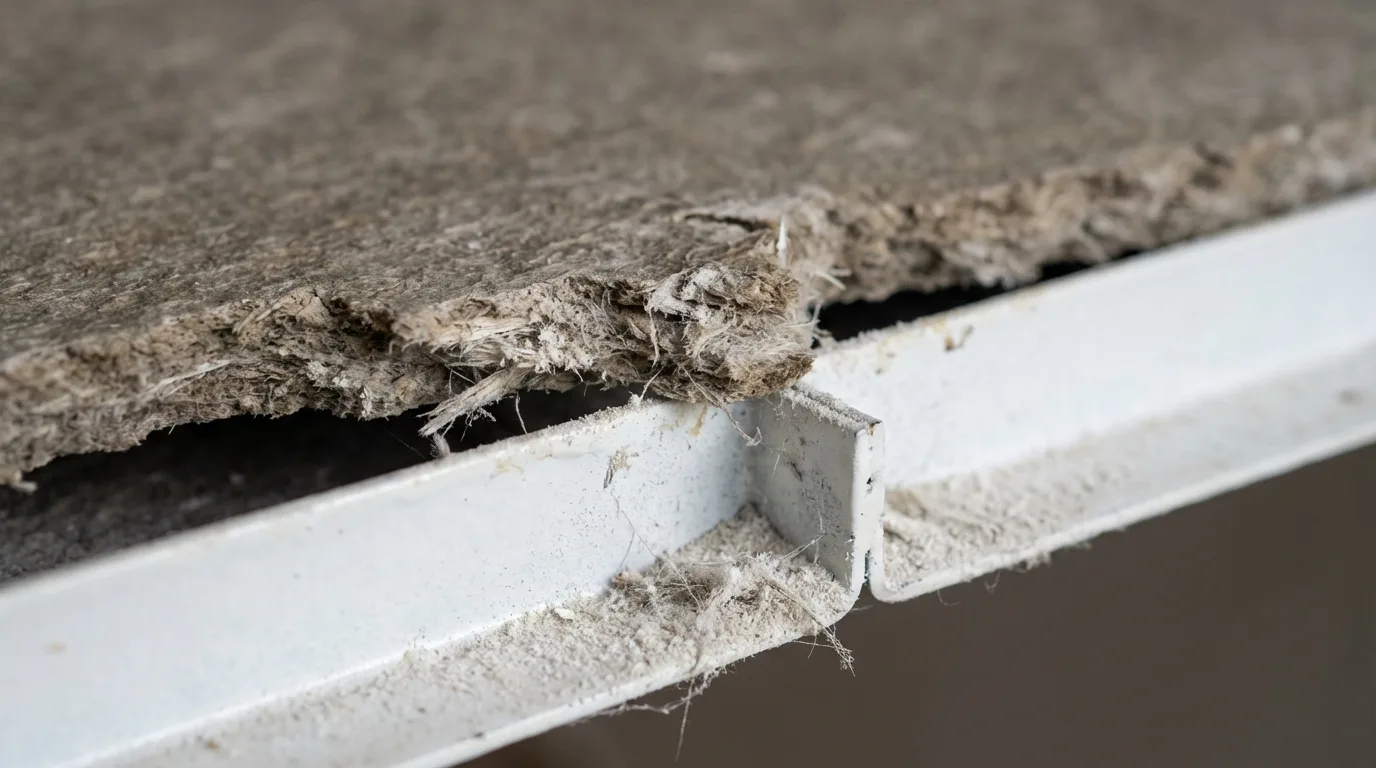
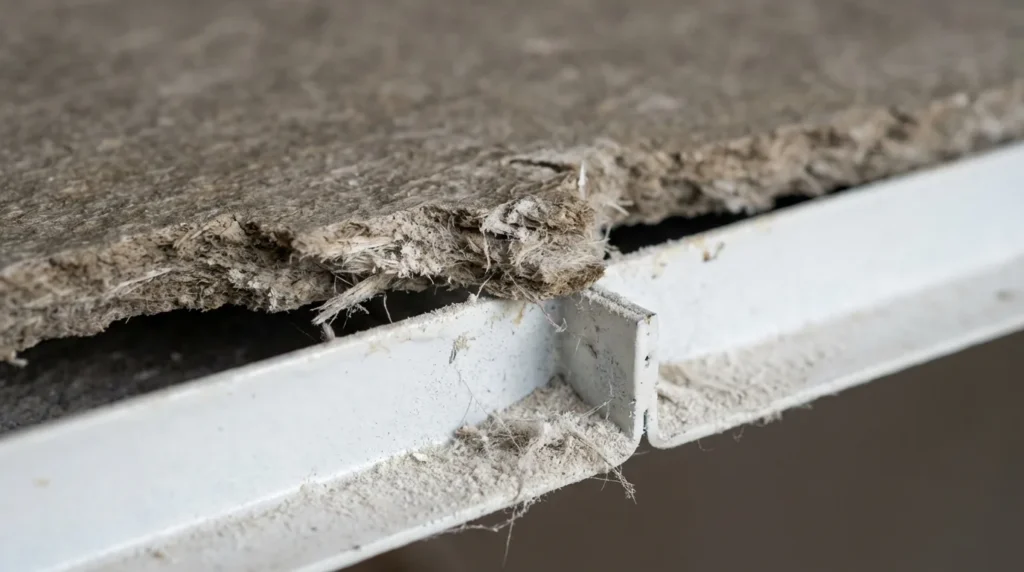
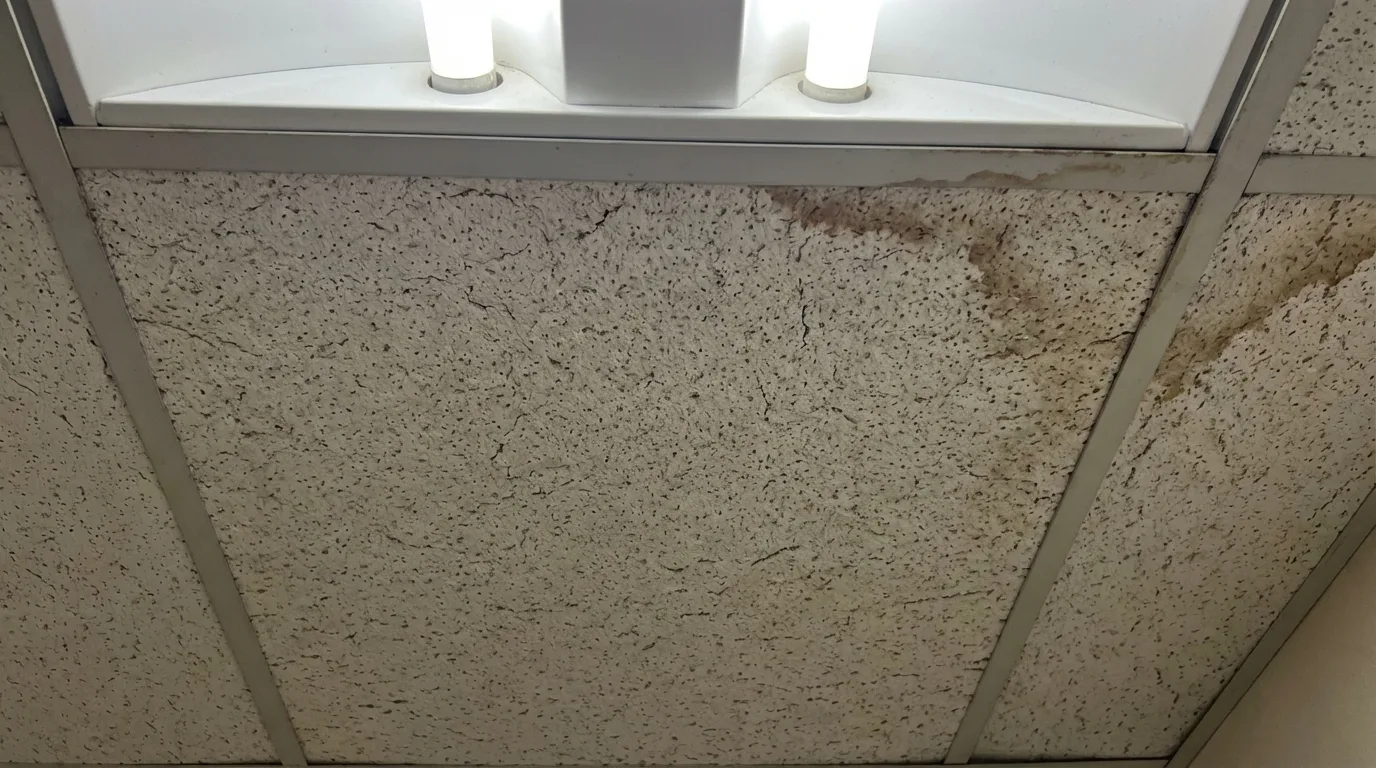
The most reliable visual identification of asbestos ceiling tiles happens at the edges — where the tile body is exposed at the T-bar grid rail or at a break point. What you are looking at in the image above is the actual mineral fiber composition of the tile: dense, loosely bound silicate fibers that, when disturbed, separate and become airborne.
The key visual characteristics of asbestos ceiling tile edges:
Fibrous texture at breaks. Unlike modern fiberglass ceiling tiles, which have a more uniform, compressed appearance at the edge, older asbestos-containing mineral fiber tiles show a visibly loose, fibrous structure. The individual fibers are longer and more distinct. When a tile is cracked, the edge looks frayed rather than cleanly broken.
Gray-white mineral color. The fiber composition is typically a medium to dark gray-white — darker than modern white ceiling tiles and with a dense, dusty quality rather than a bright white finish.
Powder accumulation on grid rails. If you look at the metal T-bar rails in a pre-1980 drop ceiling, white or gray powder along the rail is a strong indicator of ongoing fiber release from tiles above. This powder is asbestos material that has separated from the tile and settled on the nearest flat surface.
Surface Texture: What the Face of the Tile Looks Like
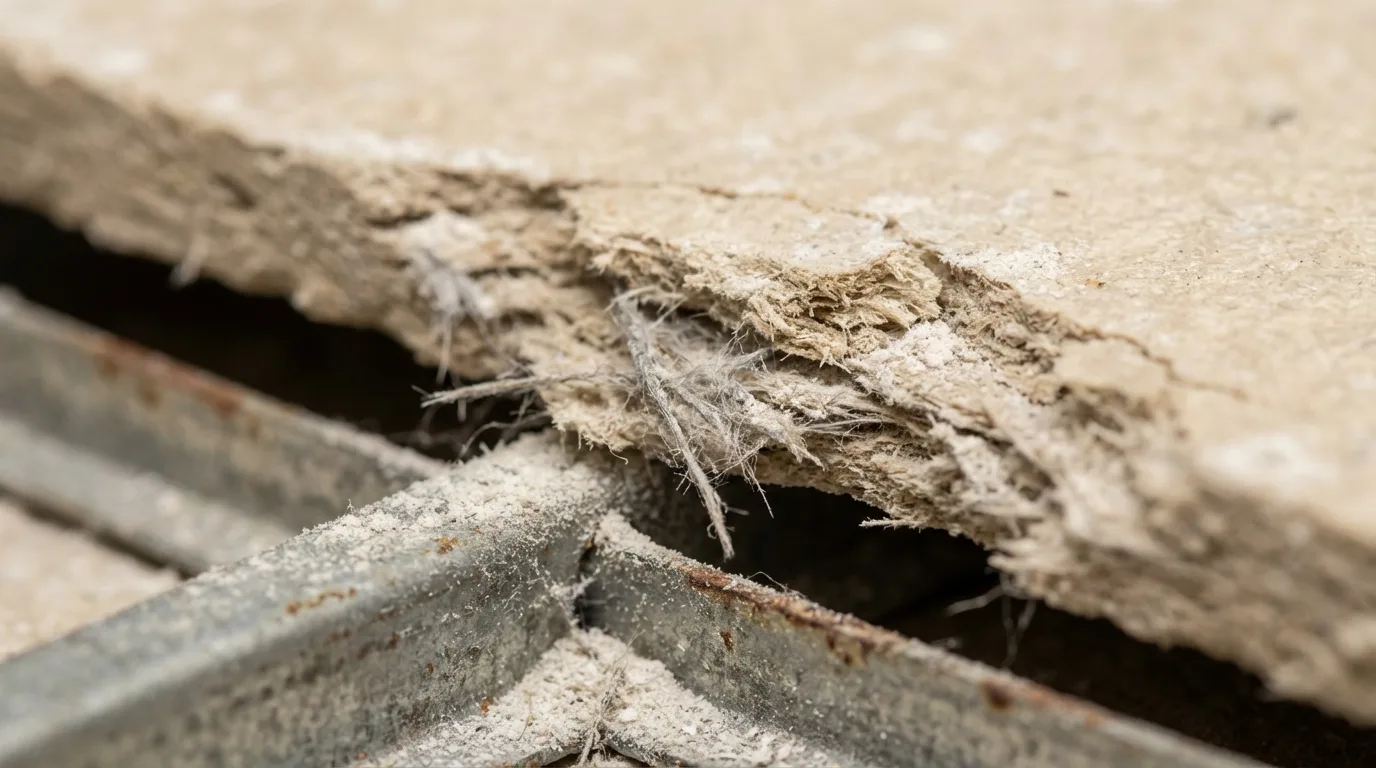
From below, intact asbestos ceiling tiles have a distinctive surface appearance that differs from modern acoustic ceiling tiles, though the difference requires knowing what to look for:
Dimpled or fissured surface pattern. The most common pre-1980 asbestos ceiling tile surface has a rough, irregular texture — either a random dimpled pattern (small rounded indentations) or a fissured pattern (irregular cracks and valleys in the surface). This texture was created by the manufacturing process of pressing mineral fiber into tile form. Modern tiles have similar surface patterns, which is why surface texture alone cannot confirm asbestos content.
Off-white to cream color. Original asbestos ceiling tiles were typically a creamy off-white, not the bright white of modern tiles. Decades of aging deepen this toward yellow or tan, particularly near lighting fixtures.
Age-related cracking. On tiles 50+ years old, a network of fine surface cracks develops as the binding compounds dry out and the tile becomes increasingly brittle. This cracking — visible across the face of the tile — is a sign of deterioration and increasing friability.
Water Damage: The Most Dangerous Ceiling Tile Condition
Water-damaged asbestos ceiling tiles are the highest-risk condition in drop ceiling systems because moisture dissolves the binder that holds the tile together, converting a stable material into an actively friable hazard without any physical disturbance. The water stain patterns in the image above are diagnostic:
Concentric brown rings are the signature of repeated above-ceiling leaks — each ring marks a high-water line from a separate event. The dark center indicates the most recent or most severe wetting. The rings spread outward as water saturates the tile body and evaporates, leaving mineral deposits from the water behind.
In Long Island’s commercial and residential building stock, above-ceiling leaks typically come from HVAC condensate lines, rooftop HVAC units, plumbing supply or drain lines above the ceiling, or roof infiltration. Any of these sources in a pre-1980 building with a drop ceiling creates a potential asbestos fiber release situation — not just a water damage situation.
When Upper Restoration responds to water damage calls in Long Island commercial buildings and pre-1980 homes with drop ceilings, ceiling tile testing is part of the standard assessment before any water mitigation work begins. Saturated asbestos ceiling tiles cannot be removed by standard water damage contractors — abatement must precede mitigation.
Commercial and Basement Drop Ceilings: The Highest-Risk Environments
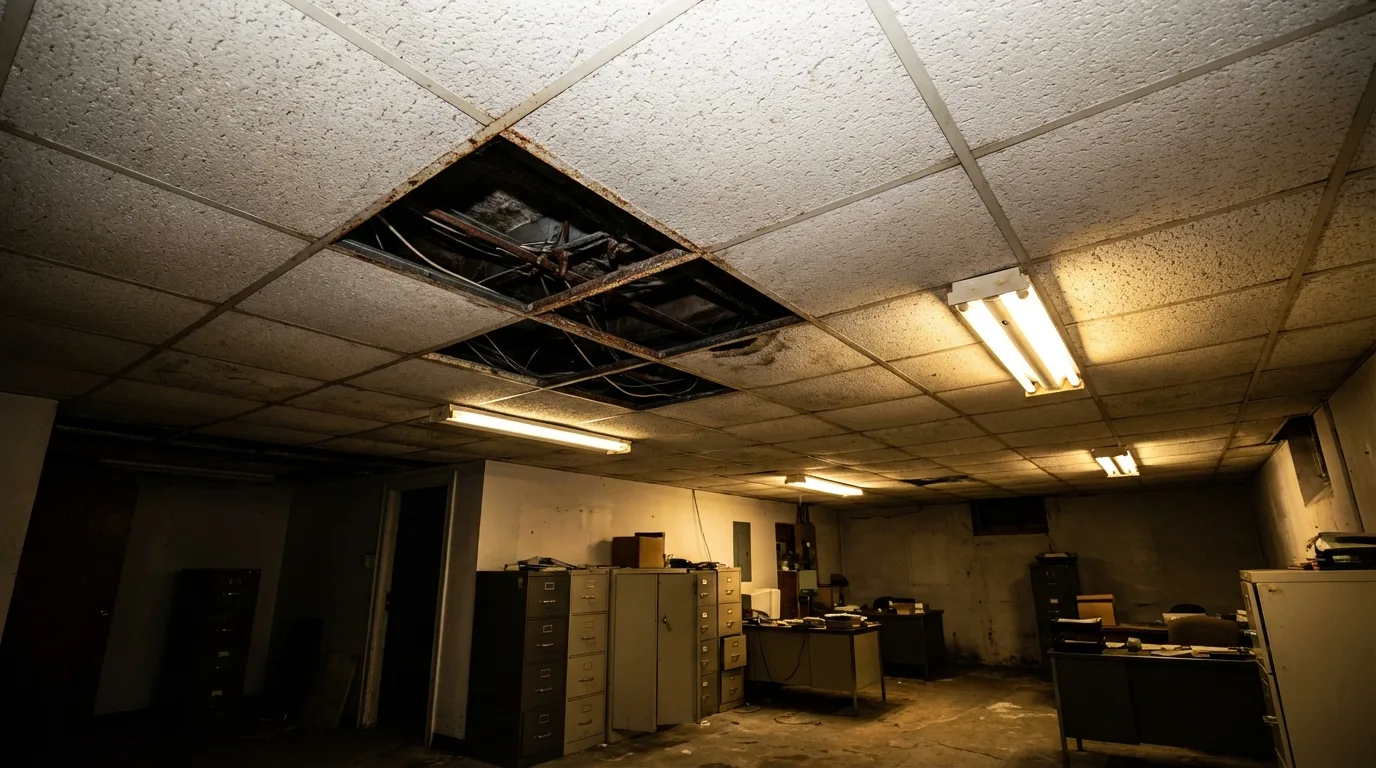
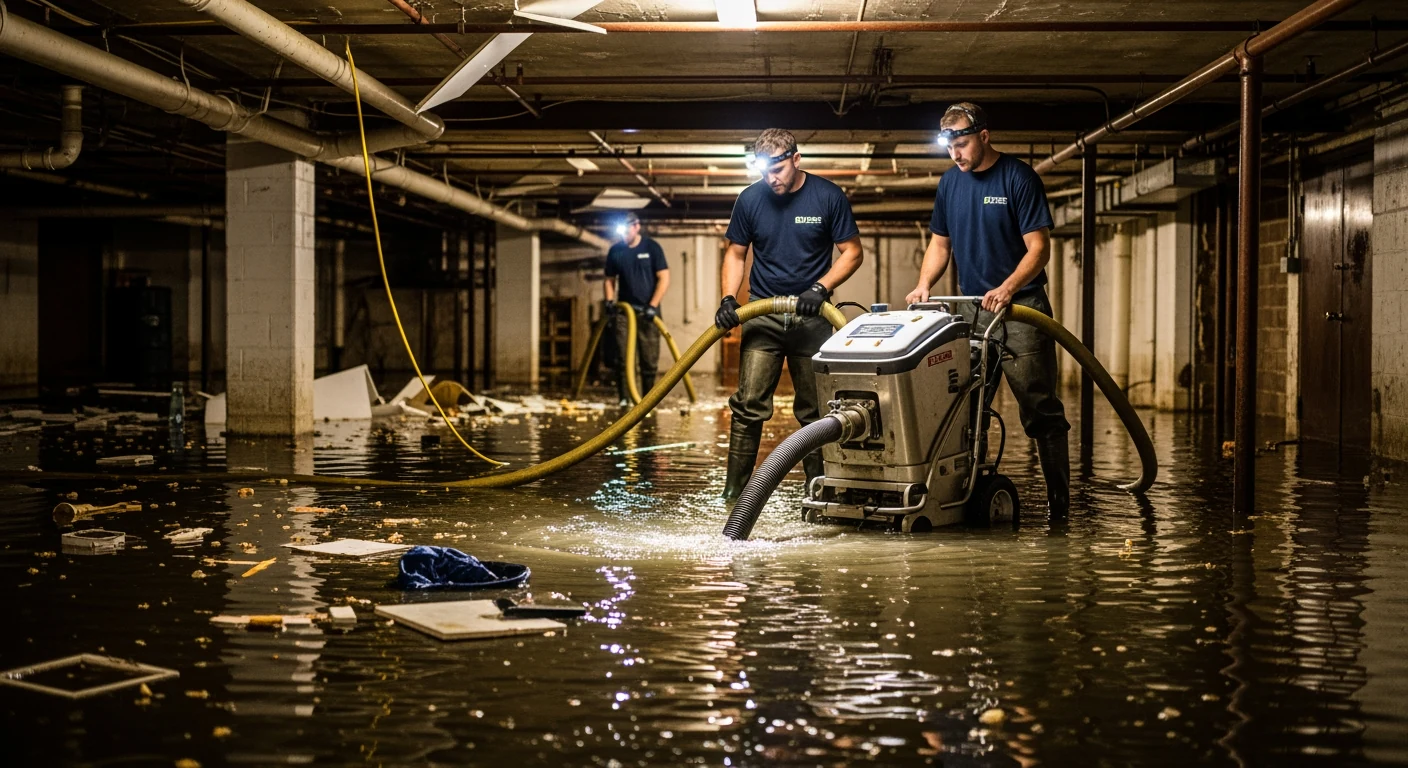
Commercial basements, utility spaces, and finished basement offices on Long Island represent the highest concentration of original asbestos drop ceiling installations. These spaces were finished with drop ceilings as a low-cost way to hide mechanical systems — pipes, conduit, ductwork — and the tiles installed in these spaces are often in worse condition than residential ceiling tiles because they have been accessed repeatedly for maintenance over decades.
Every time a ceiling tile is lifted to access above-ceiling mechanical systems, it is disturbed. Disturbing an asbestos ceiling tile — even gently lifting and replacing it — releases fibers. In commercial spaces where maintenance has been ongoing for 40 to 50 years, the cumulative fiber release into those spaces can be significant.
Nassau and Suffolk County commercial building owners should be aware that the NYS Department of Labor requires an asbestos survey before any renovation activity that disturbs ceiling tiles in buildings built before 1980. This requirement applies to office renovations, HVAC upgrades, electrical work, and any activity that involves moving or replacing ceiling tiles.
Multiple Water Stains: Identifying Chronic Leak History
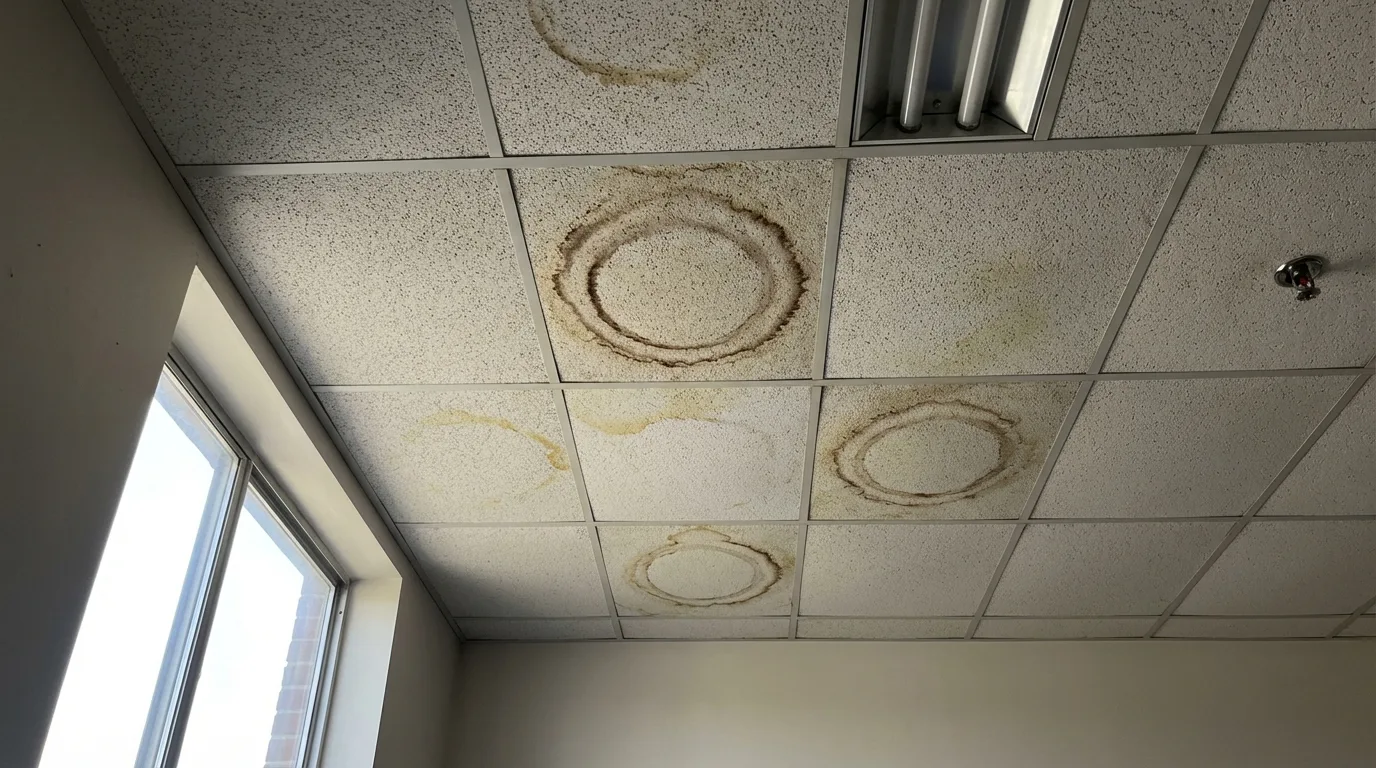
When water damage ring stains appear across multiple adjacent ceiling tiles, it indicates a chronic leak source rather than a one-time event. This pattern — visible in the image above — tells an inspector several things simultaneously: the above-ceiling plumbing or HVAC has been leaking for an extended period, multiple tiles have been repeatedly wetted and dried, and the binding compounds in those tiles have been cycling through wet-dry stress that accelerates deterioration.
For Long Island property owners, this pattern frequently appears in:
Finished basement offices where HVAC condensate lines or supply plumbing run above the drop ceiling and have been slowly leaking for years without visible indication at the living space level. Commercial first-floor spaces below upper-floor bathrooms or kitchens where supply or drain line leaks saturate tiles for months before detection. Any space below a flat roof where roofing membrane failures allow water to pool and penetrate the building envelope directly above drop ceiling spaces.
Long Island Building Stock: Where Asbestos Ceiling Tiles Are Most Common
Asbestos drop ceiling tiles are concentrated in Long Island buildings and homes where drop ceilings were installed between 1955 and 1978. The highest-density locations are finished basements in Nassau County ranch and cape cod homes (Levittown, Hicksville, Massapequa, Wantagh, Seaford), where drop ceilings were the standard basement finishing method. Commercial buildings throughout Nassau and Suffolk County built or renovated in the 1960s and 1970s — office parks, retail spaces, municipal buildings — represent the other major concentration.
Schools built during the postwar expansion of Long Island’s school districts are a particularly significant category. Many Long Island public schools built between 1950 and 1975 have asbestos ceiling tiles that have been managed under EPA AHERA regulations since 1987, but private schools and commercial buildings of the same era have no mandatory inspection requirement until renovation work is planned.
What To Do If You Have Asbestos Ceiling Tiles
If your drop ceiling tiles are intact, undamaged, and not being disturbed by renovation work, the immediate risk is lower — though not zero. HVAC airflow, foot traffic above the ceiling, and normal building vibration can cause ongoing low-level fiber release from deteriorating tiles. Annual visual inspection of tile condition and an assessment of any above-ceiling leak sources is appropriate maintenance for any pre-1980 drop ceiling.
If tiles are water-damaged, cracked, missing, or if renovation work is planned, contact a NYS-licensed asbestos contractor before proceeding. Upper Restoration serves all of Nassau and Suffolk County and the five boroughs for asbestos ceiling tile inspection, testing, and abatement. See our asbestos removal cost guide for New York for 2026 pricing, review our Long Island asbestos abatement services, or schedule a free consultation.
Frequently Asked Questions: Asbestos Ceiling Tiles
How do I know if my drop ceiling tiles contain asbestos?
Visual inspection alone cannot confirm asbestos content — laboratory testing of a tile sample is required. However, drop ceiling tiles installed before 1980 should be treated as potentially containing asbestos until tested. Key visual indicators include a dimpled or fissured surface texture, off-white to cream color with age yellowing, and visible fiber fraying at tile edges or on grid rails.
Are water-damaged asbestos ceiling tiles dangerous?
Yes — water-damaged asbestos ceiling tiles are among the highest-risk asbestos conditions in buildings. Moisture dissolves the binder holding the tile together, converting it from a stable material to an actively friable one. Saturated asbestos tiles release fibers without any physical disturbance. Water-damaged tiles must be assessed and abated by a licensed asbestos contractor before any water mitigation work proceeds.
Can I replace just one or two ceiling tiles myself?
No — in New York State, removing or disturbing asbestos-containing ceiling tiles requires a licensed asbestos abatement contractor under NYS 12 NYCRR Part 56. Lifting and replacing even a single tile disturbs it and can release fibers. A general contractor or handyman cannot legally perform this work.
Do I need to remove asbestos ceiling tiles before selling my home?
New York State does not mandate removal of intact asbestos ceiling tiles before a home sale, but sellers must disclose known asbestos-containing materials under NYS Property Condition Disclosure requirements. Intact tiles can remain in place, but buyers’ inspectors will flag them and buyers’ attorneys often require testing or abatement as a sale condition. Getting ahead of this with a pre-listing asbestos assessment is the cleaner path.
What does asbestos ceiling tile powder on the grid rails mean?
White or gray powder on T-bar grid rails below asbestos ceiling tiles indicates ongoing fiber release from deteriorating tiles above. The powder is asbestos material that has separated from the tile body and settled on the nearest flat surface. This is a sign of active friability and warrants immediate professional assessment.
How much does asbestos ceiling tile removal cost on Long Island?
Asbestos ceiling tile removal on Long Island typically runs $3 to $7 per square foot for residential drop ceiling tile abatement, with commercial projects priced similarly or on a project basis depending on access complexity and disposal volume. A typical 400 square foot basement costs $1,200 to $2,800. See our full cost guide for 2026 pricing by project type.