Why Visual Identification Matters (and Its Limits)
Learning to spot common asbestos ceiling tile patterns helps property owners flag risk before a renovation or demolition project. Appearance alone cannot confirm or rule out asbestos content. Only laboratory testing by a certified inspector can verify whether a material contains asbestos fibers.
If you own or manage a building built before the mid-1980s in the tri-state area, you’ve probably walked under a ceiling that could contain asbestos without ever knowing it. That’s not a reason to panic. It’s a reason to know what to look for so you can make an informed call about testing before you swing a hammer, run a sander, or pull tiles down for a remodel.
Here’s the honest version of what visual inspection can and can’t do for you. It can tell you whether a ceiling has the size, texture, color, or installation era that historically correlates with asbestos-containing materials. It cannot tell you what’s actually inside the tile. Two ceilings can look identical, one loaded with chrysotile fibers, the other completely clean. The only way to know for certain is a bulk sample analyzed under polarized light microscopy by an accredited lab (Mesothelioma Guide) [1]. Treat everything in this guide as a screening tool, not a diagnosis.
What Asbestos Ceiling Tiles Typically Look Like
Asbestos ceiling tiles are commonly gray, brown, or off-white, often with visible flecks or fibers in white, gray, or blue-gray tones. Surfaces frequently show small, uniformly spaced pinhole indentations or a deeply fissured, cratered texture. Many older tiles have been painted over, hiding the original speckled pattern.
Two textures show up again and again in field reports from environmental inspectors. The first is a light-colored, slightly powdery surface that almost looks chalky when you run a hand near it (never touch it directly if you suspect asbestos) (Lead Lab Environmental) [3]. The second is what one environmental firm describes as a “craters of the moon” look: deep, irregular grooves scattered across an acoustic tile, meant to absorb sound in offices, hospitals, and classrooms (Banner Environmental) [4].
Color range is broader than most people expect. Beyond the classic gray and brown, inspectors have documented cream, pink, green, and pastel tiles, along with marbled or speckled designs that were popular in mid-century commercial buildings (Banner Environmental) [4]. Some manufacturers stamped “asbestos” directly on the tile backing, but plenty didn’t, and a missing stamp tells you nothing definitive either way (Mesothelioma Guide) [1].
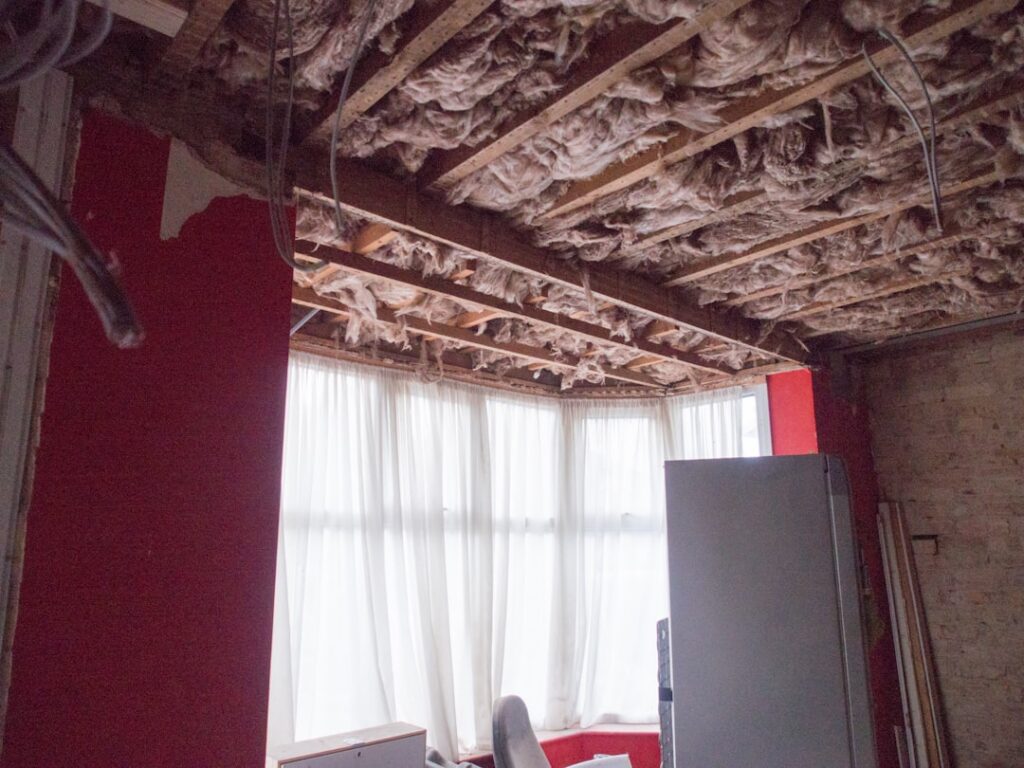
Aging adds another layer. Tiles that have been in place for 40 or 50 years often show yellow or brown discoloration, dark water staining, and a brittle, crumbling edge where the material has started to break down (Mesothelioma Guide) [1]. That deterioration matters less for identification and more for risk, which the later section on damage signs covers in detail.
Visual Red Flags to Watch For: Light, powdery white or gray-brown coloring; small pinhole or uniformly dotted indentations; a deeply fissured “cratered” surface; brittle or crumbling edges; a popcorn-style textured finish; installation dated before the mid-1980s. None of these confirm asbestos on their own, but any combination warrants professional testing before disturbance.
Common Sizes and Formats: Drop Tiles, Panels, and Grids
Asbestos ceiling tiles were manufactured in a few standard sizes: 9×9 and 12×12 inches were common in residential ceilings, while 12×12 and 24×24 inch panels were standard in commercial suspended, or “drop,” ceiling grids. Some 18×18 inch tiles also exist. Size alone is a clue, not proof of asbestos content.
The 9-inch tile deserves special mention because it shows up so often in older single-family homes and apartment buildings across Brooklyn, Queens, and the older housing stock of Long Island and northern New Jersey. Some environmental firms even refer to a rough “9-inch rule” as a screening heuristic, since 9×9 tiles were a dominant residential format through the 1960s and 70s (Banner Environmental) [4]. Larger 12×12 and 18×18 formats also appeared in homes, per Mesothelioma Guide’s product research [1].
Commercial buildings tell a different story. Office towers, schools, and hospitals typically used 12×12 or 24×24 inch acoustic panels set into a metal grid system, the kind you can push up and slide out to access wiring or HVAC above the ceiling plane (Fibre Safe) [2]. That accessibility is exactly why drop ceilings get disturbed so often during tenant fit-outs and why they deserve testing before anyone starts popping panels loose.
| Tile Size | Typical Setting | Common Format |
|---|---|---|
| 9×9 inches | Residential ceilings and floors | Individual adhered tile |
| 12×12 inches | Residential and light commercial | Adhered tile or drop-grid panel |
| 18×18 inches | Residential (less common) | Adhered tile |
| 24×24 inches | Offices, schools, hospitals | Suspended drop-ceiling panel |
Popcorn Ceilings: A Special Case
Popcorn (textured spray or patching-compound) ceilings are a distinct asbestos concern separate from tile products. If a home built before 1977 still has its original popcorn ceiling, it should be treated as a likely asbestos suspect given how widely the material was used at the time, though only testing confirms content.
Popcorn ceilings were sprayed on rather than tiled, using a compound that often incorporated asbestos fibers for texture, fire resistance, and to hide drywall seams cheaply. The EPA banned asbestos-containing textured paint and patching compounds for this specific use in 1977 (EPA, Protect Your Family from Asbestos in the Home) [8]. That date is one of the more useful cutoff lines available to homeowners: a popcorn ceiling installed before 1977 carries meaningfully higher risk than one applied afterward, though post-1977 ceilings aren’t automatically clean, since contractors sometimes used up old stock or non-compliant product after the rule took effect (Lead Lab Environmental) [3].
Vermiculite-based ceiling and insulation materials fall into the same suspect category and should not be sanded, scraped, or drilled into without testing first (EPA) [8]. If you’re planning a renovation in a pre-1977 home and the ceiling still has its original texture, that’s a strong candidate for professional sampling before demo begins, not a DIY scrape test.
Decade-by-Decade Risk Cues: When Was Your Ceiling Installed?
Asbestos ceiling and floor tiles saw widespread use from the 1920s through the 1980s, with peak popularity between the 1950s and 1980s. Materials installed before the mid-1980s should be treated as suspect. Regulatory milestones in 1977 and 1989 mark the general decline of asbestos use in ceiling products, though risk doesn’t drop to zero after either date.
The timeline is worth internalizing because building age is often the fastest screening tool a property owner has, faster than any visual inspection. Asbestos-containing ceiling tiles first appeared in the 1920s and became genuinely common by the 1950s, staying popular through the 1980s for their fire resistance and sound-dampening properties (Mesothelioma Guide; Lead Lab Environmental) [1][3]. The EPA’s 1977 ban on asbestos textured paint and patching compounds curbed new popcorn-ceiling applications, and the agency’s 1989 Asbestos Ban and Phaseout Rule attempted a broader ban on asbestos-containing products (EPA, Asbestos Laws and Regulations) [7]. That 1989 rule was partially vacated by a court in 1991, but many new-use categories remained prohibited, which is part of why asbestos use in ceiling and floor tiles effectively ended during the 1980s rather than stopping on a single clean date (Satterley Law) [5].
For practical purposes: anything installed before the mid-1980s is a red flag worth testing. Anything installed after carries lower risk but isn’t automatically ruled out, since old inventory and imported materials sometimes lagged behind the regulatory timeline (Banner Environmental; Decorative Ceiling Tiles) [4][6].
Where These Materials Were Commonly Used
Asbestos ceiling tiles and popcorn finishes were installed across schools, hospitals, office buildings, basements, and corridors, as well as residential housing throughout the tri-state area’s older stock. Commercial acoustic panels absorbed sound in high-traffic institutional spaces, while residential tiles and textured ceilings were valued for their low cost and fire resistance.
If you manage a pre-1980s office building or school facility anywhere from Manhattan to the Lehigh Valley, the ceiling grid above your drop tiles is a legitimate point of concern during any renovation, electrical upgrade, or HVAC retrofit (Satterley Law) [5]. Basements and utility corridors in older multifamily buildings across the five boroughs and Long Island also frequently retain original ceiling tile installations, partly because these spaces get renovated less often and partly because tenants rarely notice or report ceiling condition in low-traffic areas.
Warning Signs of Damage or Deterioration
Damaged asbestos-containing ceiling materials pose a higher exposure risk because deteriorated fibers release more easily into the air. Watch for brittleness, visible crumbling, chalky texture when touched, discoloration, or dust accumulation on surfaces below the ceiling. Any of these signs should prompt an immediate stop to work and a call to a licensed inspector.
Ceiling products are generally more friable, meaning more easily crumbled into dust, than asbestos floor tiles, which makes disturbance a bigger concern (Satterley Law; Banner Environmental) [5][4]. A tile that’s cracked, sagging, or shedding a fine powder onto furniture below isn’t just cosmetically bad, it’s a sign the material may already be releasing fibers into the air your tenants or family are breathing. Water damage speeds this process along, since moisture weakens the tile’s binding compound and accelerates crumbling.
If you notice any of these conditions, the right move is to seal off the area, avoid additional foot traffic or airflow disturbance if possible, and get a professional assessment scheduled. Don’t run fans, don’t vacuum the dust, and don’t attempt to patch or remove the damaged material yourself.
What to Do If You Suspect Asbestos Ceiling Tiles
If you suspect asbestos ceiling tiles or popcorn ceiling material, stop work immediately, avoid disturbing the surface, and contact a licensed environmental testing or abatement professional. A certified inspector collects a small sample for lab analysis, which is the only reliable way to confirm asbestos content before renovation, repair, or removal proceeds.
Sanding, drilling, cutting, or forcefully removing a suspect tile is the single worst thing you can do, since it’s the disturbance itself that releases fibers into breathable air. This applies whether you’re prepping for a kitchen remodel, replacing a water-damaged ceiling section, or gutting a basement before a sale. The safest sequence is always: identify visual red flags, stop disturbance, test, then plan removal with a licensed abatement contractor if the sample comes back positive.
Upper Restoration handles this process from testing through licensed abatement for property owners across NYC’s five boroughs, Long Island, New Jersey, Pennsylvania, and Connecticut, working under EPA, NYS, and IICRC certification requirements. If your project has already progressed to the removal stage, our companion guide on ceiling tile removal walks through what licensed abatement actually involves.
Spotted a red flag on your ceiling and need a fast, professional read on next steps?
Frequently Asked Questions
What color are asbestos ceiling tiles usually?
Asbestos ceiling tiles are most commonly gray, brown, or off-white, sometimes with visible flecks in white, gray, or blue-gray. Broader color ranges including cream, pink, green, and pastel or marbled patterns have also been documented in older commercial and residential installations. Color alone cannot confirm asbestos content; only lab testing can.
Can I identify asbestos ceiling tiles just by looking at them?
No. Visual traits like tile size, texture, pinhole patterns, and color can indicate that a ceiling tile is a candidate for asbestos content, especially in buildings constructed before the mid-1980s. Confirmation requires laboratory analysis of a physical sample collected by a trained professional, since materials that look identical can have completely different compositions.
What size were asbestos ceiling tiles typically made in?
Common sizes include 9×9 and 12×12 inches for residential ceilings and floors, with some 18×18 inch tiles also produced. Commercial suspended ceiling systems typically used 12×12 or 24×24 inch panels set into a metal grid. Tile size is a historical clue, not a determination of asbestos content.
Does every popcorn ceiling contain asbestos?
Not necessarily, but popcorn ceilings installed before 1977 are considered higher risk because the EPA banned asbestos-containing textured paint and patching compounds for that use in 1977. Ceilings applied after that date carry lower but not zero risk, since non-compliant material sometimes remained in use temporarily. Testing is the only way to confirm.
Is my building old enough to be at risk for asbestos ceiling materials?
Buildings constructed or renovated before the mid-1980s carry the highest risk, since asbestos ceiling tiles and popcorn finishes were widely used from the 1920s through the 1980s, peaking between the 1950s and 1980s. Structures built or updated after the mid-1980s carry lower risk following EPA regulatory actions in 1977 and 1989, though testing remains the only definitive confirmation.
What should I do before a renovation if I suspect asbestos ceiling tiles?
Stop any planned disturbance of the ceiling, including sanding, drilling, or removal, and contact a licensed environmental testing professional for sample collection and lab analysis. Do not proceed with renovation work until results confirm whether asbestos is present, since disturbing suspect material is what releases fibers into the air.
Are damaged asbestos ceiling tiles more dangerous than intact ones?
Damaged or deteriorating tiles pose a higher exposure concern because brittle, crumbling, or water-damaged material releases fibers more easily than an intact surface. Signs include chalky texture, visible crumbling, discoloration, and dust buildup. Any of these signs should prompt professional assessment rather than DIY repair or removal.
Not Sure What’s Above Your Ceiling Tiles?
Get a fast, professional read on your building before you renovate, repair, or demo.
Sources
- Mesothelioma Guide, “Asbestos in Floor and Ceiling Tiles: Exposure Risks & Legal Help,” https://www.mesotheliomaguide.com/asbestos/asbestos-containing-products-and-materials/asbestos-tiles/
- Fibre Safe, “How Do You Identify Asbestos Ceiling Tiles?,” https://fibresafe.com/blog/how-do-you-identify-asbestos-ceiling-tiles/
- Lead Lab Environmental, “Identifying Asbestos in Ceiling Tiles and Popcorn Ceilings,” https://leadlab.com/identifying-asbestos-in-ceiling-tiles-and-popcorn-ceilings/
- Banner Environmental Services, “What Does Asbestos Tile Look Like: The 9-Inch Rule and Other Ways to Identify Asbestos Tile,” https://www.bannerenvironmental.com/the-9-inch-rule-and-other-ways-to-identify-asbestos-tile/
- Satterley Law, “Asbestos Tiles Surrounded Americans for Decades,” https://www.satterleylaw.com/asbestos-mesothelioma/asbestos-products/asbestos-tiles-surrounded-americans-with-deadly-mineral-fibers-for-decades/
- Decorative Ceiling Tiles, “What Do Asbestos Ceiling Tiles Look Like? Six Ways to Identify Asbestos Ceiling Tiles,” https://www.decorativeceilingtiles.net/blog/what-do-asbestos-ceiling-tiles-look-like-six-ways-to-identify-asbestos-ceiling-tiles/
- U.S. Environmental Protection Agency, “Asbestos Laws and Regulations,” https://www.epa.gov/asbestos/asbestos-laws-and-regulations
- U.S. Environmental Protection Agency, “Protect Your Family from Asbestos in the Home,” https://www.epa.gov/asbestos
This content is for general informational purposes only and is not legal, medical, or insurance advice. Remediation scope, timelines, and costs vary by site conditions. Contact Upper Restoration for a professional assessment. Licensing and certifications apply per jurisdiction.