What Is Water Mitigation? (The Emergency Phase)
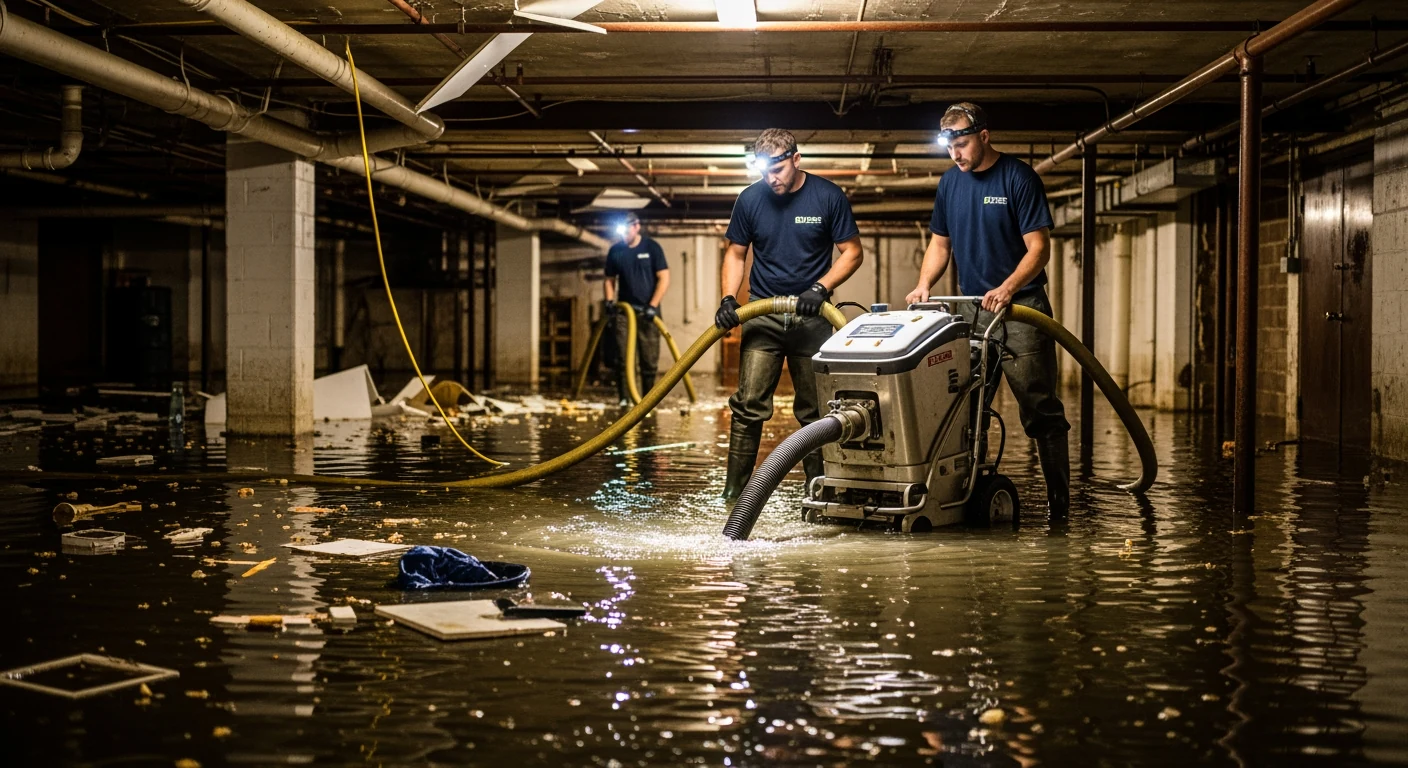
Water mitigation is the emergency response work performed immediately after a water loss to stop damage from spreading. It includes water extraction, structural drying, containment, antimicrobial treatment, and selective demolition of materials that can’t be saved. The goal is stabilization, not repair.
When a pipe bursts in your kitchen ceiling or a storm sends water through your basement, the first crew on site isn’t there to make things look nice again. They’re there to stop the bleeding. That means pulling standing water with extraction equipment, setting up air movers and dehumidifiers to hit specific dryness targets, containing the affected area so moisture doesn’t migrate into rooms that are still dry, and applying antimicrobial treatments to slow bacterial or mold growth while the structure dries out.
Soaked Local, in its explainer “Water Mitigation vs Water Damage Restoration: What’s the Difference?”, and CRBR, in “What Is the Difference Between Water Mitigation and Restoration?”, both describe mitigation the same way: it’s the work that keeps a bad situation from becoming a worse one. Nothing about it is cosmetic. A mitigation crew is measuring moisture content in your subfloor with a meter, not deciding what color to repaint your hallway.
What Is Water Damage Restoration? (The Repair & Rebuild Phase)
Water damage restoration is the rebuild phase that follows mitigation, once the structure has been confirmed dry. It covers drywall, flooring, paint, cabinetry, trim carpentry, plumbing repairs, and full reconstruction, returning the property to its pre-loss condition. Restoration is scoped and priced separately from mitigation.
Restoration doesn’t start until mitigation finishes its job and the drying targets are met. That sequencing matters, and it’s the source of most of the confusion homeowners feel. You can’t hang new drywall over a stud bay that’s still reading 22% moisture content. You can’t lay new flooring over a subfloor that hasn’t fully released the water it absorbed. Restoration crews come in after the fact, with a fresh scope of work that covers everything mitigation didn’t: replacing the drywall that was cut out, installing new flooring, repainting, rebuilding cabinetry, and handling any plumbing or structural repairs the original damage caused.
CRBR sums up the relationship in a single line worth remembering: mitigation stops the damage, restoration repairs it. Two different jobs, two different timelines, and often, though not always, two different scopes on your insurance claim.
Why the Distinction Matters for Your Insurance Claim
Insurers typically treat mitigation and restoration as separate claim phases with different approval speeds. Mitigation is usually approved and paid quickly because it prevents a larger loss. Restoration requires its own detailed estimate, and negotiation over that scope can take considerably longer, sometimes involving a different contractor entirely.
This is where a lot of homeowners get frustrated without understanding why. The emergency crew shows up within hours, insurance approves the mitigation invoice within days, and everyone feels like the claim is moving fast. Then weeks pass and the rebuild seems stalled. According to both Soaked Local and CRBR, that slowdown isn’t a red flag, it’s the normal shape of a water loss claim. Adjusters approve mitigation quickly because it’s clearly loss-prevention: drying a wet structure now is cheaper than replacing rotted framing later. Restoration is a construction estimate, line-itemed by material and labor, and it gets scrutinized the way any renovation quote would.
Statewide Restoration, in “Water Mitigation vs. Restoration: Key Differences,” frames this as a two-phase claims structure that adjusters and restoration companies rely on: mitigation’s job is to stop additional damage, hit dryness benchmarks, and document everything for the record; restoration begins only once the structure is confirmed dry and the paperwork from phase one supports the rebuild scope. That documentation, the moisture readings, the photos, the daily drying logs, is what your restoration estimate leans on later. If you’re waiting on a rebuild approval, ask your contractor whether the mitigation documentation has already been submitted to the adjuster. That single question often explains the delay.
What this means for your wallet: Mitigation costs are typically paid out faster because insurers view them as loss-prevention. Restoration costs are scoped like a construction project and reviewed more closely, so expect a longer approval window before rebuild work starts. Coverage details vary by policy, and this isn’t a guarantee of what your insurer will approve.
The 24-48 Hour Window: Why Mitigation Can’t Wait
The EPA’s “Homeowner’s and Renter’s Guide to Mold Cleanup after Disasters” advises removing standing water and wet materials and drying a home within 24 to 48 hours, using fans and dehumidifiers when it’s safe to do so. Materials that can’t be dried within that window generally need to be discarded rather than dried in place.
That 24 to 48 hour figure isn’t arbitrary. It’s the window before conditions become favorable for mold colonization on wet organic material. Statewide Restoration frames the practical urgency around a “72-hour mold window” in industry practice, but the EPA’s official guidance is more conservative: get materials to dryness targets inside 24 to 48 hours, full stop. Both figures point the same direction. The faster extraction and drying start, the smaller your eventual restoration scope is likely to be.
This guidance isn’t EPA acting alone. It was developed jointly with the Federal Emergency Management Agency, the U.S. Department of Housing and Urban Development, the National Institutes of Health, and the Centers for Disease Control and Prevention, a multi-agency resource on flood cleanup and indoor air quality. That’s worth knowing because it underscores something homeowners sometimes miss: mitigation decisions, including which materials get pulled out, are safety-driven determinations backed by federal guidance, not a contractor’s cosmetic preference.
The 24-48 Hour Rule: The EPA’s guidance is clear: standing water and wet materials should be addressed and drying should begin within 24 to 48 hours of a water loss. Waiting longer significantly increases the risk that materials will need to be discarded rather than dried and saved.
Why Contractors Sometimes Remove Materials Instead of Just Drying Them
Mitigation crews remove porous materials like carpeting, drywall, upholstered furniture, and mattresses when those items have been wet longer than 48 hours and can’t be properly dried. The EPA notes mold damages what it grows on the longer it’s left, which is why selective demolition, not full drying, is often the correct call for saturated porous materials.
This is the single most common objection homeowners raise: “why did they tear out drywall two feet above the waterline, when it never even got wet?” The answer is capillary action and vapor migration. Drywall wicks moisture upward well beyond the visible waterline, and once the paper facing on the back side has absorbed water for more than a day or two, drying it in place isn’t reliable. The EPA’s archived guidance, “Cleaning Up After a Flood: Addressing Mold Problems,” specifically addresses this: porous materials that stay wet beyond 48 hours and can’t be dried properly should typically be discarded, while solid wood furniture can often be saved if it’s cleaned and dried promptly. Severely mold-damaged structural materials, walls, floors, ceilings, stairs, may need outright replacement.
There’s a second reason materials come out rather than just get dried: the EPA’s guide is explicit that painting or caulking over mold does not prevent regrowth. The moisture source has to be fixed and any mold removed before finishing work happens. That’s exactly why the two phases can’t overlap. Restoration crews aren’t going to prime and paint a wall that mitigation hasn’t fully dried and treated first, because it would just mask a problem that comes back.
Why Was My Drywall Removed If It Wasn’t Flooded? Drywall and other porous materials absorb moisture upward past the visible waterline through capillary action. If that material has been wet more than 48 hours and can’t be reliably dried, EPA guidance supports removing it rather than risking hidden mold growth behind a wall that looks dry on the surface.
How the Two Phases Fit Together: A Realistic Timeline
A typical water loss moves through four stages: the loss event, mitigation (hours to days), a confirmed-dry milestone, and restoration (days to weeks) until the property returns to pre-loss condition. Mitigation and restoration can be handled by the same company or different ones, but they always follow this sequence.
| Factor | Water Mitigation | Water Damage Restoration |
|---|---|---|
| Primary goal | Stop damage from spreading | Repair and rebuild to pre-loss condition |
| Typical work | Extraction, drying, containment, antimicrobial treatment, selective demolition | Drywall, flooring, paint, cabinetry, trim, plumbing repairs, reconstruction |
| Timeline | Hours to a few days | Days to several weeks, depending on scope |
| Insurance treatment | Usually approved and paid quickly | Separately scoped, estimated, and often negotiated |
| What it leaves behind | A structurally dry property, documented for the claim | A finished, livable property matching pre-loss condition |
The handoff point, “structure confirmed dry,” is the hinge the whole process turns on. Mitigation crews use moisture meters against documented drying targets, not guesswork, to determine when that milestone is reached. Once it is, the restoration estimate can move forward with confidence that new materials won’t be installed over a still-wet substrate. Ask your contractor to show you the moisture readings before restoration work begins. That’s a reasonable, informed question, not an unreasonable one.
What Homeowners Should Do Right Now
If you have standing water or an active leak, the EPA’s guidance recommends photographing the damage and contacting your insurer before cleanup begins, wearing at least an N-95 respirator with goggles and gloves for any DIY work, running portable generators outdoors and away from the home, never mixing cleaning chemicals such as bleach and ammonia, and confirming mold cleanup is complete before reoccupying affected rooms.
Document before you touch anything you can safely leave alone. Photos and video of standing water, damaged materials, and the source of the leak give your adjuster and your mitigation contractor a clear starting point, and they support the claim file that later justifies your restoration estimate.
If you’re doing anything yourself before help arrives, wear proper protective equipment. The EPA guide specifies an N-95 respirator at minimum, along with goggles and gloves, when handling wet materials or debris. Never run a generator inside the home or garage; carbon monoxide risk from indoor generator use is real and fast-acting, so keep generators outdoors and away from windows and doors. And never combine cleaning chemicals, especially bleach and ammonia, which produce dangerous fumes when mixed.
Finally, don’t move back into affected rooms, or let tenants do so, until mold cleanup and drying are confirmed complete. That confirmation is exactly what a certified mitigation contractor documents as part of the process.
When to Call a Professional, and What to Ask
Call a certified mitigation contractor immediately for standing water, active leaks, or sewage backup, since delays beyond the 24 to 48 hour drying window increase the risk of material loss and mold growth. Ask whether the same company handles both mitigation and restoration, what moisture targets they’re using, and how they’ll document the claim for your insurer.
Reputable mitigation and restoration work follows the ANSI/IICRC S500 Standard, published by the Institute of Inspection, Cleaning and Restoration Certification. IICRC describes S500 as the standard that “describes the procedures to be followed and the precautions to be taken when performing water damage restoration in residential, commercial, and institutional buildings.” ANSI lists it as a practical standard covering inspection, water categorization, drying, monitoring, and job completion. Ask any contractor you’re vetting whether their technicians are IICRC certified and whether they follow S500 protocols. That standard is your assurance the drying process isn’t guesswork.
A few direct questions are worth asking at the first visit: What moisture readings are you targeting, and will you share them with me? Will mitigation and restoration be handled by your company, or will you hand off to someone else? How will you document this for my insurance claim? What’s your realistic timeline for each phase? A contractor who answers these clearly, without vague reassurances, is one who’s done this before.
Not sure whether your property needs a mitigation call, a restoration estimate, or both? Upper Restoration handles both phases under one roof, with 24/7 emergency response across NYC, Long Island, New Jersey, Pennsylvania, and Connecticut.
Frequently Asked Questions
Is water mitigation the same as water damage restoration?
No. Mitigation is the emergency, time-sensitive work that stops damage from spreading, including extraction, drying, containment, and selective demolition. Restoration is the separate follow-up phase that repairs and rebuilds the property, covering drywall, flooring, paint, and reconstruction, back to its pre-loss condition.
Why did the mitigation crew remove my carpet or drywall instead of drying it?
According to EPA guidance, porous materials such as carpeting and drywall that have been wet longer than 48 hours and cannot be properly dried are typically discarded rather than dried in place, because mold can damage the material and pose further risk the longer it’s left untreated.
Why was my emergency work approved quickly but my rebuild estimate is taking longer?
Insurers generally approve mitigation quickly because it prevents a larger loss. Restoration is a detailed construction estimate that gets scoped, reviewed, and sometimes negotiated separately, which typically takes longer than the mitigation approval. Coverage specifics vary by policy and insurer.
How much time do I have before water damage becomes a mold problem?
EPA guidance recommends removing standing water and wet materials and drying the home within 24 to 48 hours using fans and dehumidifiers when safe. Some industry sources reference a broader window before mold risk increases further, but the EPA’s 24 to 48 hour standard is the more conservative, official benchmark.
Will the same company that handled my emergency mitigation also do the restoration rebuild?
It depends on the contractor. Some companies handle both mitigation and restoration under one roof, while others specialize in only one phase and hand off the project. Ask any contractor at the start of a job whether they manage both phases directly.
What should I do if I have standing water right now?
Photograph the damage, contact your insurer before extensive cleanup, and call a certified mitigation contractor promptly. If doing any work yourself, wear an N-95 respirator, goggles, and gloves, run generators outdoors only, and never mix cleaning chemicals such as bleach and ammonia.
What standard do professional restoration contractors follow?
Most certified contractors follow the ANSI/IICRC S500 Standard, published by the Institute of Inspection, Cleaning and Restoration Certification. It outlines procedures and precautions for water damage restoration, including inspection, water categorization, drying, monitoring, and job completion criteria.
Sources
- Soaked Local, “Water Mitigation vs Water Damage Restoration: What’s the Difference?”
- CRBR, “What Is the Difference Between Water Mitigation and Restoration?”
- Statewide Restoration, “Water Mitigation vs. Restoration: Key Differences”
- U.S. Environmental Protection Agency, “Homeowner’s and Renter’s Guide to Mold Cleanup after Disasters”
- U.S. Environmental Protection Agency, “Cleaning Up After a Flood: Addressing Mold Problems” (archived guidance)
- Institute of Inspection, Cleaning and Restoration Certification, ANSI/IICRC S500 Standard overview
- American National Standards Institute, ANSI/IICRC S500 listing
This content is for general informational purposes only and is not legal, medical, or insurance advice. Remediation scope, timelines, and costs vary by site conditions. Contact Upper Restoration for a professional assessment. Licensing and certifications apply per jurisdiction.