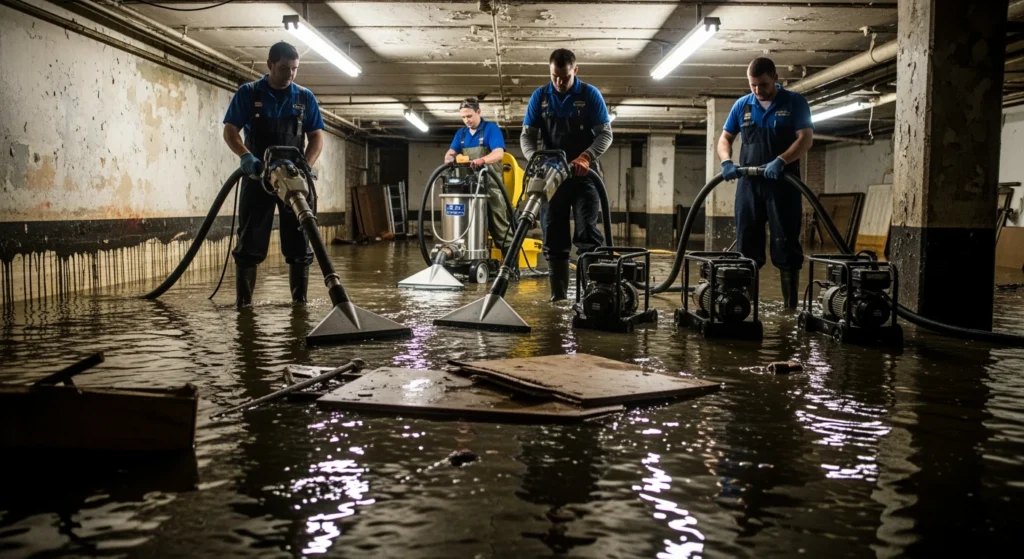
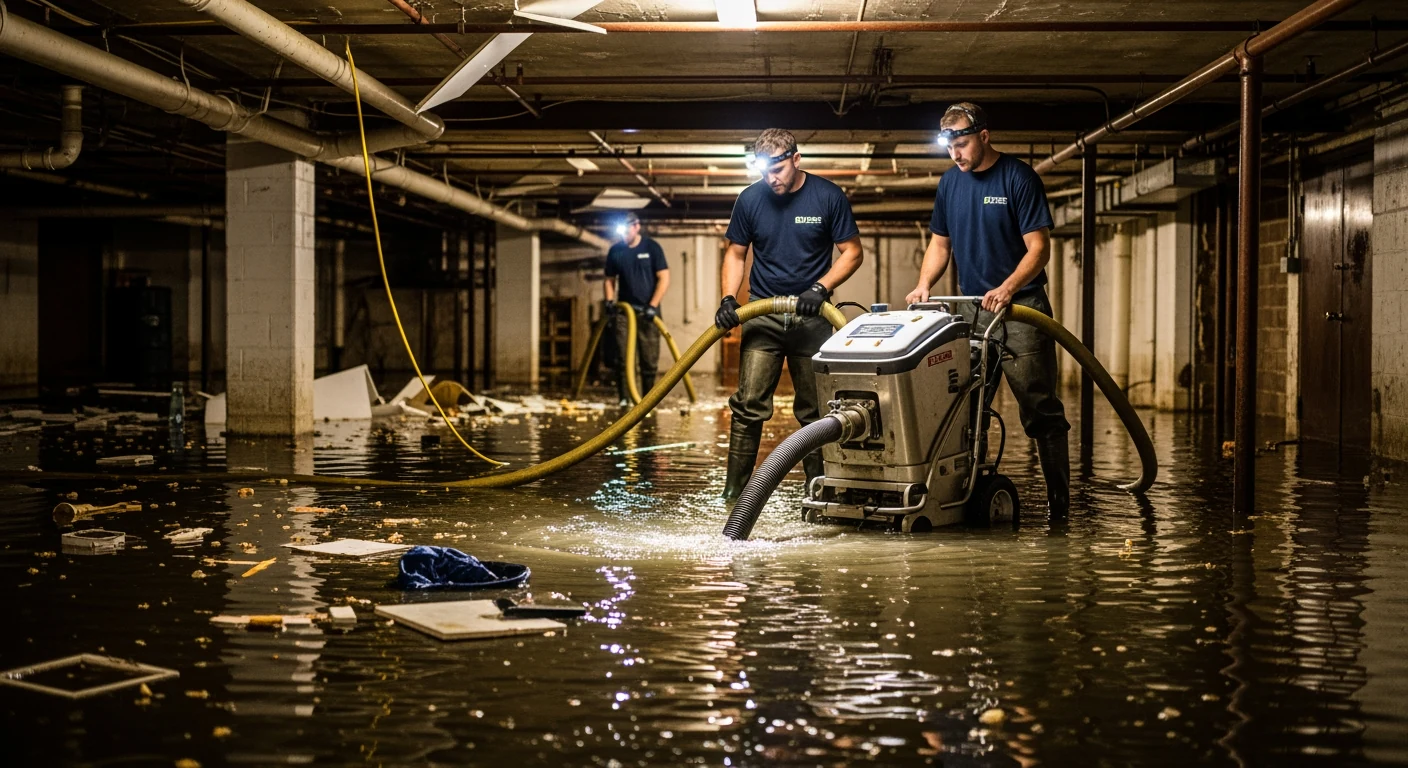
The Town of Huntington occupies a distinctive position in Long Island’s water damage landscape: it is the only Nassau–adjacent township with significant Long Island Sound exposure to the north and substantial interior suburban risk to the south, without the Great South Bay flooding that defines its western neighbors. Huntington’s water damage profile is Sound-shore tidal flooding in Northport Bay, Centerport Harbor, Cold Spring Harbor, and the Lloyd Neck communities; inland flooding from Huntington Bay tributaries and the Nissequogue River headwaters; and the full range of aging infrastructure and post-war building stock failure common to the western Suffolk corridor. For the county-level context, see the Long Island Water Damage Restoration Master Guide.
Building Stock Profile
Huntington’s housing stock includes both older Sound-shore communities with pre-war and early post-war construction — Cold Spring Harbor, Huntington Village, Centerport, Northport — and the large-scale 1960s–1980s suburban development of Huntington Station, Dix Hills, and Commack. Cold Spring Harbor contains some of the North Shore’s most historically significant residential construction, including 19th and early 20th-century estates that predate the suburban era. These structures carry historic building material risk: original lead plumbing pipes, vermiculite insulation potentially containing asbestiform tremolite, and original plaster-on-lath wall systems.
Huntington Station and Dix Hills represent Huntington’s highest-density residential zone, with predominantly 1960s–1980s Cape Cod and Colonial construction carrying the standard pre-1980 asbestos and lead paint risk profile. The below-grade family rooms common in Huntington Station’s split-level stock — built directly against uninsulated block foundations — are among the most consistent sources of basement water damage calls in the township.
Environmental Risk: Northport and Huntington Bays
Huntington Bay and Northport Bay are significant Long Island Sound embayments with tidal exposure and nor’easter surge vulnerability. Sandy’s storm surge extended significantly into both bays — the USGS documented major coastal flooding along the Sound shore, and Northport’s harbor community experienced inundation from surge amplified by the bay’s geometry. The narrow arms of Centerport Harbor and Oyster Bay Creek amplify surge by the same funnel effect that makes river mouth communities more vulnerable than open-coast sites at equivalent elevation.
Interior Huntington’s flooding risk derives from Huntington Creek, Cold Spring Harbor Creek, and the headwaters of the Nissequogue River, which drains parts of Huntington’s interior terrain. These creek systems produce localized flooding in older neighborhoods built in low-lying positions along stream corridors — flooding that is independent of coastal surge and occurs primarily during heavy rainfall events rather than storm tide windows.
Regulatory Context: Town of Huntington
Town of Huntington Building Department, 100 Main Street, Huntington, NY 11743; (631) 351-3163. Like North Hempstead and Oyster Bay, Huntington contains incorporated villages — Huntington Village, Northport, Lloyd Harbor, Asharoken — with their own building departments for permit applications. Structural restoration work in any incorporated village requires the village’s building permit authority, not the town. The Town of Huntington follows FEMA’s Substantial Damage rules and NYS two-foot freeboard requirements for flood zone construction.
Cost Benchmarks
- Northport or Centerport harbor community — Sound surge flooding: $14,000–$35,000 for Category 1–2 tidal surge scope. Sound shore water typically classifies as Category 1 or 2 depending on harbor proximity to marina activity and municipal drainage.
- Cold Spring Harbor historic construction — pipe failure: $10,000–$28,000 for water damage in older construction with plaster walls and historic material considerations.
- Huntington Station split-level — below-grade family room flooding: $9,000–$22,000 for below-grade assembly scope with pre-1980 asbestos protocol in joint compound and floor tile.