Water Damage Restoration in the Town of Smithtown, NY: What Homeowners Need to Know in 2026
Smithtown is one of Suffolk County’s most established suburban communities — encompassing the hamlets of Smithtown, Kings Park, Nesconset, St. James, Commack, and Hauppauge — with a housing stock concentrated in the 1960s through 1980s construction era and a topography that creates specific water damage risk patterns. The town’s varied terrain — hillier in the north toward Long Island Sound, flatter and more drainage-challenged in the south — along with its significant proportion of homes with full basements and an oil-heat heritage, shapes a restoration environment that ranges from basement moisture and sump pump failures to ice dam water intrusion in the winter months.
Smithtown’s Water Damage Risk Profile
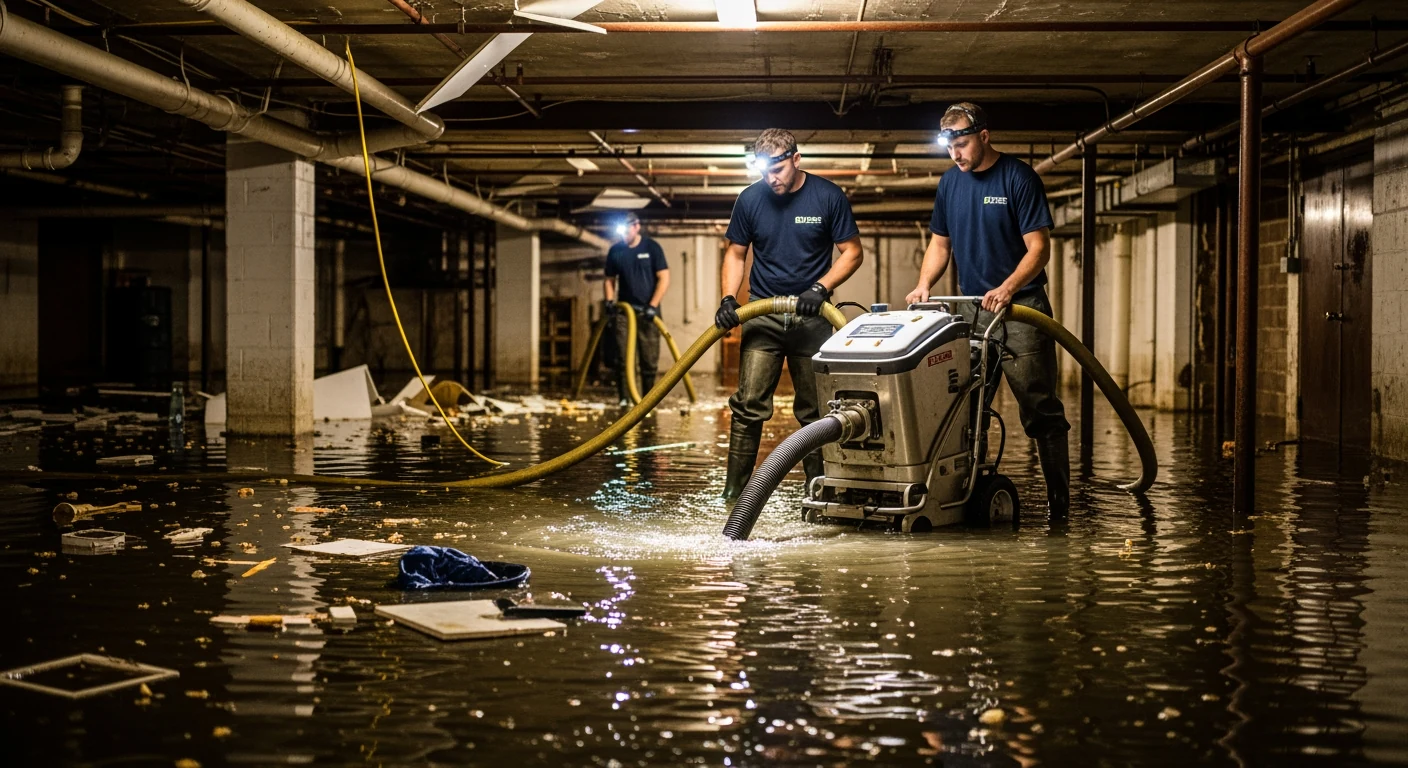
Basement moisture and sump pump failure is the most frequent water damage event across Smithtown’s residential communities. The town’s topography directs groundwater toward basement walls in many neighborhoods, and the 1960s–1970s construction era means many homes have original waterproofing that has reached or exceeded its design life. Sump pump failures during storm events — particularly nor’easters and tropical remnant systems in the fall — are a consistent source of basement flooding in Kings Park, Hauppauge, and the lower-lying areas of Nesconset.
Ice dam formation in the town’s hilly North Shore communities (particularly around Kings Park and the hillier sections of St. James) follows the pattern common to the North Shore’s older housing stock: inadequate attic insulation and ventilation in 1960s Cape Cods and ranches allows interior heat to melt roof snow, which refreezes at the cold eave and backs up under shingles. Water intrusion from ice dams typically affects upper-floor ceilings and wall junctions, often going undetected until visible staining appears weeks after the storm.
Plumbing system age in Smithtown’s 1960s–1980s housing stock produces pipe failures from corroded galvanized supply lines, deteriorated cast iron drain stacks, and aging water heaters. Supply line failures — particularly washing machine supply hoses and deteriorated under-sink lines — are a leading cause of kitchen and laundry area flooding.
Pre-1980 construction and asbestos: A significant proportion of Smithtown homes were built before 1980. Any restoration project requiring demolition must be preceded by a pre-demolition asbestos survey under NYS Code Rule 56 — particularly relevant for basement finishing projects, bathroom renovations, and any plumbing repair that requires opening walls in original construction.
Water Damage Restoration Services in Smithtown
Upper Restoration serves the entire Town of Smithtown with 24/7 emergency response — Kings Park, Nesconset, St. James, Hauppauge, Commack, and Smithtown hamlet — with typical response times of 60–90 minutes from our service network.
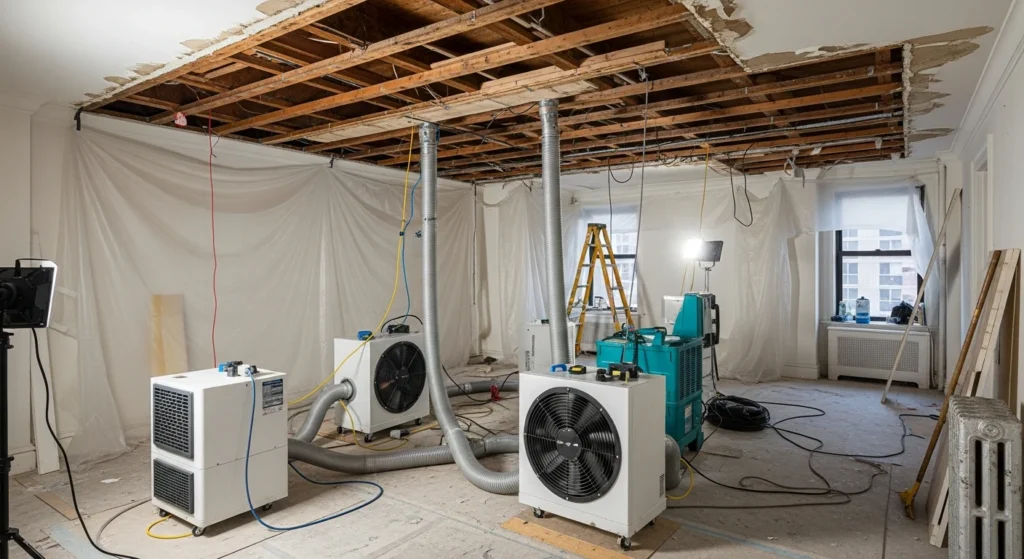
Emergency water extraction and structural drying: $2,500–$7,500 for a contained Category 1 loss. Basement flooding with Category 2 or 3 contamination (groundwater, sump pump backup): $5,000–$14,000. Mold remediation under NYS Article 32 (assessment, remediation, clearance): $2,500–$20,000 depending on scope. Asbestos survey for pre-1980 homes requiring demolition: $350–$700.
Insurance Claims for Smithtown Water Damage
Standard homeowners insurance covers sudden and accidental water damage — burst pipes, appliance failures, ice dam intrusion. Gradual seepage, maintenance-related deterioration, and basement flooding from groundwater are typically excluded. Under NYSDFS regulations, your insurer must acknowledge your claim within 15 business days and act on a completed submission within 15 business days. Document all damage with photos and video before any cleanup begins.